How To Invest In Mutual Funds: A Complete Beginner’s Guide
Master the essentials of mutual fund investing: from understanding types and risks to selecting funds and building a diversified portfolio for long-term wealth.

Mutual funds offer an accessible entry point into investing for beginners and seasoned investors alike. By pooling money from multiple investors, these funds provide professional management and instant diversification across stocks, bonds, and other assets. This guide breaks down everything you need to know, from fundamentals to advanced strategies, helping you make informed decisions for long-term financial growth.
What Are Mutual Funds?
Mutual funds are investment vehicles that collect capital from numerous investors to purchase a diversified portfolio of securities, such as stocks, bonds, or money market instruments. Managed by professional fund managers, they aim to achieve specific objectives like capital appreciation, income generation, or capital preservation. Unlike individual stocks, mutual funds spread risk across many assets, making them suitable for those seeking steady growth without extensive market knowledge.
The structure of mutual funds includes an Net Asset Value (NAV), calculated daily as the total value of assets minus liabilities divided by outstanding shares. Investors buy or sell shares at this NAV price, providing liquidity not always available in direct investments.
Types of Mutual Funds
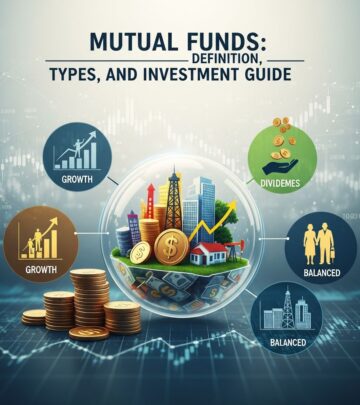
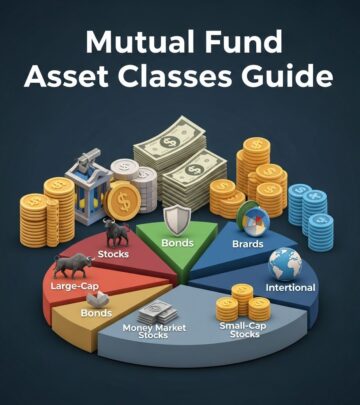
Mutual funds are categorized based on asset class, investment style, and objectives. Understanding these types helps align investments with your financial goals and risk tolerance.
- Equity Funds: Invest primarily in stocks for high growth potential. Ideal for long-term investors comfortable with volatility. Subtypes include large-cap (stable giants), mid-cap (growth-oriented), and small-cap (higher risk-reward).
- Debt Funds: Focus on bonds and fixed-income securities for steady income and lower risk. Suitable for conservative investors seeking preservation over aggressive growth.
- Balanced/Hybrid Funds: Combine equities and debt for moderate risk and balanced returns.
- Index Funds: Track market indices like the S&P 500, offering low-cost passive investing with market-matching returns.
- Target-Date Funds: Automatically adjust asset allocation based on your retirement timeline, shifting conservative as the target date approaches.
- Money Market Funds: Invest in short-term, low-risk securities for liquidity and stability.
- Sector/Thematic Funds: Target specific industries like technology or healthcare, higher risk due to lack of diversification.
Choosing the right type depends on your horizon: young investors favor equity-heavy funds, while those nearing retirement prefer debt or balanced options.
Advantages of Investing in Mutual Funds
Mutual funds democratize investing by offering benefits unavailable in individual securities.
- Diversification: Exposure to hundreds of assets reduces single-security risk. A $5,000 investment grants a professionally managed portfolio.
- Professional Management: Experts handle research, selection, and rebalancing.
- Liquidity: Redeem shares daily at NAV, unlike real estate or direct stocks.
- Affordability: Low entry barriers; some funds accept $50-$500 minimums.
- Transparency: Daily NAV and portfolio disclosures ensure accountability.
- Tax Efficiency: In tax-advantaged accounts like 401(k)s or IRAs, growth compounds tax-deferred.
Historically, diversified mutual funds deliver 7-10% average annual returns over decades, outpacing savings accounts.
Risks Involved in Mutual Fund Investing
While safer than individual stocks, mutual funds carry risks that demand careful consideration.
- Market Risk: Equity funds fluctuate with markets; downturns can erode principal.
- Interest Rate Risk: Debt funds lose value when rates rise.
- Credit Risk: Issuer defaults in bond funds.
- Liquidity Risk: Rare, but possible in illiquid holdings.
- Manager Risk: Poor decisions underperform benchmarks.
Volatility is inherent; some years yield losses, others 8%+ gains. Mitigate by diversifying across fund types and holding long-term (5+ years). Never invest emergency funds; view mutual funds as 5-10+ year commitments.
How to Choose the Right Mutual Fund
Selecting funds requires evaluating performance, costs, and fit. Follow these steps:
- Define Goals: Growth, income, or preservation? Match to fund type.
- Assess Risk Tolerance: Use tools like Vanguard’s questionnaire for asset allocation.
- Review Performance: Compare 1-, 5-, 10-year returns against benchmarks. Past results don’t guarantee future, but consistency matters.
- Check Expense Ratio: Annual fees (0.05%-2%+); lower is better, especially index funds. A 1% difference costs thousands over decades.
- Examine Portfolio: Turnover rate, top holdings, sector allocation for diversification.
- Read Prospectus: Objectives, risks, fees.
- Ratings: Morningstar stars for risk-adjusted returns.
| Fund Metric | What to Look For | Why It Matters |
|---|---|---|
| Expense Ratio | <0.5% for index, <1% active | Maximizes net returns |
| 5-Year Return | Outperforms benchmark | Long-term consistency |
| Standard Deviation | Matches risk tolerance | Measures volatility |
| Alpha | >0 for active funds | Manager skill vs. market |
Prefer index funds for most; active funds justify fees only if they beat markets consistently.
Steps to Invest in Mutual Funds
Getting started is straightforward:
- Open an Account: Brokerage (Vanguard, Fidelity), bank, or direct from fund house. Robo-advisors like Betterment for $100/month.
- Fund Your Account: Link bank; minimums $1,000-$3,000 typical.
- Select Funds: Use screener tools.
- Buy Shares: Lump sum or dollar-cost average (invest fixed amounts regularly).
- Monitor: Annually rebalance; avoid frequent trading.
- Use Tax-Advantaged Accounts: 401(k) ($23,000 limit 2026), IRA ($7,000).
Start small: $5,000 in a quality fund accesses diversification.
Investment Strategies for Mutual Funds
- Dollar-Cost Averaging: Invest fixed sums periodically to average costs.
- Asset Allocation: 80/20 stocks/bonds young; shift conservative later.
- Rebalancing: Annually adjust to target allocation.
- Core-Satellite: Low-cost index core + thematic satellites.
A $5,000 annual investment at 7% grows to $74,000 in 10 years; $7,000 to $103,000.
Common Mistakes to Avoid
- Chasing past performance without context.
- Ignoring fees: High expense ratios erode gains.
- Timing the market: Time in market beats timing.
- Overconcentration: Diversify beyond one fund.
- Panic selling during downturns.
Focus on process over predictions.
Frequently Asked Questions (FAQs)
Q: What’s the minimum to invest in mutual funds?
A: Many accept $50-$5,000; index funds often lower. Robo-advisors start at $100.
Q: Are mutual funds safe?
A: No investment is risk-free, but diversification lowers risk. SIPC insures up to $500,000.
Q: Index vs. active funds?
A: Index cheaper, matches market; active aims to beat but most underperform long-term.
Q: How to track performance?
A: Use Morningstar, Yahoo Finance; compare to benchmarks like S&P 500.
Q: Can I lose money?
A: Yes, especially equities. Hold long-term to mitigate.
References
- The Best Ways to Invest $50, $500, or $5000 — Wise Bread. 2015-approx. https://www.wisebread.com/the-best-ways-to-invest-50-500-or-5000
- 5 Killer Free Investment Tools — Wise Bread. 2015-approx. https://www.wisebread.com/5-killer-free-investment-tools
- The Only 8 Rules of Investing You Need to Know — Wise Bread. 2015-approx. https://www.wisebread.com/the-only-8-rules-of-investing-you-need-to-know
- 7 Ways to Compare Stock Market Investments — Wise Bread. 2015-approx. https://www.wisebread.com/7-ways-to-compare-stock-market-investments
- 5 Essentials for Building a Profitable Portfolio — Wise Bread. 2015-approx. https://www.wisebread.com/5-essentials-for-building-a-profitable-portfolio
- 3 Steps to Getting Started in the Stock Market With Index Funds — Wise Bread. 2015-approx. https://www.wisebread.com/3-steps-to-getting-started-in-the-stock-market-with-index-funds
Similar Articles








Read full bio of Sneha Tete