How to Include Part-Time and Temporary Work on a Resume
Master the art of showcasing part-time and temporary positions effectively on your professional resume.
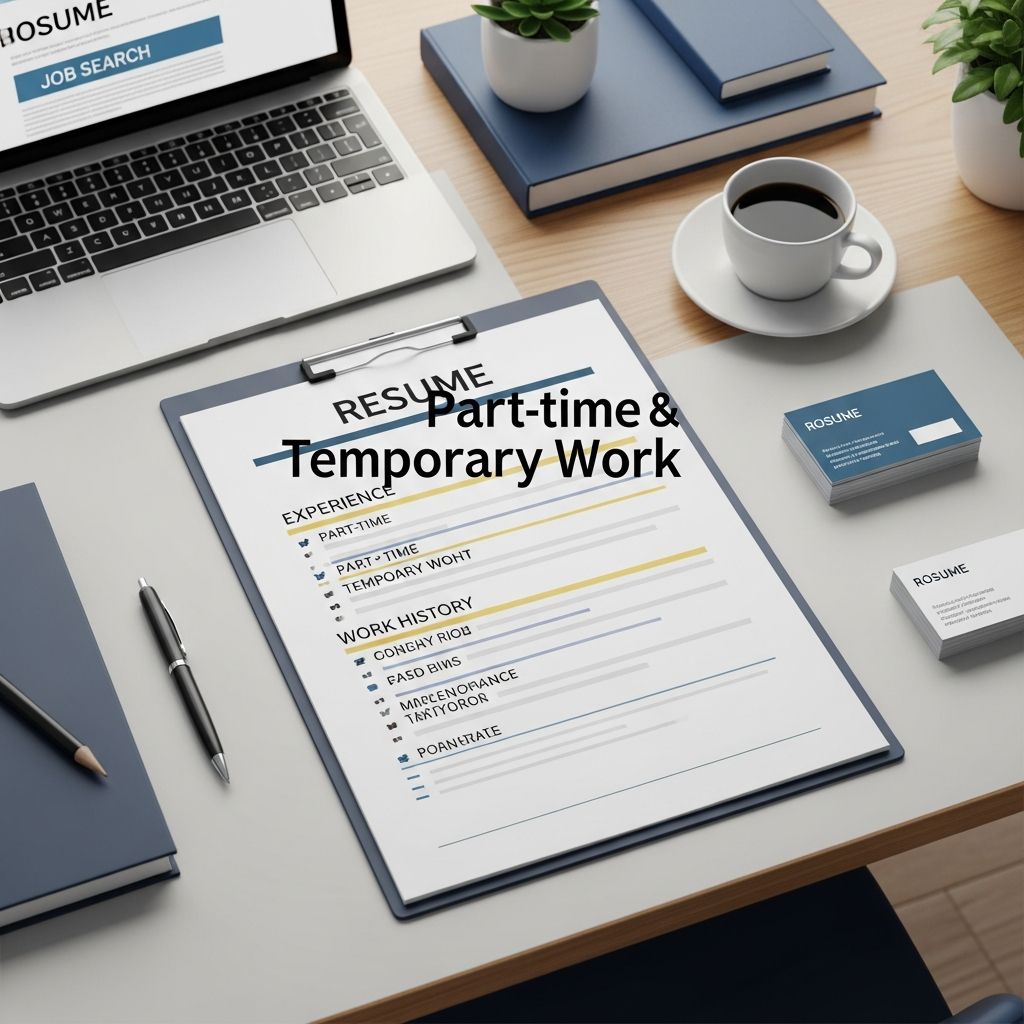
How to Include Part-Time and Temporary Work on Your Resume
Including part-time and temporary work on your resume can be a strategic advantage when done correctly. Whether you’re transitioning between careers, building experience as a student, or managing multiple roles, knowing how to present short-term positions effectively demonstrates reliability, versatility, and professional growth. This comprehensive guide explores best practices for showcasing part-time and temporary employment that will help you stand out to potential employers.
Why Part-Time and Temporary Work Matters on Your Resume
Part-time and temporary positions play a crucial role in your career narrative. Rather than viewing these roles as gaps or less significant experiences, progressive employers recognize them as valuable opportunities to develop skills, gain industry exposure, and demonstrate your ability to adapt to different work environments. When presented strategically, these positions can strengthen your candidacy by showing flexibility, work ethic, and commitment to continuous learning.
Many professionals leverage part-time work to explore different industries, test career paths, or maintain employment while pursuing education. Temporary positions often provide exposure to diverse teams, company cultures, and project types that enrich your professional toolkit. The key is framing these experiences in a way that highlights their contribution to your overall career development.
Deciding What to Include
Not every short-term position needs to appear on your resume. Use these guidelines to determine what to include:
- Relevance: Include positions that align with your target role or demonstrate transferable skills applicable to positions you’re pursuing.
- Recency: Prioritize recent part-time and temporary roles over older ones, especially if space is limited.
- Impact: Choose roles where you made meaningful contributions or developed skills that strengthen your professional profile.
- Chronological gaps: Include short-term positions that explain otherwise unexplained employment gaps.
- Career progression: Select experiences that show professional growth or advancement within your field.
Conversely, you may omit positions that are significantly outdated, unrelated to your career objectives, or where your tenure was extremely brief with minimal contributions. However, transparency about employment gaps is generally preferable to leaving unexplained voids in your work history.
Formatting Part-Time and Temporary Positions
The way you format these positions influences how employers perceive them. Here are effective formatting strategies:
Standard Format
List part-time and temporary work similarly to full-time positions, including:
- Job title
- Company name
- Employment dates (month and year)
- Brief description of responsibilities and accomplishments
Example: Retail Associate, Fashion Forward Store — June 2024 to September 2024 | Processed 50+ customer transactions daily while maintaining a 98% accuracy rate in cash handling.
Grouping Similar Roles
If you held multiple short-term positions in similar roles, consider combining them under one heading to create a stronger narrative:
Seasonal Customer Service Representative | Various Retail Companies — 2023-2024
Managed customer inquiries and sales transactions across multiple retail environments. Developed strong adaptability and communication skills while maintaining consistent performance standards across different company cultures.
Using Umbrella Descriptions
For numerous brief positions, create an umbrella category that summarizes your experience:
Part-Time Professional Experience
Combined experience in customer service, hospitality, and retail sectors involving point-of-sale systems, inventory management, and team collaboration. Demonstrated reliability and quick learning ability across diverse business environments.
Highlighting Transferable Skills
The most effective approach to showcasing part-time and temporary work involves emphasizing transferable skills—competencies applicable across industries and roles. Focus your descriptions on these universally valued abilities:
- Communication: Customer interaction, team collaboration, written correspondence
- Time management: Meeting deadlines, prioritizing tasks, managing multiple responsibilities
- Problem-solving: Addressing customer concerns, improving processes, troubleshooting issues
- Technical skills: Software proficiency, point-of-sale systems, data entry
- Teamwork: Cross-functional collaboration, supporting colleagues, contributing to team goals
- Adaptability: Learning new systems quickly, adjusting to changing environments, flexibility
When describing your duties, use action verbs and quantify results where possible. Instead of “Worked as a cashier,” write “Processed 100+ daily transactions with 99% accuracy, maintained balanced cash drawer, and resolved customer payment issues efficiently.”
Addressing Employment Gaps
Part-time and temporary positions effectively address employment gaps that employers often scrutinize. Rather than leaving unexplained breaks in your work history, including short-term roles demonstrates continuous engagement with the workforce. When explaining gaps, briefly clarify the reason while emphasizing what you accomplished during that period:
- Educational pursuit: “Completed intensive marketing certification while working part-time as a customer service representative”
- Voluntary break: “Took intentional career break to reassess professional goals before transitioning into marketing”
- Life circumstances: “Provided family care while maintaining employment through flexible part-time positions”
This approach transforms potential red flags into evidence of resilience and thoughtful career management.
Presenting Multiple Short-Term Positions
If your resume includes several short-term roles, organization becomes critical. Consider these strategies:
Reverse Chronological Order
List positions from most recent to oldest, which is the standard resume format and helps employers quickly see your current or most recent work.
Thematic Organization
Group positions by industry, function, or skill set rather than strictly by date. For example, cluster all customer-facing roles together, followed by administrative positions.
Combination Format
Lead your experience section with a skills summary, followed by chronological work history. This emphasizes capabilities before work tenure.
| Presentation Strategy | Best For | Advantages |
|---|---|---|
| Reverse Chronological | Most job seekers | Shows current/recent experience first; traditional format recruiters expect |
| Thematic Grouping | Multiple similar roles | Creates coherent narrative; emphasizes relevant experience clusters |
| Combination Format | Career changers; limited experience | Prioritizes skills; demonstrates capability despite varied roles |
When to Exclude Temporary Work
Strategic omission can sometimes serve your candidacy better than inclusion. Consider excluding positions when:
- Space constraints: Your resume is already at capacity with highly relevant experiences
- Extreme brevity: You worked for only a few days or weeks with negligible accomplishments
- Poor fit: The position is completely unrelated to your target role and offers no transferable skills
- Outdated experience: The position is 10+ years old and you have substantial more recent experience
- Terminated positions: You left under negative circumstances with concerns about references
However, use caution when omitting positions. Significant employment gaps become more conspicuous when not addressed, and dishonesty discovered during background checks can disqualify you entirely. When in doubt, inclusion with strategic framing is preferable to omission.
Creating a Strong Narrative
The most effective resumes tell a coherent career story. Even with multiple part-time and temporary roles, you can craft a compelling narrative by:
Demonstrating progression: Show how each role built upon previous experience or developed new competencies. “Progressed from cashier to shift supervisor, managing team coordination and inventory responsibilities.”
Highlighting consistency: Emphasize recurring themes across roles—reliability, customer focus, technical skills, or leadership. “Consistently praised for strong attention to detail and problem-solving across multiple temporary administrative roles.”
Connecting to career goals: Explicitly link your varied experience to your target position. “Diverse customer service background across retail, hospitality, and telecommunications sectors developed comprehensive understanding of client-centered business practices.”
Showing intentionality: Rather than appearing to drift between jobs, frame your choices as deliberate exploration or strategic skill-building. “Purposefully gained cross-industry experience to develop versatile skill set applicable to [target role].”
Optimizing Your Resume Layout
Beyond content, presentation significantly impacts how hiring managers perceive your part-time and temporary experience:
- Consistent formatting: Apply identical formatting to all positions regardless of tenure to avoid emphasizing brevity
- Action verb usage: Begin each bullet point with strong action verbs (managed, coordinated, developed, implemented) rather than passive language
- Quantification: Include metrics wherever possible—customers served, tasks completed, percentage improvements, revenue generated
- Whitespace: Adequate spacing makes your resume readable and prevents cramping that can make short positions appear insignificant
- Font consistency: Use professional fonts uniformly across the document for polished appearance
Leveraging Your Cover Letter
Your cover letter provides valuable space to address multiple short-term positions proactively. Use this opportunity to explain your employment pattern, highlight how diverse experiences strengthen your candidacy, and demonstrate awareness of your resume’s structure. For example: “My varied part-time roles across retail, administrative, and customer service sectors developed a comprehensive professional foundation and deep understanding of diverse workplace environments.” This contextualizes your resume and positions temporary work as a strategic advantage rather than a liability.
Frequently Asked Questions
Q: Should I include months along with years for part-time positions?
A: Yes, including specific months provides clarity about your timeline and shows transparency. Employers appreciate precision that prevents questions about employment gaps.
Q: How should I handle a temporary contract position that lasted only two weeks?
A: If the position offered meaningful experience or fills an employment gap, include it using brief, accomplishment-focused descriptions. If it was entirely inconsequential, omitting it is acceptable, though ensure no unexplained gaps result from the omission.
Q: Can I combine several short-term jobs into one line item?
A: Yes, when positions are similar in nature or when space is limited. Use umbrella descriptions like “Multiple temporary administrative positions” or “Seasonal retail roles,” followed by a brief summary of combined responsibilities.
Q: Should I explain why I had part-time work instead of full-time employment?
A: In your cover letter or during interviews, briefly contextualize choices without apology. Mention specific reasons—pursuing education, exploring career paths, managing life circumstances—that demonstrate intentionality and professionalism.
Q: How do I list a temporary position where I worked through a staffing agency?
A: List the company where you were placed (client company), not the staffing agency. Example: “Customer Service Representative, ABC Retail Corp (via Staffing Services) — June 2024 to August 2024.” This clarifies where you actually performed work.
Q: What if I had many part-time jobs while in school?
A: Create a dedicated section titled “Work Experience” or “Employment History” and group similar positions. You can also include an academic timeline reference to clarify that positions were concurrent with education, legitimizing the multiplicity.
Q: Is it better to omit a part-time job or leave a gap in my resume?
A: Generally, including the position is preferable to leaving unexplained gaps. Employers scrutinize gaps more critically than brief positions, so strategic inclusion usually strengthens your candidacy.
Conclusion
Part-time and temporary work should never be viewed as resume liabilities. When strategically presented, these positions demonstrate adaptability, diverse skill development, and professional resilience. By emphasizing transferable skills, maintaining consistent formatting, quantifying accomplishments, and crafting a coherent career narrative, you can transform varied work experiences into compelling evidence of your professional value. Remember that employers increasingly recognize the value of diverse work backgrounds in developing well-rounded, versatile professionals. Your part-time and temporary positions, when thoughtfully presented, reinforce your candidacy and readiness to contribute meaningfully to your target role.
References
- How to Write a Resume for Part-Time Jobs Application — Writing Tutorials. 2025-08-09. https://www.youtube.com/watch?v=yqTNMIN8Rl0
- Is It Bad To Have Temporary Employment On A Resume? — Davis Staffing. 2014-09-19. https://www.davis-staffing.com/2014/09/19/bad-temporary-employment-resume/
Similar Articles








Read full bio of Sneha Tete