How to Get the Best Savings Account Rate
Learn practical, step-by-step strategies to find, compare, and keep the highest savings account interest rates for your money.
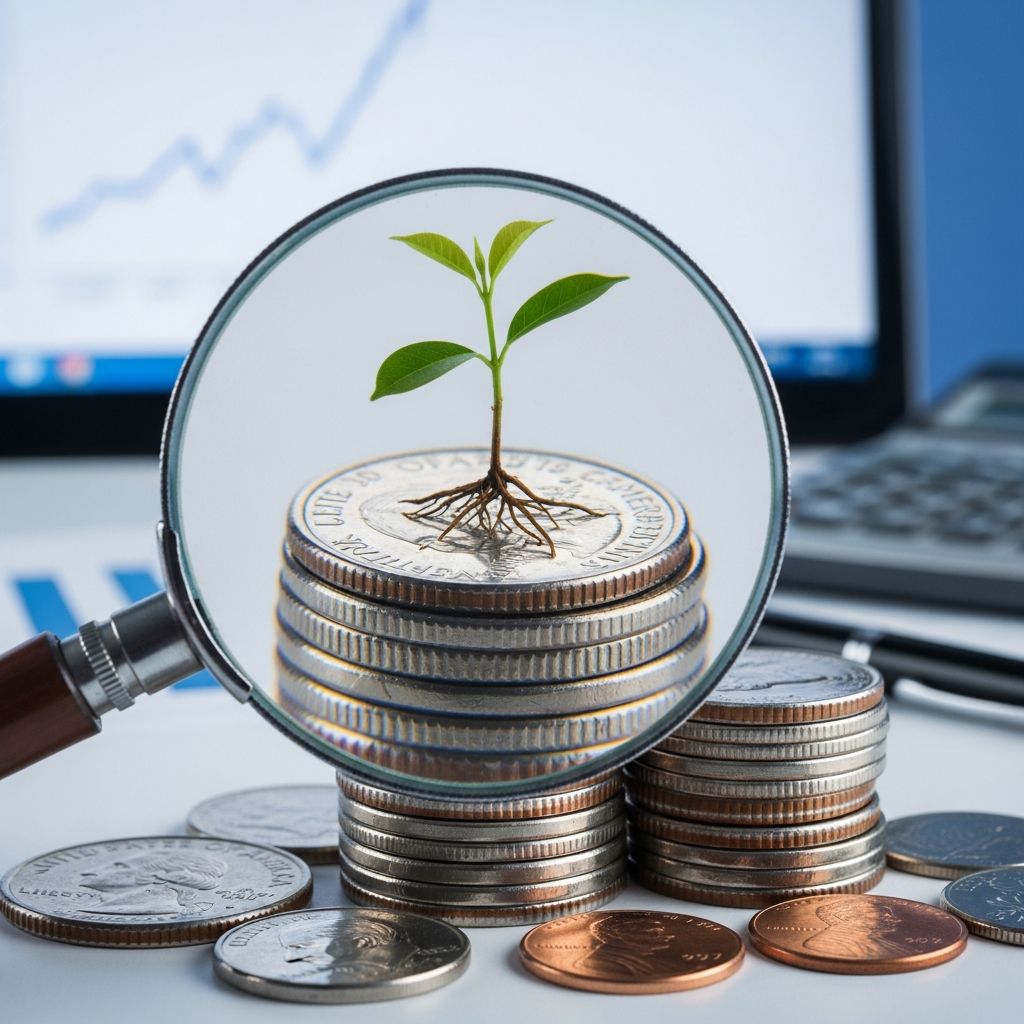
Consistently earning a top savings rate can make a major difference in how quickly your money grows. The gap between the best and average savings account rates is often huge, and savers who shop around can earn many times more interest than those who simply stay with a default bank account.
This guide explains how savings rates work, where to find the highest yields, and how to build a simple strategy using savings accounts, money market accounts, and certificates of deposit (CDs) so you can keep your rate as competitive as possible in any interest rate environment.
Why Your Savings Rate Matters So Much
Even small differences in interest rates can compound into large differences over time. According to data from the Federal Deposit Insurance Corporation (FDIC), the national average savings rate has often been below 0.5% in recent years, while leading high-yield savings accounts have paid around 4–5% annual percentage yield (APY).
| Annual Rate (APY) | Balance After 10 Years* | Interest Earned |
|---|---|---|
| 0.05% (typical low branch rate) | $10,050 | $50 |
| 0.40% (around recent national average) | $10,407 | $407 |
| 5.00% (strong high-yield rate) | $16,289 | $6,289 |
*Approximate values using annual compounding for illustration.
The spread between a low traditional savings rate and a competitive online rate can translate into thousands of dollars over a decade, even on relatively modest balances.
Understand What Drives Savings Account Rates
Before you can get a better rate, it helps to know what determines the rate you receive. Several key factors influence savings account yields:
- Federal Reserve policy: When the Federal Reserve raises or lowers its benchmark rate, banks typically adjust deposit rates up or down in response.
- Bank business strategy: Some banks choose to pay higher rates to attract deposits, while others focus on convenience and pay less.
- Account type: High-yield savings, money market accounts, and CDs usually pay more than basic branch savings accounts.
- Market competition: Online banks, which often have lower overhead costs, frequently offer higher rates than traditional branch-based banks.
What this means for you is that you don’t have to accept the rate offered by your current bank. The same economy and same interest-rate environment can still produce very different offers across institutions.
Step 1: Compare Savings Rates, Not Just Brand Names
Many people keep their savings at the same bank where they opened their first checking account, even if the rate is far from competitive. To get a better yield, treat your savings account like any other financial product and compare offers widely.
Know the Benchmark: National Average vs. Top Rates
The FDIC regularly publishes data on the national average rate for savings accounts. Recent figures show averages under 0.5%, while leading online banks have paid several times that amount.
Use this national average as a benchmark:
- If your savings rate is near the national average or lower, you likely have room for improvement.
- If your rate is several times higher than the national average, you are closer to the best deals available.
Use Online Comparison Tools
Reliable rate comparison tools and bank surveys can show how much more the highest-yielding savings accounts are paying compared with the average. Research has found that top-yielding savings and money market accounts can pay as much as five times the national average, and often far more than typical branch accounts.
When using comparison tables, pay attention to:
- APY, not just interest rate (APY reflects compounding).
- Minimum balance required to earn the advertised APY.
- Monthly maintenance fees that could offset interest.
- Introductory vs. ongoing rates (some promotions are temporary).
Step 2: Look to Online Banks for Higher Rates
Online-only banks are often the best place to find top-tier savings account rates. Because they do not operate a large network of branches, their overhead costs are lower, and they frequently pass part of that savings on to customers through higher APYs and lower fees.
Advantages of Online Savings Accounts
- Higher yields: Surveys of bank rates have consistently shown that online savings accounts earn several times the interest of traditional branch-based accounts.
- Few or no monthly fees: Many online banks eliminate maintenance fees, allowing more of your interest to stay in your account.
- Convenience: Mobile apps and online dashboards make it easy to move money, track balances, and set savings goals.
Potential Trade-offs
- No local branches: You typically cannot deposit or withdraw cash at a branch; you rely on electronic transfers, ATMs, or mobile deposit.
- Customer support: Support is usually by phone or chat, so you won’t have in-person service.
For most savers seeking the best rate, the higher yield and lower costs of an online savings account outweigh the lack of branch access.
Step 3: Use CDs and Money Market Accounts Strategically
In addition to a high-yield savings account, you can often boost your overall return by using money market accounts and certificates of deposit (CDs). These products can complement your savings account and provide options for different time horizons.
Money Market Accounts
A money market deposit account is a type of interest-bearing account that may offer a higher yield than a basic savings account while still providing check-writing or debit card access in some cases.
- Pros: Potentially higher rates than standard savings; limited transactional access; FDIC-insured at participating banks.
- Cons: May require a higher minimum balance; some have monthly fees if balances fall below a threshold.
Certificates of Deposit (CDs)
CDs are time deposits where you agree to leave your money with the bank for a fixed term, such as 6 months, 1 year, or 5 years, in exchange for a fixed rate that is usually higher than regular savings accounts.
- Pros: Guaranteed rate for the term; often higher yields for longer terms; FDIC-insured up to applicable limits.
- Cons: Early withdrawal penalties; less flexibility because funds are locked in during the term.
Building a Simple CD Ladder
To balance yield and access to your money, many savers use a CD ladder. This involves spreading your money across multiple CDs with different maturities, so a portion of your money becomes available at regular intervals.
Example of a basic 3-year ladder:
- Put one-third of your CD funds in a 1-year CD.
- Put one-third in a 2-year CD.
- Put one-third in a 3-year CD.
When the 1-year CD matures, you can either use the funds or roll them into a new 3-year CD at the current rate. This approach helps you capture higher long-term rates while maintaining periodic access to your money.
Step 4: Don’t Accept Falling Rates Without Looking Around
Interest rates in the broader economy move up and down over time as central banks adjust policy and financial conditions change. However, even when rates are trending lower, you may still be able to improve your personal rate by switching accounts or institutions.
Why Banks May Drop Your Rate
- Market conditions: When benchmark rates fall, many banks reduce what they pay on savings.
- Sticky customers: Some institutions rely on customer inertia, assuming many people won’t switch accounts even if rates become uncompetitive.
- Promotional periods ending: Introductory high rates sometimes reset to lower standard rates after a set period.
How to Respond When Rates Fall
- Monitor your rate regularly: Check your APY at least every few months and compare it with leading rates nationally.
- Be willing to move: Opening a new online savings or money market account can often be done quickly, and electronic transfers make it easy to shift funds.
- Use CDs when appropriate: If you expect rates to fall further, locking in part of your savings in a CD can keep your yield higher than future variable rates.
Research on bank rates has shown a large spread between the highest and average savings account rates, meaning many customers could earn more simply by switching to a more competitive institution.
Step 5: Protect Your Money While Chasing Higher Yields
A higher interest rate is valuable only if your money is safe and accessible when you need it. When searching for better yields, keep these safeguards in mind:
Confirm FDIC or NCUA Insurance
For bank accounts, look for FDIC insurance (or NCUA insurance for credit unions). The FDIC insures deposits up to at least $250,000 per depositor, per insured bank, per ownership category.
- Verify the institution on the official FDIC or NCUA website.
- If you have large balances, consider spreading funds across multiple insured institutions or ownership categories to maintain full coverage.
Check Fees and Restrictions
- Monthly maintenance fees: A higher APY can be offset or erased by recurring fees if your balance is low.
- Transaction limits: Some savings and money market accounts limit the number of withdrawals or transfers you can make each month.
- Minimum balance requirements: Ensure you can comfortably maintain any required minimum to earn the advertised APY.
Step 6: Match Your Accounts to Your Time Horizon
The best overall strategy is usually a combination of accounts, each chosen based on when you expect to need the money:
- Emergency fund (0–12 months): Keep this in a high-yield savings or money market account where it is safe and liquid.
- Short-term goals (1–3 years): Consider a mix of high-yield savings, money market accounts, and short- to medium-term CDs.
- Medium-term reserves (3–5 years): Longer-term CDs or a CD ladder can lock in higher rates while still providing periodic access.
This layered approach allows you to pursue better yields on funds you don’t need immediately while preserving ready access to your emergency savings.
Simple Checklist for Getting the Best Savings Rate
- Check your current savings APY and compare it with the national average and top online rates.
- Open at least one competitive high-yield online savings account.
- Consider adding a money market account for larger balances or limited check access.
- Use CDs and, if helpful, a basic CD ladder to lock in part of your savings at higher fixed rates.
- Review your accounts every 3–6 months and be willing to move if your rate slips relative to the market.
- Always confirm FDIC or NCUA insurance and watch for fees and minimum balance requirements.
Frequently Asked Questions (FAQs)
Q: What is considered a good savings account rate?
A: A good savings account rate is one that is significantly above the national average and competitive with the top high-yield savings accounts offered by online banks. If your rate is several times higher than the national average published by the FDIC, you are generally doing well.
Q: Are online savings accounts safe?
A: Online savings accounts at legitimate banks are generally as safe as those at traditional banks, as long as the institution is insured by the FDIC (or NCUA for credit unions) and you stay within coverage limits. Always verify the bank’s status through official government resources.
Q: How often should I shop for a better savings rate?
A: Checking your rate every few months is reasonable. You may not need to move every time a rate changes slightly, but if your yield falls far behind the best available rates or your bank ends a promotional rate, it may be worth opening a new account.
Q: Is it worth switching banks for a slightly higher rate?
A: For small balances, a tiny difference in APY may not matter much after accounting for the time and effort involved. However, if the gap between your current rate and a competing offer is large—such as tenths of a percent or more—the additional interest can become meaningful over time, especially on larger balances.
Q: Should I keep all my savings in one account?
A: Not necessarily. Many savers benefit from using multiple accounts: a high-yield savings or money market account for flexible access to cash and one or more CDs for funds they can lock away for longer periods to earn higher fixed rates.
References
- Understanding Deposit Insurance — Federal Deposit Insurance Corporation (FDIC). 2024-04-01. https://www.fdic.gov/resources/deposit-insurance/
- National Rates and Rate Caps – Weekly Update — Federal Deposit Insurance Corporation (FDIC). 2025-12-02. https://www.fdic.gov/resources/bankers/national-rates/
- Ways to Earn More Interest on Your Money in 2026 — MoneyRates. 2025-11-15. https://www.moneyrates.com/savings/ways-to-earn-more-interest-on-savings.htm
- The Fed Explained: What the Central Bank Does — Board of Governors of the Federal Reserve System. 2023-08-10. https://www.federalreserve.gov/aboutthefed/the-fed-explained.htm
- MoneyRates Interest Rate Comparison Tool — MoneyRates. 2025-10-20. https://www.moneyrates.com/research-center/compare-interest-rates.htm
- What Is a Money Market Account? — Consumer Financial Protection Bureau (CFPB). 2022-11-30. https://www.consumerfinance.gov/ask-cfpb/what-is-a-money-market-account-en-1893/
Similar Articles








Read full bio of medha deb