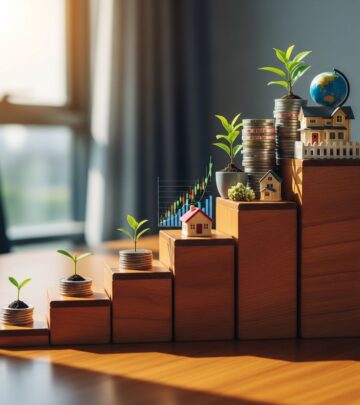
Building Assets: 5 Practical Steps To Grow Your Net Worth
Learn what counts as an asset, why it matters, and practical steps to start building wealth the smart and sustainable way.

Building assets is one of the most effective ways to grow your wealth, improve your financial security, and create options for your future. Instead of relying only on a paycheck, you use your money to acquire things that can increase your net worth and give you access to cash when you need it.
This guide walks you through what asset building means, the key types of assets to focus on, how assets affect your net worth, and practical steps you can take to get started today.
What Is Asset Building?
Asset building is the process of increasing the amount of money you have, or your access to money, by acquiring things with present or future monetary value. In other words, you use your income to buy assets that are likely to hold or grow in value over time.
Examples of assets include:
- Cash in bank accounts
- Investments such as stocks and bonds
- Real estate that has equity or produces income
- Business ownership stakes
- Valuable personal property that can be sold for cash
Your goal is to build a portfolio of assets that can support your goals, cushion you in emergencies, and help you reach long-term financial independence.
How Assets Affect Your Net Worth
Your net worth is a simple but powerful measure of your overall financial health. It shows the difference between what you own and what you owe.
| Concept | Definition | Example |
|---|---|---|
| Assets | Things you own that have monetary value. | Savings, investments, home equity, business value. |
| Liabilities | Debts and obligations you owe to others. | Credit cards, student loans, car loans, mortgages. |
| Net Worth | Assets minus liabilities. | If you have $200,000 in assets and $80,000 in debt, your net worth is $120,000. |
The more assets you have relative to your liabilities, the higher your net worth. If your liabilities grow faster than your assets, your net worth can stagnate or even fall.
Asset building is therefore not just about buying more things. It is about deliberately choosing assets that can grow in value or generate income while keeping your debt under control.
Types Of Assets To Focus On
Not all assets are equal. Some are easier to turn into cash, some generate income, and others mainly provide security or long-term growth. In personal finance, assets are commonly grouped into three broad categories:
1. Financial Assets
Financial assets are paper or digital claims on value, such as money in the bank or investments in financial markets. They are usually the easiest assets to track and measure.
- Cash and cash equivalents: checking accounts, savings accounts, money market funds. These are highly liquid and useful for emergencies and short-term goals.
- Retirement accounts: employer-sponsored plans (like 401(k)s or similar), IRAs, and other tax-advantaged accounts designed for long-term investing.
- Investments: stocks, bonds, mutual funds, and index funds. Over long periods, diversified stock investments have historically provided higher returns than cash or bonds, making them central to wealth-building.
Financial assets are the backbone of most asset-building strategies because they can grow through investment returns and compound over time.
2. Tangible (Physical) Assets
Tangible assets are physical items you can see and touch. Some tangibles are strong wealth builders; others lose value quickly.
- Real estate: your home, rental properties, or land. Real estate can generate rental income and may appreciate over time, especially when you build equity (the difference between the property value and what you owe on it).
- Vehicles: cars and other vehicles usually depreciate (lose value), so they are often considered necessary expenses rather than wealth-building assets.
- Valuable items: jewelry, art, or collectibles can be considered assets, but their value can be uncertain, and they may be hard to sell quickly.
Within tangible assets, focus on those that either appreciate in value or help generate income, such as real estate that can be rented or sold at a profit.
3. Intangible Assets
Intangible assets are non-physical but still valuable. For individuals, these often relate to your skills, knowledge, and intellectual property.
- Education and skills: degrees, certifications, and professional skills that increase your earning potential over your lifetime.
- Business ownership and intellectual property: copyrights, trademarks, or digital assets that can generate income.
While you may not list every intangible on a personal balance sheet, investing in your knowledge and skills is one of the most powerful forms of asset building because it can lead to higher income and more opportunities over time.
How Different Assets Work Together
When you build assets, you are not just collecting random financial products. Each asset can support the others and strengthen your overall financial position.
- You may use your income to build cash savings.
- You can invest that cash in the stock market to grow it over time.
- Profits or dividends from investments can be used as a down payment on real estate.
- Equity in your real estate can later be tapped (carefully) for other investments or important goals.
Asset building is a long-term strategy that requires planning and patience. Over time, your assets can support one another and help you reach bigger goals, such as buying a home, starting a business, or retiring comfortably.
Steps To Start Building Assets
Even if you are just beginning, you can start building assets one step at a time. The key is to create a simple plan and follow it consistently. The core steps are:
- Increase your income
- Put your money into savings
- Invest in the stock market
- Invest in real estate (when appropriate)
- Reduce your debt
Step 1: Increase Your Income
Cash is the foundation of asset building. The more income you have, the more you can direct toward savings and investments.
Ways to increase your income include:
- Ask for a raise: Research your market value and prepare a case based on your skills and performance.
- Look for a higher-paying role: Upgrading your job or industry can significantly boost your income over time.
- Start a side hustle: Freelancing, consulting, or small online projects can generate extra cash that goes directly into savings or investments.
- Improve your skills: Additional training or credentials can help you qualify for better-paying opportunities.
Even modest increases in income can dramatically accelerate your asset-building progress if you intentionally direct that extra money toward long-term goals rather than lifestyle upgrades.
Step 2: Put Your Money Into Savings
Savings may not always offer high returns, but they provide stability and protect your other assets. An emergency fund, for example, helps you avoid liquidating investments or going into high-interest debt when unexpected costs arise.
Consider these savings priorities:
- Emergency fund: Aim for several months of essential expenses in an easily accessible savings account.
- Sinking funds: Smaller savings buckets for planned expenses like car repairs, vacations, or insurance premiums.
- Short-term goals: Money you will need within the next few years (for example, a house deposit) is usually better kept in relatively safe accounts rather than in volatile investments.
While savings alone will not build significant wealth, they are an essential layer of your financial safety net and give you flexibility when life happens.
Step 3: Invest In The Stock Market
Once you have basic savings in place, the next step is to allow your money to grow over time through investing. Historically, stock markets have delivered higher long-term returns than most other easily accessible asset classes, despite short-term ups and downs.
Key points when investing in the stock market:
- Think long term: Investing is most effective when you stay invested for years or decades, not months.
- Diversify: Spreading your money across many companies, sectors, and possibly countries through mutual funds or index funds reduces the risk of any single investment hurting your overall portfolio.
- Use tax-advantaged accounts where available: Retirement accounts can offer tax benefits that help your investments grow more efficiently over time.
- Reinvest dividends: Dividends from stocks or funds can be reinvested, allowing your money to compound.
Investing in a diversified portfolio and sticking to a disciplined plan over time is a proven strategy for building financial assets and increasing net worth.
Step 4: Invest In Real Estate
Real estate can be a powerful asset, particularly when it builds equity and/or generates income.
Ways real estate can function as an asset include:
- Primary residence: Over time, paying down your mortgage and potential appreciation can build equity, though housing markets can be cyclical.
- Rental property: A property that generates rent above its costs (mortgage, taxes, maintenance) can provide both income and long-term appreciation.
- Land: In certain locations, land can increase in value over time and may be used for development or sale in the future.
The key concept is equity. Real estate is an asset when the property is worth more than the debt secured by it. If a property costs you more than it brings in or has little chance of appreciation, it may be more of a liability than an asset.
Because real estate involves large sums and long-term commitments, careful research, budgeting, and risk assessment are critical before investing.
Step 5: Reduce Your Debt
High-interest debt can erode your wealth and limit your ability to build assets. Interest charges reduce the money you have available for savings and investing, and too much debt can keep you from qualifying for key opportunities like mortgages or business loans.
Strategies to reduce your debt include:
- List all debts: Note balances, interest rates, and minimum payments.
- Focus on high-interest debt first: Prioritize credit cards and other expensive debts while maintaining minimum payments on lower-rate loans.
- Consider the debt avalanche or snowball method: Choose the approach that keeps you most motivated while still being effective.
- Avoid new high-interest debt: Use your emergency fund and sinking funds instead of relying on credit cards for unexpected expenses.
As you lower your debt, your net worth improves, your monthly obligations shrink, and you free up more cash to put into assets that grow your wealth.
Balancing Asset Building With Your Quality Of Life
Building assets is not only about future wealth; it also supports your current quality of life. Having money in savings and investments gives you choices, such as the ability to handle emergencies, take career breaks, or pursue education and business opportunities.
A balanced approach to asset building will typically:
- Protect you from financial shocks (through savings and insurance).
- Provide steady progress toward long-term goals (through investing and debt reduction).
- Allow room for reasonable enjoyment today with mindful spending.
Over time, the assets you build can support not only your own life but also your family and future generations.
Frequently Asked Questions (FAQs)
Q: What is the first asset I should focus on building?
A: For most people, the first priority is building cash assets in the form of an emergency fund. This protects you from relying on high-interest debt when unexpected expenses occur and provides a base for future investing.
Q: How much should I keep in savings versus investments?
A: A common approach is to keep several months of essential expenses in a liquid savings account and invest additional money for long-term goals. The exact amounts depend on your job stability, risk tolerance, and upcoming expenses.
Q: Do I need a high income to start building assets?
A: No. Asset building can begin with any income level. The key is to consistently save and invest a portion of what you earn, increase your income over time when possible, and avoid unnecessary high-interest debt.
Q: Is my car an asset?
A: Technically, a car is an asset because it has value, but it usually depreciates quickly and does not generate income. For most people, a car is more of a necessary expense than a wealth-building asset.
Q: How long does it take to see results from building assets?
A: Asset building is a long-term process. You may notice small changes in your net worth within months, but significant growth typically occurs over several years of consistent saving, investing, and debt reduction.
References
- How To Get Started With Building Assets — Clever Girl Finance. 2023-08-09. https://www.clevergirlfinance.com/building-assets/
- Wealth Accumulation: A Step By Step Guide — Clever Girl Finance. 2023-07-19. https://www.clevergirlfinance.com/wealth-accumulation/
- How America Builds Wealth: The Role of Assets in Social Mobility — Federal Reserve Bank of St. Louis. 2019-01-01. https://www.stlouisfed.org/publications/bridges/winter-2018/how-america-builds-wealth
- Survey of Consumer Finances — Board of Governors of the Federal Reserve System. 2023-10-01. https://www.federalreserve.gov/econres/scfindex.htm
- Investing Basics — U.S. Securities and Exchange Commission (SEC). 2023-04-01. https://www.investor.gov/introduction-investing
- Personal Finance: An Encyclopedia of Modern Money Management — Barbara Friedberg, Greenwood. 2015-01-26. https://products.abc-clio.com/abc-cliocorporate/product.aspx?pc=A4300C
Similar Articles








Read full bio of Sneha Tete