How to Get a Small Business Loan Without Collateral
Learn practical ways to qualify for small business funding without pledging property, equipment, or other collateral.

Many entrepreneurs hesitate to apply for financing because they do not have real estate, vehicles, or other assets to pledge as security. Yet it is often possible to obtain a small business loan without collateral by choosing the right type of funding and presenting a strong financial profile.
This guide explains what no-collateral loans are, how they differ from traditional secured loans, which lenders offer them, and what steps can improve your chances of approval. It also covers alternatives if you do not yet qualify for an unsecured loan.
What Is a No-Collateral (Unsecured) Business Loan?
A no-collateral business loan, often called an unsecured business loan, is financing that does not require you to pledge specific business or personal assets (such as property or equipment) as security for repayment. Instead, approval is based on factors like your credit profile, cash flow, and time in business.
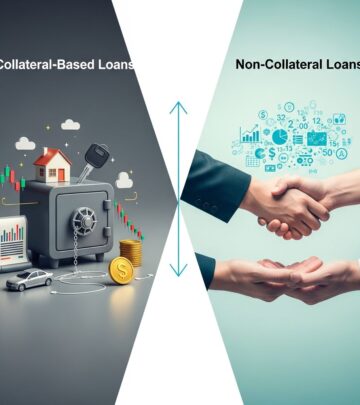
Secured vs. Unsecured Business Loans
| Feature | Secured Loan | Unsecured Loan |
|---|---|---|
| Collateral requirement | Backed by specific assets (e.g., real estate, equipment) | No specific asset pledged as collateral |
| Lender risk | Lower, because lender can seize pledged assets on default | Higher, because no asset is tied directly to the loan |
| Typical cost | Generally lower interest rates and fees | Often higher rates and fees to offset risk |
| Typical amounts | Larger amounts, often for long-term needs | Moderate amounts; some banks cap around $50,000–$100,000 |
| Approval speed | Slower, due to collateral valuation | Usually faster, fewer documents about assets |
Although unsecured loans do not require traditional collateral, many lenders still manage their risk through tools such as personal guarantees or blanket liens.
Pros and Cons of Business Loans Without Collateral
Before pursuing unsecured financing, weigh the advantages and trade-offs.
Benefits of No-Collateral Business Loans
- No specific assets at risk: You are not pledging a building, vehicle, or piece of equipment that the lender can repossess directly if you default.
- Faster approval and funding: Lenders do not need to order appraisals or analyze asset values, so underwriting is typically quicker, especially with online lenders.
- Flexible use of funds: Many unsecured loans can be used for working capital, payroll, inventory, marketing, or other business needs, as long as they are legitimate business expenses.
- Access for asset-light businesses: Service providers or online businesses that lack hard assets can still obtain financing if they show strong cash flow and credit.
- Build business credit: Making on-time payments can help build your business credit profile over time, improving future borrowing options.
Drawbacks and Risks to Consider
- Higher borrowing costs: Because unsecured loans are riskier for the lender, they often carry higher interest rates and additional fees compared with secured options.
- Personal guarantees and liens: Many lenders require owners with at least 20% ownership to sign a personal guarantee or accept a Uniform Commercial Code (UCC) lien on business assets, meaning your personal or business property can still be at risk indirectly.
- Lower maximum loan amounts: Banks and online lenders often cap unsecured loans at moderate amounts, such as up to $50,000 or $100,000, depending on your qualifications.
- Stricter credit requirements: Strong personal credit and stable revenue are often essential to qualify; startups and owners with poor credit may find approval difficult.
- Shorter repayment terms: Many unsecured products are designed for short- to intermediate-term needs, which can result in higher monthly payments.
Types of Small Business Loans That May Not Require Collateral
Multiple types of financing can be available without pledging specific collateral. Each option has different qualifications, costs, and ideal uses.
SBA Loans Without Collateral
The U.S. Small Business Administration (SBA) guarantees a portion of loans issued by partner lenders, reducing lender risk and often leading to more flexible terms for borrowers. While many SBA loans do require collateral, there are important exceptions and nuances.
- 7(a) loans: This is the SBA’s primary loan program, used for working capital, equipment, and business acquisitions. For loans of $50,000 or less under certain 7(a) options, the SBA does not require collateral, although lenders may still seek it if available.
- Collateral thresholds: For larger amounts, lenders are expected to take available collateral, but the SBA does not automatically decline an application solely for lack of sufficient collateral if the business is otherwise creditworthy.
- Personal guarantees: Owners with at least 20% ownership are typically required to personally guarantee SBA loans, meaning they are personally responsible if the business cannot repay.
Because SBA products combine government guarantees with bank underwriting, they can sometimes provide favorable rates and long repayment terms, even if traditional collateral is limited.
Bank Unsecured Term Loans
Some banks offer unsecured small business term loans that do not require specific collateral, especially for established customers. For example, certain banks advertise unsecured loans in the range of $10,000 to $100,000 with fixed terms up to several years.
Key characteristics typically include:
- Fixed loan amount and maturity date
- Level monthly payments of principal and interest
- No specific collateral requirement, though a personal guarantee may be required
- Eligibility based on time in business, revenue, and credit history
Unsecured Business Lines of Credit
An unsecured line of credit provides a revolving pool of funds you can draw on as needed, pay back, and reuse. Banks and some online lenders offer lines of credit without specific collateral for qualified businesses.
Typical uses include:
- Smoothing cash-flow gaps between payables and receivables
- Covering short-term working capital needs
- Managing seasonal fluctuations in demand
Lines of credit often require a strong credit profile and consistent revenue, but they can be more flexible than a one-time term loan.
Online Loans
Online lenders have become a major source of unsecured business loans, including short-term loans, lines of credit, and merchant cash advances. Many do not require specific collateral, but they may rely heavily on:
- Your personal credit score
- Business bank statements and cash-flow patterns
- Time in business (often at least 6–12 months)
These lenders often fund quickly—sometimes in a few days—but interest rates and fees can be higher than bank or SBA options. They may also require a personal guarantee or place a blanket lien on business assets.
Peer-to-Peer and Marketplace Lending
Peer-to-peer (P2P) lending and marketplace platforms connect borrowers directly with individual or institutional investors. Applications are usually completed online, and many loans are unsecured.
Considerations include:
- Rates and terms that vary widely based on creditworthiness
- Fast, fully digital application and approval processes
- Potentially higher costs compared with traditional banks
Alternative and Specialized Financing
Some financing products are technically secured but do not require you to pledge existing assets up front, making them viable for businesses lacking traditional collateral.
- Equipment financing: The equipment being purchased typically serves as its own collateral, so you do not need additional assets.
- Inventory financing: Lenders may use the inventory you are buying as collateral, which can help retailers and manufacturers access capital without other assets.
Requirements for Getting a Business Loan Without Collateral
Although lenders may not require traditional collateral, they will closely evaluate your ability and willingness to repay. Common requirements include:
1. Strong Personal Credit
Most unsecured lenders heavily weigh your personal credit score, especially for small businesses where the owner and the business are closely linked. A higher score signals a history of responsible borrowing and timely repayment.
- Excellent scores (often 700+) can compensate, to some extent, for limited collateral and may unlock better terms.
- Weaker credit may result in higher costs, smaller amounts, or denials.
2. Solid Business Financials and Cash Flow
Lenders want evidence that your business generates enough income to comfortably cover loan payments. They may review:
- Recent business bank statements
- Tax returns and financial statements (for larger loans)
- Average monthly revenue and profit margins
Consistent, verifiable cash flow is particularly important for unsecured funding since there is no specific asset to secure the loan.
3. Time in Business
Many unsecured products require a minimum operating history—commonly six months to two years—before approval. Longer operating history reduces perceived risk, especially if revenues have grown steadily.
4. Personal Guarantees
Even when collateral is not required, lenders often ask owners with a significant ownership stake to sign a personal guarantee. For SBA loans, personal guarantees from owners with at least 20% equity are standard.
By signing a personal guarantee, you agree that if the business cannot repay the loan, the lender can pursue your personal assets, subject to applicable laws.
5. Business Plan and Use of Funds
For some bank and SBA loans, especially larger amounts, you may need to present a detailed business plan explaining:
- How you will use the funds
- Projected financial performance
- Your market, competition, and strategy
A compelling plan can help persuade lenders to approve your application even when collateral is limited.
Tips to Improve Your Chances of Approval
If you are preparing to apply for a small business loan without collateral, the following actions can strengthen your position.
Check and Improve Your Credit
- Review your personal and, if applicable, business credit reports for errors and dispute inaccuracies.
- Pay down existing revolving debt to lower your credit utilization ratio.
- Make all payments on time for several months before applying to show current positive behavior.
Organize Financial Documentation
- Prepare recent bank statements, tax returns, and basic financial statements (profit and loss, balance sheet) if requested.
- Be ready to explain major fluctuations in revenue or expenses.
- Highlight recurring, predictable revenue streams, such as contracts or subscriptions.
Start with Your Existing Bank
If you maintain business accounts with a bank, it may offer a simplified application or relationship-based unsecured loan or line of credit. Existing transaction history can help that bank assess your risk more favorably.
Borrow Only What You Need
Smaller unsecured loans are easier to approve and may carry lower risk and cost. Estimate your financing needs carefully and avoid overborrowing.
Consider Hybrid Approaches
If you lack enough collateral for a fully secured loan, combining a modest collateral pledge with an SBA guarantee or partial unsecured structure may help you qualify while minimizing assets at risk.
Alternative Funding Options If You Cannot Qualify Yet
If you cannot yet meet the criteria for an unsecured business loan, you still have avenues to obtain capital, though each comes with trade-offs.
- Business credit cards: Often easier to obtain, can help manage smaller expenses and build credit, but interest rates are typically high if you carry balances.
- Vendor or supplier credit: Negotiating longer payment terms with suppliers can reduce your immediate cash needs.
- Crowdfunding: Equity or rewards-based crowdfunding allows you to raise funds from supporters without traditional loan repayment, but it requires marketing effort and compliance with platform rules.
- Equity investors: Angel investors or venture capital may provide funding in exchange for ownership; this dilutes your stake but does not create debt.
These alternatives can give you time to grow your business, improve your credit, and eventually qualify for more favorable bank or SBA financing.
Frequently Asked Questions (FAQs)
Q: Can I really get a small business loan with no collateral at all?
A: It is possible, particularly through unsecured bank loans, SBA loans below certain thresholds, and online lenders that do not require specific collateral. However, you may still be asked to sign a personal guarantee or accept a lien on business assets.
Q: Do SBA loans always require collateral?
A: SBA policy encourages lenders to take available collateral, especially for larger loans, but lack of adequate collateral is not by itself a reason for denial if the application is otherwise strong. For some smaller SBA 7(a) loans, collateral may not be required beyond a personal guarantee.
Q: What credit score do I need for an unsecured business loan?
A: Requirements vary by lender, but many banks and SBA lenders look for strong credit—often in the good to excellent range—while online lenders may accept somewhat lower scores in exchange for higher rates and fees.
Q: Are unsecured loans more expensive than secured loans?
A: Generally yes. Because lenders take more risk when they do not hold specific collateral, they often charge higher interest rates or additional fees on unsecured loans compared with similar secured products.
Q: How big of a loan can I get without collateral?
A: Many traditional lenders limit unsecured business loans to moderate amounts, such as up to $50,000–$100,000, depending on your revenue, credit score, and banking relationship. Online lenders may offer higher amounts but typically at higher cost.
References
- How To Get Small Business Loans Without Collateral — American Express. 2022-06-15. https://www.americanexpress.com/en-us/business/blueprint/resource-center/grow/how-to-get-small-business-loans-without-collateral/
- Unsecured Small Business Loan: No Collateral Needed — PNC Bank. 2024-01-10. https://www.pnc.com/en/small-business/borrowing/business-loans/unsecured-business-loan.html
- How to Get a Small-Business Loan Without Collateral — NerdWallet. 2024-05-20. https://www.nerdwallet.com/business/loans/learn/how-to-get-business-loan-without-collateral
- Simple Business Loan — Truist Bank. 2023-11-01. https://www.truist.com/small-business/loans/simple-business-loan
- Do You Need Collateral for SBA Loans? A Guide for Local Business Owners — Locality Bank. 2023-09-14. https://localitybank.com/resources/do-you-need-collateral-for-sba-loans/
- Loans — U.S. Small Business Administration. 2024-03-05. https://www.sba.gov/funding-programs/loans
- SBA Loan Collateral Requirements — First Business Bank. 2022-08-30. https://firstbusiness.bank/resource-center/collateral-requirements-sba-loans/
- Small Business Loans & Financing — Bank of America. 2024-02-16. https://www.bankofamerica.com/smallbusiness/business-financing/
- Types of 7(a) loans — U.S. Small Business Administration. 2024-04-01. https://www.sba.gov/partners/lenders/7a-loan-program/types-7a-loans
Similar Articles








Read full bio of medha deb