How to Get Rid of a Skunk Without Losing Your Dignity
Safe, humane strategies to evict skunks from your property and neutralize their stench without drama or danger.
Skunks are notorious for their potent spray, but they also pose health risks like rabies. This guide shares tested, humane methods to prevent skunks from settling on your property, evict them safely, and erase their lingering odor—drawn from real-world trials and reliable advice.
Confirming Skunk Presence
Before panicking, verify it’s a skunk. Skunks are nocturnal diggers attracted to grubs, insects, and shelter under sheds or decks. Use simple tests: sprinkle flour at burrow entrances at dusk and check for tracks by morning, or stuff loose brush into holes and inspect if disturbed overnight. Tracks confirm activity without confrontation.
Prevention: Keep Skunks Away Before They Move In
The best defense is deterrence. Skunks seek food, water, and dark, cozy spots. Eliminate these to make your yard unappealing:
- Secure garbage: Use tight-fitting lids and store bins in a garage. Skunks raid unsecured trash for easy meals.
- Remove food sources: Harvest ripe fruit promptly, cover compost piles, and avoid leaving pet food outdoors overnight.
- Eliminate grubs: Apply milky spore powder or beneficial nematodes to kill lawn grubs, a skunk’s favorite snack. Treat in spring or fall for long-term control.
- Block access: Install gravel borders around structures (skunks dislike digging through rocks) or bury chicken wire 3 feet deep around shed bases.
- Motion lights and noise: Install bright floodlights on timers or motion sensors; skunks avoid well-lit areas.
Combining these reduces appeal dramatically. Persistence pays off—skunks will seek easier locales.
Humane Removal Methods
If a skunk has dug in, act at night when it’s foraging. Never seal holes during the day to avoid trapping it inside, which could lead to desperate spraying.
Exclusion Techniques
The safest DIY start: confirm vacancy with the brush/leaf test, then fill the hole. Dig down 2-3 feet, line with chicken wire or hardware cloth bent outward in an L-shape to prevent re-digging, and backfill with soil, rocks, and sod. This one-way exclusion lets it leave but not return.
Repellents That Work
Homemade repellents exploit skunks’ sensitive noses. Apply around burrows and perimeters at dusk (reapply after rain):
- Ammonia-soaked rags: Place in perforated coffee cans near entrances. The fumes mimic predator urine.
- Cayenne pepper or predator urine: Sprinkle hot pepper flakes or buy coyote/fox urine from hunting stores.
- Commercial options: Products with capsaicin or essential oils like peppermint. Avoid mothballs—they’re toxic and illegal in many areas.
Rotate methods to prevent habituation. One user combined these with lights, evicting a skunk in weeks.
Trapping as a Last Resort
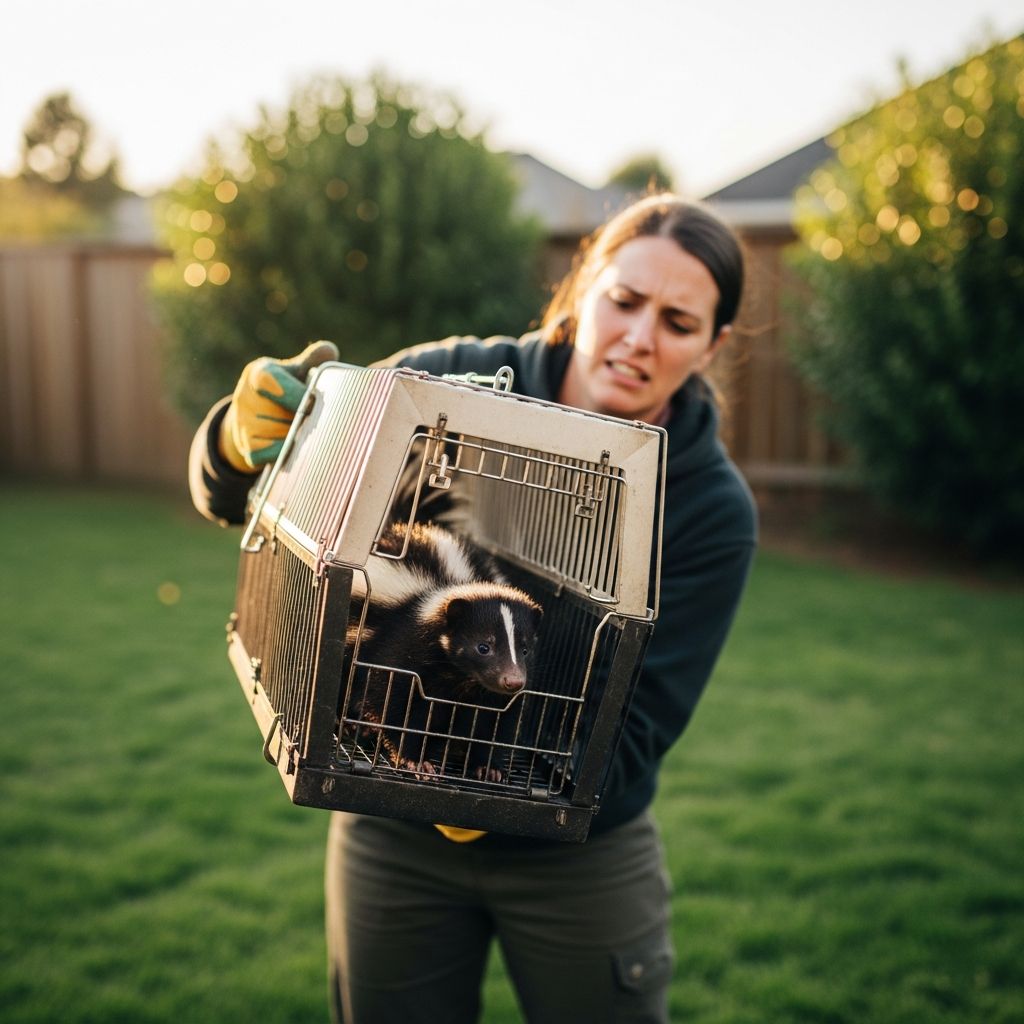
Live trapping works but risks spray or rabies. Use a sturdy raccoon-sized trap baited with fatty meats like bacon or canned fish. Place in shade near the den at night, cover with a towel to calm the animal, and check at dawn.
To release safely: transport to woods far from homes (check local laws), open away from your body, and cover again if it stamps its feet. Release immediately—stressed skunks spray.
Professionals charge $150+, but local wildlife services may relocate for free. Avoid if rabies signs appear: disorientation, aggression, foaming mouth, or seizures. Contact animal control immediately.
De-Skunking: Neutralize the Odor
Skunk spray contains thiols—volatile sulfur compounds that cling to everything. Tomato juice is a myth; it masks temporarily. Use chemistry-backed formulas:
Classic De-Skunk Recipe (For Pets, Clothes, Skin)
Mix fresh:
- 1 quart 3% hydrogen peroxide
- 1/4 cup baking soda
- 1-2 tsp dish soap (Dawn works best)
Wet the victim, apply, let sit 5-10 minutes (avoid eyes), rinse. Repeat if needed. Peroxide oxidizes thiols into odorless compounds. Air dry.
Alternative Vinegar-Peroxide Mix
For milder cases or surfaces: equal parts white vinegar and hydrogen peroxide. Saturate, let sit, rinse. Effective on fabrics and dogs’ faces (diluted).
Outdoor and Home Cleanup
| Surface | Treatment |
|---|---|
| Lawn/Furniture | Diluted peroxide solution; sun exposure helps break down residue |
| Concrete/Wood | Baking soda paste, then vinegar rinse |
| Fabrics | Wash with vinegar in hot water; add peroxide to rinse cycle |
| Eyes/Skin | Flush with cool water 15-20 min; mild soap after |
Ventilate areas and use fans. Odor fades in days with treatment.
Frequently Asked Questions (FAQs)
Can skunks climb fences?
Yes, but they prefer digging. Bury barriers 12-18 inches deep.
Is skunk spray toxic?
No, but causes nausea, temporary blindness, and intense smell lasting weeks untreated.
What if a rabid skunk is on my property?
Do not approach. Call animal control—rabies is fatal if untreated.
How long until the smell goes away?
With proper de-skunking, 1-3 days; untreated, up to months.
Will one skunk attract more?
Possibly, if entry points remain. Seal and repel post-removal.
My Recommendations
1. Prevent first: grub control, secure trash.
2. Confirm and exclude humanely.
3. Repel aggressively if needed.
4. Trap only if expert or pro helps.
5. De-skunk immediately with peroxide mix.
Call wildlife pros for safety—dignity intact.
References
- Humane Society: Raccoon, Skunk and Opossum Eviction and Exclusion Techniques — Humane Society. 2023-05-15. https://www.humanesociety.org/resources/raccoon-skunk-and-opossum-eviction-and-exclusion-techniques
- Skunk Odor Removal Guidelines — Centers for Disease Control and Prevention (CDC). 2024-08-20. https://www.cdc.gov/healthy-pets/skunks/index.html
- Wildlife Damage Management: Skunk Control — USDA Animal and Plant Health Inspection Service. 2025-02-10. https://www.aphis.usda.gov/wildlife-damage-management
- Deodorizing Skunk Spray — Cornell University College of Veterinary Medicine. 2023-11-05. https://www.vet.cornell.edu/departments-centers-and-institutes/riney-canine-health-center/canine-health-information/skunk-spray
Similar Articles








Read full bio of Sneha Tete