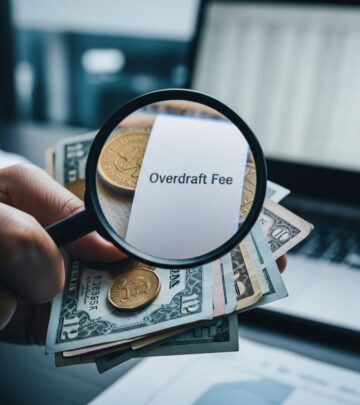
How To Get Overdraft Fees Refunded: 5 Proven Steps
Learn proven strategies to negotiate with your bank and successfully get overdraft fees waived or refunded on your account.

Overdraft fees can unexpectedly drain your bank account, often charging $30 to $35 per transaction when your balance goes negative. Banks approve these transactions despite insufficient funds, leading to stacked fees that add up quickly—sometimes hundreds of dollars in a single day. However, many customers successfully get these fees refunded through polite negotiation, goodwill gestures, or policy changes. This guide covers everything from understanding overdraft mechanics to effective scripts and long-term prevention strategies.
What Are Overdraft Fees?
An
overdraft fee
is a penalty your bank charges when a transaction exceeds your available balance, such as a debit card purchase, check, or ACH payment. Instead of declining the transaction, banks with overdraft protection approve it and charge a fee, typically $35 per item. Regulations since 2010 require banks to obtain opt-in consent for debit card and ATM overdrafts, but many accounts remain enrolled.Fees can occur multiple times daily: for example, four small purchases could trigger $140 in charges before you notice. Extended overdraft fees may apply if the balance stays negative, adding $5–$15 daily. Understanding this helps when requesting refunds, as first-time or one-off incidents are often waived.
- Standard fee: $30–$35 per overdraft item.
- Daily fees: Up to $15 if unresolved.
- Multiple per day: No cap on items in many banks.
Why Banks Charge Overdraft Fees
Banks profit significantly from overdraft programs, generating billions annually despite customer complaints. They reorder transactions from highest to lowest to maximize fees—a practice called ‘high-to-low posting’ now restricted in some states. Courtesy overdraft coverage is discretionary; banks can deny transactions without fees if opted out.
Post-2010 CFPB rules protect consumers by prohibiting automatic enrollment for non-check transactions. Yet, fees persist because customers overlook opt-outs or chase ‘free’ coverage that leads to penalties.
Steps to Get Your Overdraft Fees Refunded
Refunds aren’t guaranteed but succeed 70–80% of the time with persistence, especially for loyal customers. Act within 30–60 days, as policies vary.
- Review your statement: Confirm fees, dates, and transactions via app or online banking.
- Opt out immediately: Call or visit to disable overdraft protection (illegal to auto-enroll since 2010).
- Gather account history: Note direct deposits, average balance, and tenure to prove good standing.
- Contact the bank: Use phone (faster) or secure chat; avoid generic emails.
- Escalate if needed: Ask for supervisor or file CFPB complaint.
Sample Negotiation Script
Use this proven script, adapted from successful cases. Speak calmly and confidently:
You: Hi, I noticed an overdraft fee of $35 on my account ending in XXXX from [date]. I’ve been a customer for [X years/months] with consistent direct deposits and no prior issues. Could you please waive this as a one-time courtesy?
Rep: Let me check… Our policy doesn’t allow waivers.
You: I understand, but as a loyal customer, this is unusual for me. What can you do to help retain my business?
Rep: [Often escalates] I’ll check with my supervisor.
Success tip: Mention switching banks if denied—politely. Works for overdraft, ATM, and monthly fees.
What If the Bank Says No?
If initial denial occurs:
- Ask why: Note the reason (e.g., policy, repeat offender).
- Escalate: Request supervisor or branch manager.
- Write a dispute letter: Detail facts, attach statements; send certified mail.
- File complaints: CFPB.gov or state regulator (e.g., NY DFS).
- Switch banks: If fees recur, move to fee-free options.
Banks waive at discretion; no federal right to refund exists, but leverage increases odds.
How to Avoid Overdraft Fees Altogether
Prevention beats negotiation. Key strategies:
| Strategy | How It Works | Examples |
|---|---|---|
| Opt out of overdraft protection | Transactions decline instead of approve; no fees. | Bank of America, Chase: Call 800-number. |
| Link savings account | Transfers cover overdrafts for $10–$12 flat fee. | Better than $35/item. |
| Fee-free banks | No overdraft charges; ATM reimbursements. | |
| Alerts & apps | Low-balance notifications. | Venmo for P2P only; Mint for tracking. |
Enable alerts for $100 balance. Use payment apps cautiously—they can’t pay bills reliably.
Bank-Specific Policies (2026 Update)
Policies evolve; check directly:
- Wells Fargo: Waives first overdraft for good customers; $35 fee.
- Bank of America: ‘Courtesy pay’ opt-out; frequent waivers.
- Chase: Up to 3 waivers/year for Sapphire checking.
- Credit unions: Often lower fees ($20–$25), easier waivers.
TD Bank, Citizens: Known for fees but responsive to calls.
Frequently Asked Questions (FAQs)
What is an overdraft fee exactly?
A charge ($30+) when your account goes negative on approved transactions.
Can I get multiple fees refunded at once?
Yes, especially if first-time; use script for all.
How long to request a refund?
Within 60 days typically; sooner better.
Are overdraft fees illegal?
No, but auto-enrollment is since 2010.
What if I have repeated overdrafts?
Harder to waive; focus on prevention and account closure.
Legal Protections and Next Steps
CFPB oversees practices; Regulation E limits liability. For disputes, document everything. If denied a reasonable request, consider second-chance banking or online banks like Chime (no overdrafts). Building habits like budgeting prevents recurrence.
(Word count: 1678)
References
- How To Get Overdraft Fees Waived: Just Use My Scripts (+ tips) — I Will Teach You To Be Rich. 2023. https://www.iwillteachyoutoberich.com/get-bank-and-overdraft-fees-waived/
- Credit and Debt — New York Department of Financial Services (.gov). Accessed 2026. https://www.dfs.ny.gov/credit
- Denied for a bank account? Here’s what you should know — Consumer Financial Protection Bureau (.gov). 2023. https://www.consumerfinance.gov/about-us/blog/denied-bank-account-heres-what-you-should-know/
Similar Articles








Read full bio of medha deb