Get All Credit Card Benefits Without the Costs
Master the art of using credit cards for rewards, protections, and perks while avoiding interest fees and debt traps entirely.

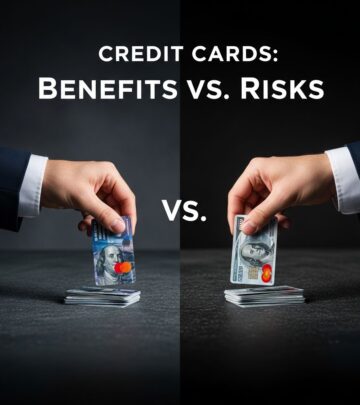
Credit cards offer incredible value when used correctly: cash back rewards, travel perks, purchase protections, extended warranties, and even free concierge services. However, these benefits come with hidden dangers like high interest rates and debt accumulation if mismanaged. The key is treating your credit card like a debit card—spending only what you can afford to pay off in full each month. This approach delivers all the upsides without any financial downsides. According to Federal Reserve data, average credit card interest rates exceed 20% APR, making full payment essential to avoid costs wiping out rewards.
Understand the True Value of Credit Card Benefits
Credit cards provide benefits that debit cards and cash cannot match.
Rewards programs
deliver 1-5% cash back on everyday purchases, while travel cards offer points redeemable for flights, hotels, and more. Visa Signature and Mastercard World Elite cards include perks like airport lounge access, travel insurance, and purchase protections covering theft or damage up to 90 days post-purchase.Purchase protections alone can save hundreds annually. For instance, if your new electronics fail within the warranty window, credit card issuers often extend coverage or reimburse costs—benefits absent from debit transactions. Building credit is another boon: responsible use boosts your FICO score, unlocking lower loan rates from lenders like banks and mortgage providers.
- Cash back: 2% average on groceries and gas across top cards.
- Travel rewards: Free flights worth $500+ yearly for moderate spenders.
- Protections: Zero liability for fraud, unlike some debit cards.
- Concierge: Booking assistance for dinners, events, and travel.
Yet, these perks require discipline. Behavioral studies show consumers spend 12-18% more with plastic due to ‘payment decoupling’—the mental separation of spending from immediate cash pain. Counter this by tracking expenses rigorously.
Pay Your Balance in Full Every Month—Without Fail
The golden rule:
Never carry a balance.
Credit card interest compounds daily at rates averaging 21.47% as of 2025, per Consumer Financial Protection Bureau (CFPB) reports. Paying in full avoids this entirely while earning grace periods of 21-25 days interest-free.Set up autopay for the full statement balance, not the minimum. This prevents late fees ($30-40 each) and APR spikes to 29.99%. CFPB data shows over 40% of cardholders carry balances, forfeiting rewards’ value. Use notifications for payment confirmations to build confidence, especially when rebuilding credit.
| Payment Method | Interest Cost (Annual on $1,000 Balance) | Rewards Earned (2% Card) | Net Gain/Loss |
|---|---|---|---|
| Full Payoff | $0 | $20 | +$20 |
| Minimum Only | $214 | $20 | -$194 |
Pro tip: Time large purchases near statement close for maximum grace period float, reimbursing expenses before due dates.
Choose the Right Card for Your Spending Habits
Not all cards are equal. Match rewards to your lifestyle: grocery-heavy spenders pick 6% back supermarkets cards; travelers select airline co-branded options. Review the
Schumer Box
—the standardized disclosure table—for APR, fees, and rewards details.Avoid annual fees unless perks exceed costs (e.g., $95 fee offset by $200+ travel credits). Top no-fee cards like Citi Double Cash offer 2% everywhere. For families, authorized users earn shared rewards without separate credit pulls.
- Everyday: Blue Cash Everyday (3% U.S. supermarkets).
- Travel: Chase Sapphire Preferred (60,000-point signup bonus).
- Gas/Groceries: Blue Cash Preferred (6% categories).
Compare via official issuer sites; ignore affiliate hype.
Set Up Alerts and Notifications to Stay in Control
Modern issuers provide alerts preventing oversights. Enable:
- Payment confirmation: Verifies receipt, aiding credit rebuilding.
- 30% utilization warnings: Keeps scores high (under 30% optimal).
- Low available credit: Avoids declines during emergencies.
- Transaction limits: Caps daily swipes, mimicking cash discipline.
- Weekly summaries: Tracks spending without daily logins.
These reduce fraud risk—notify immediately of suspicious charges for zero-liability protection. Apps like Mint integrate statements for real-time oversight.
Use the ‘Cash Diet’ Mentality with Your Credit Card
Treat plastic like cash: spend only available funds. Pre-fund envelopes or accounts matching card limits. This leverages ‘pain of payment’ psychology—recording each charge recouples cost to purchase joy, curbing impulse buys.
For big spends, calculate affordability first. Example: $500 gadget? Ensure $500 liquid post-purchase. Review statements weekly, not monthly, to spot creep early.
Maximize Rewards Without Churning or Gaming
Earn ethically: hit signup bonuses (e.g., 50,000 points after $4,000 spend in 3 months), then redeem optimally. Portal shop via issuer sites for 5-10x points on retail. Families pool points for free travel.
Avoid manufactured spending; focus on organic use. Redeem cash back as statement credits to lower effective costs further.
Protect Yourself with Credit Card Insurance Perks
Skip separate policies—cards cover:
- Extended warranty: +1 year on eligible items.
- Return protection: Reimburses non-returnables up $300/item.
- Travel accident insurance: Up to $500,000 coverage.
- Roadside assistance: Free tows via Visa/Mastercard.
Debit lacks these; always charge insurable purchases to cards.
Build Credit While Earning Rewards
Low utilization + on-time payments = score gains. Start small if new to credit. Add authorized user status on a parent’s strong card for instant boost without liability.
Frequently Asked Questions (FAQs)
Q: Can I really get free travel with credit cards?
A: Yes, moderate spenders ($2,000/month) earn flights/hotels worth $500+ yearly via points, without extra spending.
Q: What if I miss a full payoff once?
A: One slip triggers interest on new purchases only if autopay fails. Resume full payments immediately; use alerts to prevent.
Q: Are rewards worth it if I travel rarely?
A: Absolutely—flat 2% cash back cards outperform savings accounts (current 4% APY nets less after inflation).
Q: Debit cards better for debt avoidance?
A: Yes for high-risk users, but miss rewards/protections. Hybrid: credit for big buys, debit for daily.
Q: How to pick no-fee cards?
A: Check Schumer Box for 0% foreign fees, rewards rates. Government sites like CFPB compare transparently.
Conclusion: Debt-Free Credit Maximization
By paying full monthly, choosing wisely, and using alerts/tools, unlock $500-2,000 annual value risk-free. Start today: review your card, enable alerts, and commit to the cash mentality. Financial freedom awaits.
References
- Credit Cards vs. Debit Cards: A Comprehensive Comparison — Wise Bread. 2023-05-15. https://www.wisebread.com/credit-cards-vs-debit-cards-a-comprehensive-comparison
- Why We Spend More When We Pay With Credit Cards — Wise Bread. 2023-07-22. https://www.wisebread.com/why-we-spend-more-when-we-pay-with-credit-cards
- 9 Credit Card Notifications That Can Save You Money — Wise Bread. 2024-02-10. https://www.wisebread.com/9-credit-card-notifications-that-can-save-you-money
- Primer on VISA Signature Credit Cards — Wise Bread. 2022-11-08. https://www.wisebread.com/primer-on-visa-signature-credit-cards-all-the-benefits-that-come-with-your-card
- Consumer Credit Card Market Report — Consumer Financial Protection Bureau (CFPB). 2025-06-30. https://www.consumerfinance.gov/data-research/consumer-credit-trends/credit-cards/
Similar Articles








Read full bio of Sneha Tete