How to Get a Mortgage: A Step-by-Step Guide
Learn every step of the mortgage process, from checking your credit to closing on your new home with confidence.

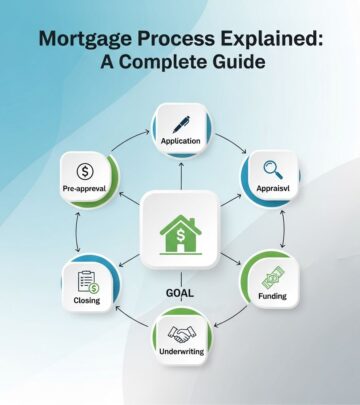
Buying a home is one of the biggest financial decisions most people will ever make, and securing the right mortgage is central to that journey. This step-by-step guide explains how mortgages work, what lenders look for, and how to move from early planning to closing with as little stress as possible.
What Is a Mortgage and How Does It Work?
A mortgage is a loan used to purchase or refinance a home, where the property itself serves as collateral. You agree to repay the amount borrowed (the principal) plus interest over a set term, often 15, 20, or 30 years.
Each monthly payment typically includes:
- Principal – the amount that reduces your loan balance.
- Interest – the cost of borrowing from your lender.
- Property taxes – often collected into an escrow account and paid by your lender.
- Homeowners insurance – also commonly escrowed and paid by your lender.
- Mortgage insurance – may be required if your down payment is below 20% on many loans.
If you fall behind on payments and default, the lender can foreclose and take possession of the home. This is why lenders carefully assess your finances before approving a mortgage.
Step 1: Check Your Credit and Financial Readiness
Before you apply, evaluate your overall financial health. Lenders rely heavily on your credit profile and income to determine if you qualify and at what rate.
Review Your Credit Report and Score
Your credit score is a three-digit number that summarizes your credit risk. Higher scores generally mean lower interest rates and a wider range of loan options.
- Request copies of your credit reports from the major credit bureaus.
- Look for errors such as incorrect accounts, late payments you never missed, or outdated negative information.
- Dispute any inaccuracies with the bureaus, providing documentation as needed.
Many lenders use a minimum score threshold, but government-backed programs like FHA loans often allow lower scores than conventional loans, subject to other requirements.
Evaluate Your Debt-to-Income Ratio (DTI)
Your debt-to-income ratio (DTI) compares your monthly debt obligations to your gross monthly income. Lenders use DTI to gauge whether you can comfortably handle a mortgage payment on top of existing obligations.
- Add up monthly debt payments (credit cards, car loans, student loans, personal loans, and estimated housing costs).
- Divide by your gross monthly income (before taxes).
- Many lenders look for a total DTI at or below about 43%, though some programs have flexibility.
Build Savings for a Down Payment and Closing Costs
Lenders and consumer finance agencies emphasize the importance of saving for both a down payment and closing costs.
- Down payment: Often ranges from 3% to 20% or more of the purchase price, depending on the loan type.
- Closing costs: Frequently total about 2%–5% of the loan amount, covering lender fees, appraisal, title work, and prepaid taxes and insurance.
- Cash reserves: Some lenders want to see extra funds left over after closing as a financial cushion.
Step 2: Understand Main Types of Mortgages
Choosing the right mortgage type can reduce your long-term costs and make payments more predictable.
| Loan Type | Key Features | Best For |
|---|---|---|
| Conventional | Not insured by government; often requires higher credit score and 3%–20%+ down payment. | Borrowers with solid credit and savings. |
| FHA | Insured by the Federal Housing Administration; allows lower down payments and more flexible credit requirements. | First-time buyers or those with limited savings or imperfect credit. |
| VA | Guaranteed by the U.S. Department of Veterans Affairs; often no down payment and limited closing costs. | Eligible veterans, active-duty service members, and some surviving spouses. |
| USDA | Backed by the U.S. Department of Agriculture; may offer zero down for qualifying rural or suburban properties. | Low- to moderate-income buyers in eligible areas. |
| Fixed-rate | Interest rate stays the same for the entire term; consistent monthly principal and interest. | Buyers wanting predictable long-term payments. |
| Adjustable-rate (ARM) | Initial fixed period followed by periodic rate adjustments; rate can move up or down within set limits. | Borrowers who expect to sell or refinance before the variable period has a large impact. |
Step 3: Get Prequalified or Preapproved
Before home shopping, it helps to understand how much you may be able to borrow.
Prequalification vs. Preapproval
- Prequalification: An informal estimate of how much you might borrow based on self-reported information. It is quick but not a firm commitment.
- Preapproval: A more formal review where the lender checks your credit and verifies income and assets, then issues a conditional approval and estimated loan amount.
A preapproval letter can make your offers more attractive to sellers because it signals you have already cleared an initial lender review.
Documents Commonly Needed for Preapproval
While exact requirements vary, lenders typically ask for:
- Government-issued photo ID (driver’s license or passport).
- Social Security number or taxpayer identification number.
- Recent pay stubs covering about 30 days.
- W-2 forms for the last two years.
- Recent bank statements and other asset account statements.
- Two years of federal tax returns for self-employed borrowers or those with complex income.
Step 4: Shop for Lenders and Compare Loan Offers
Mortgage rates and fees can vary significantly between lenders, so shopping around can save thousands over the life of your loan.
How to Compare Loan Estimates
Once you apply with one or more lenders, you will receive a standardized Loan Estimate that outlines key features and costs.
- Interest rate and whether it is fixed or adjustable.
- Annual Percentage Rate (APR), which reflects interest plus certain fees.
- Monthly payment amount, including estimated taxes and insurance.
- Closing costs and whether the lender offers credits or discounts.
- Prepayment penalties or balloon payments, if any.
Compare multiple offers on the same day if possible, because rates can change daily. Focus on total cost over time, not just the monthly payment.
Step 5: Prepare Your Mortgage Application
When you are ready to proceed with a specific property and lender, you will complete a full mortgage application and provide detailed documentation.
Information You Will Provide
- Personal details (name, Social Security number, date of birth, contact information).
- Residential history for the last two years.
- Employment and income history for the last two years.
- Details about assets, such as checking, savings, and retirement accounts.
- List of debts, including credit cards, auto loans, and student loans.
- Information about the property you are buying, including purchase price and address.
Core Documents Lenders Typically Require
Government-sponsored enterprises and major lenders publish mortgage document checklists that are widely used across the industry.
- Proof of identity: Government-issued photo ID and, if needed, proof of Social Security number.
- Proof of income:
- Recent pay stubs (usually last 30 days).
- W-2 forms for the past two years.
- Tax returns for the past two years for self-employed borrowers, those with rental income, or complex income streams.
- Profit and loss statements or business tax returns if self-employed.
- Proof of assets:
- Recent statements for checking and savings accounts.
- Statements for investment or retirement accounts if they are being used for funds to close.
- Other documentation (if applicable):
- Gift letter if someone is helping with your down payment.
- Divorce decree or child support documentation.
- Bankruptcy or foreclosure paperwork if relevant.
- Copy of lease or proof of rent payments.
Step 6: Home Appraisal, Inspection, and Underwriting
After you submit your application and sign initial disclosures, the lender begins verifying information and evaluating the property.
Home Appraisal
Lenders order an independent appraisal to estimate the market value of the property. This helps ensure the home is worth at least the amount of the loan.
- If the appraisal comes in low, you may need to renegotiate the purchase price, increase your down payment, or challenge the appraisal if you believe it contains errors.
Home Inspection
A home inspection is usually optional but strongly recommended. A licensed inspector evaluates the property for structural, mechanical, and safety issues. While the lender focuses on value, the inspection helps you decide whether the home is in acceptable condition and whether to request repairs or concessions from the seller.
Underwriting
Underwriting is the lender’s in-depth review of your application, documents, and the property. The underwriter checks that the loan meets internal guidelines and any applicable investor or agency standards.
- Verifies your income, employment, and assets.
- Reviews your credit report and credit scores.
- Analyzes your DTI and reserves.
- Reviews appraisal and title report for property-related risks.
The underwriter may issue conditions that you must satisfy before final approval, such as updated pay stubs or letters of explanation for specific items.
Step 7: Review the Closing Disclosure and Prepare to Close
Once underwriting is complete and all conditions are cleared, the lender issues a Closing Disclosure outlining your final loan terms and closing costs. In many jurisdictions, lenders are required to provide this document at least several days before closing so you have time to review it.
What to Check on Your Closing Disclosure
- Loan amount, interest rate, and whether the rate is fixed or adjustable.
- Monthly principal and interest payment, as well as estimated taxes and insurance.
- Total cash needed to close, including down payment and closing costs.
- Any lender credits, seller credits, or prepaid items.
- Whether there are any prepayment penalties or balloon payments.
Compare the Closing Disclosure to your initial Loan Estimate. Ask your lender to explain any differences you do not understand or did not expect.
Gather Items for Closing Day
On closing day, you will sign a stack of documents and pay your remaining funds to close, often by wire transfer or certified check.
- Bring your valid government-issued photo ID.
- Confirm final figures with your lender and closing agent in advance.
- Review key documents, such as the promissory note, mortgage or deed of trust, and closing statement, before signing.
Once everything is signed and funds are disbursed, the transaction records with the local authority and you become the official owner of the home.
Tips to Improve Your Chances of Mortgage Approval
- Stabilize your employment: Lenders generally prefer at least two years of consistent work history in the same field.
- Avoid new debt: Taking on new loans or large credit card balances can raise your DTI and hurt your credit score during the process.
- Keep funds documented: Large, unexplained deposits can delay underwriting. Maintain clear records for any non-payroll deposits.
- Respond quickly: Promptly provide any additional documents your lender requests to keep the process moving.
Frequently Asked Questions (FAQs)
Q: How long does the mortgage process usually take?
A typical mortgage process from application to closing often takes about 30 to 45 days, although timelines can vary based on the lender, loan type, and how quickly you provide documents.
Q: What credit score do I need to get a mortgage?
Many conventional mortgages require a higher credit score, while some government-backed loans such as FHA may approve borrowers with scores in the low- to mid-600s or below, depending on the lender and other factors. Exact requirements differ by program and lender.
Q: Can I get a mortgage with a small down payment?
Yes. Some conventional loans allow down payments as low as 3%, and certain government-backed loans, such as VA or USDA programs, may offer zero-down options for eligible borrowers and properties.
Q: What is private mortgage insurance (PMI)?
Private mortgage insurance is a policy that protects the lender if you default on a conventional mortgage with a small down payment. It is typically required when your down payment is less than 20% of the home’s value, and it is added to your monthly payment or paid upfront.
Q: Should I pay points to lower my interest rate?
Discount points are upfront fees paid to reduce your interest rate. They can make sense if you plan to stay in the home long enough to recoup the cost through lower monthly payments, but the decision depends on your time horizon and total savings compared with the upfront expense.
References
- Documents you need to apply for a mortgage — Fannie Mae. 2023-05-01. https://yourhome.fanniemae.com/buy/home-loan-documents
- Your 10-step guide to the mortgage loan process — Bank of America. 2024-01-10. https://www.bankofamerica.com/mortgage/learn/guide-to-the-mortgage-loan-process/
- Mortgage Application Checklist — Evolve Bank & Trust. 2022-08-15. https://www.getevolved.com/mortgage-application-checklist/
- Documents Needed for a Mortgage Loan: Your Complete Checklist — Waterstone Mortgage. 2020-03-18. https://www.waterstonemortgage.com/blog/mortgage-basics/2020/03/home-loan-documents
- Ultimate Mortgage Preapproval Checklist — Rocket Mortgage. 2023-06-12. https://www.rocketmortgage.com/learn/mortgage-preapproval-checklist
Similar Articles








Read full bio of Sneha Tete