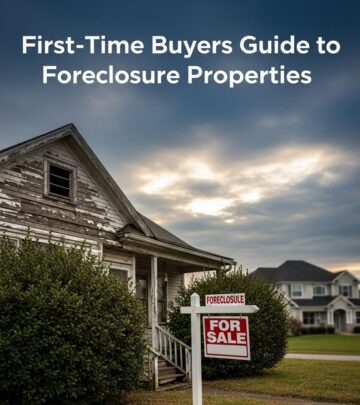
Finding Foreclosures and Government-Seized Homes
Discover multiple strategies to locate foreclosure properties and government-seized real estate opportunities.
Finding Foreclosures and Government-Seized Homes: A Comprehensive Guide
The real estate market offers numerous opportunities for savvy buyers willing to explore unconventional purchasing avenues. Foreclosures and government-seized properties represent significant opportunities for those seeking discounted homes or investment properties. Unlike traditional real estate transactions, these properties often sell below market value and can provide substantial savings for informed buyers. Understanding where and how to find these properties is essential for anyone interested in capitalizing on these opportunities.
Foreclosure properties emerge when homeowners default on their mortgages, while government-seized homes are acquired by federal agencies through various legal processes including tax violations, criminal forfeitures, or bank failures. Both types of properties represent legitimate investment opportunities that are openly marketed through multiple channels. This comprehensive guide explores the various methods available to locate these properties and navigate the purchasing process successfully.
What Are Foreclosures and Government-Seized Properties?
Foreclosures occur when a property owner fails to make mortgage payments, prompting the lender to reclaim the property. Banks then attempt to sell these properties quickly to recover their losses, often resulting in below-market prices. Government-seized properties, by contrast, are acquired by federal agencies through legal proceedings such as tax auctions, criminal forfeitures, or the resolution of failed financial institutions.
These properties vary widely in condition and location. Some are move-in ready, while others require significant rehabilitation. Understanding the distinction between pre-foreclosures, bank-owned (REO) properties, and government-seized homes helps buyers identify which opportunities align with their investment goals and capabilities.
Online Platforms and Real Estate Websites
Major Real Estate Portals
Several established real estate websites offer dedicated foreclosure search functions, making it easy to filter and identify distressed properties in your area. These platforms provide detailed information including property photos, pricing, and agent contact information. Zillow, for example, allows users to filter listings by type, including foreclosures and pre-foreclosures, with options to view both current listings and properties that may become available in the future.
Users can access these resources by visiting the websites, entering their desired search area, and utilizing the “Listing Type” or similar filtering features to narrow results to foreclosures. This method provides free access to multiple property listings and represents one of the most accessible entry points for casual buyers exploring the market.
Specialized Foreclosure Auction Platforms
Dedicated foreclosure auction websites operate as the nation’s largest online marketplaces for distressed properties. These platforms specialize in REO (real estate owned) and foreclosure properties, offering thousands of listings updated in real-time across all 50 states. These sites typically feature advanced search tools that allow buyers to filter by location, price range, property type, and other criteria. The registration and bidding process is streamlined, with transparent pricing and real-time bid tracking throughout the auction process.
Government Agency Listings
Federal Housing Administration and Fannie Mae
The Federal Housing Administration (FHA) and Fannie Mae maintain dedicated websites featuring foreclosed properties available for purchase. These government-backed entities have acquired properties through mortgage defaults and now offer them to the public through structured sales processes. Fannie Mae’s HomePath program specifically lists many single-family homes for sale across the United States, providing buyers direct access to properties without requiring traditional real estate agent involvement.
U.S. Department of Agriculture
The USDA Rural Development (USDA-RD) and Farm Service Agency (FSA) maintain a comprehensive website featuring single-family homes, multi-family properties, farms, and ranches available for purchase through the federal government. These properties become available through agricultural loan defaults and foreclosure proceedings. The USDA-RD/FSA Resales website provides a map-based search interface allowing buyers to refine searches by geographic location and property characteristics. Prospective buyers can explore properties by category—Single Family Housing, Multi-Family Housing, or Farm & Ranch—and then work with authorized real estate agents or brokers to submit offers.
U.S. Department of Housing and Urban Development
HUD Homes lists properties for auction throughout the United States, offering another avenue for federal property acquisition. The department has foreclosed on numerous properties backed by FHA insurance and now offers them to qualified buyers through a structured auction process. These properties often present exceptional value, particularly in specific geographic markets.
Treasury Department and Seized Property Auctions
The U.S. Department of the Treasury operates a comprehensive auction site advertising seized real property throughout the United States and Puerto Rico. These properties have been seized and forfeited due to violations of federal laws enforced by the Treasury Department, with participating enforcement agencies including the IRS-Criminal Investigations Division, Homeland Security Investigations, and the U.S. Secret Service. The Treasury Department has designated CWS Asset Management and Sales (CWSAMS) as the prime contractor responsible for maintaining and selling these seized and forfeited real properties. Property listings include single and multi-family residences, commercial and residential land, commercial buildings, warehouses, and operating businesses. All proceeds from property sales are deposited in the U.S. Treasury Asset Forfeiture Fund, which supports continued law enforcement efforts and provides restitution to crime victims.
General Services Administration
The GSA sells a wide variety of surplus federal real property to the public via competitive sales through the RealEstateSales.gov website. Properties can be located in any of the 50 states, the District of Columbia, Puerto Rico, the U.S. Virgin Islands, and U.S. Pacific Territories. The GSA also handles auctions through its dedicated auction site, offering real estate, land, and other government-owned excess property.
U.S. Marshals Service
The U.S. Marshals Service auctions seized homes, condominiums, commercial real estate, and land in the United States and Caribbean regions. These properties are seized through federal law enforcement actions and offered to the public through competitive auction processes.
Bank and Lender Websites
Many banks, particularly larger institutions, maintain dedicated sections on their websites listing foreclosed property inventory. These bank-owned (REO) property listings are typically searchable by state and city, with detailed information including prices, photographs, descriptions, and agent contact information for each property.
Additionally, banks often hire asset management companies to handle their foreclosure listings. Checking the websites of these asset management firms can reveal properties not yet broadly distributed through multiple listing services. This approach can provide a competitive advantage by identifying newly acquired properties before they reach wider circulation.
Public Records and Official Sources
County Recorder’s Office
Throughout the foreclosure process, various legal notices must be filed in the County Recorder’s Office. This information is public record and accessible to anyone at no cost. Prospective buyers can visit their county office to search for Notices of Default (NOD), lis pendens, or Notices of Sale. This approach offers two significant advantages: it’s completely free, and it may reveal newly posted properties that haven’t yet reached online foreclosure data providers, potentially providing a competitive advantage.
Newspaper Legal Notices
A requirement for filing a foreclosure is that the Notice of Sale be published in the local newspaper of record. Checking legal notices in your local paper can identify legitimate auction houses operating in your area. Once several companies are identified, checking their websites can reveal upcoming auctions and current listings, sometimes before properties appear on major online platforms.
Working with Real Estate Professionals
Foreclosure Specialists
Real estate agents who specialize in foreclosed properties possess valuable expertise and access to exclusive listings through the Multiple Listing Service (MLS)—a database to which consumers typically do not have direct access. These professionals can guide buyers through the complexities of foreclosure purchases, help evaluate properties, and negotiate on their behalf. Foreclosure specialists understand the unique aspects of distressed property transactions and can help ensure buyers avoid common pitfalls.
Direct Neighborhood Investigation
Touring neighborhoods and looking for real estate signs marked “Foreclosure” or “Bank Repo” provides opportunities to contact agents directly and inquire about other properties potentially coming to market. Agents responding to these inquiries often provide insider information about new foreclosures not yet widely listed, potentially allowing buyers to get a jump on the competition.
Understanding Government Agency Purchase Requirements
Government agencies implement varying requirements for purchasing seized and foreclosed properties. Most require buyers to work with authorized real estate agents, brokers, or servicing representatives to submit offers or bids. However, some government agencies accept offers directly from consumers without agent involvement, so it’s essential to review specific agency requirements before proceeding.
The purchase process typically involves property inspection periods, offer submission windows, and specific documentation requirements. Understanding these procedures before beginning your search ensures a smoother transaction and prevents delays or disqualification.
Comparison of Access Methods
| Access Method | Cost | Availability | Best For |
|---|---|---|---|
| Online Real Estate Portals | Free | Wide availability | Quick market exploration |
| Foreclosure Auction Sites | Free (with optional services) | All 50 states | Active auction participation |
| Government Agency Sites | Free | Varies by agency | Direct government purchases |
| Bank REO Sites | Free | Bank-dependent | Direct bank negotiations |
| Public Records Search | Free | Early market notice | Competitive advantage |
| Real Estate Agent | Usually commission-based | MLS access | Professional guidance |
Tips for Success in Foreclosure Purchasing
Conduct Thorough Due Diligence: Never purchase a foreclosure without professional property inspection. Many distressed properties require significant repairs not immediately visible.
Research Neighborhood Trends: Understand why foreclosures are occurring in specific areas. Economic downturns affecting local employment can impact future property values.
Review Financial Obligations: Investigate any outstanding liens, property taxes, or homeowner association fees that transfer with the property purchase.
Understand Auction Terms: Different platforms and agencies have varying auction rules, bidding processes, and closing timelines. Read all documentation carefully.
Secure Financing Pre-Approval: Many foreclosure auctions require proof of funds or pre-approval letters before bidding. Arrange financing before participating in auctions.
Frequently Asked Questions (FAQs)
Q: What is the difference between a foreclosure and a government-seized property?
A: Foreclosures result from mortgage defaults and are sold by lenders to recover losses. Government-seized properties are acquired by federal agencies through tax violations, criminal forfeitures, or failed bank resolutions.
Q: Can I purchase a foreclosure property without a real estate agent?
A: Yes, depending on the property type and seller. Many online auction platforms allow direct bidding. However, government agencies sometimes require agent involvement, so verify specific requirements before pursuing a property.
Q: Are foreclosure properties always below market value?
A: Typically, yes, but not always. Properties in desirable locations may receive competitive bids driving prices upward. Conduct market analysis to determine fair value before bidding.
Q: What financing options are available for foreclosure purchases?
A: Most conventional lenders offer foreclosure financing, though some properties may require cash-only purchases. FHA loans are available for HUD properties. Contact your lender about specific foreclosure property financing options.
Q: How long does the foreclosure purchase process typically take?
A: Timelines vary significantly. Direct sales may take 30-45 days, while auctions can be completed in days. Government property purchases typically require 45-90 days from successful bidding to closing.
Q: Can I inspect a foreclosure property before purchasing?
A: Inspection availability varies. Many foreclosures offer inspection periods before auctions conclude, typically 7-14 days. Always schedule inspections when possible to avoid purchasing properties with hidden defects.
Q: Are there any closing costs associated with government property purchases?
A: Yes, closing costs typically apply to all real estate purchases, including government properties. These may include title insurance, recording fees, and attorney fees. Budget 2-5% of purchase price for closing costs.
Q: What should I research before bidding on a foreclosure property?
A: Research the property’s condition, neighborhood trends, comparable sales, outstanding liens or taxes, insurance costs, and any homeowner association fees. This research helps establish maximum bidding limits and identify potential issues.
References
- How to Find a Foreclosure — Zillow. 2025. https://www.zillow.com/learn/finding-foreclosures/
- US Dept of the Treasury Seized Real Property Auctions — U.S. Department of the Treasury. 2025. https://www.treasury.gov/auctions/treasury/rp/
- REO and Foreclosure Properties — U.S. Department of Agriculture. 2025. https://properties.sc.egov.usda.gov/resales/public/home
- Real Estate Sales Home Page — General Services Administration. 2025. https://www.realestatesales.gov
- Auction.com: Real Estate Auctions for Foreclosures and Bank Owned Properties — Auction.com. 2025. https://www.auction.com
- Real Estate and Federal Lands for Sale by the Government — USAGov. September 18, 2025. https://www.usa.gov/real-estate-sales
- Government Auctions of Seized and Surplus Property — USAGov. September 18, 2025. https://www.usa.gov/auctions-and-sales
Similar Articles








Read full bio of medha deb