How to Fill Out a Money Order Step-by-Step
Master the complete process of filling out money orders correctly to avoid payment issues and ensure secure transactions.
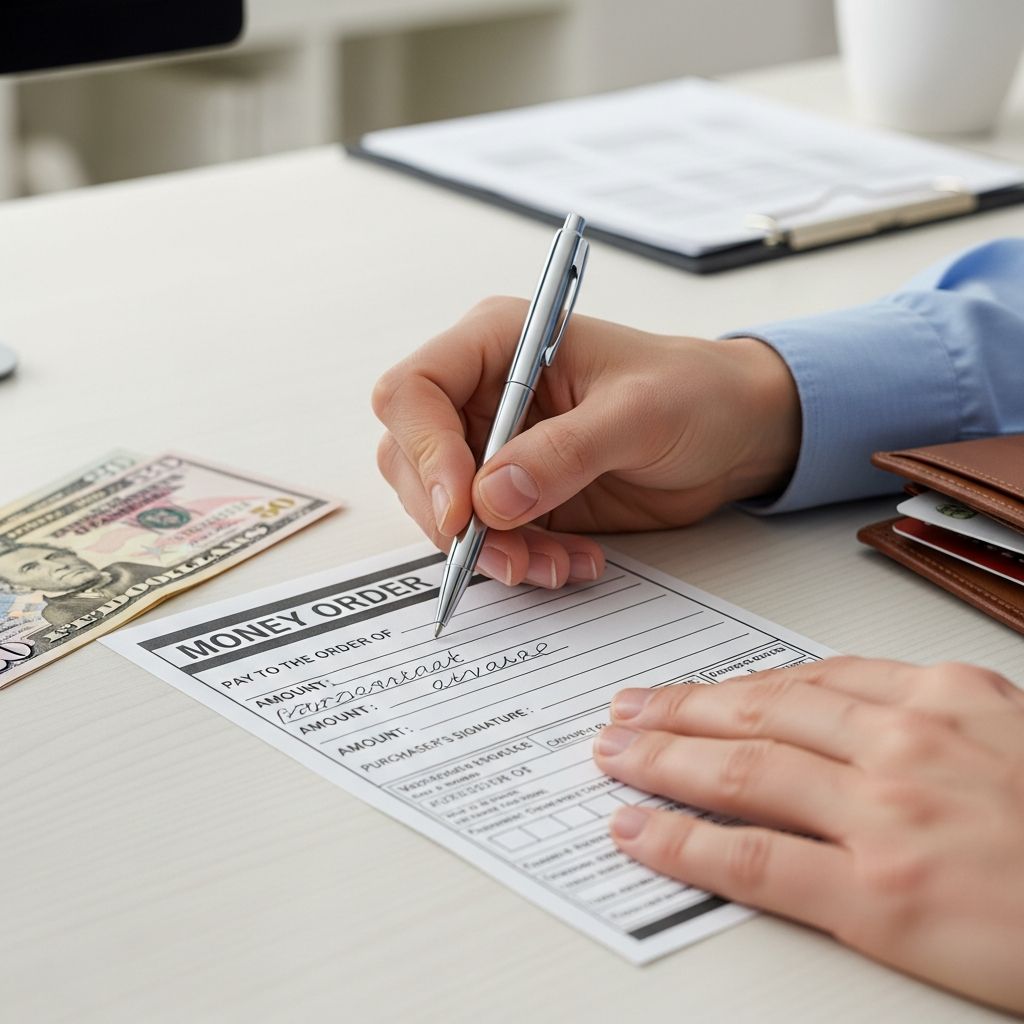
How to Fill Out a Money Order: A Complete Step-by-Step Guide
Money orders serve as a safe and secure alternative to cash when you need to send funds to another person or business. Unlike personal checks, money orders are prepaid instruments that guarantee the recipient will receive the funds, making them an ideal choice for various transactions. Whether you’re paying bills, sending money to family, or making a payment to someone you don’t know well, understanding how to properly fill out a money order is essential to ensure your payment reaches its intended destination without complications. This comprehensive guide will walk you through every step of the process, helping you navigate the requirements and avoid common mistakes.
Understanding What a Money Order Is
A money order is a paper form of payment that you purchase in advance with cash. It functions as a guaranteed payment instrument because you pay for it upfront, meaning the funds are already secured when you purchase it. This makes money orders fundamentally different from personal checks, which draw from your bank account at the time they’re cashed. Money orders are widely available at numerous locations including banks, credit unions, the U.S. Postal Service, retail stores, grocery stores, and convenience stores.
The primary advantage of money orders is that they cannot bounce because the funds are prepaid. This provides peace of mind to both the sender and recipient, knowing that the payment is guaranteed. Money orders are particularly useful for individuals without bank accounts, those making smaller payments, or anyone who wants an extra layer of security in their financial transactions.
Understanding Limits on Money Orders
Money orders have maximum dollar amounts you can purchase in a single transaction. These limits exist for important reasons: to reduce fraud risk and comply with anti-money laundering regulations established by federal authorities. Understanding these limits is crucial before you attempt to purchase a money order, as they will determine whether you need one or multiple money orders for your payment.
Different issuers maintain varying limits on their money orders:
- The U.S. Postal Service limits domestic money orders to $1,000 maximum, with international money orders capped at $700
- Western Union allows up to $1,000 per money order
- Walmart caps their money orders at $1,000
- Banks and credit unions often have similar limits, though some institutions may allow higher amounts for their customers
If you need to send more than the maximum limit, you have the option to purchase multiple money orders. However, it’s important to note that buying multiple money orders totaling over $3,000 in a single day may trigger additional reporting requirements under federal anti-money laundering laws. Be aware of this threshold if you’re planning a large money order transaction.
Money Order Costs and Fees
One of the advantages of money orders is their relatively low cost compared to other secure payment methods. You will typically pay a fee to buy a money order, and these fees vary based on the issuer and the amount of the money order. Generally, larger money orders will cost slightly more than smaller ones.
Here’s what you can expect to pay at different locations:
- U.S. Postal Service: $2.55 for money orders from $0.01 to $500, and $3.60 for money orders between $500.01 and $1,000
- Walmart: No more than $1 for any money order amount up to $1,000
- Wells Fargo: $5 for money orders in any amount up to $1,000
- Western Union: Starting at $1 depending on the amount
- Chase Bank, TD Bank, and U.S. Bank: $5 per money order
Overall, money orders typically cost between $1 and $10, making them an affordable option for secure payments. When comparing costs, the USPS and Walmart offer some of the most economical options, while bank-issued money orders tend to cost around $5.
Where to Purchase a Money Order
Money orders are conveniently available at multiple locations, giving you flexibility in where you choose to purchase one. Your best option depends on your specific circumstances and which location is most convenient for you.
Your Bank or Credit Union
If you have an account at a local bank or credit union, this is often your best place to obtain a money order. Getting your money order from your financial institution has several advantages: the bank can deduct the funds directly from your account, and you don’t need to carry large sums of cash to another location. This option is particularly convenient if you’re already banking with an institution. Some institutions may charge a small fee for issuing money orders, typically around $5.
U.S. Postal Service
The USPS offers money orders at post offices nationwide, making them extremely accessible for most people. They maintain competitive pricing and straightforward procedures for purchasing money orders. This is a reliable option if you prefer a government-backed issuer.
Retail and Grocery Stores
Many retailers and grocery stores offer money orders at customer service desks, often at very competitive rates. Walmart, in particular, offers some of the lowest fees in the industry at just $1 per money order. These locations provide convenience and quick transactions.
Convenience Stores
Many convenience stores and gas stations sell money orders, making them an accessible option if you need one quickly or outside regular banking hours.
Step-by-Step Guide to Filling Out Your Money Order
Now that you understand what money orders are, their limits, costs, and where to buy them, let’s walk through the actual process of filling one out correctly. Proper completion is critical to ensure your money order functions as intended and reaches the right recipient.
Step 1: Obtain Your Money Order
Visit your chosen provider and purchase your money order. You’ll need to pay the face value of the money order plus the issuer’s fee in cash. For example, if you want a $500 money order at the USPS, you’ll pay $502.55 total ($500 plus $2.55 fee). The issuer will provide you with a blank money order form.
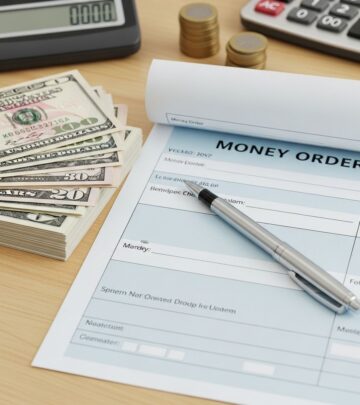
Step 2: Fill in the Recipient’s Information
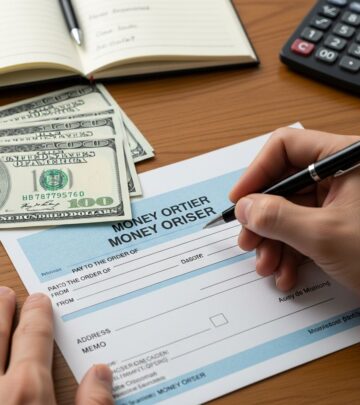
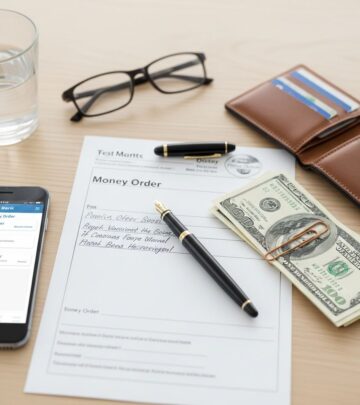
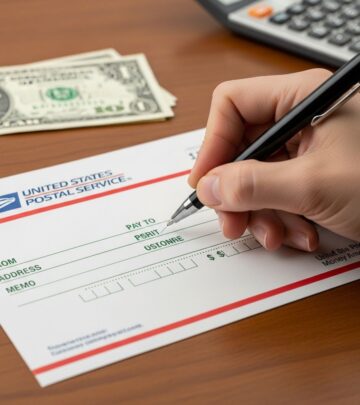
This is one of the most important fields on your money order. In the “Pay to the Order of” field, write the recipient’s full name clearly and legibly. Use permanent ink and write in print rather than cursive for clarity. Double-check the spelling of the name to ensure the money order can be easily identified and cashed by the correct person. Do not leave this field blank, as it’s essential for the money order to be valid.
Step 3: Enter the Amount
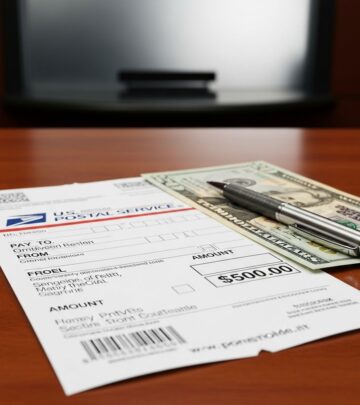
Write the amount of the money order in both numerical and written form. The numerical amount should go in the box labeled “Amount,” while you’ll write out the amount in words on the line provided. For example, if sending $250, write “250.00” in the box and “Two Hundred Fifty Dollars” on the written line. Make sure these amounts match exactly to avoid confusion or rejection of the money order.
Step 4: Sign the Money Order
Sign the money order in the designated signature line. Your signature verifies that you authorized this payment and purchased the money order legitimately. Never sign a blank money order, as this could allow someone else to complete it fraudulently.
Step 5: Include Additional Information (Optional)
Many money order forms include a memo or account number field. If necessary, you can include a memo with the payment (for example, “Rent for November”) or an account number if required by the recipient. This information helps the recipient organize and track their payments more effectively. While optional, this can be helpful for both parties to maintain organized records.
Step 6: Keep Your Receipt
The issuer will provide you with a receipt that contains a tracking number. Save this receipt carefully, as it allows you to track your money order and obtain a replacement if the original is lost or stolen. Keep the receipt until you have confirmation that the recipient has received and cashed the money order.
Important Considerations Before Sending Your Money Order
Before you send your completed money order, take a moment to review it for accuracy. Check that the recipient’s name is spelled correctly, the amount is accurate, and all signatures are in place. Any errors could result in the money order being delayed or returned. If you make a mistake, most issuers will allow you to void the money order and issue a new one, though there may be fees involved.
Ensure that all fields are completed in permanent ink and are legible. Write clearly and avoid using markers or pencils, as these can be altered or fade over time. Some institutions may refuse to accept a money order with illegible information.
How to Send Your Money Order
Once your money order is properly filled out, you have several options for getting it to the recipient. You can mail it directly through the postal service, deliver it in person, or use a courier service depending on the urgency and your preference. When mailing a money order, consider using tracking or insurance services for added protection.
Money Orders vs. Other Payment Methods
Money orders offer distinct advantages compared to other payment methods. Unlike personal checks, they cannot bounce and are backed by prepaid funds. Compared to cashier’s checks, money orders are more widely available and typically cost less, though they have lower maximum amounts. Cashier’s checks are better for large transactions over $1,000, while money orders work well for smaller payments under $1,000.
Frequently Asked Questions
Q: What happens if I make a mistake filling out a money order?
A: If you make an error, contact the issuer immediately with your receipt and tracking number. Most will void the original money order and issue a replacement, though there may be a small fee or processing time involved.
Q: Can I cancel a money order after I’ve purchased it?
A: Yes, you can typically cancel a money order if it hasn’t been cashed yet. Contact the issuer with your receipt and tracking information to initiate the cancellation process. You may receive a refund, though there could be a cancellation fee.
Q: What should I do if my money order is lost or stolen?
A: If your money order is lost or stolen, contact the issuer immediately with your receipt and tracking number. They can typically place a stop on the money order and issue a replacement, though this process may take several weeks.
Q: Can I use a money order internationally?
A: Yes, but international money orders have lower limits ($700 with USPS) and higher fees. Check with your issuer for international options and requirements, as they may have specific restrictions or procedures for international transfers.
Q: Do I need a bank account to purchase a money order?
A: No, you don’t need a bank account. Money orders can be purchased with cash at retail stores, the post office, or other locations, making them accessible to everyone regardless of banking status.
Q: How long does it take for a money order to clear?
A: Money orders typically clear quickly, usually within a few business days. The exact timeframe depends on the recipient’s bank and how quickly they deposit it. Government agencies and banks may have faster clearing times.
Q: Can I buy a money order with a credit card?
A: Most issuers only accept cash for money orders. While some retailers may allow credit card purchases, your credit card issuer will likely classify it as a cash advance, which comes with higher fees and interest rates that begin accruing immediately.
Best Practices for Money Order Safety
To ensure your money order transaction is secure and successful, always obtain your money order from a reputable provider. Verify that you’re purchasing from an authorized issuer, not from a scammer. Never leave money order blanks unattended after purchase, as anyone could complete them. Store your receipt in a safe place and track your money order until you have confirmation it has been received and cashed.
Conclusion
Money orders remain a reliable and secure payment method for various financial transactions. By following this step-by-step guide and understanding the important details about limits, costs, and proper completion procedures, you can confidently use money orders for your payment needs. Remember to fill out all required fields clearly and legibly, keep your receipt for tracking purposes, and verify all information before sending. Whether you’re paying bills, sending money to family, or making a payment to an unfamiliar recipient, properly filled-out money orders provide guaranteed payment and peace of mind for both parties involved in the transaction.
References
- How To Fill Out A Money Order Step-By-Step — Bankrate. 2025. https://www.bankrate.com/banking/how-to-fill-out-a-money-order/
- Where to get a money order: Best places to purchase one — Bankrate. 2025. https://www.bankrate.com/banking/where-to-get-money-order/
- Cashier’s Check vs. Money Order: What’s The Difference? — Bankrate. 2025. https://www.bankrate.com/banking/cashiers-check-vs-money-order-what-is-the-difference/
- Can you buy a money order with your credit card? — Bankrate. 2025. https://www.bankrate.com/credit-cards/advice/how-to-buy-money-order-with-credit-card/
- What Is a Money Order and How Does It Work? — Experian. 2025. https://www.experian.com/blogs/ask-experian/what-is-money-order/
- U.S. Postal Service – Money Orders — United States Postal Service. 2025. https://www.usps.com/
- Federal Regulations on Financial Transactions — Financial Crimes Enforcement Network (FinCEN), U.S. Department of Treasury. 2024. https://www.fincen.gov/
Similar Articles








Read full bio of Sneha Tete