How to File for Bankruptcy: Complete Step-by-Step Guide
Navigate the bankruptcy filing process with our comprehensive guide covering all essential steps and requirements.

How to File for Bankruptcy: Your Complete Guide to Financial Fresh Start
Bankruptcy can provide a legal pathway to manage overwhelming debt and gain financial relief when other options have been exhausted. Understanding the bankruptcy filing process is crucial for anyone considering this significant financial decision. Whether you’re drowning in credit card debt, medical bills, or other financial obligations, this comprehensive guide will walk you through the entire process of filing for bankruptcy and help you understand your options.
Filing for bankruptcy is a formal legal process that allows individuals and businesses to either eliminate or restructure their debts. The process requires careful preparation, understanding of legal requirements, and completion of numerous forms. While the process may seem daunting, thousands of individuals successfully navigate bankruptcy filing each year, and with proper guidance and organization, you can too.
Understanding Your Bankruptcy Options
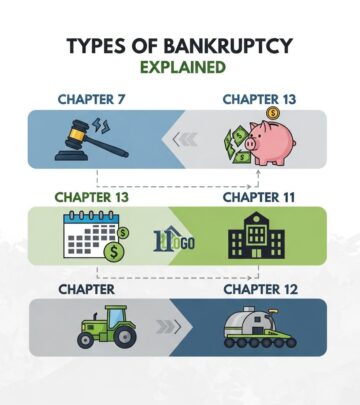
Before beginning the filing process, it’s essential to understand the different types of bankruptcy available to individuals. The two most common chapters for personal bankruptcy are Chapter 7 and Chapter 13, each offering different advantages and requirements.
Chapter 7 Bankruptcy
Chapter 7 bankruptcy, also known as liquidation bankruptcy, involves the sale of your non-exempt assets to pay creditors. This chapter is typically used by individuals with limited income who cannot afford to repay their debts. Chapter 7 bankruptcy can eliminate most unsecured debts, including credit card debt, medical bills, and personal loans. The process typically takes three to six months from filing to discharge. However, Chapter 7 bankruptcy will appear on your credit report for up to 10 years, significantly impacting your ability to obtain future credit.
Chapter 13 Bankruptcy
Chapter 13 bankruptcy, known as reorganization bankruptcy, allows individuals with regular income to create a repayment plan lasting three to five years. This chapter is ideal for those who want to keep their assets while restructuring their debts into manageable monthly payments. Chapter 13 bankruptcy is particularly useful for homeowners facing foreclosure or individuals with significant income who can afford to repay at least a portion of their debts. Once your repayment plan is successfully completed, remaining eligible debts are discharged. Chapter 13 bankruptcy remains on your credit report for seven years, which is shorter than Chapter 7.
Step-by-Step Guide to Filing for Bankruptcy
Step 1: Gather Your Financial Documents
The first step in filing for bankruptcy is assembling all necessary financial documentation. This step is crucial as it provides the court with a complete picture of your financial situation and determines your eligibility for bankruptcy protection.
You’ll need to collect the following documents:
– Tax returns for the past two years- Pay stubs or proof of income from the last six months- Recent bank account statements- Retirement account or brokerage account statements- Valuations or appraisals of any real estate you own- Copies of vehicle registration documents- Documentation of all debts and creditors- Information about your monthly expenses
Having these documents organized and readily available will streamline the entire filing process and help ensure accuracy in your bankruptcy petition.
Step 2: Complete Required Credit Counseling
Before filing for bankruptcy, you must complete a mandatory credit counseling course from an approved provider. This requirement applies to all individuals filing for bankruptcy and is designed to help you understand your financial situation and explore alternatives to bankruptcy. The credit counseling course typically takes one to two hours and can be completed online, over the phone, or in person. You’ll receive a certificate upon completion, which must be included with your bankruptcy filing.
Step 3: Complete Required Bankruptcy Forms
Filing bankruptcy requires completing more than 20 required forms, with some forms spanning multiple pages. Your complete bankruptcy petition may total up to 70 pages. These forms require detailed information about your income, expenses, assets, debts, and financial history.
The bankruptcy forms ask you to disclose:
– All sources of income- Monthly living expenses- Complete list of assets and their values- Complete list of debts and creditors- Information about your bankruptcy chapter selection- Whether you’re filing pro se (on your own) or with attorney representation
If you hire a bankruptcy attorney, they will complete these forms based on information you provide. If you cannot afford an attorney but lack confidence in completing the forms yourself, you may qualify for free bankruptcy filing tools or legal aid services in your area.
Step 4: Pay Your Filing Fee
The filing fee for Chapter 7 bankruptcy is $338, while Chapter 13 bankruptcy has a $313 filing fee. These fees are typically due when you file your bankruptcy petition with the court. If you cannot afford the filing fee, you have options. You can apply to pay the fee in installments, making up to four monthly payments spread over several months. Additionally, you may qualify to have your filing fee waived entirely if you meet income requirements.
Step 5: Print and Review Your Forms
Once you’ve completed your bankruptcy forms, you must print them single-sided on white paper. The court will not accept double-sided printing. After printing, carefully review all forms for accuracy and completeness. Any errors or omissions can delay your case or result in dismissal. You’ll need to sign all required forms in front of a notary public. Gather the following for your court filing:
– Original petition forms with your signatures- Any required local forms specific to your jurisdiction- Copies of supporting documentation- Proof of credit counseling completion- Filing fee or fee waiver application
Step 6: File Your Forms with the Bankruptcy Court
Take your prepared bankruptcy forms to your local bankruptcy courthouse during business hours. You’ll pass through security screening before entering the clerk’s office. Inform the clerk that you’re filing for bankruptcy and provide them with your forms and filing fee or fee waiver application. The clerk will process your case by scanning your documents and uploading them to the court’s online filing system, typically taking no more than 15 minutes.
Once processing is complete, the clerk will provide you with:
– Your bankruptcy case number- The name of your assigned bankruptcy trustee- The date, time, and location of your 341 meeting (meeting of creditors)
Step 7: Mail Documents to Your Trustee
After filing, you must mail additional documents to your assigned bankruptcy trustee within specific deadlines. These documents provide the trustee with detailed information about your financial situation and assets. The trustee uses this information to administer your bankruptcy case and ensure compliance with bankruptcy law.
Step 8: Complete Financial Management Course
Before your debts can be discharged, you must complete a financial management course from an approved provider. This course, also called debtor education, teaches you budgeting, money management, and credit rebuilding strategies. Like the initial credit counseling course, this can be completed online, by phone, or in person, and typically takes one to two hours. You’ll receive a certificate proving completion.
Step 9: Attend Your 341 Meeting
The 341 meeting, formally called the meeting of creditors, is a required meeting between you, your trustee, and creditors. This meeting typically occurs 40-60 days after your bankruptcy filing. The trustee will ask questions about your finances, assets, and debts to verify the information in your bankruptcy petition. Creditors rarely attend these meetings, but they have the right to do so. You must bring proper identification and may be asked to provide additional documentation. After attending this meeting, your case moves closer to final discharge.
Step 10: Receive Your Discharge
Upon successful completion of all requirements, you’ll receive a discharge order from the court. This order legally eliminates qualifying debts in Chapter 7 bankruptcy or confirms your Chapter 13 repayment plan. For Chapter 7, discharge typically occurs two to three months after your 341 meeting. For Chapter 13, discharge occurs after you complete your three to five-year repayment plan and fulfill all plan requirements.
Filing Without an Attorney: Pro Se Filing
Individuals can file bankruptcy without an attorney, a process called filing pro se. While this option saves on attorney fees, it requires careful preparation and thorough understanding of bankruptcy law, federal rules of bankruptcy procedure, and local court rules. The United States Courts website and local bankruptcy courts provide extensive information and forms to assist pro se filers.
Pro se litigants are expected to follow all court rules and procedures just as attorneys must. However, court employees and judges are prohibited by law from offering legal advice to pro se filers. You must familiarize yourself with applicable laws, rules, and procedures before filing. Check your court’s website for local forms and requirements, as many courts require completion of additional local forms beyond the standard federal forms.
Costs Associated with Bankruptcy Filing
Beyond the filing fees, bankruptcy involves several other potential costs to consider. Attorney fees for Chapter 7 bankruptcy typically range from $1,000 to $2,500, while Chapter 13 attorney fees often exceed $2,500 and vary based on case complexity and location. Credit counseling and financial management courses may cost $25 to $50 each, though many approved providers offer these courses at reduced rates for low-income individuals. Document copying and notarization may add additional expenses. However, numerous free resources exist, including legal aid organizations and nonprofit bankruptcy assistance programs that provide free or reduced-cost filing assistance to qualifying individuals.
Important Considerations Before Filing
Bankruptcy should be considered carefully as it has long-term financial and legal consequences. Filing bankruptcy will significantly impact your credit score and ability to obtain future credit, loans, or mortgages. However, for those with overwhelming debt, the fresh start and debt relief provided by bankruptcy may outweigh the credit impact. Consider meeting with a bankruptcy attorney or credit counselor to evaluate whether bankruptcy is appropriate for your situation or whether alternatives like debt consolidation, debt settlement, or credit counseling might better serve your needs.
Frequently Asked Questions About Bankruptcy Filing
Q: Can I file for bankruptcy without an attorney?
A: Yes, you can file pro se (on your own), though it requires understanding bankruptcy law and court procedures. Many people successfully file without attorneys, but seeking legal guidance is recommended, especially for complex cases.
Q: How much does it cost to file for bankruptcy?
A: The filing fee for Chapter 7 is $338 and for Chapter 13 is $313. Attorney fees vary but typically range from $1,000 to $2,500 or more depending on complexity. You can request to pay the filing fee in installments.
Q: How long does the bankruptcy process take?
A: Chapter 7 bankruptcy typically takes three to six months from filing to discharge. Chapter 13 bankruptcy takes three to five years to complete the repayment plan.
Q: What debts can be eliminated through bankruptcy?
A: Most unsecured debts like credit cards, medical bills, and personal loans can be eliminated in Chapter 7. Student loans, child support, and recent taxes are generally not dischargeable.
Q: How long will bankruptcy appear on my credit report?
A: Chapter 7 bankruptcy remains on your credit report for 10 years, while Chapter 13 remains for 7 years. During this time, obtaining credit will be more difficult.
Q: What is the 341 meeting?
A: The 341 meeting, or meeting of creditors, is a required meeting between you, your trustee, and creditors where the trustee asks questions about your finances and verifies information in your petition.
References
- How To File Bankruptcy for Free: A 10-Step Guide — Upsolve Legal Aid Organization. 2025. https://upsolve.org/learn/how-to-file-bankruptcy/
- Filing Without an Attorney — United States Courts. 2025. https://www.uscourts.gov/court-programs/bankruptcy/filing-without-attorney
- Bankruptcy Overview — United States Courts Bankruptcy Judges Division. 2025. https://www.uscourts.gov/court-programs/bankruptcy
- How to Build Credit After Bankruptcy — Money Magazine. 2025. https://money.com/how-to-build-credit-after-bankruptcy/
- Debt Relief vs. Bankruptcy: Which Is Right for You? — Money Magazine. 2025. https://money.com/debt-relief-vs-bankruptcy/
- Bankruptcy Forms — United States Courts. 2025. https://www.uscourts.gov/how-do-i/file-bankruptcy
Similar Articles








Read full bio of Sneha Tete