How To File A Pet Insurance Claim: Step-By-Step Guide
Learn how to file a pet insurance claim step by step, avoid delays, and maximize your reimbursement for your dog or cat’s vet bills.
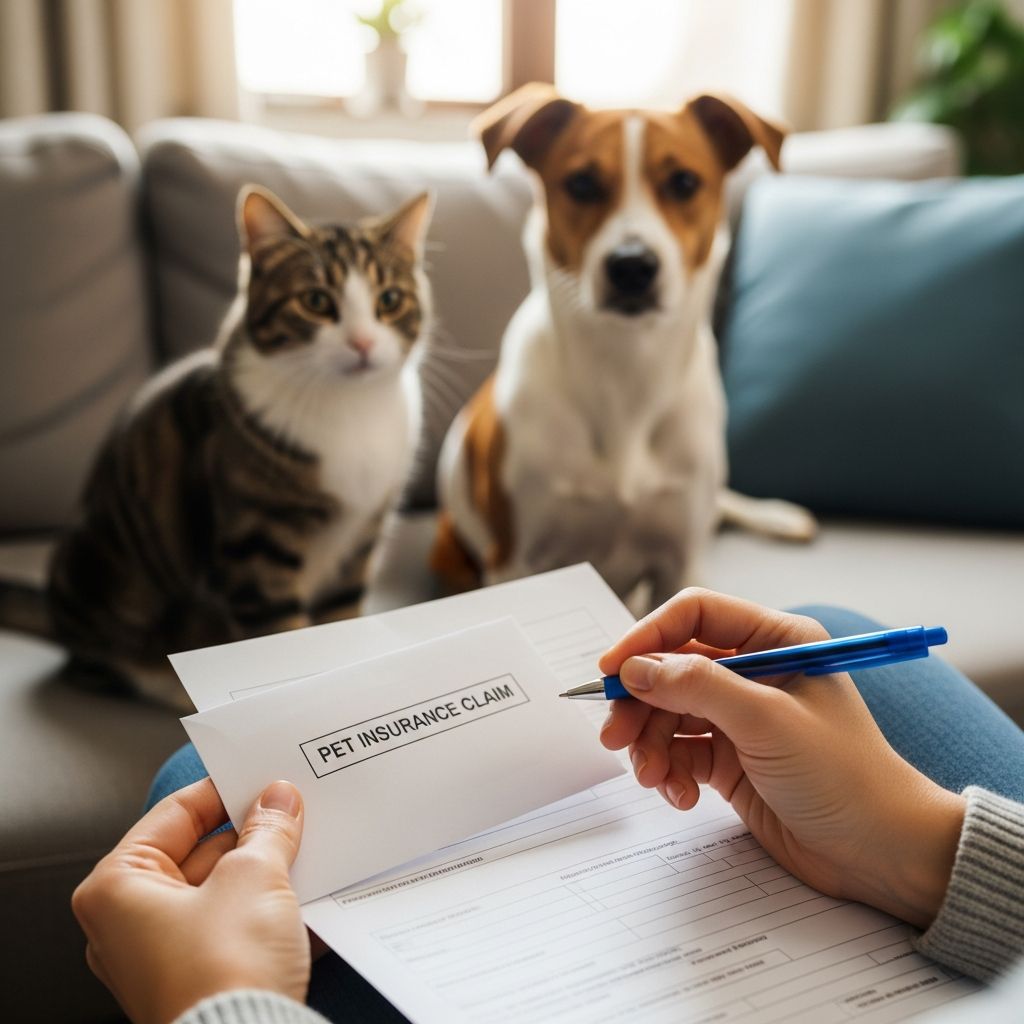
When your dog or cat needs veterinary care, the last thing you want is confusion over how to get reimbursed by your pet insurance. A clear understanding of the claims process can help you move quickly, avoid mistakes, and get money back in your account as soon as possible.
This guide walks you through how pet insurance claims work, what to do before and after a vet visit, how to submit your claim correctly, and what to expect while you wait for reimbursement.
Understanding How Pet Insurance Claims Work
Most pet insurance policies in the US work on a reimbursement model: you pay the veterinary bill up front, then file a claim to have the insurer repay part of the cost, depending on your deductible, reimbursement rate, and coverage limits.
| Step | What Typically Happens |
|---|---|
| 1. Vet visit | Your pet is examined or treated, and you receive an itemized invoice. |
| 2. You pay the bill | You usually pay the full amount directly to the vet clinic at checkout. |
| 3. You file a claim | You submit a claim form plus supporting documents (invoice, medical records, etc.) to your insurer. |
| 4. Insurer reviews claim | The company checks coverage, waiting periods, and pre-existing conditions using your pet’s medical history. |
| 5. Reimbursement | If approved, the insurer reimburses you via direct deposit or check, minus any deductible and co-insurance. |
A few companies can pay participating veterinarians directly at checkout, which means you may not need to pay the full bill up front, but you still must authorize or review the claim information.
Key Things to Know Before You File a Claim
Before you even open your insurer’s app or portal, it helps to understand a few terms and rules that affect whether your claim will be paid.
Waiting Periods
Most pet insurance policies have a waiting period, which is the time between when the policy starts and when coverage actually begins. During this period, illnesses or injuries generally are not eligible for reimbursement.
- Waiting periods can differ for accidents, illnesses, and certain orthopedic conditions.
- If treatment happens before the waiting period ends, related claims may be denied.
- Always confirm the exact dates in your policy documents before scheduling non-urgent procedures.
Pre-Existing Conditions
Pet insurance usually excludes pre-existing conditions — illnesses or injuries that showed signs or were diagnosed before coverage began or during the waiting period.
- Insurers review your pet’s medical history to determine if a condition is pre-existing.
- Some providers distinguish between curable and incurable pre-existing conditions; curable issues may become eligible again after a symptom-free period, depending on the policy.
Medical Records and Exams
Most insurers require access to veterinary records to process claims and verify coverage.
- Policies often require a recent exam (for example, within the last 12 months) before or shortly after enrolling.
- Having comprehensive records ready can speed up the first claim, which may otherwise take longer to process while the insurer gathers history from your vets.
Claim Filing Deadlines
Every policy sets rules about how long you have to file after treatment.
- Deadlines might range from 90 to 180 days, or longer, depending on the company and state.
- Filing late can lead to automatic denial, even for otherwise covered treatments.
To avoid missed deadlines, plan to submit your claim as soon as you receive the final invoice from your veterinarian.
What to Do Before and During the Vet Visit
Good preparation at the clinic can make your claim much easier to complete and less likely to be delayed.
Confirm Coverage for Non-Emergency Care
- For elective procedures or expensive diagnostics, review your policy or call your insurer in advance to check whether the condition and treatment type are covered.
- Some insurers offer pre-authorization for certain treatments, where they confirm expected coverage before the procedure (more common with large or ongoing claims).
Request an Itemized Invoice
Ask your veterinary clinic for an itemized bill that lists each service, medication, and diagnostic separately.
- Ensure the invoice includes your pet’s name, the date of service, and the clinic’s information.
- Itemization helps the insurer clearly see what was done and which charges are eligible under the policy.
Keep Proof of Payment
Because most claims are reimbursed after you pay, insurers usually need proof that the invoice was paid in full.
- Save your credit card receipt, bank statement, or a receipt marked “paid in full.”
- Many insurers will not accept estimates or unpaid invoices as proof for reimbursement.
Ask the Vet to Help With Medical Details
Some claim forms include a section for the veterinarian to list diagnoses, procedures, and notes.
- Politely ask the clinic staff to complete or review that part, especially for complex cases.
- Accurate diagnosis codes or descriptions help prevent follow-up questions from the insurer.
How to File a Pet Insurance Claim: Step-by-Step
Although details vary between companies, the overall process is fairly similar across providers.
1. Gather Required Documents
Before you start, make sure you have:
- The final itemized veterinary invoice
- Proof of payment (receipt, credit card slip, or bank evidence)
- Your pet insurance policy number or login credentials
- Relevant medical records if requested (exam notes, lab results, imaging reports)
2. Log In or Access the Claim Form
Most insurers now allow you to file electronically:
- Through a mobile app dedicated to pet insurance claims
- Via an online customer portal on the insurer’s website
- Or with a downloadable PDF form that you can email, fax, or mail
Create an account if you do not already have one, using the same email or details you used to purchase the policy.
3. Enter Basic Policy and Pet Details
Typical information requested includes:
- Policyholder name and contact information
- Policy number
- Pet’s name, species, and sometimes breed and date of birth
- Veterinary clinic name, address, and phone number
4. Describe What Happened
You will be asked to select a claim type and describe the reason for the visit.
- Choose whether the claim is for an accident, illness, or wellness visit, depending on your coverage.
- Provide a clear, concise explanation of symptoms, how long they have been present, and any known cause (e.g., trauma, ingestion of a toxic substance).
- Be consistent with the information your vet recorded in the medical notes.
5. Upload or Attach Documents
You will need to attach:
- A photo or scanned copy of the itemized invoice
- Proof of payment (often on the same invoice or as a separate receipt)
- Any requested medical records (the insurer may retrieve them directly from your vet or ask you to upload them).
Check that all images are readable and that no pages are cut off or blurry.
6. Review, Sign, and Submit
Before you finalize the claim:
- Double-check dates, clinic details, and amounts.
- Confirm that your bank details are correct if you are using direct deposit.
- Sign any declarations or attestations confirming that the information you provided is accurate and complete.
Once submitted, you should receive a confirmation number or email. Keep this for your records.
Direct Pay vs. Reimbursement Claims
There are two main ways claims may be handled financially.
Standard Reimbursement Model
This is the most common structure:
- You pay the full vet bill at the time of service.
- You then file a claim and wait for the insurer to process and reimburse you.
- After approval, reimbursement is sent via direct deposit, check, or occasionally to a payment card.
Direct Payment to the Vet (Where Available)
Some insurers have arrangements to pay participating veterinarians directly at checkout, which reduces or eliminates the need to pay the full cost yourself.
- The clinic or insurer may request pre-authorization, especially for expensive procedures.
- You may still owe the deductible and co-insurance portion at the time of service.
- Direct payment is not available at all clinics and may depend on the insurer’s systems and policies.
What Happens After You File the Claim
Once your claim is submitted, the insurer follows an internal review process.
Claim Review and Medical History Check
- The insurer verifies that the policy was active and any waiting periods were completed at the time of treatment.
- They review your pet’s medical history to determine whether the condition is new or potentially pre-existing.
- They confirm which services are covered (for example, emergency surgery might be covered, while routine grooming would not).
Your first claim may take longer than later claims, because the company might not yet have all your pet’s historical records and must request them from various veterinary practices.
How Reimbursement Is Calculated
When a claim is approved, the insurer applies the terms of your policy:
- Deductible: A set amount you pay out of pocket each policy period or per condition before reimbursement begins.
- Co-insurance: The percentage of eligible costs the insurer pays after the deductible. For example, with an 80% reimbursement rate, you pay 20% of covered costs.
- Annual or lifetime limits: Maximum amounts the insurer will pay in a given year or over the pet’s lifetime, if your policy has such caps.
Typical Timelines
Processing times vary by company, claim complexity, and how complete your submission is:
- Simple claims with clear invoices and records may be processed quickly, sometimes in a few business days for digital submissions.
- More complex cases, or those requiring additional records, can take longer, especially for first-time claims.
Many insurers allow you to track the status of your claim via an app or online portal.
Common Reasons Pet Insurance Claims Are Delayed or Denied
Understanding common issues can help you avoid problems with your own claims.
- Incomplete documentation: Missing invoices, unclear receipts, or lack of medical records are leading causes of delays.
- Filing after the deadline: Submitting past the allowed timeframe may result in automatic denial, regardless of coverage.
- Treatment during waiting period: Care received before coverage starts or during the waiting period is often not eligible.
- Pre-existing conditions: Claims related to an illness or injury noted in records before policy start are often excluded.
- Non-covered services: Items like grooming, boarding, or cosmetic procedures usually fall outside standard accident/illness coverage.
Tips to Make Your Pet Insurance Claims Smoother
A few proactive steps can significantly increase your chances of quick, successful reimbursements.
- Read your policy thoroughly: Understand what is and is not covered, including special rules for chronic conditions or orthopedic issues.
- Keep organized records: Store invoices, lab reports, and medication lists in a safe, easily accessible place.
- Use digital tools: Mobile apps and online portals often streamline submission and reduce paperwork.
- File early: Submit claims soon after each visit instead of waiting to bundle multiple invoices.
- Stay in touch with your vet clinic: Let them know you have pet insurance so they can help with diagnosis sections or send records promptly.
Frequently Asked Questions (FAQs)
Q: Can I file a pet insurance claim the same day as the vet visit?
In many cases, yes. Once your waiting period has passed and your policy is active, you can usually submit a claim as soon as you have the final, itemized invoice from your veterinarian.
Q: Do I have to pay the vet first, or will the insurer pay them directly?
Most insurers require you to pay your vet at the time of service and then file for reimbursement. A smaller number of providers can pay participating clinics directly at checkout, but this is not yet the norm and depends on both your insurer and the veterinary practice.
Q: What documents do I need to submit with my claim?
You typically need an itemized invoice from your vet, proof of payment, and, if requested, medical records or exam notes related to the visit. Some claim forms also include a section for the veterinarian to complete.
Q: How long does it take to get reimbursed?
Processing times vary, but straightforward claims submitted online with complete documentation may be paid within several business days, while first-time or complex claims can take longer, especially if additional records are needed.
Q: What happens if my claim is denied?
If a claim is denied, you should receive an explanation stating the reason—such as a pre-existing condition, waiting period issue, or non-covered service. You can usually contact the insurer for clarification and, in some cases, submit additional information or appeal if you believe the decision was based on incomplete or incorrect data.
References
- How Does Pet Insurance Work? A Quick Guide — State Farm. 2023-05-01. https://www.statefarm.com/simple-insights/family/how-does-pet-insurance-work
- How to File a Pet Insurance Claim — Pets Best Insurance Services. 2023-08-10. https://www.petsbest.com/claims
- Ins and Outs of Pet Insurance Claims — ASPCA Pet Health Insurance. 2023-04-15. https://www.aspcapetinsurance.com/resources/ins-outs-of-pet-insurance-claims/
- How to File a Pet Insurance Claim — Lemonade Insurance. 2022-11-30. https://www.lemonade.com/pet/explained/how-to-file-a-pet-insurance-claim/
- A Guide to Pet Insurance Claims — Medivet Group. 2022-09-20. https://www.medivetgroup.com/pet-care/pet-advice/pet-insurance-claims/
Similar Articles








Read full bio of medha deb