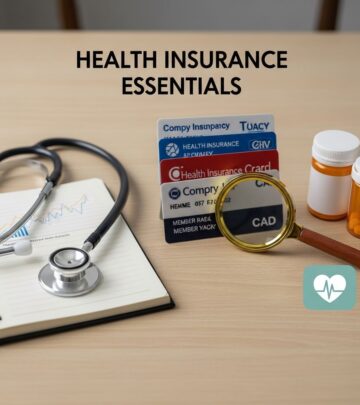
How to Examine Your Healthcare Plan and Save
Master your health insurance: Decode premiums, deductibles, networks, and more to slash costs without sacrificing coverage.

Navigating healthcare insurance can feel overwhelming, but a thorough examination of your plan can uncover significant savings opportunities. By understanding key components like premiums, deductibles, copays, coinsurance, out-of-pocket maximums, provider networks, and prescription coverage, you can make informed decisions that balance cost and coverage effectively. This guide breaks down each element step-by-step, helping you optimize your healthcare spending without compromising essential protection.
Understand Premiums: Your Fixed Monthly Cost
The
premium
is the fixed monthly payment you make to keep your health insurance active, regardless of whether you use medical services. It’s essentially your ‘entry fee’ for coverage. Premiums vary widely based on factors like age, location, tobacco use, family size, and plan type (e.g., PPO vs. HMO). Health Maintenance Organizations (HMOs) often have lower premiums but require you to stay within a specific network, while Preferred Provider Organizations (PPOs) offer more flexibility at a higher cost.To evaluate your premium’s value, calculate your expected annual cost: multiply the monthly premium by 12 and compare it against potential out-of-pocket expenses. Ask: Does this fit my budget if I have a healthy year with minimal claims? For instance, a lower-premium high-deductible plan might save money if you’re rarely sick, but it could backfire during medical emergencies. Review past usage via Explanation of Benefits (EOB) statements to project future costs accurately.
- Tip: During open enrollment, compare plans side-by-side using tools from Healthcare.gov or your employer’s portal.
- Shop smart: Employer-sponsored plans might offer premium subsidies; individual marketplace plans qualify for tax credits if your income is moderate.
Decode Deductibles: The Threshold to Coverage
Your
deductible
is the amount you pay out-of-pocket for covered services before your insurance kicks in. For 2026 plans, deductibles can range from $0 (rare, in low-deductible plans) to over $8,000 for individuals in high-deductible health plans (HDHPs) paired with Health Savings Accounts (HSAs). HDHPs encourage preventive care focus and offer triple tax advantages on HSAs: contributions are tax-deductible, growth is tax-free, and withdrawals for qualified medical expenses are tax-free.Examine your deductible by estimating annual healthcare needs. If you anticipate routine visits or prescriptions, a lower deductible minimizes upfront costs. Conversely, if you’re healthy, a high deductible reduces premiums significantly. Key question: Can I afford the full deductible if hospitalized? Use last year’s EOBs to simulate costs under different deductibles.
| Plan Type | Avg. Annual Deductible (Individual) | Best For |
|---|---|---|
| Low-Deductible | $500–$1,500 | Frequent doctor visits, chronic conditions |
| HDHP | $1,500–$8,000+ | Healthy individuals, HSA users |
Always confirm if preventive services (e.g., annual checkups, vaccines) count toward the deductible—under the Affordable Care Act, they typically don’t.
Analyze Copays and Coinsurance: Ongoing Cost Shares
**Copays** are fixed fees for services, like $20 for a primary care visit or $50 for urgent care.
Coinsurance
is a percentage of costs you pay after meeting the deductible, often 20% for specialists or hospital stays. These kick in post-deductible and continue until you hit your out-of-pocket maximum.Scrutinize tiers: Primary care copays are usually lowest, specialists higher. Prescription copays vary by tier (generic: $10, preferred brand: $40, non-preferred: $70+). To save, prioritize plans aligning copays/coinsurance with your usage. For families, embedder deductibles (per person vs. family) can cap individual exposure.
- Calculate sample scenarios: ER visit ($500 copay + 20% coinsurance on $5,000 bill = $1,500 total).
- Check waiver rules: Some plans waive copays for telehealth or generics.
Out-of-Pocket Maximum: Your Safety Net
The
out-of-pocket maximum (OOPM)
caps your annual spending on deductibles, copays, and coinsurance—typically $9,200 for individuals and $18,400 for families in 2026 marketplace plans (subject to federal adjustments). Once reached, your plan covers 100% of covered services for the year. Embedded OOPMs protect families by limiting any one person’s costs.Evaluate affordability: Could you pay the full OOPM in a bad year (e.g., surgery)? Compare across plans; lower OOPMs pair with higher premiums. Non-covered services (cosmetic, experimental) don’t count toward it.
Provider Network: Access to Care Providers
A plan’s
network
lists in-network providers offering discounted rates. Out-of-network care costs more or isn’t covered. PPOs have broad networks with out-of-network options; HMOs are narrower but cheaper. Verify your doctors, hospitals, and specialists via the plan’s online directory or by calling.- Steps to check: Search provider names; note narrow vs. tiered networks (Tier 1 cheapest).
- Savings hack: Switch to in-network for 30–70% discounts.
- Consider proximity: Rural areas may limit HMO options.
Prescription Drug Coverage: Formulary Matters
Review the
formulary
(drug list) for covered medications, tiers, and prior authorization needs. Two-thirds of U.S. adults use prescriptions; generics save 80–85% vs. brands. Check your meds’ status and pharmacy network.Questions: Are my drugs Tier 1 (lowest copay)? Convenient pharmacies? Quantity limits? Use tools like GoodRx for uncovered drugs, but submit claims for negotiated rates.
Additional Benefits and Preventive Care
Look beyond basics: Free preventive services (mammograms, colonoscopies), telehealth, wellness incentives (gym discounts), or extras like acupuncture. HMOs often excel in coordinated care; PPOs in flexibility.
Strategies to Maximize Savings
1. Use HSAs/FSAs for tax-free savings.
2. Shop retail clinics for minor issues ($79 vs. $150+ urgent care).
3. Negotiate bills or use price transparency tools (e.g., CMS data).
4. Appeal denials with EOB evidence.
5. Bundle family coverage wisely.
Frequently Asked Questions (FAQs)
What’s the difference between a copay and coinsurance?
A copay is a fixed dollar amount per service; coinsurance is a percentage of the bill after deductible.
Do preventive services count toward my deductible?
No, under ACA rules, they’re covered at no cost.
How do I know if my doctor is in-network?
Use the plan’s provider directory or call member services.
Can I use HSA funds for premiums?
Only if on COBRA, unemployment, or Medicare—check IRS rules.
What if I hit my out-of-pocket maximum early?
Plan pays 100% for covered services rest of year; track via app.
References
- How to pick a health insurance plan: Top 10 questions to ask — HealthPartners. 2023-10-12. https://www.healthpartners.com/blog/10-questions-to-ask-when-picking-a-plan/
- How to Examine Your Healthcare Plan and Save — Wise Bread. 2010-05-18. https://www.wisebread.com/how-to-examine-your-healthcare-plan-and-save
- Health Insurance Marketplace Standards — Centers for Medicare & Medicaid Services (CMS). 2025-12-01. https://www.healthcare.gov/
- Publication 969: Health Savings Accounts — Internal Revenue Service (IRS). 2025-11-15. https://www.irs.gov/publications/p969
- 2026 Notice of Benefit and Payment Parameters — CMS. 2025-06-20. https://www.cms.gov/newsroom/fact-sheets/2026-notice-benefit-and-payment-parameters-final-rule
Similar Articles








Read full bio of medha deb