How To End A Letter Professionally: 22 Sign-Offs
Master the art of closing letters with appropriate sign-offs and professional etiquette.
How to End a Letter Professionally
Ending a letter properly is just as important as how you begin it. The closing of your letter is often the last thing a reader will see, making it a crucial element in creating a positive final impression. Whether you are writing a formal business letter, a cover letter, or professional correspondence, understanding how to conclude your message with the right closing phrase, formatting, and tone can significantly impact how your letter is received.
The closing of a letter is more than just a polite sign-off; it is a reflection of your professionalism, respect for the recipient, and understanding of business etiquette. A well-chosen closing phrase reinforces the message of your letter and demonstrates your attention to detail and communication skills.
What Is a Business Letter Closing?
A business letter closing is a word or phrase that appears before your signature to indicate farewell and conclude your message. This closing phrase serves multiple purposes in professional communication. It shows respect and appreciation for the recipient, signals that your message is complete, and provides a final opportunity to reinforce the tone and purpose of your letter.
The closing is distinct from the body of your letter and should be carefully selected to match the formality level, purpose, and your relationship with the recipient. It acts as a bridge between your main message and your signature, giving your letter a sense of completion and professionalism.
The Importance of a Meaningful Final Sentence
Before you include your closing phrase, consider adding a short final paragraph consisting of one or two sentences. This final sentence serves as a transition between your letter’s body and your sign-off, and it can accomplish several important objectives in your professional communication.
Your final sentence before the closing can serve these purposes:
- Clarify or restate the letter’s main purpose
- Summarize a key point from your message
- Request a specific action from the recipient
- Offer an invitation or opportunity
- Express gratitude or appreciation
- Confirm a connection or agreement
Here are some examples of effective final sentences that can strengthen your letter before the closing:
- “I look forward to hearing from you soon.”
- “I appreciate your input on this matter.”
- “Thank you for your understanding, and I will contact you next week with more details.”
- “Please don’t hesitate to contact me if you have any questions.”
- “I hope we can come to an agreement on terms so that our business relationship can continue.”
Choosing the Right Closing Based on Context
One of the most important guidelines for ending a professional letter is to use a closing phrase that reflects your relationship with the reader. The ending of your business letter should directly relate to the purpose of your communication. The context of your letter plays a significant role in determining which closing phrase is most appropriate.
If you are writing to request assistance, convey gratitude, or pursue a business opportunity, your closing should match these intentions. For instance, if your letter’s purpose is to express thanks, you could end with a phrase like “With appreciation” or “With gratitude.” If you are writing to pursue a business connection or establish a professional relationship, you should maintain formality and respect by using closings such as “Respectfully” or “Sincerely.”
Consider the nature of your communication before selecting your closing. A letter requesting a favor calls for appreciation-focused language, while a formal business proposal requires a more traditional and authoritative closing.
Considering Your Relationship With the Recipient
Your closing should be appropriate to the relationship you have with the person receiving your letter. The familiarity and professional relationship you share with your recipient should guide your choice of closing phrase.
For formal relationships: If your letter is addressed to a supervisor, someone you have never met, or someone you do not know very well, choose a formal and professional ending. Appropriate options include “Sincerely,” “Regards,” “Respectfully,” or “Best regards.” These closings maintain a professional distance while showing respect.
For informal relationships: If your letter is for someone you have interacted with frequently or know well, you may use a more informal closing while still maintaining a professional tone. Examples include “Best,” “Cordially,” “All the best,” or “Thanks.” These options convey warmth and familiarity without sacrificing professionalism.
Formal Closing Phrases for Professional Letters
When writing formal business correspondence, you have several excellent options for closings. These traditional and widely accepted phrases work well in almost any professional situation.
- Sincerely – The most traditional and universally accepted closing. “Sincerely” means “genuinely” or “honestly,” indicating that your message’s contents are genuine and you are trustworthy.
- Respectfully – Conveys high regard and formality, appropriate for senior management or formal communications.
- Regards – A neutral, professional closing that works in most business contexts.
- Best Regards – Slightly warmer than “Regards” while maintaining formality.
- Thank You – Appropriate when gratitude is a primary purpose of your letter.
- With Appreciation – Emphasizes gratitude and is ideal for thank-you letters.
- With Gratitude – A more formal way to express appreciation.
- With Sincere Thanks – Combines appreciation with sincerity.
- Sincerely Yours – A variation that adds a personal touch while remaining formal.
- Yours Sincerely – Common in British English, equivalent to “Sincerely Yours.”
- Yours Respectfully – A traditional formal closing suitable for business correspondence.
- Yours Faithfully – A more formal variation used in certain professional contexts.
Informal Closing Phrases for Professional Communication
If you have established a good working relationship with your recipient, you can use closings that are less formal while still maintaining professionalism:
- Best – Casual yet professional, suitable for colleagues you know well.
- All the Best – Conveys warmth and finality, good for closing out communication.
- Best Wishes – Friendly and positive, suggesting goodwill toward the recipient.
- Cordially – Warm and friendly while remaining professional.
- Kindest Regards – Adds a personal touch to the standard “Regards” closing.
- Kind Wishes – Expresses goodwill and friendliness.
- Many Thanks – Emphasizes gratitude in a friendly manner.
- Thanks – Simple and direct appreciation.
- Thanks Again – Reinforces gratitude in a casual, friendly way.
- Warm Regards – Combines professionalism with warmth and friendliness.
Formatting Tips for Business Letter Closings
Beyond selecting the right closing phrase, proper formatting is essential for a professional appearance. Follow these formatting guidelines to ensure your letter looks polished and properly structured:
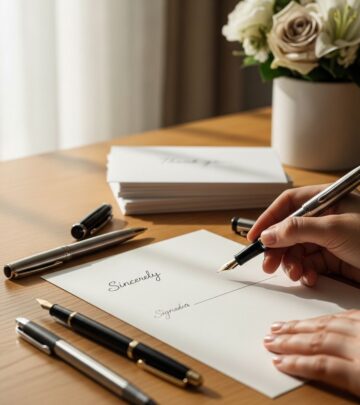
Line placement: Begin the complimentary closing on a new line after the last paragraph of your letter’s body. If you are using block format (all lines flush with the left margin), the closing line should also begin on the left margin. If you use semi-block style (indenting the first lines of each paragraph), then begin the closing phrase to the right of center, so it aligns with the date in the heading.
Capitalization: Start the closing with a capital letter. If the closing is more than one word, use lowercase for any following words. For example, write “With appreciation” rather than “With Appreciation.”
Punctuation: Use a comma after the complimentary closing, before your signature. This is the standard punctuation for professional letter closings.
Spacing: Leave four spaces between the closing and your typed name if you are sending the letter by mail. This space allows room for your handwritten signature. If you are sending the letter by email, leave one space between the closing and your name.
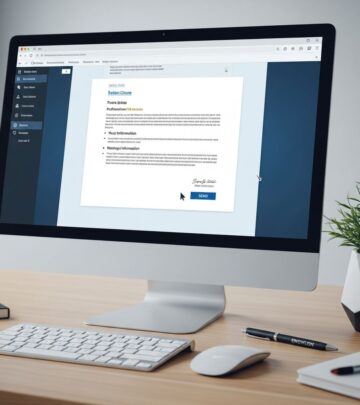
Signature and contact information: After the closing phrase, include your signature. Follow your signature with your contact information unless it is already included at the top of your formal letter. You can include your title, email address, and phone number. If you are emailing the letter, you may also include a link to your online professional profile or work portfolio.
Sample Business Letter Endings
To help you understand how to properly conclude your business letters, here are two examples showing different contexts and formality levels:
Sample 1: Ending a Formal Letter
Thank you again for your attention to this matter. Please don’t hesitate to contact me if you have any questions or if I can be of further assistance.
Sincerely,
[Handwritten Signature]
Alexis Parino
Senior Account Manager
Email: aparino@company.com
Phone: (555) 123-4567
Sample 2: Ending an Informal Email
It’s been a pleasure doing business with you.
Best wishes,
Jacob Winters
Marketing Director, L&H Firm
Phone: 882-671-5642
Email: j_winters@email.com
Matching Your Closing to Letter Type
Different types of business letters call for different closing approaches. Understanding which closing works best for each letter type can help you communicate more effectively:
Cover Letters: Use formal closings like “Sincerely” or “Respectfully” to convey your professionalism and genuine interest in the position.
Thank-You Letters: Choose closings that emphasize gratitude, such as “With appreciation,” “With sincere thanks,” or “Thank you.”
Business Proposal Letters: Maintain formality with closings like “Respectfully,” “Sincerely,” or “Best regards.”
Follow-up Letters: Use closings that suggest continued engagement, such as “Looking forward to hearing from you” or “I look forward to our continued partnership.”
Letters of Recommendation: Use formal closings that convey your professional endorsement, such as “Sincerely” or “Respectfully.”
Common Mistakes to Avoid
When closing your business letter, be aware of these common mistakes that can undermine your professionalism:
- Using overly casual closings in formal business correspondence
- Forgetting to include a closing entirely
- Using inappropriate punctuation or capitalization in your closing
- Not leaving adequate space for your signature
- Using slang or informal expressions in professional letters
- Selecting a closing that doesn’t match the letter’s purpose
- Failing to include your contact information after your signature
- Using the wrong closing for your relationship with the recipient
Frequently Asked Questions About Letter Closings
Q: What is the most professional way to close a business letter?
A: “Sincerely” is the most universally accepted and professional closing for business letters. It is appropriate for almost any formal business situation and is always a safe choice when you are uncertain about which closing to use.
Q: Can I use “Best” in a formal business letter?
A: “Best” is less formal than “Sincerely” but still conveys a professional relationship. It works well if you have an established relationship with the recipient but may be too casual for your first communication with someone or for highly formal situations.
Q: How many spaces should I leave for my signature?
A: Leave four spaces between your closing and your typed name for printed letters that will be signed by hand. For email correspondence, use only one space.
Q: Should I include a comma after my closing phrase?
A: Yes, always use a comma after your complimentary closing, before your signature. This is standard business letter punctuation and formatting.
Q: What closing should I use for a follow-up email to someone I’ve never met?
A: Use a formal closing like “Sincerely,” “Respectfully,” or “Best regards.” These maintain professionalism and respect in your first interaction.
Q: Is it acceptable to use “Thanks” as a closing in a business letter?
A: “Thanks” can work in less formal correspondence with colleagues you know well, but it is too casual for formal business letters or initial communications. For formal situations, use “Thank you” or “With appreciation” instead.
Q: What should I include after my signature?
A: Include your full name, title, phone number, and email address. For print letters, this information can appear below your signature. For emails, you can create a professional signature block with this information.
Conclusion
Ending your business letter with the appropriate closing phrase and proper formatting is a critical element of professional communication. By understanding the context of your letter, your relationship with the recipient, and the various formal and informal closing options available, you can select a sign-off that reinforces your message and leaves a positive lasting impression. Remember to include a meaningful final sentence that clarifies your purpose or intention, format your closing correctly with proper capitalization and punctuation, and always include your contact information. Whether you choose the timeless “Sincerely,” a more contemporary “Best regards,” or another appropriate closing, your letter’s ending should reflect your professionalism and respect for your recipient.
References
- How To Close a Business Letter (With Tips and Examples) — Indeed Career Advice. 2024. https://www.indeed.com/career-advice/career-development/business-letter-closing-examples
- How to End a Letter: 10 Formal Letter Closings — Grammarly Blog. 2024. https://www.grammarly.com/blog/writing-tips/how-to-end-a-letter/
- Beyond Yours Truly: Business Letter Closings That Mark You as a Pro — Nonprofit Copywriter. https://www.nonprofitcopywriter.com/business-letter-closings.html
- Writing the Basic Business Letter — Purdue OWL. 2024. https://owl.purdue.edu/owl/subject_specific_writing/professional_technical_writing/basic_business_letters/index.html
- Business Letter Formats Everyone Should Know — Gallaudet University. https://gallaudet.edu/student-success/tutorial-center/english-center/writing/how-to-write-letters/business-letter-formats-everyone-should-know/
Similar Articles








Read full bio of medha deb