How to Donate School Supplies to Teachers Who Need Them
Discover simple, effective ways to donate school supplies and support teachers funding their own classrooms amid rising costs.
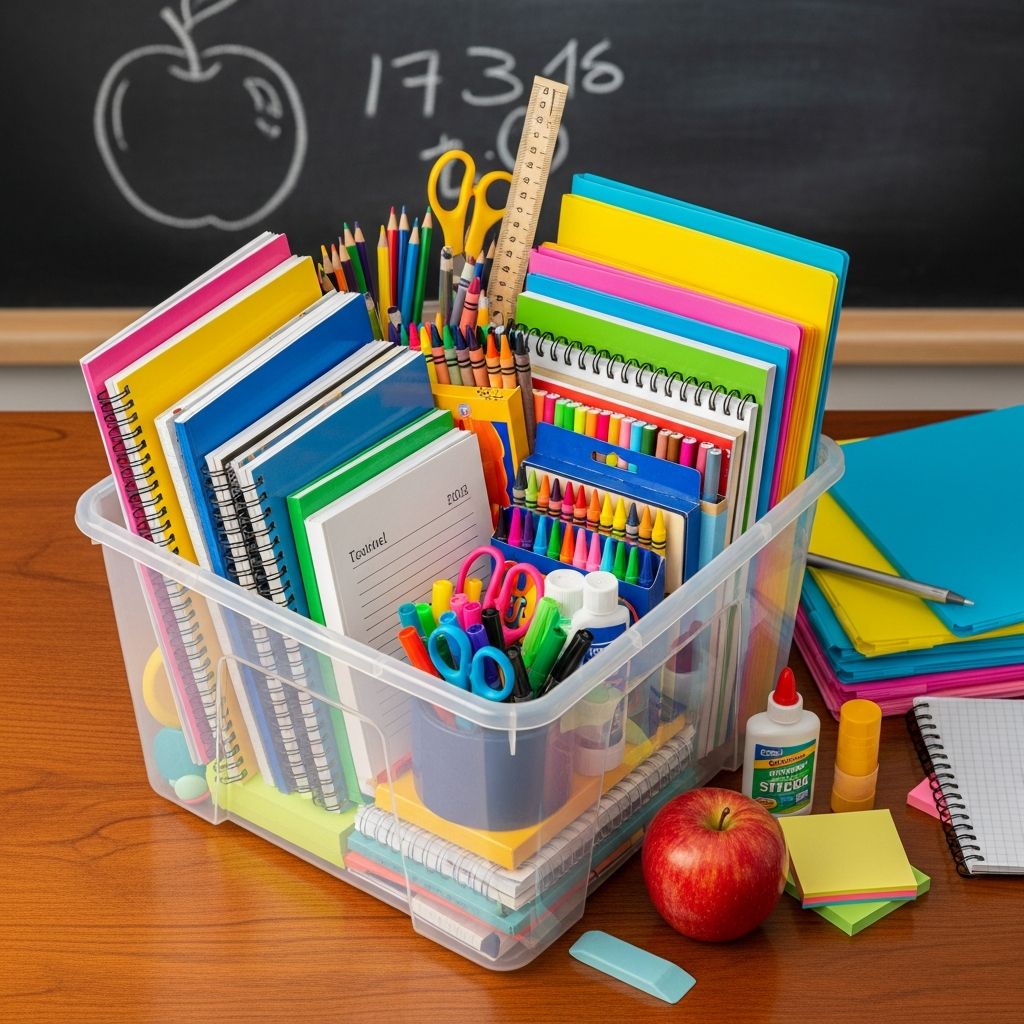
Teachers across the U.S. spend hundreds of dollars out-of-pocket each year on classroom supplies, from notebooks and pencils to basic furniture like chairs. With school budgets strained, your donations can make a significant difference in equipping students for success. This guide covers proven methods to donate effectively, whether you have cash, new items, or gently used goods.
Why Teachers Need Your Help with School Supplies
Public school teachers in America average $762 annually on classroom materials, according to the National Education Association’s latest survey. Many projects on platforms like DonorsChoose.org request basics like tissues, dry-erase markers, and even chairs because district funding falls short. By donating, you bridge this gap, ensuring kids have what they need to learn without teachers bearing the full burden.
In 2025, inflation pushed supply costs up 5-10%, exacerbating the issue. Low-income districts suffer most, where 1 in 5 students lack reliable access to pencils or paper. Your contribution—be it $5 or a backpack—directly combats this, fostering equity in education.
1. Support Teachers Through DonorsChoose.org
If you have a few dollars to spare, DonorsChoose.org is the easiest entry point. This nonprofit platform lets teachers post specific projects, from STEM kits to reading nooks. Donors fund them fully or partially, and 100% of contributions go to supplies—no administrative fees taken from donations.
- Browse projects by location, grade, or subject—e.g., ‘Kindergarten essentials in rural Georgia.’
- Donate as little as $1; many projects fund in hours.
- Receive photos and thank-you notes from funded classes.
- Corporate matching programs double your impact during back-to-school seasons.
Since 2000, DonorsChoose has funded over 4 million projects, delivering $1.5 billion in materials. In 2025 alone, it supported 500,000+ classrooms.
2. Participate in Local School Supply Drives
Community drives organized by PTAs, libraries, or rotary clubs collect bins of supplies at grocery stores or drop-off points. Check your district’s website or apps like Nextdoor for events.
- Wishlist items: Pencils, crayons, glue sticks, folders, tissues, sanitizers.
- Drop off new or like-new items—no expired goods.
- Timing: August drives peak before school starts.
Pro tip: Contact your local Title I school (serving high-poverty areas) directly for their wishlist. This ensures donations reach the neediest classrooms.
3. Donate to Teachers via Amazon Wish Lists
Many educators share public Amazon Wish Lists on their classroom websites or social media. Search ‘#TeacherWishList’ on Twitter/X or Instagram for links.
- Purchase and ship directly to the teacher’s address.
- Opt for Prime for fast delivery before school.
- Common requests: Laminators, storage bins, fidget tools for special needs students.
This method personalizes giving—add a note like ‘Thanks for inspiring young minds!’
4. Give Through National Nonprofits and Foundations
Beyond DonorsChoose, organizations like AdoptAClassroom.org let you fund entire classrooms with $500 grants. Select a teacher, and they receive a debit card for supplies.
- Operation Supply Drop: Focuses on military-connected schools.
- Save the Children: Targets underserved rural and urban areas.
- Teachers in Need Fund: Quick cash for emergencies like broken projectors.
These groups vet requests and provide tax receipts, maximizing your deduction potential.
5. Host Your Own School Supply Drive
Rally your neighborhood, workplace, or church for a drive. Promote via flyers, emails, or Facebook events.
| Step | Action | Timeline |
|---|---|---|
| 1. Partner | Contact a local school for wishlist | Week 1 |
| 2. Collect | Set up bins at high-traffic spots | Weeks 2-3 |
| 3. Deliver | Sort and drop off | Week 4 |
Expect to gather 200-500 items per event. Share success photos online to inspire others.
6. Donate Gently Used Supplies
Don’t toss last year’s leftovers—pass them on. Host a swap meet or box them for drives.
- Condition check: No broken crayons, dried glue, or torn books.
- Local options: Freecycle groups, Buy Nothing communities.
- Backpack programs: Many schools refurbish for homeless students.
This reduces waste while stretching your budget—supplies are 20% cheaper reused.
Tax Benefits of Donating School Supplies
Monetary donations to 501(c)(3)s like DonorsChoose are tax-deductible. For goods, track fair market value (e.g., $0.10/pencil) if over $250 total.
- Use IRS Form 8283 for non-cash gifts exceeding $500.
- Apps like ItsDeductible estimate values.
- Keep receipts and photos for audits.
Consult a tax pro; deductions can save you 20-37% based on your bracket.
Best Times to Donate School Supplies
- Back-to-School (July-August): Stock-up season.
- Holidays (November-December): Teachers buy gifts too.
- End-of-Year (May-June): Refresh worn items.
- Ongoing: Platforms like DonorsChoose need year-round support.
Common Mistakes to Avoid When Donating
- Assuming all schools need the same—ask for wishlists.
- Donating perishables like food unless specified.
- Forgetting labels on bagged items.
- Ignoring shipping costs on online gifts.
Frequently Asked Questions (FAQs)
What are the most needed school supplies to donate?
Tissues, dry-erase markers, pencils, notebooks, and sanitizers top most lists, as they run out quickly in shared classrooms.
Can I donate used school supplies?
Yes, if clean and functional. Avoid broken or incomplete items; sort rigorously before donating.
Is DonorsChoose really free for teachers?
Teachers pay 15% processing fee only if funded; donors cover 100% of materials.
How do I find teachers needing supplies near me?
Use DonorsChoose filters, school district sites, or social media hashtags like #CleartheList.
Are donations tax-deductible for school drives?
Monetary yes via nonprofits; goods require valuation and receipts for deductions over $250.
Make a Difference Today
Whether $5 on DonorsChoose or a box of crayons locally, every donation counts. Teachers thank you, students thrive, and communities strengthen. Start small—search a project now and fund a child’s bright future.
References
- National Education Association: Educator Supply Spending Survey — NEA. 2024-09-01. https://www.nea.org/resource-library/educator-pay-and-student-spending-how-does-your-state-rank
- DonorsChoose Annual Impact Report — DonorsChoose.org. 2025-06-30. https://www.donorschoose.org/about/impact/
- U.S. Department of Education: Title I Funding Overview — U.S. Dept. of Education. 2025-01-15. https://www.ed.gov/policy/elsec/leg/esea02/pg2.html
- IRS Publication 526: Charitable Contributions — Internal Revenue Service. 2025-12-01. https://www.irs.gov/publications/p526
- AdoptAClassroom.org Program Details — AdoptAClassroom.org. 2025-08-20. https://www.adoptaclassroom.org/how-it-works
Similar Articles








Read full bio of Sneha Tete