How to Do a Spending Fast in 16 Easy Steps
Master your finances with a 16-step spending fast: reset habits, slash debt, and build lasting wealth effortlessly.
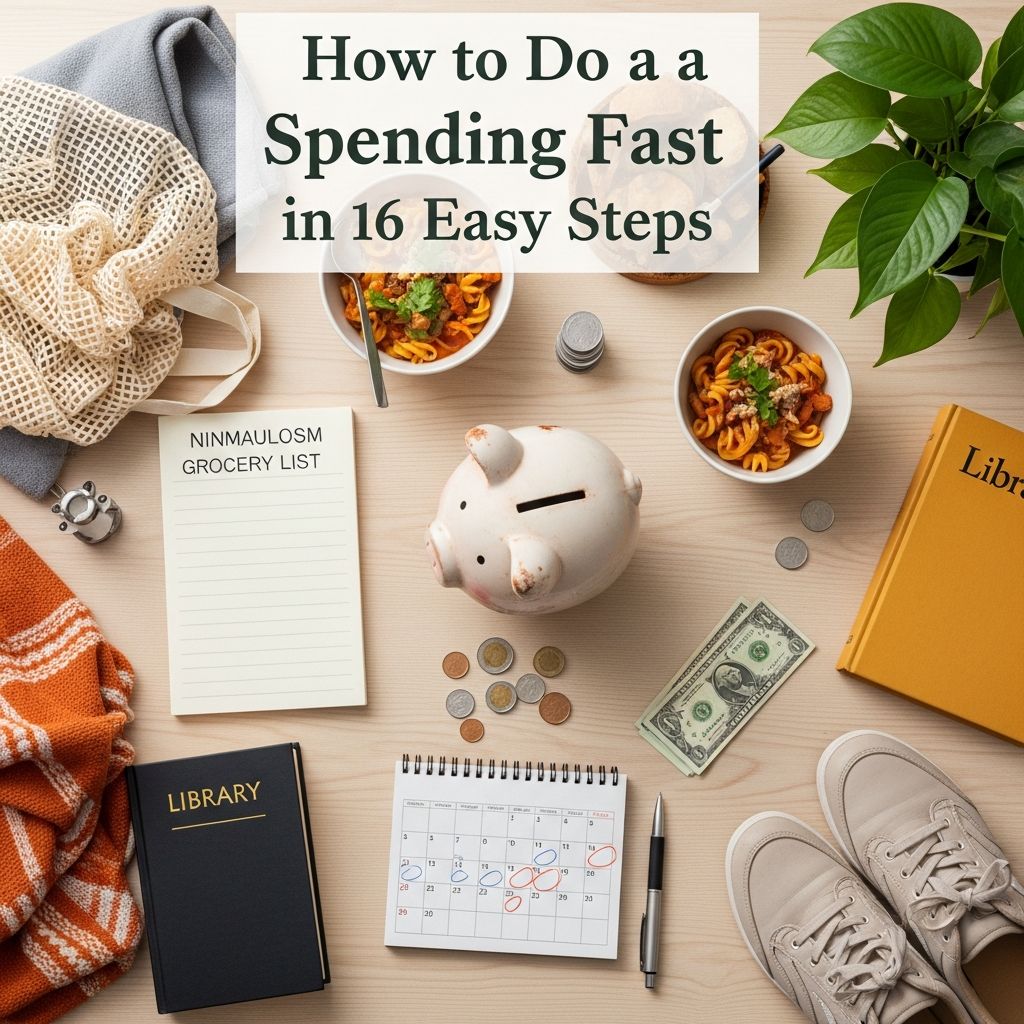
A spending fast is a powerful strategy to regain control over your finances by temporarily halting non-essential purchases. This deliberate pause helps identify spending leaks, prioritize debts, and redirect funds toward savings and goals. Unlike strict no-spend challenges, a spending fast focuses on intentional choices, making it sustainable for long-term financial health. By following these 16 steps, you’ll reset habits, reduce debt, and build momentum toward financial freedom.
Step 1: List Your Debts and Their Interest Rates
Begin by compiling a complete inventory of all debts, including credit cards, loans, and mortgages. Note each balance, minimum payment, and annual percentage rate (APR). This transparency reveals high-interest burdens draining your income. For instance, credit card debt often carries APRs exceeding 20%, compounding quickly if ignored. Use a spreadsheet or free debt tracker app to organize this data, sorting by interest rate descending to prioritize aggressively.
- Gather statements from all creditors.
- Calculate total debt and monthly interest accrual.
- Identify ‘toxic’ debts with rates above 15%.
This foundational step prevents oversight and motivates action, as seeing the full picture often shocks into behavioral change.
Step 2: Ask Your Creditors to Lower Your Interest Rates
Contact each creditor politely but firmly, requesting a rate reduction. Highlight your payment history and loyalty. Many issuers, facing competitive pressures, agree to cuts of 2-5% or more. Script your call: ‘I’ve been a customer for X years with on-time payments; can you lower my APR?’ Success rates hover around 70% for persistent callers. If denied, inquire about promotional balance transfers to 0% APR cards.
- Prepare account details and payment history.
- Call during non-peak hours for better service.
- Document agreements in writing.
Lower rates accelerate payoff, freeing hundreds monthly for savings.
Step 3: Picture the Life You Want After the Fast
Visualize your post-fast life: debt-free vacations, emergency funds, or early retirement. Create a vision board with images of homes, travels, or family milestones. This emotional anchor sustains motivation during temptations. Research shows goal visualization boosts achievement by 42%. Write a one-page manifesto detailing ‘why’ you’re fasting—freedom from bill stress, gifting generously, or legacy building.
Step 4: Set SMART Financial Goals
Define goals using the SMART framework: Specific, Measurable, Achievable, Rewarding, Trackable. Instead of ‘save money,’ aim for ‘$5,000 emergency fund by June 30 via $400 monthly transfers.’ Review weekly, adjusting as needed. SMART goals combat vagueness, with studies indicating 10x higher success rates.
- Specific: Clear target.
- Measurable: Quantifiable progress.
- Achievable: Realistic scope.
- Rewarding: Personal value.
- Trackable: Milestones scheduled.
Step 5: Create a Household Budget
Draft a zero-based budget where income minus expenses equals zero. Categorize essentials (rent, food) first, then debt, savings, and fun. Tools like Mint or YNAB automate tracking. Allocate every dollar purposefully to eliminate waste.
Step 6: Calculate Your Net Worth
Subtract liabilities from assets for net worth. Track quarterly to measure progress. Positive growth reinforces discipline.
Step 7: Review Your Credit Reports
Access free annual reports from AnnualCreditReport.com. Dispute errors promptly, as inaccuracies can inflate rates.
Step 8: Check Your Credit Score
Monitor via Credit Karma or official sites. Scores above 700 unlock better terms.
Step 9: Set a Monthly Savings Amount
Automate transfers equaling 10-20% of income to high-yield savings. Treat as non-negotiable.
Step 10: Make Minimum Debt Payments
Never miss minima to avoid fees and score damage. Build extras into budget.
Step 11: Pay Down Debt Using the Debt Snowball
List debts smallest to largest, paying minima on all but attacking the smallest aggressively. Roll payments forward. This builds wins. Alternative: avalanche method by highest interest.
| Method | Pros | Cons |
|---|---|---|
| Snowball | Quick wins, motivation | Potentially higher interest |
| Avalanche | Saves most money | Slower visible progress |
Step 12: Trim Lifestyle Expenses
Audit discretionary spending: cancel unused subs, pack lunches, meal prep. A ‘do not buy’ list curbs impulses.
Step 13: Save Money on Groceries
Plan meals, shop sales, use coupons, buy generics. Aim for 20-30% reduction via lists and cash-only.
Step 14: Plan for Periodic Expenses
Divide annual costs (insurance, holidays) by 12, saving monthly. Prevents budget shocks.
Step 15: Track Expenses Daily
Log every purchase via app or notebook. Awareness slashes spending 20-30%.
Step 16: Make a Commitment and Automate Savings
Post goals visibly, automate savings first. Use envelopes for cash categories. Review monthly, celebrate milestones without spending.
Frequently Asked Questions (FAQs)
What is a spending fast exactly?
A spending fast is a short-term commitment to avoid non-essential purchases, focusing on needs only to reset habits and boost savings.
How long should my spending fast last?
Start with 30 days, extending as needed. Consistency yields results without burnout.
Can I still eat out during a fast?
Limit to necessities; prioritize home-cooked meals to maximize savings.
What if I slip up?
Forgive, analyze triggers, resume immediately. Progress over perfection.
Is a spending fast suitable for families?
Yes, involve all via envelope goals and family buy-in for shared success.
Benefits of a Spending Fast
Beyond debt reduction, expect mental clarity, reduced stress, and habit formation. Many report 20-50% spending drops, accelerating wealth.
References
- Financial Literacy Month | MMI — Money Management International. 2023. https://www.moneymanagement.org/blog/financial-literacy-month
- Money Management in 5 Minutes a Day — Wise Bread. 2022-10-15. https://www.wisebread.com/money-management-in-5-minutes-a-day
- 16 Simple Steps to Achieving a Spending Fast — TipHero. 2021. https://tiphero.com/16-simple-steps-to-achieving-a-spending-fast
- 16 Small Steps You Can Take Now to Improve Your Finances — Wise Bread. 2023. https://www.wisebread.com/16-small-steps-you-can-take-now-to-improve-your-finances
- 6 Fun Ideas To Save As A Family — CollegeAdvantage. 2019-02-27. https://www.collegeadvantage.com/blog/blog-detail/posts/2019/02/27/6-fun-ideas-to-save-as-a-family
Similar Articles








Read full bio of Sneha Tete