How To Deal With A Rude Neighbor: Calm, Practical Strategies
Practical strategies to handle rude neighbors tactfully, from polite confrontation to knowing when to involve authorities, preserving neighborhood peace.
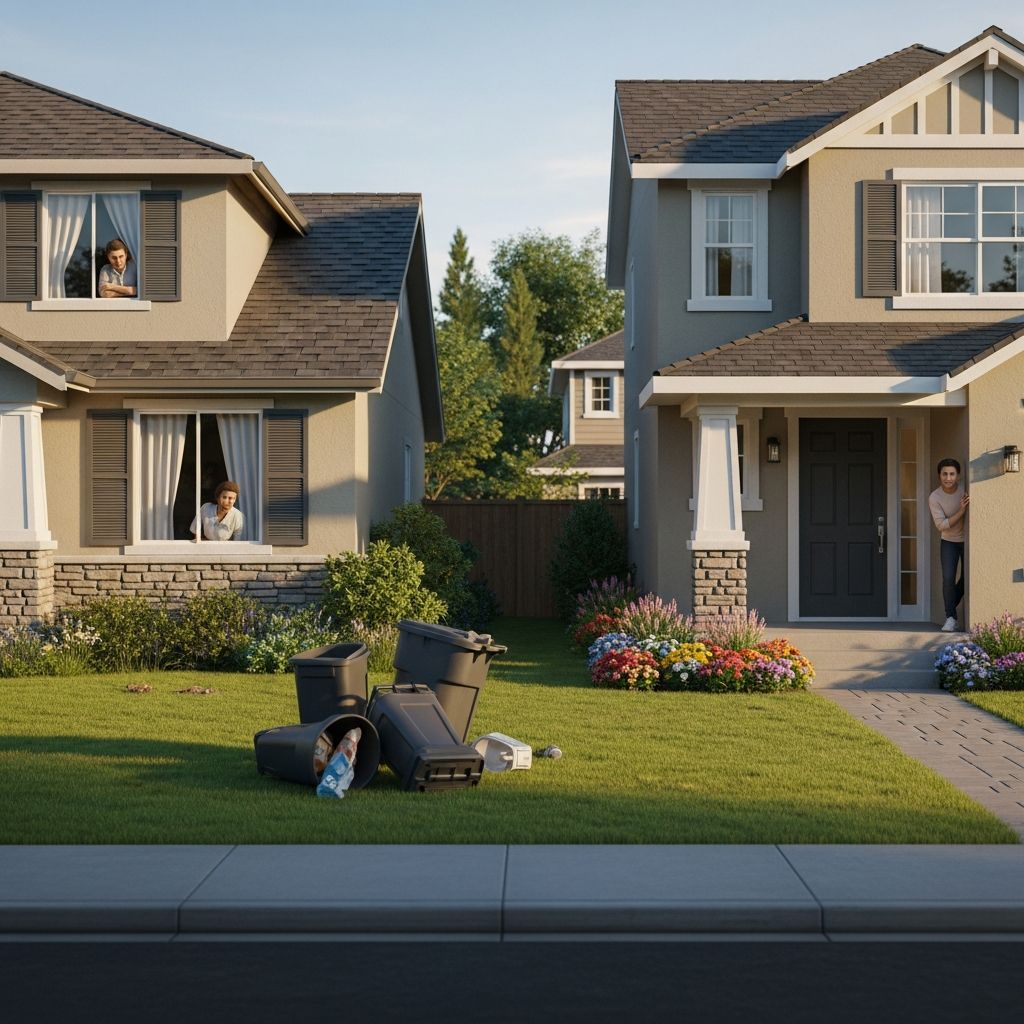
Your neighbors can significantly influence your quality of life, either enhancing your community or creating ongoing frustrations. Rude behaviors like failing to clean up after pets, stealing newspapers, or excessive nosiness are common issues that require tactful handling to resolve without escalating tensions.
While some neighbors may be unreasonable, most respond positively when approached correctly. The key is maintaining composure and focusing on solutions rather than confrontation, ensuring you protect your peace without stooping to their level.
Politely Remind Them of the Rules
Many rude actions stem from ignorance of neighborhood rules or local laws rather than malice. Start by gently reminding the offender of applicable regulations, such as HOA policies or municipal ordinances on pet waste or parking.
For instance, if a neighbor is renting out space illegally, referencing the specific law can prompt compliance without personal attacks. This approach educates while signaling that their behavior is noticed, often leading to voluntary correction.
Document rules from your homeowner’s association or city code before approaching. Present the information factually: “I noticed this might violate section X of our community guidelines—thought you might want to know.” This non-accusatory method preserves relationships.
Communicate Your Complaint Directly
Avoid letting annoyances fester, as bottled-up frustration can lead to explosive outbursts that damage neighborly ties irreparably. Address issues early and directly, but calmly, to prevent escalation.
Choose a neutral time—not when emotions are high—and state the problem clearly: “I’ve noticed your dog isn’t picked up after walks, which affects the sidewalk.” Be specific about impacts without blame to encourage dialogue.
- Prepare what you’ll say in advance to stay focused.
- Listen to their side; they may be unaware or have explanations.
- Propose mutual solutions, like shared cleanup responsibilities.
Direct communication often resolves 80% of minor disputes before they worsen, fostering mutual respect.
Be Friendly, But Firm
Approach discussions with a positive demeanor to de-escalate potential defensiveness. Smile, use open body language, and emphasize collaboration over conflict.
However, friendliness doesn’t mean weakness. Advocate firmly for community standards: “I’d love if we could agree on this so everyone enjoys the neighborhood.” If they push back, remain composed—your professionalism garners support from other residents.
Real-world example: A neighbor complaining about illegal room rentals succeeded by staying friendly yet citing laws, leading to resolution without bad blood.
| Approach | Do | Don’t |
|---|---|---|
| Friendly Tone | Smile, use “we” language | Arrive angry or accusatory |
| Firmness | Reference rules clearly | Back down on safety issues |
| Outcome Focus | Seek agreement | Demand immediate change |
Don’t Stoop to Their Level
Rude neighbors often provoke reactions to justify their behavior or draw you into drama. Responding in kind—yelling, retaliation, or gossip—only escalates conflicts and alienates allies.
Stay the “bigger person” by ignoring bait and documenting incidents. This positions you favorably if authorities or mediators get involved. Antisocial personalities thrive on engagement; disengagement starves their tactics.
Reader stories highlight this: One neighbor ignored rock-throwing incidents, avoiding harassment claims, while another used fences and avoidance to minimize contact effectively.
Call the Authorities When Necessary
For safety hazards or legal violations—like children swerving golf carts into traffic, loud go-karts endangering streets, or aggressive threats—contact police non-emergency lines.
Provide specifics: dates, times, descriptions. Repeat calls if patterns persist. In extreme cases, like property damage or harassment, file reports to build a case.
Community examples include dangerous vehicle use in streets, warranting intervention to protect all residents, especially children and elderly.
Accept It or Move On
Not every dispute resolves amicably. Persistent issues like chronic noise or hostility may require acceptance through coping strategies or relocation.
Practical adaptations: earplugs for noise, hedges for privacy, alternate routes to avoid contact. Some neighbors self-correct via consequences like evictions or arrests.
Weigh costs: If mental health suffers, consider moving, especially renters facing absentee landlords enabling bad tenants.
Preventing Rude Behavior: Be a Good Neighbor Yourself
Self-reflection prevents hypocrisy. Common “terrible neighbor” pitfalls include poor parking, unkempt yards, excessive pets, or noise like door slamming.
- Park considerately, rotating spots.
- Pick up pet waste promptly.
- Maintain lawns and shovel snow.
- Avoid burning waste or fireworks.
Good habits build community goodwill, reducing complaints.
Benefits of Friendly Neighbor Relations
Cultivating positive ties yields practical perks: tolerance for occasional noise, direct issue resolution over formal complaints, and mutual support.
Friendly networks save time and money, from borrowed tools to emergency watch.
Frequently Asked Questions (FAQs)
Q: What if my neighbor’s kids ride golf carts dangerously in the street?
A: This poses safety risks—call non-emergency police, documenting swerving into traffic or hitting vehicles/mailboxes.
Q: My neighbor threw a rock at my dog and denies it—what now?
A: Document with photos/videos, avoid confrontation to prevent harassment claims; use fences/avoidance and report repeated aggression.
Q: Neighbors are nosy, throw trash, and act threatening—how to handle?
A: Install cameras, document patterns, inform landlord/police if threats persist; avoid direct engagement.
Q: Neighbor yells and curses at me while walking my dog—what to do?
A: Walk alternative routes, record incidents calmly, involve authorities if harassment escalates.
Q: How can I avoid being the rude neighbor?
A: Shovel sidewalks, control pets, park politely, and communicate kindly.
References
- How to Deal With a Rude Neighbor — Wise Bread. 2010-approx (evergreen personal advice). https://www.wisebread.com/how-to-deal-with-a-rude-neighbor
- 10 Ways You’re Being a Terrible Neighbor — Wise Bread. 2010-approx (evergreen). https://www.wisebread.com/10-ways-youre-being-a-terrible-neighbor
- 6 Ways It Pays to Be Friendly With Your Neighbors — Wise Bread. 2010-approx (evergreen). https://www.wisebread.com/6-ways-it-pays-to-be-friendly-with-your-neighbors
Similar Articles








Read full bio of Sneha Tete