How to Deal With a Partner Who Is Too Controlling With Money
Strategies to address financial control in relationships, restore balance, and recognize when it crosses into abuse for healthier partnerships.
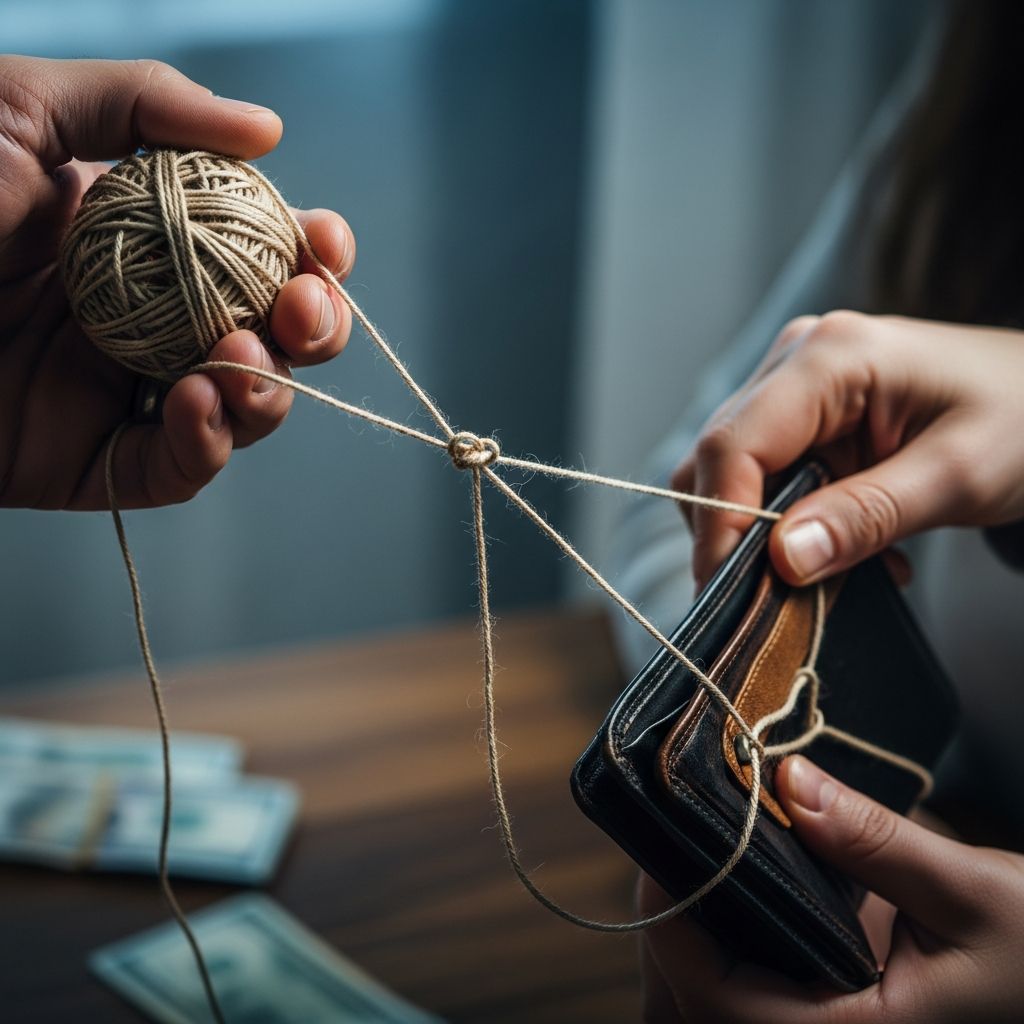
You share a home, responsibilities, and dreams with your partner, but when it comes to money, do you feel like an outsider begging for access? A spouse or partner who exerts too much control over finances can create resentment, inequality, and even trap you in an unhealthy dynamic. This isn’t just about differing spending habits—it’s often rooted in deeper fears, past experiences, or power imbalances that erode trust and intimacy.
Financial control in relationships manifests in various ways, from one partner handling all accounts without transparency to dictating every purchase. While some oversight might stem from good intentions, like protecting family savings, it crosses into problematic territory when it leaves the other feeling powerless. Addressing this requires empathy, clear communication, and sometimes professional intervention. This guide covers identifying the root causes, practical solutions, communication strategies, when to involve experts, and crucially, distinguishing healthy frugality from financial abuse. By the end, you’ll have actionable steps to foster mutual respect and equal access to your shared financial future.
Get to the Root Cause
Before jumping to accusations, understand why your partner is so controlling with money. Often, this behavior isn’t about distrusting you but stems from personal fears or upbringing. For instance, if they grew up in a household where money was scarce or one parent squandered it on impulsive buys, they might overcompensate by micromanaging finances to ensure stability.
Consider these common triggers:
- Childhood scarcity mindset: Witnessing financial instability can lead to anxiety-driven control, where they fear repeating past hardships.
- Provider instinct: They may believe it’s their role to ‘protect’ the family budget, unaware it’s sidelining you as an equal partner.
- Past betrayals: Previous relationships or experiences with overspending friends/family can heighten vigilance.
Observe patterns: Does the control intensify during stressful times, like after a big expense or job loss? Recognizing these roots allows for compassionate discussions rather than blame. Journal your observations privately to prepare for a calm conversation, noting specific examples without judgment.
Balance the Money Load
One effective way to ease control is by sharing the financial responsibilities. If your partner shoulders the entire budgeting burden, it can breed resentment on both sides—they feel overwhelmed, you feel excluded. Redistributing tasks builds teamwork and trust.
Start small:
- Take over bill payments or grocery budgeting to demonstrate reliability.
- Use joint apps like Mint or YNAB (You Need A Budget) for real-time visibility into shared accounts.
- Alternate who handles monthly reviews, ensuring both voices shape decisions.
This approach shows you’re a team, reducing their solo stress. In one study on marital finances, couples who divided money tasks reported higher satisfaction and lower conflict. Over time, this can normalize equal access, preventing one partner from gatekeeping funds.
Talk About Your Feelings
Communication is key, but approach it with ‘I’ statements to avoid defensiveness. Instead of ‘You’re too controlling,’ say, ‘I feel sidelined when I can’t access our joint account, and it makes me feel like less of a partner’.
Timing matters—choose a neutral moment, not mid-argument. Express vulnerability: ‘I know you handle finances to keep us secure, but I want to contribute too.’ Listen actively to their perspective; they might reveal underlying anxieties.
Avoid common pitfalls:
| Poor Approach | Better Approach |
|---|---|
| ‘You treat me like a child with money!’ | ‘I feel restricted when asking for spending approval.’ |
| Listing all their faults | Focusing on how it impacts your feelings |
| During a fight | Calm, scheduled talk |
If they respond positively, set boundaries like joint account access. Persistence with empathy often yields progress.
Add a Third Party if Needed
If talks stall or escalate, neutral mediation helps. A marriage counselor or financial advisor specializing in couples can facilitate objective discussions. They provide tools like financial personality assessments to align differing money views.
Benefits include:
- Identifying blind spots, like how control mimics ‘my paycheck, my rules’ mentality.
- Creating customized budgets respecting both styles.
- Building accountability without shame.
Search for certified financial planners (CFPs) via the CFP Board or therapists through Psychology Today. Even 2-3 sessions can shift dynamics profoundly.
Understanding Financial Abuse
Not all control is benign—watch for signs it veers into abuse, where money becomes a tool for domination. Financial abuse affects power balance, exploiting resources to limit independence. Unlike healthy budgeting, it isolates and entraps.
Key red flags:
- Withholding information: No access to accounts, statements, or passwords; secrecy to hide mismanagement or prevent escape.
- Allowance system: Dictating minimal ‘pocket money’ unilaterally, restricting basics like food or medicine.
- Job sabotage: Discouraging work, badmouthing employers, or creating conflicts to foster dependence.
- Explosive reactions: Rage or violence over non-essential spends, followed by gaslighting (‘You made me angry’).
- Economic exploitation: Unauthorized charges, ruining credit, gambling joint funds, or refusing shared bills.
According to the National Network to End Domestic Violence, these tactics trap victims, especially women, in cycles of dependence. In “traditional” setups, breadwinners may gatekeep as superiority, monitoring every expense to control movements.
If you spot these, prioritize safety. Document everything, secure personal documents, and contact hotlines like the National Domestic Violence Hotline (1-800-799-7233). Legal aid can help separate finances or pursue protection orders. Research from William & Mary Law shows financial control empowers abusers, diminishing victim autonomy—breaking free restores power.
Frequently Asked Questions (FAQs)
Q: Is it normal for one partner to handle all finances?
A: It’s common if one is more organized, but healthy relationships ensure transparency and access for both. Secrecy signals issues.
Q: How do I convince my partner to share account access?
A: Frame it as teamwork: ‘Equal access builds trust.’ Start with read-only views if needed, progressing gradually.
Q: What if my partner says ‘It’s my money since I earn it’?
A: In marriage, income is shared family resources. Counselors can reframe this mindset; if unyielding, evaluate the relationship’s health.
Q: Can financial abuse happen if I’m the higher earner?
A: Yes, control isn’t tied to income—it’s about power. Non-earners can also abuse via household gatekeeping.
Q: How do I budget together without fights?
A: Use agreed categories, personal allowances, and weekly check-ins. Tools like envelopes or apps visualize spending.
Building Long-Term Financial Harmony
Beyond immediate fixes, cultivate habits for lasting equity. Establish joint and individual accounts: shared for bills/housing, personal for fun/discretionary spends. Agree on spending thresholds requiring discussion, like $100+.
Incorporate non-monetary contributions—home labor equates to income. Propose valuing it (e.g., $20/hour for chores) deposited into a personal account to test fairness. Max retirement for both, regardless of earner status.
Regular ‘money dates’—monthly reviews over coffee—keep dialogues open. Celebrate wins, like debt payoffs, to associate finances with positivity.
For deeper issues, explore books like ‘The Seven Principles for Making Marriage Work’ by John Gottman, applying money modules. Online courses from Khan Academy on personal finance build joint skills.
Ultimately, a thriving relationship treats money as ‘ours,’ fostering respect. If abuse persists, leaving may be safest—resources abound for rebuilding independently.
References
- Signs of Financial Abuse in a Relationship — DocVita. 2023. https://docvita.com/blog/signs-of-financial-abuse-in-a-relationship/
- How to Deal With a Partner Who Is Too Controlling With Money — Wise Bread. Accessed 2026. https://www.wisebread.com/how-to-deal-with-a-partner-who-is-too-controlling-with-money
- We need to talk about financial abuse in “traditional” marriages — YouTube (Ramit Sethi). 2023-10-15. https://www.youtube.com/watch?v=FtsPkfRMxFY
- How to Navigate 3 Common Money Arguments With Your Significant Other — Wise Bread. Accessed 2026. https://www.wisebread.com/how-to-navigate-3-common-money-arguments-with-your-significant-other
- Financial Freedom: Women, Money, and Domestic Abuse — William & Mary Law School Scholarship. 2015. https://scholarship.law.wm.edu/cgi/viewcontent.cgi?article=1380&context=wmjowl
Similar Articles








Read full bio of Sneha Tete