Undefined: Comprehensive Guide To Cutting Car Ownership Costs
Discover proven strategies to dramatically reduce your annual car expenses and keep more money in your pocket.
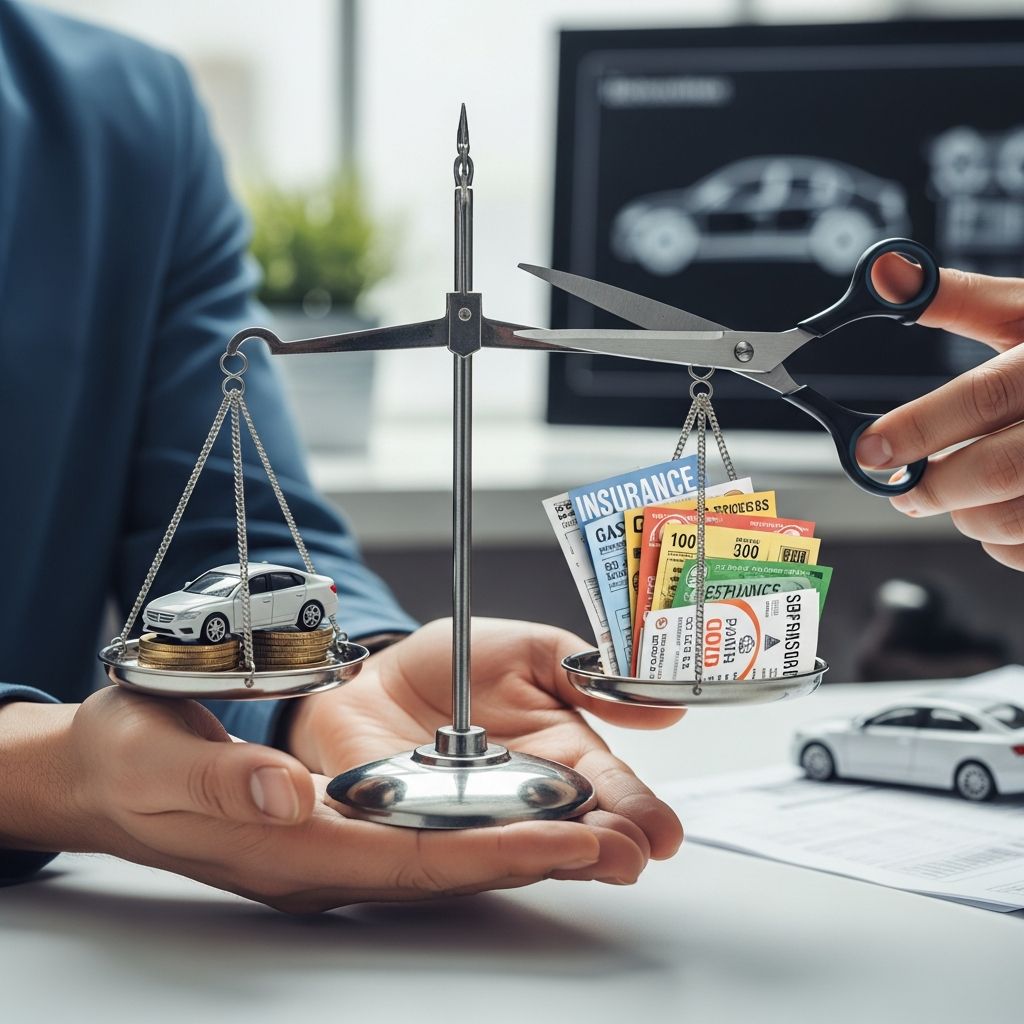
Owning a car provides invaluable convenience, but it comes with substantial ongoing expenses that can strain your budget. The average American spends over $7,500 annually on car ownership, including depreciation, fuel, insurance, maintenance, and more. By implementing smart strategies, you can slash these costs by thousands of dollars each year without sacrificing mobility. This comprehensive guide covers proven tactics from purchasing wisely to daily driving habits, drawing on real-world examples and data-driven advice.
Understand the True Cost of Car Ownership
Before cutting costs, grasp the full financial picture. A typical car depreciates by about $3,571 per year, fuel averages $2,168 annually (outside major cities), insurance runs $1,029, repairs around $745, and roadside assistance adds $66–$126. These figures total roughly $7,513 yearly for one vehicle. New cars depreciate 15-20% immediately upon purchase, amplifying losses. Factoring in opportunity costs—like money tied up in a depreciating asset instead of investments—makes ownership even pricier.
Tracking your specific expenses is step one. Use apps or spreadsheets to log fuel, repairs, insurance premiums, and mileage. This reveals hidden drains, such as inefficient routes or premium fuel unnecessary for your engine.
Buy Smart: Opt for Used Vehicles
Avoid the depreciation trap by skipping new cars. New vehicles lose 15-20% of value the moment you drive off the lot. Instead, buy reliable used models with 100,000 miles for under $5,000. Aim for cars averaging $100 monthly total ownership cost, including repairs.
- Choose fuel-efficient, durable models: Toyota Camry or Honda Accord hold value well and sip fuel at 25-30 mpg.
- Inspect thoroughly: Get a pre-purchase inspection from a trusted mechanic to avoid lemons.
- Pay cash: Eliminate loan interest and finance charges, which compound depreciation pain.
Used cars also mean lower registration fees (tied to vehicle value) and cheaper insurance, as liability-only coverage suffices without loans. One frugal owner reports keeping vehicles ‘forever’ by doing DIY repairs, limiting costs to parts only.
Minimize Insurance Expenses
Insurance is mandatory but controllable. Shop annually for quotes; rates vary widely by provider, age, history, and location. Drop comprehensive coverage on paid-off older cars, opting for liability only to save hundreds.
| Coverage Type | Average Annual Cost | Best For |
|---|---|---|
| Full Coverage (New/Loaned Car) | $1,500+ | Lenders require it |
| Liability Only (Paid-Off Used) | $600–$900 | Older vehicles |
| Usage-Based (e.g., Progressive Snapshot) | 10-30% savings | Safe drivers |
Bundling auto with home/renters insurance yields discounts. Maintain a clean record and good credit for lower premiums. Skip add-ons like roadside assistance if your insurer includes it cheaper than AAA ($66–$126/year).
Master Maintenance and Repairs
Preventive care averts costly breakdowns. Repairs average 4.97 cents per mile or $745 yearly. Follow manufacturer schedules: oil changes every 5,000 miles, tire rotations quarterly.
- DIY basics: Change air filters, wiper blades, and top off fluids yourself.
- Shop indie mechanics: Dealerships charge 2x more; independents often match quality at half price.
- Buy quality parts: OEM or aftermarket like Bosch last longer than cheap generics.
Track maintenance in a log to predict needs. For clunkers, embrace a ‘buy and hold’ mindset—well-maintained used cars outperform hybrids in total cost over time.
Save Big on Fuel
Fuel is 28% of ownership costs at $2,168/year. Boost efficiency without buying a new car.
- Drive smoothly: Avoid jackrabbit starts; maintain steady 55-65 mph speeds for 20% better mpg.
- Keep it tuned: Proper tire pressure (32-35 PSI) alone improves efficiency 3-5%.
- Lighten load: Remove roof racks and excess weight; each 100 lbs cuts mpg by 1-2%.
- Use apps: GasBuddy for cheapest stations; combine errands to minimize trips.
One household achieves ’75 mpg equivalent’ by biking 2/3 of trips with a $9,000 used car for the rest—no insurance or tags on bikes.
Explore Carpooling and Sharing
Halve costs by sharing rides. Households with one worker need just one car; coordinate business trips for carpool lane access.
Decide which car to keep:
- Highest fuel economy
- Lowest maintenance needs
- Newest (least repairs)
- Highest reliability ratings
If three of four apply to one vehicle, ditch the other. Apps like Waze Carpool or workplace programs facilitate matching. Spouses save by commuting together, bonding while cutting fuel 50%.
Leverage Public Transit and Alternatives
Go car-free where possible. Public transit, biking, or walking suits urban/suburban life. One owner sold their car, biked to work/school, and funded two years of college.
- Multi-modal: Bus to work, bike locally—Uber sparingly.
- Zipcar/Turo: Rent for occasional needs at $10/hour vs. full ownership.
- Relocate strategically: Move near transit hubs to eliminate driving.
Even partial ditching saves massively; transit/Uber rarely matches $7,500/year ownership.
Negotiate Registration and Fees
Fees scale with value—used cars win. State formulas vary, but older vehicles pay less. Renew online for discounts; some states offer low-income rebates.
Long-Term Strategies for Frugal Ownership
Adopt a clunker mindset: Prioritize retirement over shiny rides. Clark Howard advises: New? Drive till dead. Used? Buy 2-3 year old, drive 4 years. Maintain meticulously to create ‘quality second-hand vehicles’ for others.
Combine tactics: Cash-used purchase + DIY maintenance + carpooling + efficient driving can drop costs below $2,000/year.
Frequently Asked Questions (FAQs)
Q: How much can I save by buying used vs. new?
A: Up to 20% immediate depreciation avoidance, plus lower insurance and fees—potentially $2,000+ yearly.
Q: Is liability-only insurance safe?
A: For paid-off older cars, yes, if you can self-fund repairs. Assess personal risk tolerance.
Q: What’s the best fuel-saving hack?
A: Proper tire pressure and smooth driving yield 10-20% mpg gains instantly.
Q: Can I really go car-free?
A: In walkable areas with transit, yes—saving $7,500/year for investments like real estate.
Q: How do I start carpooling?
A: Use apps, workplace boards, or coordinate with family for halved commute costs.
References
- Here’s How Rich You’d Be If You Stopped Driving — Wise Bread. 2010-approx (authoritative on cost breakdowns, still relevant averages). https://www.wisebread.com/heres-how-rich-youd-be-if-youpped-driving
- How To Cut Car Ownership Costs — Wise Bread. N/A (direct source on depreciation stats). https://www.wisebread.com/how-to-cut-car-ownership-costs
- 7 Ways My Clunker Is Smarter Than a Hybrid — Wise Bread. N/A (practical used car advice, timeless). https://www.wisebread.com/7-ways-my-clunker-is-smarter-than-a-hybrid
- Depreciation: The Highest Cost of Car Ownership — MotoMan (YouTube). Recent (reinforces depreciation primacy). https://www.youtube.com/watch?v=Wi814bhl0dM
- The Hidden Costs of Car Ownership No One Talks About — AOL. Recent (opportunity cost insights). https://www.aol.com/hidden-costs-car-ownership-no-165417401.html
Similar Articles








Read full bio of medha deb