How to Create a Biweekly Budget That Actually Works
Learn how to turn your biweekly paycheck into a clear, simple plan for bills, savings, debt payoff, and long-term financial goals.
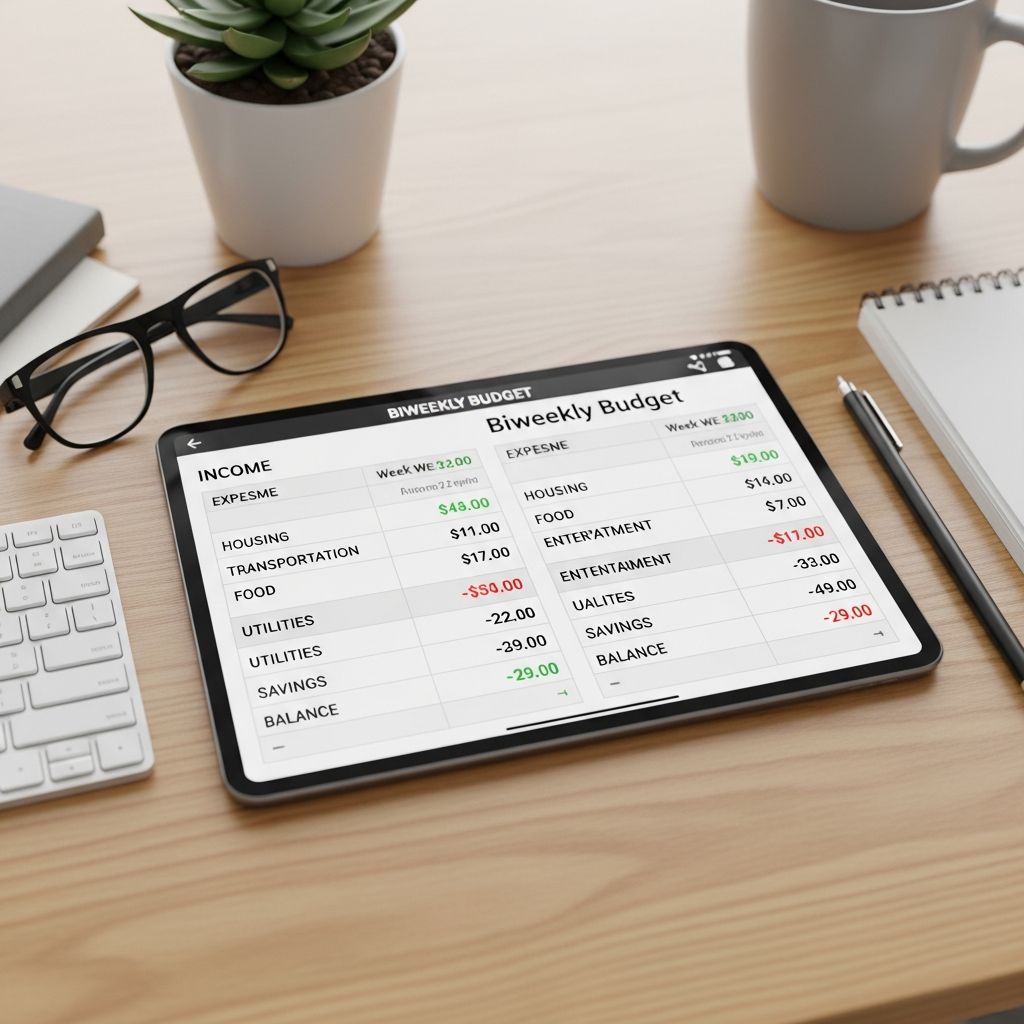
Getting paid every two weeks can feel confusing when most bills are due once a month. A well-designed biweekly budget helps you line up your paychecks with your bills, stay out of overdraft, and finally make progress on savings and debt.
This guide walks you step by step through how biweekly pay works, how to build a paycheck-based budget, ways to handle extra pay periods, and tips to avoid common mistakes.
What is a biweekly budget?
A biweekly budget is a spending plan built around income that arrives every two weeks instead of once a month. With biweekly pay, you receive 26 paychecks per year, because there are 52 weeks in a year and you’re paid every other week. Each paycheck covers 14 days of income, which does not line up perfectly with calendar months.
That misalignment is why a standard monthly budget can be tricky. A biweekly budget solves this by:
- Planning your money paycheck by paycheck instead of by calendar month.
- Assigning specific bills, savings, and debt payments to each paycheck.
- Preparing in advance for the two months a year when you get three paychecks instead of two.
Financial institutions and workplace training resources often highlight that a biweekly schedule, if managed intentionally, can improve cash flow and make it easier to smooth spending over the year.
Biweekly vs monthly budgeting
Before you create a biweekly budget, it helps to understand how it differs from a traditional monthly plan.
| Feature | Monthly Budget | Biweekly Budget |
|---|---|---|
| Income timing | Assumes income once per month | Income arrives every two weeks (26 paychecks/year) |
| Main planning unit | Calendar month | Each paycheck (14-day period) |
| Bill alignment | Bills line up easily with a monthly income number | Requires assigning each bill to a specific paycheck |
| Extra paychecks | No extra pay periods | Two extra paychecks per year can boost savings or debt payoff |
| Cash-flow risk | Risk of being short before next month’s check | Risk of being short if bills cluster near one paycheck |
Because your bills are usually due on fixed calendar dates, the key challenge with biweekly budgeting is matching those due dates to the paychecks that will cover them. Credit unions and banks often recommend using a paycheck-based budget calendar for this reason.
Pros and cons of biweekly pay
Biweekly pay has both advantages and challenges. Understanding them helps you design a budget that works long term.
Benefits of biweekly pay
- More frequent cash flow: You get paid every two weeks, which can make it easier to manage day-to-day spending.
- Two extra paychecks per year: Compared with a twice-monthly or monthly schedule, you effectively receive two extra checks annually that can be used for savings, investing, or aggressive debt payoff.
- Easier to build habits: Saving or making debt payments every paycheck means you take action 26 times a year, which can reinforce good financial habits.
Drawbacks of biweekly pay
- Doesn’t line up with monthly bills: Most rent, mortgage, and utilities are monthly. Without a plan, you may be short when a big bill is due.
- Budgeting feels confusing at first: You have to think in two-week chunks instead of months, which can feel like more work until you build a system.
- Irregular “extra” paychecks: The months in which you get three paychecks shift from year to year, so you need to track them.
How to build a biweekly budget step by step
Here is a practical, repeatable process you can use to build your own biweekly budget. Many credit unions and financial educators recommend similar steps for paycheck-based planning.
1. Calculate your true take-home income
Start with what actually lands in your bank account every paycheck.
- Look at your last few pay stubs and find your net pay (after taxes, retirement contributions, insurance, and other deductions).
- Multiply that number by 26 to estimate your annual take-home pay.
- Divide by 12 if you still want to know your approximate monthly income for comparison.
This will give you both a yearly picture and a per-paycheck number to build your budget around.
2. List and categorize all of your expenses
Next, list all of your regular expenses and separate them into categories. Major financial institutions suggest doing this before trying to assign anything to specific paychecks.
- Fixed expenses: Rent or mortgage, insurance premiums, car payment, minimum debt payments, subscriptions.
- Variable essentials: Groceries, transportation, medical co-pays, childcare.
- Flexible or discretionary: Dining out, entertainment, clothing beyond basics, travel.
- Savings and goals: Emergency fund, retirement beyond workplace plan, sinking funds (for car repairs, holidays, annual fees).
Write down the amount and the due date for each fixed bill. For variable expenses like groceries, estimate a monthly amount based on bank statements or a budgeting app.
3. Create a paycheck calendar
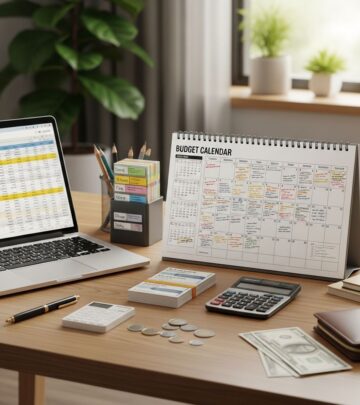
A paycheck calendar is a simple but powerful tool for biweekly budgeting. Credit unions often recommend it to help you visualize cash flow across the month.
- Mark every payday on a calendar for the next 1–3 months.
- Write your expected net pay next to each payday.
- Write each bill on the date it is due, with the amount owed.
Now draw arrows or notes connecting each bill to the paycheck that will cover it. If a bill is due just before a payday, connect it to the previous paycheck.
4. Assign bills to each paycheck
Now you will design a plan for exactly what each paycheck will do.
- Under each payday, list the bills that fall before the next paycheck.
- Include savings and debt payments as if they were bills, so they happen automatically.
- Check the total for each paycheck to make sure it is less than or equal to your net pay.
For example:
- Paycheck #1: Rent, phone bill, internet, savings contribution, part of groceries.
- Paycheck #2: Car payment, utilities, credit card payment, the rest of groceries, gas, and spending money.
If one paycheck is overloaded and the other has room, you have two options:
- Call service providers and ask if you can move due dates so your bills are more evenly split.
- Use a small buffer (cash in checking) to cover bills that hit between paychecks, then rebuild that buffer with the next check.
5. Break monthly expenses into biweekly amounts
Some expenses, especially variable ones, are easier to handle if you treat them as biweekly instead of monthly amounts. Many advisors suggest taking annual or monthly totals and converting them to per-paycheck contributions.
- Take your monthly grocery budget and divide by two to get your per-paycheck amount.
- For annual expenses (insurance, memberships, holiday gifts), estimate the yearly cost, divide by 26, and set that aside from every paycheck into a separate savings category.
- Do the same for irregular but predictable costs like car repairs, clothing, or back-to-school expenses.
This turns surprise bills into planned expenses that you have been slowly funding all year.
6. Plan how to use your “extra” paychecks
When you are paid biweekly, there will be two months each year where you receive three paychecks instead of two. If your regular bills are already covered by the first two paychecks, you can treat the third paycheck in those months as a powerful tool for financial progress.
Before those months arrive, decide how you want to use the extra pay:
- Boost your emergency fund.
- Make an extra payment toward high-interest debt.
- Increase contributions to retirement accounts or investment accounts, within allowed limits.
- Fund major goals such as a house down payment or education savings.
Planning ahead prevents the extra money from disappearing into untracked spending.
7. Track, review, and adjust regularly
No budget is perfect the first time. Financial educators emphasize checking in regularly and updating your plan when your income or expenses change.
- Track your actual spending for at least one full month or two pay periods.
- Compare what you planned with what actually happened.
- Adjust category amounts, due dates, or paycheck assignments as needed.
If you consistently overspend in a category, either lower spending elsewhere or increase the budget for that category and reduce another. The goal is to make your budget realistic, not perfect on paper.
Tips to make a biweekly budget easier to manage
Once you have a basic structure, these strategies can make your biweekly budget simpler and more sustainable.
Automate what you can
- Set up automatic transfers to savings from every paycheck.
- Use automatic payments for fixed bills to avoid late fees.
- If possible, time automatic payments to fall just after your paydays.
Automation supports the principle of “pay yourself first,” which research shows can help people save more consistently over time.
Use separate accounts for clarity
- Keep a primary checking account for bills and essentials.
- Use a second checking or a simple spending card for day-to-day discretionary spending.
- Open separate savings sub-accounts (or labeled “buckets”) for emergency fund, vacation, holidays, and other sinking funds.
Many banks and credit unions allow free sub-accounts that make it easier to see how much money is allocated to each goal at a glance.
Build and protect a small buffer
A buffer is a small amount of money that stays in your checking account and is not assigned to any immediate bill. Even a few hundred dollars can help you avoid overdraft fees if a bill posts earlier than expected.
- Start by leaving a small portion of each paycheck in checking.
- Let this grow until you have at least one half to one full paycheck as a cushion.
- Aim to treat the buffer as untouchable except in genuine emergencies.
Avoid common biweekly budgeting mistakes
- Ignoring irregular expenses: Failing to plan for annual and seasonal costs leads to reliance on credit when they arise.
- Spending third paychecks mindlessly: Treating extra pay as “fun money” instead of a chance to move your finances forward.
- Not updating your plan: When income or bills change, your old budget quickly becomes inaccurate.
- Underestimating variable costs: If you lowball categories like groceries or gas, you will constantly feel like your budget is failing.
Biweekly budgeting example
To see how this works, here is a simplified example using a fictional person, Alex, who is paid biweekly.
- Net pay per paycheck: $1,500.
- Paydays: 1st and 15th of each month (for illustration).
Monthly bills and goals
- Rent: $1,000 (due on the 3rd)
- Car payment: $300 (due on the 10th)
- Utilities: $150 (due on the 18th)
- Phone & internet: $120 (due on the 20th)
- Minimum credit card payment: $100 (due on the 25th)
- Groceries: $400 (monthly estimate)
- Gas & transportation: $160 (monthly estimate)
- Savings: $200 per month (goal)
Assigning expenses to each paycheck
Paycheck #1 (1st of the month)
- Rent: $1,000
- Groceries (half): $200
- Savings (half): $100
- Gas (half): $80
Total assigned: $1,380 — Remaining: $120
Paycheck #2 (15th of the month)
- Car payment: $300
- Utilities: $150
- Phone & internet: $120
- Credit card payment: $100
- Groceries (half): $200
- Gas (half): $80
- Savings (half): $100
Total assigned: $1,050 — Remaining: $450
Alex could then direct the remaining $450 from the second paycheck toward extra debt payments, additional savings, or discretionary spending, depending on priorities.
Biweekly budgeting and financial goals
A biweekly budget is not just about surviving until the next paycheck. It is a structure you can use to move steadily toward your financial goals.
- Emergency fund: Decide on a target (for example, 3–6 months of expenses, which is broadly recommended by financial planners) and set a fixed amount from every paycheck.
- Debt payoff: Use your budget to ensure at least the minimums are covered, then apply extra paychecks or leftover funds to the highest-interest balances first, a strategy often called the debt avalanche.
- Long-term savings: Make regular contributions to retirement and other long-term investment accounts, within the legal contribution limits specified by tax authorities.
- Short-term goals: Create sinking funds for vacations, home upgrades, education, and other medium-term priorities.
By linking each goal to a specific amount from every paycheck, you turn large, intimidating targets into a series of manageable biweekly actions.
Frequently Asked Questions (FAQs)
Q: How do I handle months with three paychecks?
A: Identify the two months in your year where you will receive three paychecks. Make sure your regular bills are fully covered by the first two paychecks, then assign the third paycheck entirely to savings, debt payoff, or other goals so it does not get lost in everyday spending.
Q: What if my big bills are due before I get paid?
A: First, try calling your landlord, lender, or service providers to request a different due date that better matches your pay schedule. If that is not possible, build a buffer in your checking account so that part of the previous paycheck can cover early-month bills.
Q: Should I still think in terms of a monthly budget?
A: It can be helpful to know your monthly income and expenses for long-term planning, but for day-to-day decisions, a paycheck-based plan is more accurate when you are paid biweekly.
Q: Can I use budgeting apps with a biweekly budget?
A: Yes. Many apps allow you to set up custom pay schedules and paycheck-based plans. You can also export transactions to a spreadsheet and manually assign each expense to a pay period if you prefer a low-tech approach.
Q: How often should I update my biweekly budget?
A: Review your budget at least once a month, and anytime your income, bills, or goals change. Make quick adjustments each payday as you see what worked and what did not in the previous pay period.
References
- How to Manage Your Budget with Biweekly Pay — eLeaP Performance. 2024-01-10. https://performance.eleapsoftware.com/glossary/how-to-manage-your-budget-with-biweekly-pay/
- How to Budget with Biweekly Paychecks: A Simple Guide for Young Adults — United Federal Credit Union. 2023-06-14. https://unitedfcu.com/resources/advice-hub/bi-weekly-paycheck-budgeting-tips
- How to Budget Biweekly Paychecks: A Step-by-Step Guide — DEXSTA Federal Credit Union. 2023-05-18. https://www.dexsta.com/how-to-budget-biweekly-paychecks/
- How America Saves 2024 — Vanguard. 2024-06-01. https://institutional.vanguard.com/content/dam/inst/vanguard-has/insights-pdfs/21_TL_HASAFAPR_2024.pdf
- Topic No. 560, Investment Income and Expenses — Internal Revenue Service. 2023-11-02. https://www.irs.gov/taxtopics/tc560
Similar Articles








Read full bio of Sneha Tete