How to Consolidate Business Debt Effectively
Learn practical strategies to combine multiple business debts into one manageable payment and strengthen your company’s financial future.
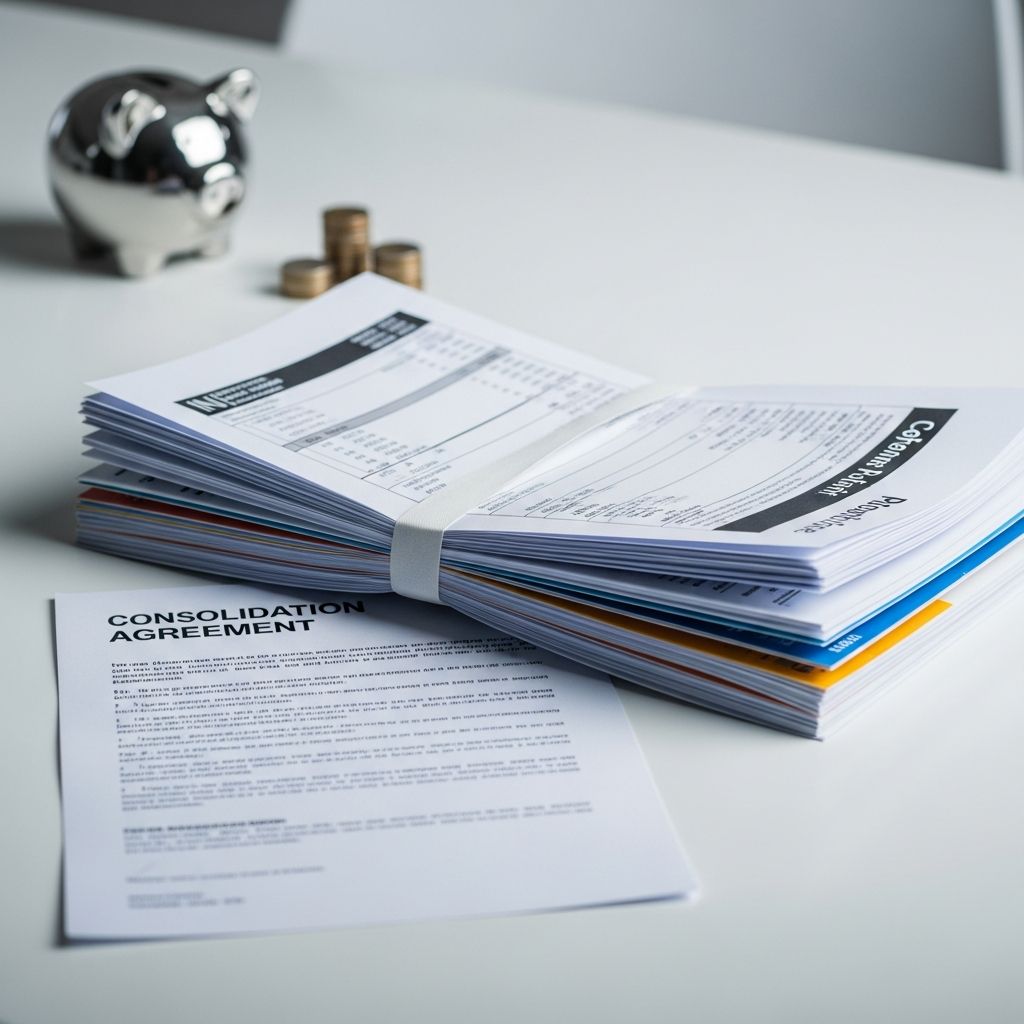
Mounting business debt can quickly drain cash flow and distract you from running your company. Consolidating multiple obligations into a single, structured payment can be a powerful way to regain control, reduce costs, and plan confidently for the future.
This in-depth guide explains what business debt consolidation is, when it makes sense, how it works, and the key steps to take before you sign any agreement. You will also learn about the main financing options, how lenders assess your business, and practical tips to avoid repeating past mistakes.
What Is Business Debt Consolidation?
Business debt consolidation is the process of taking out a new loan or financing arrangement to pay off multiple existing business debts, leaving you with just one consolidated payment to manage. In practice, you replace several obligations—such as lines of credit, term loans, business credit cards, or merchant cash advances—with a single facility that ideally has better terms.
Main goals of consolidation
- Simplify repayments by replacing many due dates and lenders with one monthly payment.
- Lower the interest cost on your overall debt, if you qualify for a cheaper rate.
- Improve cash flow by extending the repayment term or reducing the required monthly payment.
- Stabilize your finances and reduce the risk of missed payments and late fees.
How business consolidation loans work
In a typical consolidation, you apply for a new business loan large enough to cover your current balances. If approved, the lender either sends funds directly to your existing creditors or provides a lump sum that you must use to pay them off. From that point on, you make scheduled payments—often monthly—on the new loan only.
Types of Business Debt You Can Consolidate
Not every obligation can or should be consolidated, but many common business debts are eligible. Lenders usually focus on debts that are current or only slightly delinquent and that can be clearly documented.
- Term loans from banks, credit unions, or online lenders.
- Business lines of credit with revolving balances.
- Business credit card debt, especially high-interest revolving balances.
- Equipment loans, when permitted under the original contracts.
- Merchant cash advances (MCAs), which can sometimes be refinanced into installment loans.
- Short-term working capital loans from alternative lenders.
Debts that include heavy prepayment penalties or complicated collateral arrangements may be less suitable. Always review existing contracts to see whether early payoff triggers fees or restrictions.
Pros and Cons of Consolidating Business Debt
Consolidation can be a smart move, but it is not automatically beneficial. Carefully weigh the advantages and disadvantages against your business’s current situation and long-term goals.
| Potential Benefit | Why It Matters |
|---|---|
| Single monthly payment | Easier to manage cash flow and avoid missed payments or late fees. |
| Lower interest rate | Can reduce overall cost of borrowing if the new APR is below your current blended rate. |
| Predictable repayment schedule | Fixed payments make budgeting and forecasting more accurate. |
| Improved liquidity | Lower monthly obligations may free cash for operations and growth. |
Key drawbacks to consider
- Longer repayment term may mean you pay more total interest, even at a lower rate.
- Fees and closing costs—such as origination fees or prepayment penalties on old debts—can offset savings.
- Collateral requirements may put business assets or personal guarantees at risk.
- Discipline risk: Paying off old balances can be undermined if you continue to borrow aggressively afterwards.
Is Business Debt Consolidation Right for Your Company?
Before committing, assess whether consolidation aligns with your financial health and strategy. Many lenders and industry guides recommend taking an inventory of your current obligations, cash flow, and credit profile as a first step.
Signs consolidation may be a good fit
- You juggle several high-interest debts with different due dates.
- Your business cash flow is strained but fundamentally viable.
- Your credit profile is strong enough to qualify for more favorable terms than you currently have.
- You want to switch from variable or daily/weekly payments to predictable monthly payments.
When consolidation may not be the best answer
- Your business model is not yet profitable and lacks a clear path to sustainability.
- Most of your existing loans carry low fixed rates and short remaining terms.
- Prepayment penalties or fees would outweigh any savings.
- You are already severely delinquent or facing legal collections, which might call for restructuring or workout negotiations instead.
Common Business Debt Consolidation Options
Businesses can consolidate debt through several forms of financing. The right option depends on your company’s size, credit quality, collateral, and how quickly you need funds.
1. Traditional bank or credit union term loan
Banks and credit unions provide term loans that can be used to refinance higher-cost debt. These often feature competitive interest rates and multi-year repayment schedules, but underwriting is stringent and may require collateral, historical financial statements, and strong cash flow coverage.
2. SBA 7(a) loans for debt consolidation
The U.S. Small Business Administration’s SBA 7(a) loan program allows eligible small businesses to refinance certain existing debts under specific conditions. SBA support enables longer terms and potentially lower rates than many conventional loans, though the application process can be document-heavy and time-consuming.
- Maximum loan amounts can be substantial for qualified borrowers.
- Terms may extend up to 10 years or more for working capital, easing monthly obligations.
- Proceeds must typically be used to improve the business’s financial position and cannot be purely speculative.
3. Online business consolidation loans
Fintech and online lenders offer term loans and lines of credit that can be used for consolidation. Approval decisions can be faster, sometimes within days, and documentation requirements may be lighter than traditional banks. However, interest rates and fees may be higher, especially for borrowers with weaker credit.
4. Business line of credit
A revolving business line of credit can be used to pay down smaller, scattered balances. Once you draw funds to retire other debts, you repay what you used plus interest. This option offers flexibility but requires discipline not to re-accumulate debt on multiple facilities.
5. Refinancing or restructuring directly with lenders
Instead of taking a new loan from a different lender, you may be able to:
- Refinance an existing loan into a new one with a lower rate or longer term, sometimes with the same lender.
- Restructure current debts by negotiating modified terms, such as interest reductions, temporary payment relief, or maturity extensions.
Step-by-Step: How to Consolidate Business Debt
Although each lender has its own criteria, most business debt consolidation processes follow a similar sequence. Taking a structured approach improves your chances of securing favorable terms and avoiding unnecessary costs.
1. Inventory all existing debts
Start with a detailed list of what you owe:
- Lender or creditor name.
- Type of debt (loan, line of credit, card, MCA, etc.).
- Outstanding balance.
- Interest rate (APR) and whether it is fixed or variable.
- Payment frequency and due dates.
- Any collateral pledged or personal guarantees.
- Prepayment penalties or early-termination fees, if applicable.
This overview helps you calculate your total debt, your blended interest rate, and how consolidation might change both.
2. Review business and personal credit
Lenders heavily weigh your business credit profile, and often your personal credit as well for closely held firms. Check reports for accuracy and look for opportunities to correct errors or improve scores before applying.
- Confirm there are no incorrect delinquencies or duplicate accounts.
- Pay down small balances that could quickly boost utilization ratios.
- Address any outstanding tax liens or legal judgments where possible.
3. Analyze your cash flow
Evaluate how much your business can realistically afford to pay each month toward consolidated debt while covering operating expenses and necessary reinvestment. Many lenders consider debt service coverage ratios and recent bank statements when assessing repayment capacity.
4. Compare consolidation options and lenders
Next, research which form of consolidation best fits your needs, and then compare offers across multiple providers. Key factors to review include:
- Interest rate and whether it is fixed or variable.
- Repayment term length and amortization schedule.
- Origination fees, closing costs, or prepayment penalties.
- Collateral requirements and guarantees.
- Funding speed and application complexity.
5. Prepare documentation
Be ready to supply core financial and legal records. Common requirements include:
- Recent business tax returns.
- Year-to-date and prior-year financial statements (profit-and-loss, balance sheet, cash flow).
- Bank statements, typically for the last 3–6 months.
- Debt schedule summarizing all current obligations.
- Business formation documents and licenses.
- Personal financial statements for major owners, when required.
6. Submit applications and evaluate offers
Apply with selected lenders, ideally within a focused time window so multiple inquiries are viewed as rate shopping. When offers arrive, do not focus only on the headline rate—compare total cost, repayment structure, and flexibility.
7. Use proceeds to pay off existing debts
Once your consolidation loan is approved and funded, either:
- The lender pays creditors directly, or
- You receive a lump sum and must immediately pay off the targeted debts.
Confirm that all previous accounts show a zero balance and closed or paid in full, as appropriate. Keep documentation in case of later disputes.
8. Set up and manage your new payment plan
With your old obligations cleared, treat the new consolidated loan as a key part of your financial plan:
- Set up automatic payments from your business checking account.
- Monitor cash flow and maintain reserves for slower periods.
- Avoid rebuilding high-interest balances on credit cards or short-term loans.
How Lenders Evaluate Business Debt Consolidation Applications
Understanding how lenders underwrite applications helps you prepare a stronger case and anticipate possible outcomes.
- Time in business: Many lenders prefer at least 1–2 years of operating history.
- Revenue and profitability: Stable or growing revenues and positive net income are strong indicators of ability to repay.
- Debt-to-income and coverage ratios: Lenders analyze how much of your cash flow is already committed to debt service.
- Credit scores: Both business and personal credit scores influence interest rates and approval odds.
- Collateral and guarantees: Hard assets or personal guarantees can mitigate risk for the lender but increase exposure for you.
Practical Tips to Make Consolidation Work Long-Term
Consolidating debt is only part of the solution. Sustained improvement requires better financial habits and ongoing planning.
- Create a realistic budget that includes conservative revenue assumptions and prioritized expenses.
- Build an emergency reserve to avoid relying on expensive short-term financing during downturns.
- Separate business and personal finances to keep records clear and protect credit profiles.
- Regularly review financial statements so you can spot trends early and adjust spending or pricing.
- Use debt strategically: Reserve borrowing for investments that clearly support revenue growth or operational efficiency.
Frequently Asked Questions (FAQs)
Q: Will consolidating business debt hurt my credit?
A: Applying for a new loan usually triggers a hard inquiry, which can cause a small, temporary dip in your credit score. Over time, making on-time payments on the consolidated loan and reducing overall debt can support stronger credit, especially if it helps you avoid delinquencies.
Q: Can I consolidate business debt with a personal loan?
A: Some owners use personal loans or home equity to pay off business debts, but this shifts liability to you personally. In addition, interest on personal loans is usually not tax-deductible as a business expense, and you may be putting personal assets at risk. Consider professional advice before taking this route.
Q: How long does it take to get a business debt consolidation loan?
A: Timeframes vary widely. Online lenders may approve and fund in a few days, while bank and SBA-backed loans can take several weeks due to more extensive underwriting and documentation requirements.
Q: Is consolidation the same as settlement?
A: No. Consolidation replaces multiple debts with a new loan, and you repay the full amount over time. Settlement, by contrast, involves negotiating with creditors to accept less than the full balance—usually after accounts are severely delinquent—and it can significantly damage your credit.
Q: Can startups consolidate business debt?
A: Very young businesses with limited revenue and short operating history may struggle to qualify for favorable consolidation loans. Lenders typically want to see at least several months—often years—of revenue and financial statements. In these cases, focusing on cash flow management and targeted cost reductions may be more realistic in the short term.
References
- Business Debt Consolidation: How It Works & When It Makes Sense — SBG Funding. 2023-06-15. https://sbgfunding.com/business-debt-consolidation-explained/
- Business Debt Consolidation: A Small Business Guide — Fundera (NerdWallet). 2022-09-08. https://www.fundera.com/business-loans/guides/business-debt-consolidation-loan
- How to Consolidate Business Debt — Bankrate. 2023-10-12. https://www.bankrate.com/loans/small-business/how-to-consolidate-business-debt/
- SBA 7(a) Loan Program — U.S. Small Business Administration. 2024-02-01. https://www.sba.gov/funding-programs/loans/7a-loans
- What a Business Consolidation Loan Is, and How to Apply for One — JPMorgan Chase. 2023-05-20. https://www.chase.com/business/knowledge-center/manage/business-consolidation-loan
Similar Articles








Read full bio of Sneha Tete