How to Compare Motorcycle Insurance Quotes
Find the best motorcycle insurance rates by comparing quotes from multiple insurers.
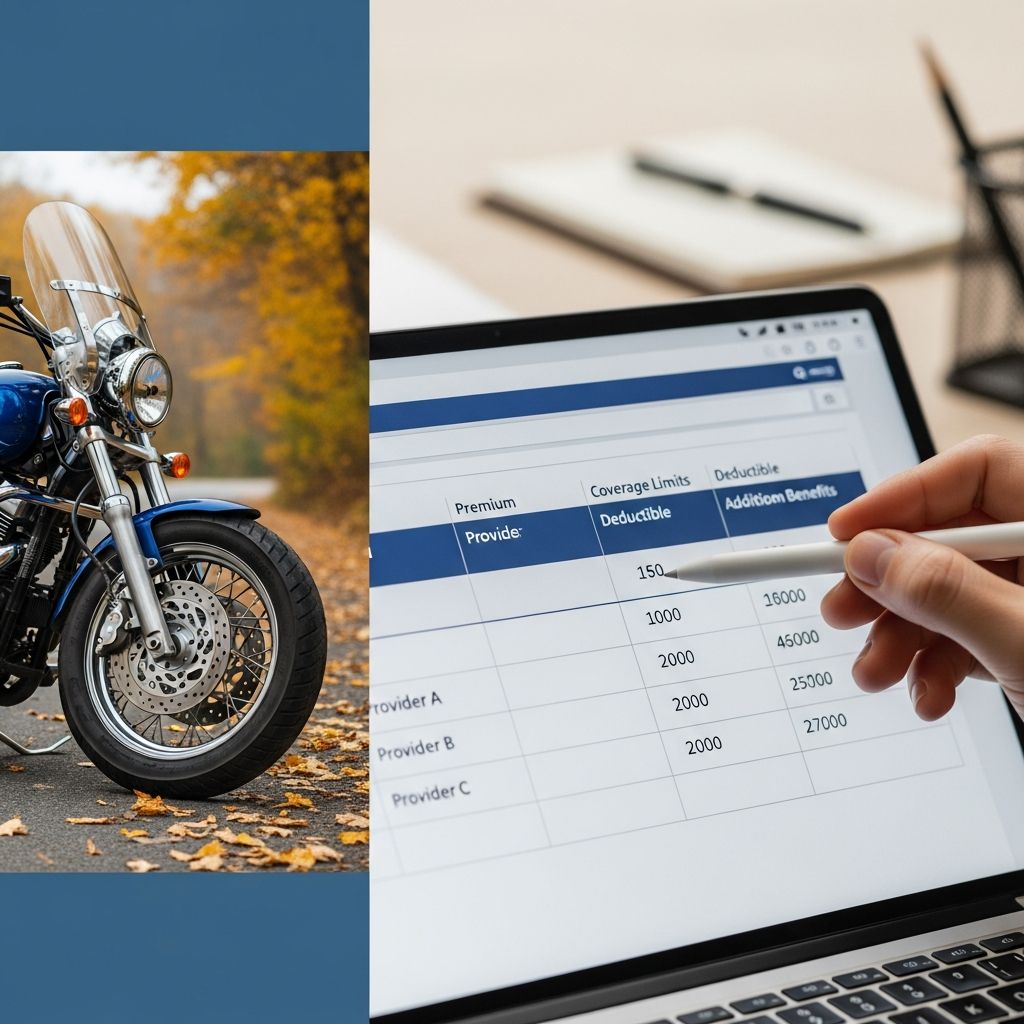
Shopping for motorcycle insurance doesn’t have to be overwhelming. By comparing quotes from multiple insurers, you can find coverage that protects your bike while fitting your budget. Research shows that comparing motorcycle insurance rates between companies can reveal significant price differences—identical coverage can cost $31 per month with one insurer and $58 per month with another, potentially saving you up to 42% on annual premiums. This guide walks you through the process of comparing motorcycle insurance quotes like a pro.
Step 1: Gather the Information You Need
Before requesting quotes from insurance companies, prepare detailed information about yourself and your motorcycle. Having this information ready ensures you receive accurate quotes and can compare them fairly across different insurers.
Insurers require the following details to generate accurate motorcycle insurance quotes:
- Your motorcycle’s Vehicle Identification Number (VIN), or the make, model, and year if the VIN isn’t available
- Annual mileage you expect to ride
- Date you obtained your motorcycle license
- Completion dates for any motorcycle safety courses you’ve taken
- Current insurance information, if you’re switching providers
- Your age, current address, and driving history
- Primary use of the motorcycle (commuting, recreation, or both)
- Where you store your motorcycle (garage, outdoor parking, or storage facility)
- Discount qualifiers such as student GPA, motorcycle club memberships, or military service
Having all this information organized before you start getting quotes will speed up the process significantly and ensure consistency across all your comparisons.
Step 2: Determine What Motorcycle Coverage You Need
Before comparing quotes, decide which coverage types and limits make sense for your situation. The right coverage depends on several factors including your budget, where you live, how often you ride, and the value of your motorcycle.
Liability Coverage: This is the foundation of motorcycle insurance and is required by law in all states. It covers damages or injuries you cause to others in an accident. Higher limits provide better protection but increase your premium.
Collision Coverage: This covers damage to your motorcycle resulting from a collision with another vehicle or object. It’s optional but recommended if you have a loan or lease on your bike.
Comprehensive Coverage: This protects your motorcycle from non-collision events like theft, vandalism, weather, or animal strikes. Many riders choose this coverage for additional peace of mind.
Uninsured and Underinsured Motorist Coverage: This protects you if you’re hit by a driver without adequate insurance. While optional in some states, it’s highly recommended given the number of uninsured drivers on the road.
Medical Payments Coverage: Also called personal injury protection in some states, this covers medical expenses for you and your passengers resulting from an accident, regardless of who’s at fault.
Consider your riding habits, the value of your motorcycle, and your financial situation when deciding which coverages to include. Newer bikes and financed motorcycles typically require full coverage, while older bikes might only need liability.
Step 3: Explore Ways to Save on Motorcycle Insurance
Insurance companies offer numerous discounts that can significantly reduce your premiums. Taking advantage of these opportunities is one of the easiest ways to lower your motorcycle insurance costs.
Safety Course Discounts: Completing an approved motorcycle safety course demonstrates responsible riding and can cut your premiums by 5-15% depending on the insurer. Many insurance companies recognize courses from the Motorcycle Safety Foundation and other accredited organizations.
Motorcycle Club Memberships: Belonging to recognized riding organizations like the American Motorcyclist Association can unlock discounts with participating insurers. These memberships often come with additional benefits beyond insurance discounts.
Policy Bundling: Combining your motorcycle insurance with auto, home, or renters insurance policies often results in substantial discounts. Bundling can save you 10-25% on your overall insurance costs.
Clean Driving Record: Avoiding accidents and traffic tickets qualifies you for safe rider discounts. Some insurers reward claims-free years by reducing your deductible or lowering your premium annually.
Annual Payment Plans: Paying your premium in one lump sum rather than in monthly installments typically costs less. The savings vary by insurer but can be 5-10% of your annual premium.
Motorcycle License: Having a formal motorcycle license rather than just an endorsement on your auto license can save you money. This demonstrates formal training and commitment to safe riding.
Anti-Theft and Safety Devices: Installing anti-lock brakes, GPS trackers, or approved anti-theft devices can qualify you for additional discounts with many insurers.
Low Mileage Discounts: If you ride your motorcycle infrequently or only seasonally, some insurers offer discounts for riders who don’t use their bikes year-round.
Step 4: Compare Multiple Quotes Through Different Means
Now that you have your information organized and know what coverage you need, it’s time to collect quotes from multiple insurance companies. Comparing at least three to five quotes ensures you’re getting competitive rates.
Online Quotes: Most major insurers offer online quote tools that provide instant estimates. Online quotes are convenient and allow you to compare coverage options and prices quickly. Many insurers including Progressive, GEICO, Markel/Voom, Dairyland, Harley Davidson, and Rider Insurance offer online quotes that you can complete in minutes.
Direct Agent Contact: You can also call insurance agents directly or visit their offices for personalized quotes. Agents can answer questions about specific coverage options and help customize policies for your needs. Companies like State Farm, Liberty Mutual, and Nationwide typically require agent contact for quotes.
Telephone Quotes: Many insurers have customer service teams that can provide quotes over the phone. This option is useful if you have complex coverage needs or prefer speaking with a representative.
Email Quotes: Some insurers like Foremost Insurance accept quote requests via email, which can be convenient if you want to provide detailed information and receive comprehensive quotes.
When collecting quotes, ensure each one includes the same coverage types, limits, and deductibles so you can make accurate comparisons. Different deductibles or coverage limits will make premiums appear lower but won’t reflect true apples-to-apples comparison.
Understanding Coverage Limits and Deductibles
Once you have multiple quotes, compare the coverage limits and deductibles for each policy. A limit is the maximum amount your policy will pay for a covered loss. Understanding these details is crucial for making an informed decision.
Collision and Comprehensive Coverage Limits: These are typically limited to the actual cash value of your motorcycle. More valuable bikes may justify higher limits.
Liability Limits: These determine how much your insurer will pay for damages or injuries you cause to others. State minimum requirements vary, but many experts recommend limits higher than the state minimum for adequate protection.
Uninsured and Underinsured Motorist Coverage Limits: In some states, these limits are dictated by state law, while in others you can choose your limits. If unsure, consult with an agent about appropriate limits for your situation.
Medical Payments Coverage Limits: Some states require this coverage with specific mandatory limits, while in others it’s optional and you choose the limits. These typically range from $1,000 to $5,000 per person.
Deductibles: A higher deductible means lower premiums but more out-of-pocket costs if you have a claim. Consider your emergency fund when choosing deductibles—typically $250 to $1,000 per claim.
Comparing Insurance Companies and Their Offerings
Beyond price, compare the reputation, customer service, and unique offerings of each insurance company. Different insurers provide various benefits that might add value to your policy.
Allstate: Offers an optional “new motorcycle replacement” feature that reimburses you for a brand-new bike if yours is destroyed in an accident (available for motorcycles less than 2 years old). Your insurance cost also stays the same after your first accident if your policy is at least 4 years old.
Progressive: Progressive’s standard motorcycle coverage pays to repair your damaged motorcycle with new parts and no deduction for depreciation. Claims of $500 or less don’t count against your record, and a first accident doesn’t count against you if you’ve been accident-free for four consecutive years.
Liberty Mutual: Offers Better Bike Replacement coverage that pays out for a bike one year newer with 2,500 fewer miles if yours is destroyed. Their new motorcycle replacement coverage reimburses you for a new bike with no depreciation within the first year.
State Farm: Offers coverage for various motorcycle types including classic, custom, factory-built, trail bikes, and motor scooters. Provides emergency roadside assistance and protective gear coverage.
USAA: Available to military members and their families, USAA offers motorcycle insurance from Foremost Insurance Group with a 5% military discount plus additional discounts for claims-free records and safety courses.
American Family: Covers custom accessories up to $3,000 and offers up to $1,000 of coverage for safety gear including helmets and boots.
Farmers: Provides collision insurance covering up to $1,500 of safety gear and comprehensive insurance covering up to $3,500 of equipment. Also offers trip interruption coverage.
Nationwide Insurance: Offers up to $50,000 of coverage for custom bikes and up to $30,000 for vintage bikes. Decreases your deductible by $100 for every year you go without an accident.
Typical Motorcycle Insurance Costs
Understanding average costs helps you evaluate whether quotes you receive are reasonable. Costs vary significantly based on location, age, riding experience, and bike type.
| Coverage Level | Typical Annual Range | Details |
|---|---|---|
| Minimum Liability Only | $200 – $400 | Meets state requirements but offers limited protection |
| Full Coverage (Liability + Comp + Collision) | $600 – $1,200 | Recommended for most riders |
| High-Risk Riders | $1,500+ | Rates increase with violations, sport bikes, or accident history |
Urban riders in areas with high traffic density and theft exposure may pay 25-35% more than riders in rural areas. Young riders and those with performance or sport bikes typically face higher premiums due to increased risk factors.
Making Your Final Decision
After collecting and comparing multiple quotes, review your options carefully. Don’t automatically choose the cheapest option—consider the company’s reputation, customer service ratings, claims handling experience, and any unique benefits offered.
Check online reviews and ratings from independent sources. Look for comments about claims processing, customer service responsiveness, and overall satisfaction. A slightly higher premium from a highly-rated insurer might provide better value and peace of mind than the lowest-priced option.
Verify that each quote includes all the coverage you determined was necessary in Step 2. Ensure deductibles and limits match across your comparison. Once you’ve made your selection, review your policy documents carefully before your coverage begins.
Frequently Asked Questions
Q: How often should I compare motorcycle insurance quotes?
A: It’s recommended to compare quotes annually or whenever your circumstances change significantly (new bike, accident, moving, etc.). Insurance rates fluctuate, and new discounts may become available. Shopping around every 12-24 months can help ensure you’re still getting competitive rates.
Q: Can I get a motorcycle insurance quote without a VIN?
A: Yes, most insurers will provide a preliminary quote using your motorcycle’s make, model, and year if you don’t have the VIN readily available. However, you’ll need the VIN when purchasing the policy for final underwriting and verification of the specific bike.
Q: What if I have a poor driving record?
A: A poor driving record will increase your premiums, but you still have options. Completing a motorcycle safety course can offset some increases. Shopping with multiple insurers is especially important since different companies weigh driving history differently. Some specialize in covering riders with imperfect records.
Q: How much can I save with a motorcycle safety course?
A: Most insurers offer 5-15% discounts for completing an approved motorcycle safety course. The exact discount varies by insurer and sometimes by your age and experience level. The cost of the course (typically $150-$300) is often recovered within one year through insurance savings.
Q: Should I get full coverage for an older motorcycle?
A: For older motorcycles with lower market values, full coverage (collision and comprehensive) might not be cost-effective. Compare the annual premium cost against your bike’s actual cash value. If your bike is worth less than 10 times the annual comprehensive and collision premium, liability-only coverage may be more economical.
Q: Can bundling motorcycle insurance with auto insurance save money?
A: Yes, bundling typically saves 10-25% on your overall insurance costs. Most major insurers offer discounts when you combine motorcycle, auto, home, and renters insurance policies with them. Always ask about bundle discounts when comparing quotes.
Q: What’s the difference between a motorcycle endorsement and a motorcycle license?
A: A motorcycle license is a separate, dedicated license obtained through testing, while an endorsement is an addition to your auto driver’s license. Insurance companies generally charge lower premiums for riders with full motorcycle licenses since they’ve demonstrated formal training and commitment to safe riding practices.
Q: How does my age affect motorcycle insurance rates?
A: Age significantly impacts rates. Younger riders (under 25) typically pay much higher premiums due to statistically higher accident rates. Rates generally decrease as you age and build a clean riding record. Some insurers offer discounts for riders over a certain age, recognizing their experience and lower risk profile.
References
- Compare Motorcycle Insurance Quotes & Companies Online — MoneyGeek. 2025. https://www.moneygeek.com/insurance/motorcycle/
- A Complete Guide to Motorcycle Insurance — NerdWallet. 2025. https://www.nerdwallet.com/insurance/auto/learn/motorcycle-insurance
- California Motorcycle Insurance: Costs, Coverage & Rules — InsZone Insurance. 2025. https://inszoneinsurance.com/blog/motorcycle-insurance-guide
- Comparing Insurance Quotes – Motorcycle — Allstate. 2025. https://www.allstate.com/resources/motorcycle-insurance/comparing-motorcycle-insurance
- Motorcycle Insurance Guide: Essential Coverage Insights — AAA. 2025. https://www.acg.aaa.com/connect/insurance/motorcycle-insurance-guide
Similar Articles








Read full bio of Sneha Tete