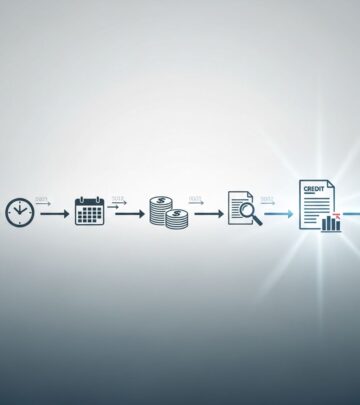
How to Clear Old Debt from Your Credit Report
Discover proven strategies to remove outdated collections and old debts from your credit report to boost your financial health and score.

Old debts lingering on your credit report can significantly damage your credit score, making it harder to qualify for loans, mortgages, or even rentals. Fortunately, under U.S. laws like the Fair Credit Reporting Act (FCRA) and Fair Debt Collection Practices Act (FDCPA), you have rights to challenge and potentially remove inaccurate or outdated collection accounts. Negative items, including collections, must generally be removed after seven years from the date of first delinquency with the original creditor—not when it’s sold to a collector. This article outlines comprehensive steps to verify, dispute, negotiate, and eliminate old debt, helping you reclaim your financial future.
Understand How Long Old Debt Stays on Your Credit Report
Before taking action, know the timelines governed by the FCRA. Most negative information, such as late payments, charge-offs, and collections, remains on your credit report for
seven years
from the original delinquency date (ODD)—the first missed payment that led to default. For example, if you missed a payment in March 2022, the clock starts then, regardless of subsequent sales to collection agencies. Chapter 7 bankruptcies stay for 10 years, while Chapter 13 for seven.Paid collections don’t disappear automatically; they may update to “paid” or “settled” but still impact your score until the seven-year mark. Multiple collections from the same debt share the same ODD, so they all expire together. If an item exceeds this period, it’s illegal for bureaus to report it. Always pull free weekly reports from AnnualCreditReport.com to check dates and accuracy.
Step 1: Pull and Review Your Credit Reports
Start by obtaining your credit reports from Equifax, Experian, and TransUnion via AnnualCreditReport.com (free weekly) or directly from bureau sites. Scrutinize every entry:
- Debt amount: Does it match your records?
- Date of delinquency: Verify the ODD; errors here can lead to premature removal.
- Personal info: Ensure name, address, and account details are correct.
- Status: Check if paid debts show as “paid in full” or “settled”.
Discrepancies? Document everything with screenshots and statements. This foundation is crucial for disputes.
Step 2: Verify the Debt with the Collection Agency
If you spot an unfamiliar or questionable collection, request validation under the FDCPA within 30 days of their contact. Send a certified debt validation letter demanding proof of the debt, original creditor, amount owed, and their right to collect.
Key steps:
- Write the letter: Include account number, your details, and validation request.
- Send via certified mail.
- If they fail to validate (e.g., no response in 30 days), they must stop collection and request bureau removal.
This halts aggressive tactics and often uncovers unverifiable debts.
Step 3: Dispute Inaccurate Information with Credit Bureaus
The FCRA mandates bureaus investigate disputes within 30 days, contacting furnishers (creditors/collectors) to verify info. Unverifiable items must be deleted.
How to dispute:
- Online via bureau portals (Equifax.com/dispute, Experian.com/dispute, TransUnion.com/dispute).
- Mail detailed letters with evidence: Explain errors, attach docs like payment proofs or ODD records.
- Include your full name, address, account number, and specific inaccuracies.
Track via dispute ID. If denied, escalate to the creditor directly or CFPB. Success rates are high for outdated items post-seven years.
Step 4: Negotiate a Pay-for-Delete Agreement
For valid but removable debts, propose paying (full or settled amount) in exchange for deletion. Though not guaranteed—some agencies’ policies prohibit it due to bureau agreements—many accept, especially for older accounts.
Negotiation process:
- Contact the agency: Call or write, propose the deal clearly.
- Get it in writing: Before paying, secure a signed letter stating deletion upon payment.
- Pay and monitor: Use a method providing proof (e.g., wire, check). Check reports in 30-45 days; follow up if needed.
| Pros | Cons |
|---|---|
| Quick score boost | Not always honored |
| Removes tradeline entirely | May violate agency policies |
| Works for settled debts | Payment restarts statute of limitations in some states |
Timing matters: Older debts (near 7-year mark) increase leverage.
Step 5: Request a Goodwill Deletion
If paid, write a goodwill letter to the original creditor or agency explaining circumstances (e.g., job loss, medical emergency). Highlight your improved payment history and loyalty.
Sample structure:
- Introduce yourself and account.
- Explain hardship briefly.
- Provide evidence of good behavior (recent on-time payments).
- Politely request removal as goodwill.
- Attach proofs.
Success is higher with strong credit profiles and one-time issues. Send to both creditor and agency.
Step 6: Update Paid Collections to ‘Paid in Full’ or ‘Settled’
After payment, confirm bureaus reflect updated status. Dispute if it still shows “unpaid.” Request the furnisher update directly. This mitigates damage even if not deleted.
Step 7: Add a Consumer Statement
If removal fails, add a 100-word statement to your report explaining the debt (e.g., “Medical emergency led to delinquency; paid in full 2023”). Lenders see it, providing context.
Step 8: Wait It Out – The 7-Year Rule
If all else fails, negative items auto-expire after seven years. Monitor near the date; dispute if lingering. Avoid payments or acknowledgments that could reset the clock.
Additional Tips for Success
- Be persistent: Follow up every dispute.
- Rebuild credit: Use secured cards, pay on time.
- Seek help: Non-profits like NFCC.org for free advice.
- Avoid scams: No “credit repair” fees upfront (illegal).
Removing old debt demands patience but yields massive rewards—a higher score unlocks better rates, saving thousands.
Frequently Asked Questions (FAQs)
Q: Can paid collections be removed immediately?
A: Not automatically, but via goodwill letters, pay-for-delete, or disputes if inaccurate. They drop after 7 years regardless.
Q: Does paying old debt hurt my score?
A: Updating to “paid” helps slightly; full deletion is best. Avoid if near expiration.
Q: What if debt is beyond 7 years but still shows?
A: Dispute with bureaus; they must investigate and remove if unverifiable.
Q: Can multiple collectors reset the 7-year clock?
A: No—all tie to original delinquency date.
Q: Is pay-for-delete legal?
A: Yes, if agreed privately, though some agencies decline.
References
- How to Remove Collection Debt from Your Credit Report — JG Wentworth. 2024. https://www.jgwentworth.com/resources/how-to-remove-collection-debt-from-your-credit-report
- Pay for Deletion in Debt Collection: A Comprehensive Guide — The Fair Capital. 2024. https://www.thefaircapital.com/post/pay-for-deletion-in-debt-collection
- 8 ways to remove old debt from your credit report — Bankrate. 2024-10-01. https://www.bankrate.com/personal-finance/credit/how-to-rid-credit-report-of-old-debt/
- How Do I Get a Paid Collection off My Credit Report? — Experian. 2024. https://www.experian.com/blogs/ask-experian/how-do-i-get-a-paid-collection-off-my-credit-report/
- How to Remove a Collections Account from Your Credit Report After Seven Years — Wenzel Fenton Cabassa P.A. 2025-10-01. https://www.wslaw.com/blog/2025/october/how-to-remove-a-collections-account-from-your-credit-report-after-seven-years/
- Disputing Errors on Your Credit Reports — Federal Trade Commission. 2024. https://consumer.ftc.gov/articles/disputing-errors-your-credit-reports
- How to Remove Collection Accounts from Your Credit Report — Discover. 2024. https://www.discover.com/credit-cards/card-smarts/how-remove-collections-credit-report/
Similar Articles








Read full bio of Sneha Tete