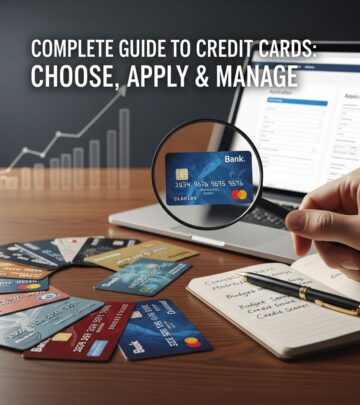
How To Choose A Credit Card: 12 Essential Factors
Navigate the overwhelming world of credit cards with expert tips on rewards, rates, fees, and more to find your perfect match.

Choosing the right credit card can significantly impact your financial health, offering rewards, building credit, or providing convenience. With hundreds of options available, it’s essential to evaluate key factors systematically to find one that aligns with your spending habits and goals. This guide covers all critical aspects, from avoiding scams to understanding fine print, helping you make an informed decision.
1. Avoid Independent Marketers
Independent marketers often promote credit cards with aggressive tactics, promising unrealistic benefits or hiding fees. These offers may come via unsolicited emails, calls, or pop-up ads, pressuring quick decisions without full disclosure. Stick to reputable sources like bank websites, comparison tools from trusted financial sites, or official issuer applications to ensure transparency and legitimacy.
Research issuers directly. For instance, major banks like Chase, Capital One, and Bank of America provide detailed card comparisons on their sites. Independent promoters might earn commissions by pushing subpar cards, so verify offers through primary sources such as the Consumer Financial Protection Bureau (CFPB) guidelines on credit card applications.
2. Choose a Rewards Program You Will Use
Rewards are a major draw, but only valuable if you redeem them. Common types include cash back, travel miles, points for merchandise, or gift cards. Analyze your spending: if you travel frequently, opt for airline or hotel rewards; for everyday purchases, flat-rate cash back like 1.5% or 2% is ideal.
Consider cards like the Chase Freedom Unlimited, offering 1.5% cash back on all purchases plus bonuses on travel and dining, or Capital One Quicksilver with 1.5% unlimited cash back and easy $200 welcome bonuses. Tools like the Wise Bread Rewards Maximizer analyze your spending history to recommend personalized cards, factoring in categories like groceries, gas, and dining.
- Cash Back Cards: Simple redemption as statement credits or deposits. Best for non-travelers.
- Travel Rewards: Miles or points for flights/hotels, but watch blackout dates and expiration.
- Points Programs: Flexible for multiple redemptions, e.g., Chase Ultimate Rewards transferable to partners.
Evaluate redemption value: Aim for at least 1 cent per point/mile. Avoid programs with high thresholds or limited options that lead to unused rewards.
3. Evaluate the Annual Percentage Rate
The APR determines interest costs if you carry a balance. Credit cards feature variable APRs tied to the prime rate, typically ranging 15-30% in 2026. Pay in full monthly to avoid interest; otherwise, seek 0% introductory APR cards for purchases or balance transfers.
Compare regular APRs: Lower is better for revolvers. Fixed APRs offer stability but are rare. Per the Federal Reserve, average credit card APR hovers around 21%, so shopping saves hundreds annually. Use the Schumer Box in offers to spot intro periods, penalty APRs (up to 29.99%), and how rates apply to balances.
| Card Example | Intro APR | Regular APR | Best For |
|---|---|---|---|
| Chase Freedom Unlimited | 0% for 15 months | 19.99%-28.74% | Balance transfers |
| Capital One Quicksilver | 0% for 15 months | 19.24%-29.24% | Purchases |
| Bank of America Unlimited | 0% for 15 billing cycles | 19.24%-29.24% | Cash back + low intro |
Penalty APR triggers from late payments; choose cards with grace periods (usually 21-25 days) for interest-free payments if paid on time.
4. Understand Fees
Fees erode benefits. Common ones: annual ($0-$550), foreign transaction (0-3%), late payment ($30-$40), returned payment, cash advance (3-5% + higher APR), and balance transfer (3-5%). No-fee cards suit beginners; premium cards justify fees with perks like lounge access.
- Annual Fee: Waived first year often; calculate if rewards exceed it.
- Foreign Transaction: Avoid for international use; 0% is standard on travel cards.
- Other Fees: Opt for no-penalty APR hikes.
Review Schumer Box for all fees. CFPB data shows average late fee at $32, capped by CARD Act at $41 max.
5. Check the Credit Limit
Higher limits improve utilization ratio (under 30% ideal for credit scores). Starts based on income, credit score (FICO 670+ for good limits). Request increases post-approval, but avoid hard inquiries. Secured cards build credit with deposits as limits ($200-$500 typical).
6. Know Grace Periods and Billing Cycles
Grace period: 21+ days to pay without interest. Billing cycle: 28-31 days; pay before statement closes for full grace. Track via apps to avoid interest on new purchases if balance carried.
7. Review Payment Options and Due Dates
Flexible payments: full, minimum (impacts score negatively), or more. Set due dates suiting cash flow (e.g., post-payday). Autopay prevents late fees; issuers like Citi allow changes online.
8. Look at Authorizations and Holds
Gas stations/hotels place holds ($1-$150+), temporarily reducing available credit. Understand policies to avoid declines; travel cards often have higher limits.
9. Use Comparison Tools
Leverage free tools like Wise Bread Rewards Maximizer: Link accounts or input spending for tailored recs, comparing 1-3 year earnings vs. current cards. Other sites like CreditCards.com compare cash back options.
10. Read the Fine Print
Schumer Box summarizes, but dig into terms: exclusions, caps, changes. CARD Act mandates clarity since 2010.
11. Consider Your Credit Score
Excellent (740+): Premium rewards. Good (670-739): Solid options. Fair: Secured/subprime with higher fees. Check free via AnnualCreditReport.com.
12. Think About Customer Service
24/7 support, app ratings (4+ stars), dispute resolution. J.D. Power ranks issuers annually; Chase, Amex top lists.
Frequently Asked Questions (FAQs)
Q: What’s the best cash back rate for everyday spending?
A: 1.5%-2% flat rates like Wells Fargo Active Cash or Citi Double Cash excel for simplicity.
Q: Should I get a card with an annual fee?
A: Yes, if perks (credits, insurance) exceed fee; calculate net value annually.
Q: How does APR affect me if I pay in full?
A: Not at all; focus on rewards and fees instead.
Q: Can I have multiple cards?
A: Yes, diversify rewards but manage utilization under 30% total.
Q: What’s a Schumer Box?
A: Mandatory summary table of rates, fees, and terms in applications.
Armed with this guide, select a card boosting finances without pitfalls. Tools and comparisons simplify; always apply what fits your life.
References
- Consumer Financial Protection Bureau: Credit Card Accountability Responsibility and Disclosure Act of 2009 — U.S. Government (CFPB). 2024-01-15. https://www.consumerfinance.gov/rules-policy/regulations/1026/
- Federal Reserve Board: Credit Card Rates and Fees — Federal Reserve System. 2025-10-01. https://www.federalreserve.gov/releases/g19/current/
- Credit Card Surveys and Market Report — J.D. Power. 2025-07-22. https://www.jdpower.com/business/press-releases/2025-us-credit-card-satisfaction-study
- Annual Credit Report Request Service — Federal Trade Commission. 2025-12-01. https://www.annualcreditreport.com
- Truth in Lending Act (Regulation Z) — Federal Reserve. 2023-05-01. https://www.federalreserve.gov/boarddocs/supmanual/cch/truth_in_lending_act.pdf
Similar Articles








Read full bio of Sneha Tete