How to Check a Check: Complete Verification Guide
Learn to verify checks properly: identify security features, prevent fraud, and ensure safe transactions.
How to Check a Check: A Comprehensive Verification Guide
Checks remain a common form of payment in both personal and business transactions, despite the rise of digital payment methods. Whether you’re a business owner, financial professional, or individual handling checks regularly, understanding how to properly verify a check is essential for protecting yourself against fraud and ensuring smooth financial transactions. This guide walks you through the complete process of checking a check for authenticity and validity.
Understanding Check Basics
Before you can effectively verify a check, it’s important to understand the fundamental components and how checks work in the banking system. A check is a written order directing a financial institution to pay a specific sum of money from the account holder’s account to the designated payee. Checks contain several critical elements that serve both functional and security purposes.
The front side of a check displays identifying information about the account holder, including their name, address, and account number. The back side contains information about the person or business who wrote and signed the check, along with endorsement spaces. Understanding these components is crucial for proper verification, as missing or incorrect information can indicate fraud or processing problems.
Key Components of a Check
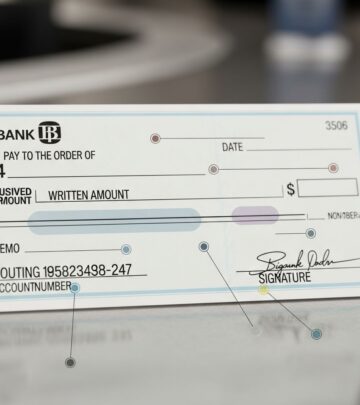
Each check contains specific elements that you should examine carefully when verifying its authenticity:
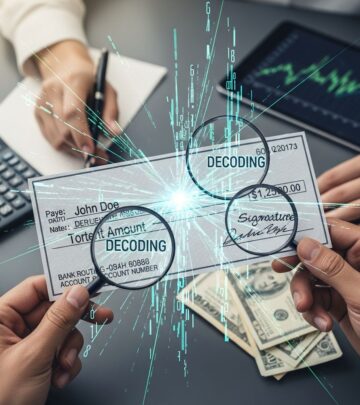
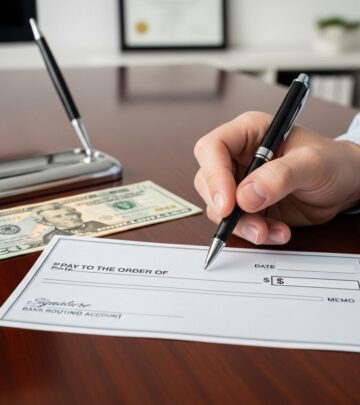
– Check Number: Located in the top-right corner and bottom-left corner, this unique identifier helps track individual checks and prevents duplication.- Routing Number: This nine-digit code identifies the specific bank or credit union and is essential for processing through the Federal Reserve’s clearing system.- Account Number: Displayed on the bottom-left of the check, this number identifies the specific account from which funds will be drawn.- Date Line: Shows when the check was written and determines when it can be cashed. Post-dated checks cannot be cashed before this date.- Payee Line: Specifies who the check is written to and must match the person depositing the check.- Amount Box: Contains the numerical dollar amount with two decimal places, formatted to prevent alterations.- Written Amount: The amount spelled out in words serves as verification against the numerical amount.- Signature Line: The account holder’s signature must match the signature on file at the bank. The check is not valid without a proper signature.- Memo Line: An optional field for noting the purpose of the payment.
Primary Security Features to Examine
Modern checks incorporate multiple security features designed to prevent counterfeiting and fraud. When checking a check, examine these security elements carefully:
Physical Security Features
High-quality checks include several physical characteristics that are difficult to replicate. The paper itself often contains security fibers or watermarks that become visible when the check is held up to light. The ink used should be permanent and resistant to alteration. Some checks feature special inks that change color when exposed to certain chemicals or temperatures, making tampering attempts obvious.
The border design of legitimate checks is typically intricate and difficult to reproduce with standard copiers or printers. Any check with a blurry, pixelated, or obviously photocopied border may be fraudulent. Additionally, legitimate checks often feature background images or patterns that don’t reproduce well on copiers as an additional anti-counterfeiting measure.
Magnetic Ink Character Recognition (MICR)
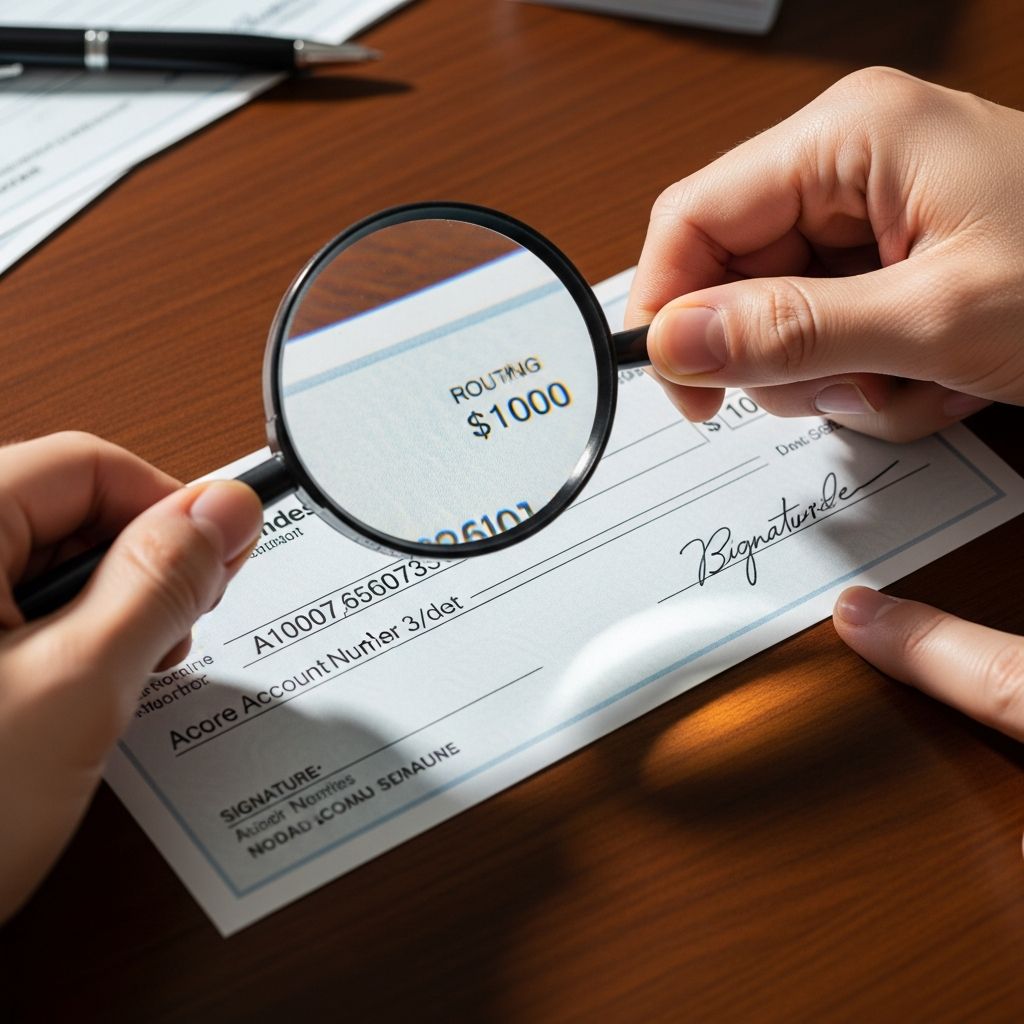
The bottom of a check contains numbers printed in special magnetic ink that can be read by automated banking equipment. These numbers include the routing number, account number, and check number. Legitimate MICR printing is sharp, evenly spaced, and consistent in color. If the numbers appear smudged, misaligned, or use regular ink instead of magnetic ink, the check may be fraudulent.
Watermarks and Security Printing
Many legitimate checks include watermarks that are visible only when held up to light. These watermarks typically feature the bank name, logo, or security words. The presence and clarity of these watermarks can help verify a check’s authenticity. Additionally, some checks feature gradient backgrounds or security panels that are difficult to reproduce digitally.
Verification Steps You Should Take
Examine the Check Physically
Start by looking at the check in person. Hold it up to light to check for watermarks and security features. Run your finger across the surface to feel for any irregularities or areas where ink appears raised or unusual. The paper should feel substantial and uniform, not thin or overly glossy.
Look carefully at the printing quality. The text should be sharp and clear, not blurry or pixelated. Any signs of erasure, correction fluid, or alterations should raise red flags. Pay special attention to the amount boxes and signature, as these are common areas for alteration attempts.
Verify the Routing and Account Numbers
The routing number in the bottom-left corner is your first point of verification. You can verify this number by checking it against the Federal Reserve’s routing number database or contacting the bank directly. The routing number must be valid and correspond to the bank mentioned on the check.
The account number should be printed in the same font and size as the routing number and should appear clean and properly aligned. Any inconsistencies in formatting or appearance may indicate fraud.
Check the Signature
The signature on a check must match the signature on file at the bank. If you’re processing a check from a known source, compare the signature to previous checks from that person or business. Signatures should be consistent in style and formation.
Be particularly cautious of signatures that appear shaky, overly practiced, or different from previous examples. Some fraudsters attempt to forge signatures by using check templates or by requesting someone else to sign. If the signature appears unusually formal or inconsistent with the account holder’s normal style, verify directly with the account holder before processing.
Match Numerical and Written Amounts
The amount written in numbers must exactly match the amount spelled out in words. Banks will reject checks where these amounts don’t match or will use the written amount as the correct figure. Check for proper formatting, including two decimal places in the numerical amount (for example, $50.00 rather than $50).
Be alert to signs of alteration, such as erasure marks, correction fluid, or overwritten digits. Some fraudsters attempt to increase check amounts by adding digits or changing numbers. Any suspicious alterations should be reported to your bank immediately.
Verify the Date
Check the date to ensure it’s not in the future (unless it’s a post-dated check) and not excessively old. Most banks won’t accept checks that are more than six months old, though policies vary by institution. The date should be written clearly and should match the current timeframe for normal transactions.
Be cautious of stale-dated checks or checks with altered dates. Some fraudsters use old checks or modify dates to cover their tracks or to coincide with specific account balances.
Confirm the Payee Information
The payee line should be completely filled in with the recipient’s name. Checks with blank payee lines or with “To the order of” lines left empty are problematic because they could potentially be altered after issuance.
If you’re depositing a check made out to someone else, ensure you have proper authorization and that the original payee has endorsed it to you. Multiple endorsements can indicate the check has passed through several hands, which may warrant additional verification.
Understanding Check Processing and Clearing
After you verify that a check appears legitimate, it enters the banking system for processing and clearing. Understanding this process helps you know when funds will be available and what steps your bank takes to verify the check.
The Forward Collection Process
When you deposit a check, your bank begins the forward collection process. The check is scanned or captured, creating a digital image that becomes the legal item in the electronic banking system. Your bank aggregates multiple deposited checks into digital packages called Image Cash Letters (ICLs) and transmits them through the Federal Reserve.
The Federal Reserve acts as a clearing agent, routing the check to the appropriate paying institution (the bank where the account holder has their account). This institution then verifies that the account contains sufficient funds to cover the check amount.
Clearing and Settlement Timelines
Clearing happens when a check is deposited at a bank and typically takes two to five business days for the check to clear. Once checks have cleared, banks send them to the Federal Reserve Bank for settlement, which takes an additional one to three business days. It’s important to note that the ACH network processes checks in batches, meaning it can take several days before funds are available in an account after writing a check.
This timeline is important for business planning and cash flow management. Never assume funds are available until the check has fully cleared and settled.
Identifying Common Fraud Indicators
Physical Red Flags
– Check number begins with zero or has unusually low numbers (0000, 0001, etc.)- Printed information appears misaligned or of poor quality- Paper feels thin, overly glossy, or substantially different from regular checks- Visible alterations, correction fluid, or erasure marks- Missing security features like watermarks or security printing- Magnetic ink that appears smudged or improperly printed
Information Red Flags
– Routing number that doesn’t correspond to a valid bank- Account number that appears inconsistent or incorrectly formatted- Amounts that don’t match between numerical and written sections- Signature that appears forged, shaky, or inconsistent with known examples- Payee line that’s blank or incomplete- Date that’s post-dated significantly or extremely old- Bank name that appears misspelled or is from an unfamiliar institution
Transaction Red Flags
– Unsolicited check from an unknown source- Check received through unexpected channels- Pressure to deposit and use funds quickly- Check for an unusually large amount- Multiple checks from the same source in short succession
What to Do If You Suspect Fraud
If you have concerns about a check’s authenticity, don’t deposit it. Instead, contact your bank directly and describe your concerns. Banks have specialized fraud departments that can investigate suspicious checks. If you’ve already deposited a fraudulent check, contact your bank immediately to report it.
For business transactions, verify large checks by contacting the account holder directly using a phone number from their official documentation, not from information provided on the check itself. This additional step can prevent significant losses from fraudulent transactions.
Best Practices for Check Safety
– Store blank checks securely and account for all check numbers- Use pen (blue or black) when writing checks to prevent alterations- Write clearly and completely fill in all required fields- Never sign blank checks or checks with incomplete information- Record each check written and reconcile regularly against bank statements- Verify large checks through additional channels before depositing- Report lost or stolen checks to your bank immediately- Review your bank statements regularly for unauthorized checks
Frequently Asked Questions
Q: How long does it take for a check to clear?
A: Checks typically take two to five business days to clear after deposit. Settlement through the Federal Reserve can take an additional one to three business days. However, some banks may make funds available sooner under their clearing policies.
Q: Can I cash a post-dated check before the date on the check?
A: Legally, a check should not be cashed before the date written on it. However, this is not universally enforced by all banks. It’s best practice to not attempt to cash a post-dated check before its designated date.
Q: What should I do if the amounts on a check don’t match?
A: If the numerical amount and written amount don’t match, contact the check writer immediately to obtain a corrected check. Banks may use the written amount as authoritative, but processing may be delayed or the check may be rejected.
Q: How can I verify a check is from a legitimate bank?
A: Verify the routing number through the Federal Reserve database or contact the bank directly using the phone number on their official website (not on the check). You can also ask your bank to verify the check’s authenticity.
Q: What’s the difference between a certified check and a regular check?
A: A certified check is guaranteed by the bank, meaning the bank has verified that sufficient funds exist in the account and has set those funds aside. This makes certified checks safer for large transactions, though they take longer to obtain.
Q: How do I report a fraudulent check?
A: Contact your bank immediately to report any check you suspect is fraudulent. Provide them with all details about the check and how you obtained it. You can also report check fraud to the Federal Trade Commission or local law enforcement.
References
- Check Services Basic Check Workflows — Federal Reserve Bank Services. 2024. https://www.frbservices.org/binaries/content/assets/crsocms/education/webinars/check-services-basic.pdf
- Check Processing Guide: How it’s Done — BankersHub. 2024. https://www.bankershub.com/blogs/blog/check-processing-guide-how-its-done
- How To Write a Check in 6 Simple Steps — PNC Insights. 2024. https://www.pnc.com/insights/personal-finance/spend/how-to-write-a-check-in-6-simple-steps.html
- How to Write a Check: A Guide — Chase Banking Education. 2024. https://www.chase.com/personal/banking/education/basics/how-to-write-a-check
- How to Write a Check: A Step-by-Step Guide — Bankrate. 2024. https://www.bankrate.com/banking/checking/how-to-write-a-check/
- Understanding Check Basics — Central Bank. 2024. https://www.centralbank.net/learning-center/understanding-check-basics/
Similar Articles








Read full bio of Sneha Tete