How to Cash a Check: Complete Guide to All Options
Learn the easiest and cheapest ways to cash checks at banks, retailers, and online platforms.
How to Cash a Check: Your Complete Guide to All Options
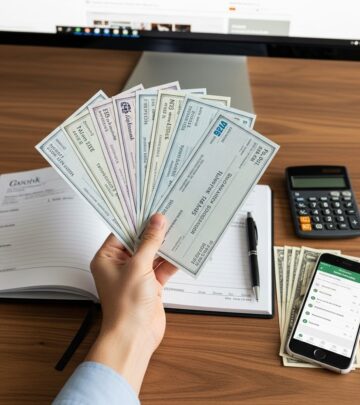
Receiving payment by check is still common in many situations, whether from an employer, client, or government agency. While checks may seem outdated in our digital age, knowing how to cash them efficiently and affordably remains an essential financial skill. The good news is that cashing a check is a straightforward process with multiple options available, each with different costs and convenience levels. This comprehensive guide walks you through every method of cashing a check, helping you save money and time.
Three Essential Steps to Cash or Deposit a Check
Step 1: Visit the Right Location
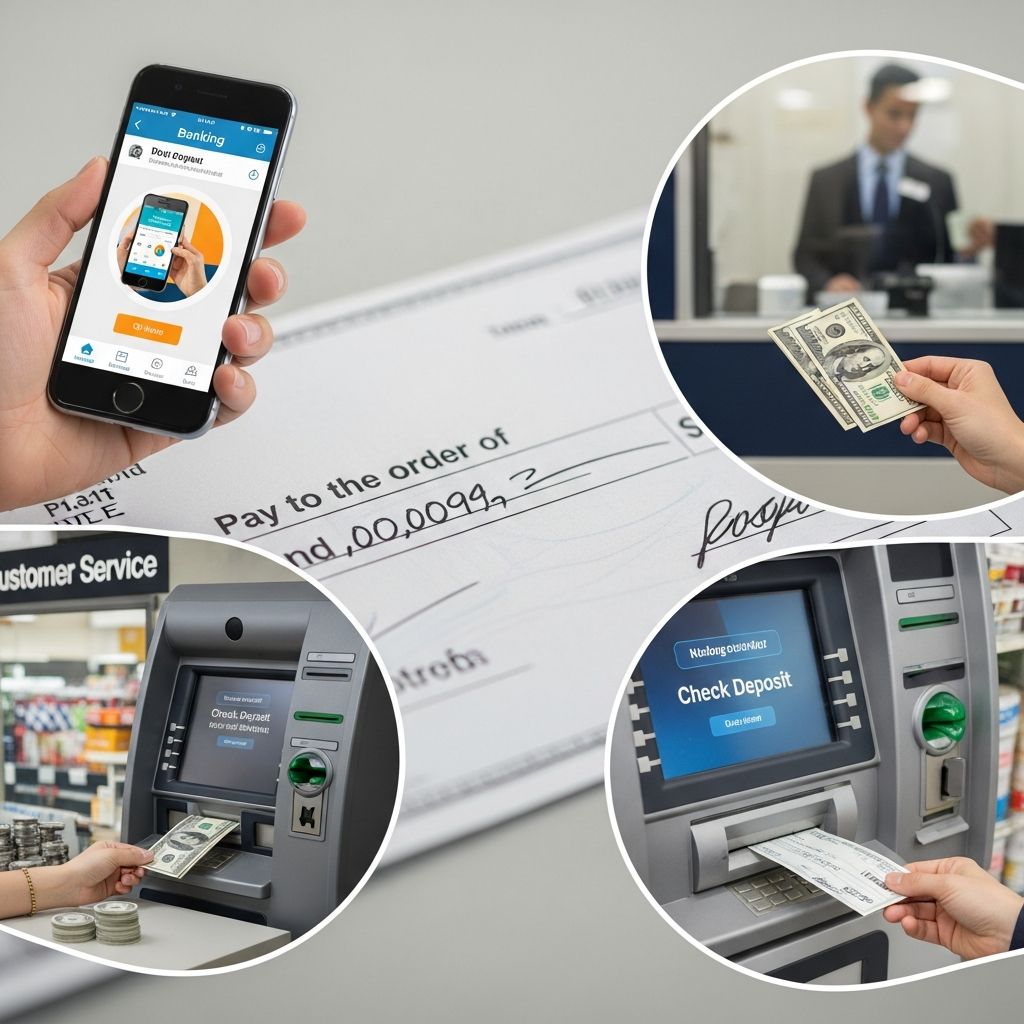
Your first decision is choosing where to cash your check. If you have a bank account, you can visit your bank’s branch or use their ATM with your debit card. You can also access mobile deposit through your bank’s app for contactless depositing. If you don’t have a bank account, you have several alternative options including visiting the issuing bank, major retailers like Walmart or Target, or specialized check-cashing services. The location you choose directly impacts the fees you’ll pay and how quickly you receive your funds.
Step 2: Endorse the Check
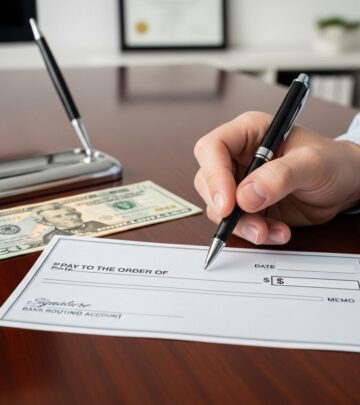
Before cashing or depositing your check, you must endorse it by signing the back. Flip the check over and locate the endorsement section, typically marked with grey lines or “Endorse here” text. Sign your name exactly as it appears on the front of the check on the first line. If the check is made out to multiple people, each person should sign on the designated lines. For mobile deposits, you may add “For mobile deposit only” beneath your signature for added security. Proper endorsement is crucial—without it, financial institutions cannot process your check.
Step 3: Present Your Check and ID
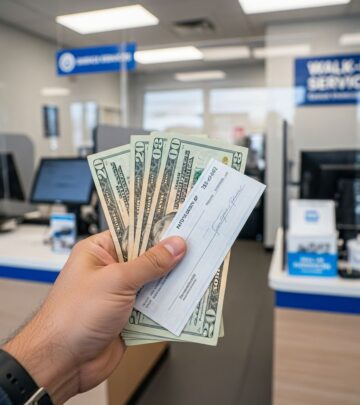
Hand over your endorsed check along with valid government-issued identification such as a driver’s license or passport. Depending on where you’re cashing the check, you may also need to provide your account number if depositing, specify how much cash you want versus how much to deposit, or answer security questions. Bank tellers will verify that funds are available and typically process the transaction within 5-10 minutes. Retail locations may ask for additional information like your phone number or Social Security number.
Where to Cash Your Check: Options and Comparisons
Your Own Bank or Credit Union (Best Option)
If you have a checking account at a bank or credit union, this is your most convenient and economical option. Depositing or cashing checks through your financial institution is completely free. You can visit a branch during business hours, use an ATM with your debit card, or utilize mobile deposit through your bank’s app—available 24/7 from your smartphone. While you typically won’t have immediate access to the full check amount, funds usually become available within one to two business days. Getting a checking account specifically for handling checks you receive is highly worthwhile given the substantial fee savings.
The Issuing Bank (For Non-Customers)
The bank listed on the check front is your second-best option. Many banks will cash checks drawn on their accounts even for customers of other banks or non-customers. However, they aren’t legally required to do so. If they agree to cash your check, expect to pay a fee ranging from $5 to $8 for checks over $50. Bank of America charges $8, Chase charges $8, and Wells Fargo charges $7.50 for non-customer check cashing. Processing typically takes 5-10 minutes, and you’ll need to present valid government-issued photo identification.
Major Retailers and Grocery Stores
Walmart, Kmart, Target, and other major retail chains offer accessible check-cashing services at competitive rates. Walmart charges $4 to cash checks up to $1,000 and $8 for checks over $1,000. Kmart offers particularly affordable options, cashing checks up to certain amounts for $1 or less. These retailers accept various check types including payroll checks, government checks, cashier’s checks, money orders, and personal checks. The main advantage is convenience—many retailers have extended hours and numerous locations. You’ll typically need to present a valid ID and may be asked for your phone number or other identifying information.
Prepaid Debit Cards
Prepaid debit cards offer an alternative method for cashing checks without a traditional bank account. You can deposit your check using mobile check deposit through the card’s app or by visiting a retailer like Walmart or 7-Eleven that’s part of the card’s reload network. After depositing, you can withdraw cash at that location or at any ATM displaying the card’s network logo. Be aware of potential fees: loading checks onto the card may incur a fee, ATM withdrawals may have charges, and prepaid cards themselves typically cost $0-$10 upfront with monthly service fees around $5.
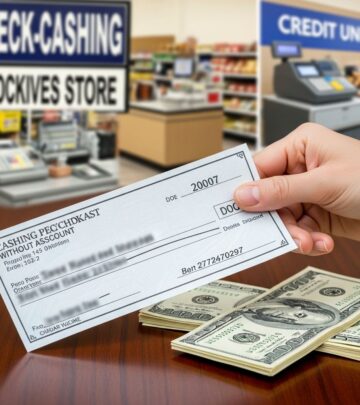
Check-Cashing Stores (Avoid)
Check-cashing stores represent the most expensive option and should be avoided whenever possible. These establishments typically charge a percentage of your check amount rather than a flat fee, resulting in significantly higher costs compared to banks or retailers. For example, cashing a $1,000 check at a payday lender charging 3% would cost you $30—far more than you’d pay elsewhere. These stores prey on individuals without bank accounts and charge premium rates for convenience. Your time is better spent visiting a bank, retailer, or opening a basic checking account.
Understanding Check-Cashing Fees
Check-cashing fees vary substantially depending on where you cash your check. Banks typically charge non-customers $5-$8 per check. Major retailers offer competitive rates ranging from $1 to $8 depending on check size. Payday lenders charge percentage-based fees that can reach 3% or more. The most important takeaway is that your own bank provides free check-cashing services, making it the clear winner for cost-conscious consumers. Even if you rarely use a checking account, the fee savings on just a few checks will exceed any monthly service fees.
Check Requirements and Validity
Essential Information on the Check
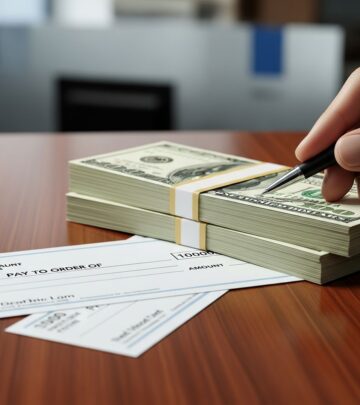
Before attempting to cash a check, verify that it contains all required information. The check must display the issue date within the last six months—most personal checks are valid for 180 days from the issue date. The “Pay to the Order of” section must clearly show your name as the payee. The check must be signed by the payer on the front signature line, and the numeric amount must match the written amount. Any discrepancies or missing information should be corrected by the payer before you attempt to deposit or cash the check.
Types of Checks You Can Cash
Most financial institutions accept several check types including payroll checks (most widely accepted), government checks such as Social Security payments and tax refunds, cashier’s checks, money orders, and personal checks. Stimulus checks and other government payments are typically processed without issue. If you receive an unfamiliar check type, contact the issuing institution to confirm it can be processed.
Additional Requirements
Beyond the check itself and your ID, some locations may request additional verification including your Social Security number, a thumbprint or fingerprint, or proof of address such as a utility bill or lease agreement. These requirements vary by institution and the check amount. Larger checks often require more stringent verification.
Mobile Check Deposit: The Modern Method
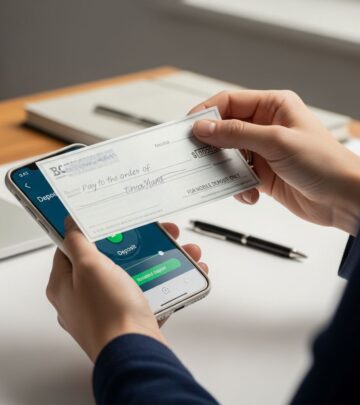
Many banks now offer mobile check deposit through their smartphone apps, allowing you to deposit checks without visiting a branch. To use this service, endorse the check and write “For mobile deposit only” below your signature. Take clear, well-lit photos of both the front and back of the check, ensuring all corners are visible in the images. Upload both photos through your bank’s app and submit. Processing times vary from seconds to several business days depending on check size and submission timing. Larger checks and weekend submissions typically take longer to clear. This method provides maximum convenience for account holders.
Cashing a Check Without ID: Limited Options
Cashing a check without government-issued photo identification is extremely difficult and often impossible at legitimate financial institutions. Banks and retailers require valid ID as part of their fraud prevention procedures. If you don’t have a photo ID, your best option is signing over the check to a trusted friend or family member. On the back of the check, write “Pay to the order of [their name],” sign underneath, and have them present it with their ID to cash it. They can then give you the cash. This workaround requires absolute trust in the other person and isn’t ideal for large checks.
Comparison Table: Check-Cashing Options
| Option | Cost | Speed | Convenience | Requirements |
|---|---|---|---|---|
| Your Bank | Free | 1-2 days | High | Debit card/ID |
| Issuing Bank | $5-$8 | 5-10 min | Medium | Photo ID |
| Walmart | $4-$8 | Immediate | Very High | Photo ID |
| Check-Cashing Store | 3%+ of amount | Immediate | High | Photo ID |
| Mobile Deposit | Free | Varies | Very High | Bank account |
The Best Long-Term Solution: Open a Checking Account
While various check-cashing methods exist, the most practical and economical long-term solution is opening a checking account at a bank or credit union. A checking account eliminates fees entirely and provides convenient access to your funds through branches, ATMs, debit cards, and mobile apps. Even if you rarely use the account, the savings from free check deposits far outweigh any maintenance fees. For those with limited banking history or past financial difficulties, “second chance” checking accounts are specifically designed to provide banking access without requiring perfect credit.
Key Takeaways for Cashing Checks
Successfully cashing a check requires following three straightforward steps: visiting an appropriate location, endorsing the check properly, and presenting valid identification. Your choice of location dramatically impacts both the fees you pay and the convenience you experience. Banks offer free processing for account holders, retailers provide affordable alternatives at $4-$8, and check-cashing stores should be avoided due to high percentage-based fees. Mobile deposit offers maximum convenience for smartphone users with bank accounts. The ultimate recommendation is obtaining a checking account to eliminate check-cashing fees entirely while gaining access to comprehensive banking services.
Frequently Asked Questions
Q: Can I cash a check at any bank?
A: You can cash a check at the bank listed on the check front, though they may charge a fee for non-customers. Your own bank will cash it for free if you have an account there. Most banks aren’t legally required to cash checks from non-customers, so policies vary by institution.
Q: How long is a check valid?
A: Most personal checks are valid for 180 days (approximately six months) from the issue date. After this period, banks may refuse to cash or deposit them. Government checks and cashier’s checks may have different validity periods.
Q: What if my check has the wrong name on it?
A: Contact the payer immediately and ask them to issue a corrected check with your correct name. Banks won’t process checks made out to the wrong person, even if you sign them. Never attempt to alter check information yourself.
Q: Can I deposit a check without visiting a bank?
A: Yes, if your bank offers mobile check deposit through its app, you can deposit checks from anywhere using your smartphone camera. You can also deposit checks at ATMs that accept deposits, at retail locations that offer check cashing, or through prepaid card services.
Q: What identification do I need to cash a check?
A: You’ll need valid government-issued photo identification such as a driver’s license, passport, or state ID. Some locations may request additional verification including your Social Security number or proof of address for large checks.
Q: Why do banks charge fees for non-customer check cashing?
A: Banks charge fees to non-customers because processing checks involves labor costs, fraud prevention measures, and the risk of insufficient funds. These fees help offset operational expenses and discourage non-customers from using their services regularly.
Q: Is it safe to sign over a check to someone else?
A: Signing over a check (third-party check endorsement) is technically legal but increasingly difficult due to bank policies. Many banks no longer accept third-party checks due to fraud concerns. Only sign checks over to people you trust completely.
References
- How to Cash a Check (And Save on Fees) — NerdWallet. 2025. https://www.nerdwallet.com/banking/learn/cash-check-paying-high-fees
- How to Deposit or Cash a Check at the Bank — Huntington Bank. 2025. https://www.huntington.com/learn/checking-basics/how-to-deposit-a-check
- 6 Ways To Cash A Check Without A Bank Account — Bankrate. 2025. https://www.bankrate.com/banking/checking/how-to-cash-a-check-without-a-bank-account/
- How to Cash a Check: A Comprehensive Guide — Chime. 2025. https://www.chime.com/blog/how-to-cash-a-check/
- How to Endorse a Check — PNC Insights. 2025. https://www.pnc.com/insights/personal-finance/spend/how-to-endorse-a-check.html
- What are the requirements for cashing or depositing a check? — U.S. Bank. 2025. https://www.usbank.com/customer-service/knowledge-base/KB0295544.html
- Check Processing Guide: How it’s Done — BankersHub. 2025. https://www.bankershub.com/blogs/blog/check-processing-guide-how-its-done
Similar Articles








Read full bio of Sneha Tete