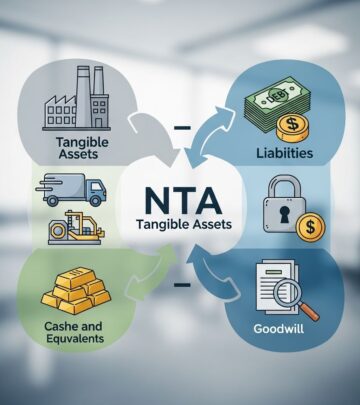
How to Calculate Your Tangible Net Worth
Master the calculation of your tangible net worth and assess your true financial health.

What Is Your Tangible Net Worth?
Tangible net worth is a financial metric that represents the value of an individual’s or company’s assets minus its liabilities, excluding intangible assets. In other words, it measures the net value of your physical or tangible assets that could be liquidated to cover debts. This metric provides valuable insight into your financial health and your ability to withstand financial challenges.
Unlike traditional net worth calculations that include intangible assets such as patents, trademarks, and intellectual property, tangible net worth focuses exclusively on assets you can physically touch or readily convert to cash. These include real estate, vehicles, cash, and investments like stocks and bonds. Understanding your tangible net worth is essential for assessing your true financial position, particularly when dealing with lenders or evaluating your capacity to weather unexpected financial difficulties.
Tangible net worth serves as a more conservative measure of wealth compared to overall net worth because it eliminates subjective valuations of intangible assets. This makes it an especially important metric for lenders who need to understand a borrower’s actual capacity to repay loans. Many lenders specifically request tangible net worth figures when evaluating loan applications, as it provides a clearer picture of the collateral and liquid resources available to borrowers.
The Tangible Net Worth Formula
Calculating your tangible net worth is straightforward with the following formula:
Tangible Net Worth = Total Assets – Total Liabilities – Intangible Assets
Breaking down this formula:
- Total Assets: The sum of all assets you own, including both current assets (cash, savings accounts, investments) and fixed assets (real estate, vehicles, jewelry, and collectibles).
- Total Liabilities: The sum of all financial obligations and debts you owe, including mortgages, car loans, student loans, personal loans, and credit card balances.
- Intangible Assets: Non-physical assets that you exclude from this calculation, such as goodwill, patents, trademarks, copyrights, and intellectual property.
The key distinction of tangible net worth is that it removes intangible assets from the equation entirely. This approach provides a more realistic picture of the assets available to satisfy creditors or fund your financial obligations.
How to Calculate Your Tangible Net Worth Step-by-Step
Follow these systematic steps to calculate your tangible net worth:
Step 1: List All Tangible Assets
Begin by identifying and valuing all your tangible assets. Use current market values rather than original purchase prices. Tangible assets typically include:
- Cash and savings accounts
- Retirement accounts (401(k), IRA, Roth IRA)
- Investments (stocks, bonds, mutual funds, ETFs)
- Primary residence (use current market value)
- Additional real estate properties
- Vehicles (cars, trucks, motorcycles)
- Jewelry and collectibles with resale value
- Business equipment and inventory (if applicable)
Step 2: Calculate Your Total Tangible Assets
Add up the values of all tangible assets identified in step one. This total represents the combined value of everything you own that has physical substance.
Step 3: List All Liabilities
Create a comprehensive list of all debts and financial obligations. These include:
- Mortgage on your primary residence
- Home equity loans or lines of credit
- Car loans
- Student loans
- Personal loans
- Credit card balances
- Medical debt
- Any other outstanding loans
Step 4: Calculate Your Total Liabilities
Sum all the amounts you owe across all debt accounts. This represents your total financial obligations.
Step 5: Apply the Formula
Subtract your total liabilities from your total tangible assets. Since most individuals don’t have significant intangible assets, this calculation is typically simpler for personal finances than for businesses.
Your Tangible Net Worth = Total Tangible Assets – Total Liabilities
Tangible Net Worth Example for Individuals
Consider the example of Alex, who wants to calculate their tangible net worth:
Alex’s Assets:
- Cash and Savings Accounts: $10,000
- Retirement Accounts (401(k), IRA): $50,000
- Investments (Stocks, Bonds): $30,000
- Personal Residence (Market Value): $300,000
- Car (Market Value): $15,000
- Jewelry and Collectibles: $5,000
Total Tangible Assets = $410,000
Alex’s Liabilities:
- Mortgage on Personal Residence: $200,000
- Car Loan: $5,000
Total Tangible Liabilities = $205,000
Calculation:
Tangible Net Worth = $410,000 – $205,000 = $205,000
In this example, Alex’s tangible net worth is $205,000, representing the net value of their tangible assets after subtracting their tangible liabilities. This figure shows that Alex has $205,000 in net tangible assets available to cover unexpected financial needs or obligations.
Tangible Net Worth Example for Businesses
Tangible net worth calculations are equally important for business owners. Consider a manufacturing company that produces furniture:
Company Assets:
- Cash: $100,000
- Inventory (raw materials, finished products): $400,000
- Land and Buildings: $800,000
- Machinery and Equipment: $200,000
Total Assets = $1,500,000
Company Liabilities:
- Bank Loan: $500,000
- Accounts Payable: $300,000
Total Liabilities = $800,000
Intangible Assets:
- Trademarks and Patents: $30,000
- Goodwill: $20,000
Total Intangible Assets = $50,000
Calculation:
Tangible Net Worth = $1,500,000 – $800,000 – $50,000 = $650,000
The manufacturing company’s tangible net worth is $650,000. This represents the net value of the company’s physical assets that can be used to cover its liabilities, excluding intangible assets like trademarks, patents, and goodwill. This metric helps lenders assess whether the company has sufficient physical assets to secure a loan.
Why Tangible Net Worth Matters
Tangible net worth serves several critical purposes in personal and business finance:
Lending and Credit Decisions
Lenders prioritize tangible net worth when evaluating loan applications because it represents the actual collateral and liquid resources available to repay borrowed funds. Banks and credit institutions use this metric to determine borrowing capacity and assess default risk. A higher tangible net worth generally improves your chances of loan approval and may result in more favorable interest rates.
Financial Stability Assessment
Tangible net worth provides a realistic snapshot of your financial health by focusing only on assets that have real, measurable value. This conservative approach helps you understand your true financial position without inflating your wealth through subjective valuations of intangible assets.
Business Valuation and Bankruptcy Planning
For businesses, tangible net worth approximates the liquidation value of a company in the event of bankruptcy or sale. This metric helps stakeholders understand what physical assets would remain after all debts are paid, which is crucial information during business transitions or financial distress.
Regulatory Compliance
Companies in the financial services industry are often required by regulators to maintain minimum levels of tangible net worth to ensure stability and protect customers. These requirements help safeguard the financial system and maintain consumer confidence.
Debt Covenant Requirements
Many loan agreements include debt covenants that require borrowers to maintain minimum tangible net worth levels. These provisions protect lenders by ensuring that borrowers maintain sufficient assets to cover their obligations.
Tangible Assets vs. Intangible Assets: Key Differences
| Asset Type | Definition | Examples | Liquidation Value |
|---|---|---|---|
| Tangible Assets | Physical assets with measurable, concrete value | Real estate, vehicles, cash, equipment, inventory | High – can be sold readily |
| Intangible Assets | Non-physical assets with subjective value | Patents, trademarks, goodwill, copyrights, brand reputation | Low – difficult to convert to cash |
How Tangible Net Worth Differs from Traditional Net Worth
Traditional net worth includes all assets minus all liabilities, encompassing both tangible and intangible assets. Tangible net worth, conversely, excludes intangible assets entirely. This makes tangible net worth a more conservative and arguably more realistic measure of financial health, especially for lending purposes.
For example, a technology company might have a high traditional net worth due to valuable patents and brand reputation, but its tangible net worth could be significantly lower if it doesn’t own substantial physical assets. This distinction is why lenders frequently request tangible net worth figures rather than relying on overall net worth calculations.
Frequently Asked Questions
Q: Why is tangible net worth important for loans?
A: Lenders use tangible net worth to assess a borrower’s ability to repay loans and determine available collateral. It provides a realistic picture of assets that can actually be liquidated to cover debt obligations.
Q: Should I include retirement accounts in my tangible net worth calculation?
A: Yes, retirement accounts like 401(k)s and IRAs should be included as tangible assets because they represent real, measurable value that you own, even though there may be penalties for early withdrawal.
Q: How often should I calculate my tangible net worth?
A: It’s helpful to calculate your tangible net worth annually or whenever significant financial changes occur, such as purchasing property, paying off debt, or receiving an inheritance.
Q: Does tangible net worth include my car?
A: Yes, your vehicle’s current market value should be included as a tangible asset. However, any car loan remains a liability that reduces your net worth.
Q: What if my tangible net worth is negative?
A: A negative tangible net worth means your liabilities exceed your tangible assets. This indicates you owe more than you own and may signal the need for debt reduction strategies or financial restructuring.
Q: Are intangible assets ever included in tangible net worth calculations?
A: No, by definition, tangible net worth excludes all intangible assets such as patents, trademarks, goodwill, and intellectual property.
References
- Tangible Net Worth: Meaning, Formula, Calculation, & Adjusted Tangible Net Worth — Equirus Wealth. 2024. https://www.equiruswealth.com/glossary/tangible-net-worth
- How to Calculate Your Tangible Net Worth — SmartAsset. 2024. https://smartasset.com/personal-finance/tangible-net-worth
- What is Tangible Net Worth? — Masterworks. 2024. https://insights.masterworks.com/finance/what-is-tangible-net-worth/
- Tangible Net Worth Overview, Use in Debt Covenants — Corporate Finance Institute. 2024. https://corporatefinanceinstitute.com/resources/valuation/tangible-net-worth/
- Effective Tangible Net Worth Clause Samples + Guide — Fynk. 2024. https://fynk.com/en/clauses/effective-tangible-net-worth/
Similar Articles








Read full bio of medha deb