Undefined 6-Step Guide To Calculate Monthly Interest
Master monthly interest calculations with formulas, examples, and practical tips for savings and loans.

How to Calculate Monthly Interest
Understanding how to calculate monthly interest is essential for making informed financial decisions about savings accounts, loans, and investments. Whether you’re earning interest on a savings account or paying interest on a loan, knowing the math behind these calculations helps you understand exactly how much money you’ll earn or owe over time. Monthly interest calculations can seem complex at first, but with the right formulas and step-by-step guidance, anyone can master this important financial skill.
Understanding Monthly Interest Basics
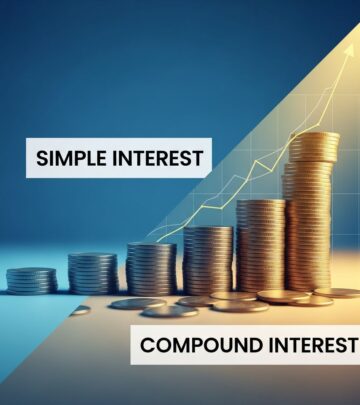
Monthly interest refers to the interest that accrues or compounds on a monthly basis. This means that every month, new interest is calculated on your principal amount, and in the case of compound interest, this new interest is added to the principal for the next month’s calculation. This differs from simple interest, where interest is calculated only on the original principal amount throughout the entire period.
There are two primary types of monthly interest: simple interest and compound interest. Simple interest is straightforward and applies only to the original principal. Compound interest, on the other hand, is more powerful because interest is calculated on both the principal and previously earned interest, creating an exponential growth effect.
The Monthly Compound Interest Formula
The formula for calculating monthly compound interest is one of the most important tools in personal finance. The standard compound interest formula used for monthly compounding is:
A = P(1 + r/n)^(nt)
Where:
- A = Final amount (principal plus accrued interest)
- P = Principal amount (initial investment or loan amount)
- r = Annual interest rate expressed as a decimal
- n = Number of compounding periods per year (12 for monthly)
- t = Time in years
For monthly compounding specifically, the formula simplifies to:
CI = P(1 + r/12)^(12t) – P
In this version, the compound interest (CI) is calculated as the final amount minus the principal. The division of r by 12 accounts for the monthly compounding, and 12t represents the total number of months over which interest will be compounded.
Step-by-Step Guide to Calculating Monthly Interest
Calculating monthly interest becomes manageable when you break it down into clear steps. Here’s how to do it:
Step 1: Identify Your Values
Start by gathering all the necessary information. You need to know your principal amount (P), the annual interest rate (r), and the time period in years (t). Make sure your interest rate is converted to decimal form. For example, 5% becomes 0.05.
Step 2: Divide the Annual Rate by 12
Since you’re calculating monthly interest, divide your annual interest rate by 12. This gives you the monthly interest rate. For instance, if your annual rate is 6%, your monthly rate would be 6%/12 = 0.5% or 0.005 in decimal form.
Step 3: Add One to the Monthly Rate
Add 1 to your monthly rate in decimal form. If your monthly rate is 0.005, you would calculate 1 + 0.005 = 1.005.
Step 4: Raise to the Power of Total Months
Multiply the number of years by 12 to get the total number of months. Then raise your result from Step 3 to this power. This step accounts for the compounding effect over time.
Step 5: Multiply by Principal
Multiply your result by the principal amount. This gives you the final amount including interest.
Step 6: Subtract the Principal
If you want just the interest earned (not including the principal), subtract the original principal from the final amount.
Practical Examples of Monthly Interest Calculations
Example 1: Savings Account Interest
Let’s say you deposit $5,000 in a savings account with an annual interest rate of 5%, compounded monthly, for 1 year.
- P = $5,000
- r = 0.05 (5% as a decimal)
- n = 12 (monthly compounding)
- t = 1 year
Using the formula: A = $5,000(1 + 0.05/12)^(12×1) = $5,000(1.00416667)^12 = $5,255.81
Your interest earned would be: $5,255.81 – $5,000 = $255.81
Example 2: Loan Interest Calculation
Suppose you borrow $1,500 at an annual interest rate of 4.3%, compounded monthly, for 1 year.
- P = $1,500
- r = 0.043
- n = 12
- t = 1
Using the formula: CI = $1,500(1 + 0.043/12)^12 – $1,500 = $1,500(1.00358333)^12 – $1,500 = $65.79
You would owe approximately $65.79 in interest.
Example 3: Long-Term Investment
Consider a $6,000 investment at 10% annual interest, compounded monthly, for 2 years.
- P = $6,000
- r = 0.10
- t = 2
Final amount: A = $6,000(1 + 0.10/12)^(12×2) = $6,000(1.00833333)^24 = $7,322.35
Interest earned: $7,322.35 – $6,000 = $1,322.35
Simple Interest vs. Compound Interest
Understanding the difference between simple and compound interest is crucial for financial planning. Simple interest is calculated only on the principal amount and remains the same each period. The formula for simple interest is:
SI = P × r × t
Compound interest, by contrast, is calculated on the principal plus previously earned interest. This creates the “interest on interest” effect that can significantly increase your returns over time. With monthly compounding, this effect becomes pronounced, especially over longer periods.
For example, $10,000 at 5% interest for 5 years would earn $2,500 in simple interest but approximately $2,763 with monthly compound interest—a difference of $263.
Using Online Calculators for Monthly Interest
While calculating monthly interest manually is valuable for understanding the concept, online calculators make the process faster and reduce the chance of errors. Most financial institutions and personal finance websites offer free compound interest calculators. These tools typically require you to input your principal, annual interest rate, time period, and compounding frequency, then instantly provide your final amount and total interest earned.
When using an online calculator, ensure you:
- Select “monthly” as your compounding frequency
- Express your time period in years (convert months to years by dividing by 12)
- Input the annual interest rate, not the monthly rate
- Verify the result by spot-checking with the manual formula
Factors Affecting Monthly Interest Calculations
Interest Rate
The annual interest rate directly impacts how much interest you earn or owe. Higher rates result in greater returns on investments but also mean higher costs for borrowers. Even small differences in rates can compound to significant amounts over time.
Compounding Frequency
Monthly compounding applies 12 times per year, which is more favorable than quarterly (4 times) or semi-annual (2 times) compounding. However, daily compounding, if available, would be even better for savers. The more frequently interest compounds, the greater the benefit to the account holder.
Time Period
Longer time periods allow compound interest to work more powerfully. The effect of compounding accelerates over time, meaning your money grows exponentially rather than linearly. This is why starting to save early is so beneficial.
Principal Amount
Larger principal amounts generate more interest. If you double your principal, you’ll roughly double your interest earnings, assuming the rate and time period remain the same.
Frequently Asked Questions
Q: What’s the difference between monthly interest and annual interest?
A: Monthly interest is calculated and applied to your account every month, while annual interest is the stated yearly rate. To find monthly interest, divide the annual rate by 12. Monthly compounding typically results in higher returns than annual compounding due to the compounding effect.
Q: Can I use the monthly interest formula for other compounding frequencies?
A: Yes. The general formula A = P(1 + r/n)^(nt) works for any compounding frequency. For quarterly compounding, use n = 4; for daily, use n = 365. Simply adjust the ‘n’ value according to how many times per year interest compounds.
Q: How often should I check my interest calculations?
A: It’s wise to review your statements monthly to ensure your interest is being calculated correctly. However, calculating your expected interest quarterly or annually using the formula helps you understand if your savings are on track to meet your goals.
Q: Does monthly compounding always result in more money than simple interest?
A: Yes, over any period longer than one month, monthly compound interest will always generate more total interest than simple interest at the same rate, because interest is earned on previously accrued interest.
Q: What if my interest rate changes during the investment period?
A: If the rate changes, you’ll need to calculate the interest in segments. Calculate the interest earned during the first period using the original rate, then use the new principal (original plus accrued interest) to calculate interest for the second period at the new rate.
Q: How does inflation affect my monthly interest earnings?
A: Inflation can erode your real returns. If inflation is 3% and your savings account earns 2% monthly interest, your real return is actually negative. This is why it’s important to seek interest rates that exceed inflation for long-term wealth building.
Q: Can the monthly interest formula be used for mortgages?
A: Yes, monthly interest formulas apply to mortgages, though mortgage calculations often involve additional factors like payment schedules and amortization. The fundamental monthly compounding formula still applies to the interest portion of your payment.
Key Takeaways for Monthly Interest Calculations
Understanding monthly interest calculations empowers you to make better financial decisions. The compound interest formula A = P(1 + r/n)^(nt) is your foundation for calculating both savings growth and loan costs. Remember that monthly compounding happens 12 times per year, creating a powerful exponential effect over time.
By mastering these calculations, you can better evaluate savings accounts, compare loan offers, and plan for long-term financial goals. Whether you’re using the manual formula or an online calculator, the principles remain the same: higher rates, longer time periods, and more frequent compounding all work in your favor as a saver and against you as a borrower.
References
- What is Monthly Compound Interest Formula? Examples — Cuemath. Accessed November 29, 2025. https://www.cuemath.com/monthly-compound-interest-formula/
- Prompt Payment: Monthly Compounding Interest Calculator — U.S. Department of the Treasury Fiscal Service. Accessed November 29, 2025. https://www.fiscal.treasury.gov/prompt-payment/monthly-interest.html
- Compound Interest Calculator — Calculator Soup. Accessed November 29, 2025. https://www.calculatorsoup.com/calculators/financial/compound-interest-calculator.php
- Apply the Compound Interest Formula for Monthly Compounding — Brigham Young University-Idaho. Accessed November 29, 2025. https://content.byui.edu/file/b8b83119-9acc-4a7b-bc84-efacf9043998/1/Math-2-12-3.html
- Compound Interest Calculator — NerdWallet. Accessed November 29, 2025. https://www.nerdwallet.com/banking/calculators/compound-interest-calculator
- How To Calculate Compound Interest — Citizens Bank. Accessed November 29, 2025. https://www.citizensbank.com/learning/how-to-calculate-compound-interest.aspx
- Compound Interest Calculator — Investor.gov, U.S. Securities and Exchange Commission. Accessed November 29, 2025. https://www.investor.gov/financial-tools-calculators/calculators/compound-interest-calculator
Similar Articles








Read full bio of Sneha Tete