How To Calculate Loan Interest: Simple And Amortized
Master loan interest calculations with simple and amortized methods for better financial decisions.
Understanding how loan interest works is essential for making informed financial decisions. Whether you’re considering a personal loan, auto loan, or mortgage, knowing how to calculate interest can help you compare offers and understand the true cost of borrowing. There are two primary methods for calculating loan interest: simple interest and amortized interest. Each approach works differently, and the method your lender uses will affect how much you pay over the life of your loan.
The difference between these two calculation methods can significantly impact your monthly payments and total interest costs. Simple interest is typically applied to short-term loans, while amortized interest is the standard method used by most personal loan and mortgage lenders. By learning both methods, you’ll be equipped to evaluate loan terms more effectively and plan your finances accordingly.
Understanding Simple Interest
Simple interest is the most straightforward method of calculating loan costs. With simple interest, the calculation remains constant throughout the loan term because it’s based on the original principal amount borrowed, not the remaining balance.
Simple Interest Formula
The formula for calculating simple interest is straightforward:
Principal Loan Amount × Interest Rate × Loan Term in Years = Interest
For example, if you borrow $10,000 at a 6 percent annual interest rate for 3 years, your total interest would be calculated as follows:
$10,000 × 0.06 × 3 = $1,800
This means you would pay $1,800 in total interest over the three-year period, regardless of how you structure your monthly payments.
How Simple Interest Monthly Payments Work
While the total interest under a simple interest loan remains fixed, the monthly payment structure can vary depending on how the lender structures the repayment schedule. In some cases, you might make equal monthly payments, while in others, the payment structure might differ.
Simple interest loans are less common for personal loans but are sometimes used for short-term loans or specific lending products. Understanding this method provides a foundation for grasping more complex interest calculations.
Understanding Amortized Interest
Amortized interest is the most common method used by personal loan lenders, mortgage companies, and auto loan providers. With amortized interest, the calculation is more complex because the interest you pay each month depends on your remaining loan balance, not the original principal amount.
Key Characteristics of Amortized Loans
The most important characteristic of amortized loans is that interest fluctuates with the principal balance. Making a payment five days late means five additional days where your principal balance was higher, resulting in more interest being charged. This dynamic nature of amortized interest is why your monthly interest payment decreases over time as your principal balance shrinks.
The monthly payment itself is fixed throughout the loan term. However, the portion of that payment allocated to interest versus principal changes each month. Initially, most of your payment goes toward interest, but as time passes and you draw closer to your loan payoff date, more of your payment goes toward principal and less toward interest.
How To Calculate Amortized Interest Manually
If you want to understand exactly how much interest you’re paying each month, you can calculate amortized interest manually by following these steps:
Step-By-Step Calculation Process
Step 1: Divide Your Interest Rate by the Number of Annual Payments
First, express your annual interest rate as a decimal and divide it by the number of payments you’ll make each year. For most personal loans, this means dividing by 12 since payments are typically made monthly.
Example: If you have a 6 percent interest rate and make monthly payments:
0.06 ÷ 12 = 0.005
Step 2: Calculate Monthly Interest on Your Remaining Balance
Multiply the monthly rate by your remaining loan balance to determine how much you’ll pay in interest that month. This is crucial because the interest calculation changes each month as your principal balance decreases.
Example: If your loan balance is $5,000:
$5,000 × 0.005 = $25
This means your first month’s interest payment would be $25.
Step 3: Calculate Principal Payment for the Month
Subtract the monthly interest from your fixed monthly payment to determine how much principal you’ll pay down that month. If your lender has told you that your fixed monthly payment is $430.33, and your first month’s interest is $25, then:
$430.33 − $25 = $405.33
This means $405.33 of your first payment goes toward reducing your principal balance.
Step 4: Calculate New Remaining Balance
Subtract the principal payment from your current outstanding balance to get your new remaining balance for the next month:
$5,000 − $405.33 = $4,594.67
Step 5: Repeat the Process for Each Month
Repeat steps 1-4 for each subsequent month. Each month, your interest payment will be slightly lower because you’re multiplying the monthly rate by a smaller remaining balance. Correspondingly, more of your fixed monthly payment will go toward principal.
To get your total interest for the entire loan, simply add all the individual monthly interest payments together.
Amortization Schedule Example
To illustrate how amortized interest works over time, here’s a practical example of an amortization schedule for a $10,000 loan with a 6 percent annual interest rate over one year with monthly payments:
| Month | Payment | Principal | Interest | Remaining Balance |
|---|---|---|---|---|
| May 2026 | $445.60 | $427.40 | $18.21 | $1,309.26 |
| Jun 2026 | $445.60 | $431.88 | $13.73 | $877.38 |
| Jul 2026 | $445.60 | $436.40 | $9.20 | $440.98 |
| Aug 2026 | $445.60 | $440.98 | $4.62 | $0.00 |
As you can see from this example, notice how the interest portion decreases each month while the principal portion increases. In the first month, $18.21 goes toward interest and $427.40 toward principal. By the final month, only $4.62 goes toward interest and $440.98 toward principal.
Simple Interest vs. Amortized Interest: Key Differences
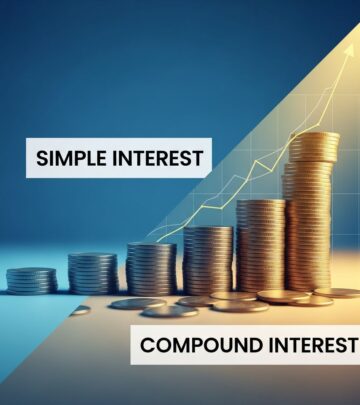
The main difference between amortizing loans and simple interest loans is how the interest is calculated and applied over time. With simple interest, the total interest amount is fixed from the beginning. With amortized interest, the monthly interest varies based on your remaining balance.
Another important distinction is that initial payments for amortized loans are generally interest-heavy. This means a smaller portion of your early monthly payments goes toward your principal balance. As time passes and you approach your loan payoff date, the situation reverses – the lender applies most of your payments to your principal balance and less toward interest fees.
This structure is important to understand because it means if you pay off your loan early, you’ll save significant money on interest. Conversely, if you make late payments, you’ll pay more interest because your principal balance remains higher for longer.
Using Online Calculators for Loan Interest
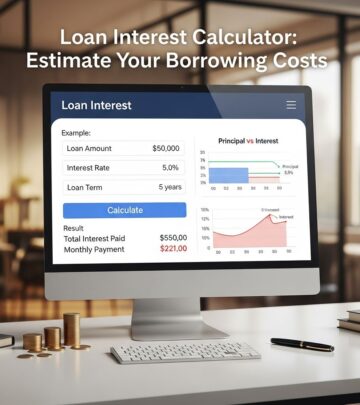
While calculating loan interest manually is possible, most people find it easier and more convenient to use online loan calculators. These tools automate the calculations and can provide you with comprehensive information about your loan costs.
How to Use a Personal Loan Calculator
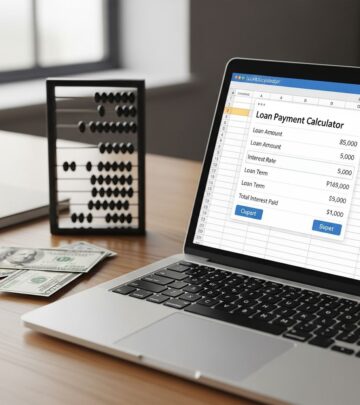
Most personal loan calculators work similarly. You typically need to input three pieces of information:
Enter Your Loan Amount: This is the principal amount you’re borrowing. Enter the total amount you need.
Choose Your Loan Term: Select how many years you have to repay the loan. Standard terms range from two to seven years at most lenders, though some offer terms as short as one year or as long as ten years. Your credit score and income will influence which terms your lender offers.
Enter an Interest Rate: If you’re unsure what rate to enter, you can use current average rates or explore the range offered by various lenders.
After entering this information and clicking calculate, you’ll see your estimated monthly payment and total interest paid over the life of the loan. Many calculators also show an amortization schedule, which displays how your principal and interest payments change each month.
Factors That Affect Your Loan Interest Rate
Several factors influence the interest rate you’ll be offered on a personal loan. Understanding these factors can help you improve your borrowing terms:
Credit Score: Your credit score is one of the most important factors determining your interest rate. Excellent credit typically qualifies for the lowest rates, while poor credit results in higher rates.
Loan Amount: The amount you borrow can affect your rate. Larger loans might have different rate structures than smaller loans.
Loan Term: Shorter terms often come with lower rates, while longer terms may have higher rates to compensate the lender for extended risk.
Income and Employment: Lenders want assurance that you can repay your loan. A stable income and employment history can help you qualify for better rates.
Debt-to-Income Ratio: This ratio shows how much of your monthly income goes toward debt payments. A lower ratio indicates better ability to manage additional debt.
APR vs. Interest Rate: Understanding the Difference
When shopping for loans, you’ll encounter both an interest rate and an APR (Annual Percentage Rate). While these terms are sometimes used interchangeably, they represent different concepts. The interest rate is the percentage of your principal loan amount that you pay in interest annually. The APR includes the interest rate plus any additional fees the lender charges, such as origination fees or processing fees.
This distinction is important because two loans with the same interest rate might have different APRs if one lender charges origination fees and the other doesn’t. When comparing loan offers, always compare APRs rather than just interest rates to get a true picture of the cost of borrowing.
Frequently Asked Questions
Q: What’s the difference between simple and amortized interest?
A: Simple interest is calculated only on the original principal amount and remains constant throughout the loan term. Amortized interest is calculated monthly based on your remaining loan balance, so it decreases as you pay down your principal. Most personal loans use amortized interest.
Q: Can I pay off my loan early to save on interest?
A: Yes, paying off your loan early can save you significant interest charges because you’ll have a smaller remaining balance accruing interest. However, always check whether your loan has prepayment penalties before doing so.
Q: How do loan origination fees affect my total borrowing cost?
A: Origination fees increase your APR even if your stated interest rate stays the same. These fees are factored into your APR calculation, which is why it’s important to compare APRs rather than just interest rates when evaluating loan offers.
Q: Why does my first loan payment mostly go toward interest?
A: With amortized loans, your initial payments are interest-heavy because interest is calculated on the full remaining balance. As you pay down the principal, less of your payment goes to interest and more goes to principal.
Q: What happens if I make a late payment on my loan?
A: Making a late payment means your principal balance remains higher for longer, resulting in more interest being charged. You’ll pay more total interest and may also face late fees from your lender.
Q: How can I find the best personal loan interest rate?
A: To secure the best rate, work on improving your credit score, maintain stable employment, reduce your debt-to-income ratio, and shop around with multiple lenders to compare offers.
References
- How To Calculate Loan Interest: Simple And Amortized — Bankrate. 2025-11-19. https://www.bankrate.com/loans/personal-loans/how-to-calculate-loan-interest/
- How To Calculate Loan Payments And Costs — Bankrate. 2025. https://www.bankrate.com/loans/personal-loans/how-to-calculate-loan-payments/
- What Is APR On A Loan? Plus, How To Compare Rates — Bankrate. 2025-11-19. https://www.bankrate.com/loans/personal-loans/what-is-the-apr-on-a-personal-loan/
- Personal Loan Calculator — Bankrate. 2025. https://www.bankrate.com/loans/personal-loans/personal-loan-calculator/
Similar Articles








Read full bio of medha deb