How to Calculate the Land-to-Building Ratio
Master the land-to-building ratio calculation for better real estate investment decisions.
Understanding the Land-to-Building Ratio
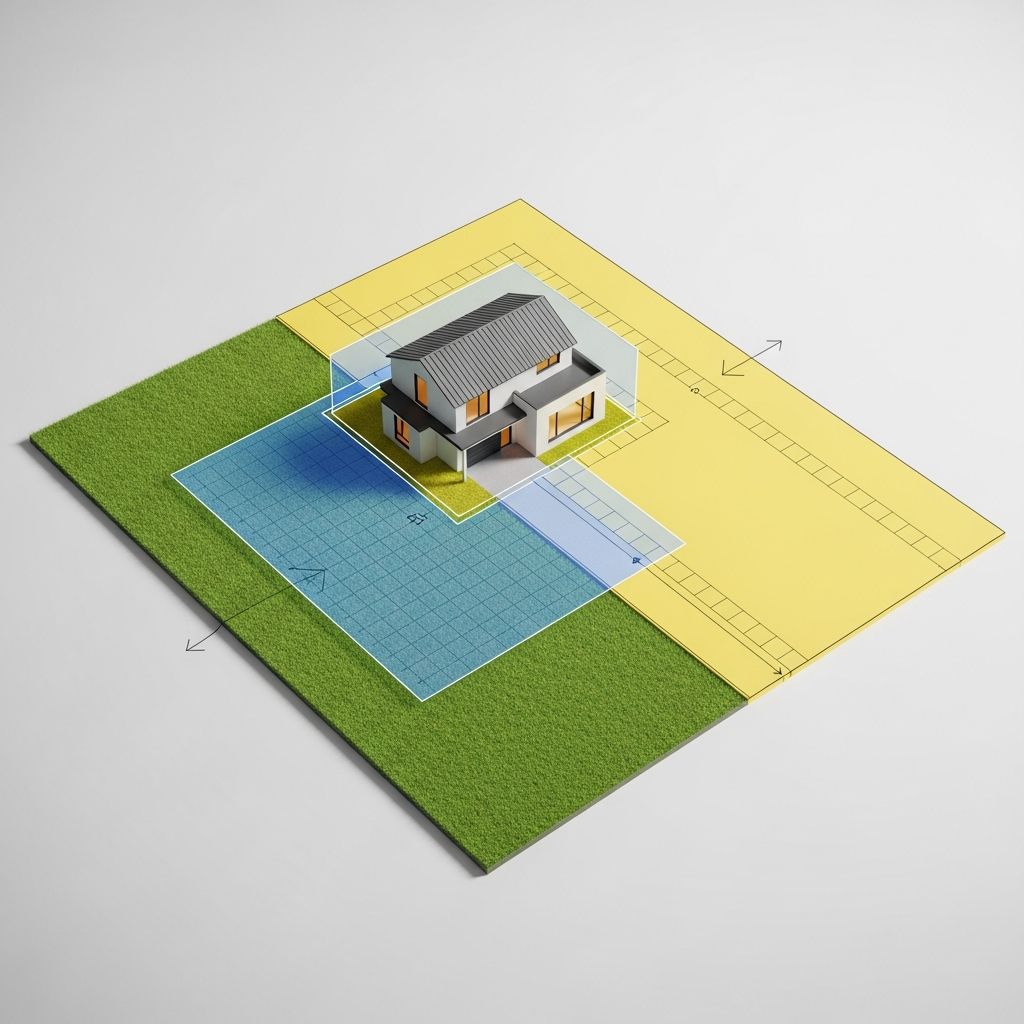
The land-to-building ratio is a fundamental metric in real estate that measures the relationship between the total area of a land parcel and the size of the building constructed on that land. This ratio plays a crucial role in property valuation, development planning, and real estate investment decisions. Whether you are a property investor, real estate professional, or homeowner, understanding how to calculate this ratio can provide valuable insights into property potential and market value.
In essence, the land-to-building ratio represents how much of a property’s total area is devoted to the building structure versus open land space. A higher ratio indicates more land relative to the building, while a lower ratio suggests a larger building footprint in relation to available land. This metric becomes increasingly important in urban environments where land is scarce and expensive.
What Is the Land-to-Building Ratio?
The land-to-building ratio is defined as the total square footage of a land parcel divided by the total area of the building footprint. This straightforward metric provides real estate professionals and investors with a clear picture of how a property’s space is allocated between built structures and open land.
This ratio serves multiple purposes in the real estate industry. Appraisers use it to assess property value, developers employ it to determine development potential, and investors rely on it to make informed purchasing decisions. The ratio varies significantly depending on location, with urban properties typically having lower ratios due to limited available land, while suburban and rural properties often feature higher ratios.
Understanding this metric is essential because it directly impacts property taxation, development feasibility, and investment returns. A property with a high land-to-building ratio may offer opportunities for expansion or additional development, while a low ratio might indicate maximum utilization of available space.
The Land-to-Building Ratio Formula
Calculating the land-to-building ratio requires a simple mathematical formula:
L:B = AL / AB
Where:
- L:B = Land-to-Building Ratio
- AL = Total area of the land (in square feet)
- AB = Total area of the building (in square feet)
This formula divides the land area by the building area to produce the ratio. For example, if you have a property with 10,000 square feet of land and a building occupying 5,000 square feet, the calculation would be:
L:B = 10,000 / 5,000 = 2:1
This means the land area is twice the size of the building footprint. The resulting ratio provides a clear numerical representation of the property’s spatial allocation.
Step-by-Step Calculation Guide
Calculating the land-to-building ratio involves three straightforward steps:
Step 1: Determine the Total Building Area
The first step is to accurately measure the total square footage occupied by the building or buildings on the property. This measurement should include the entire building footprint at ground level. If the property contains multiple structures, sum all building areas together to get the total.
Step 2: Measure the Total Land Area
Next, measure the complete area of the land parcel or lot. This includes all open space, parking areas, landscaping, and any undeveloped portions of the property. Be sure to use the total lot size, not just the usable land area.
Step 3: Apply the Formula
Finally, divide the total land area by the total building area using the formula L:B = AL / AB. The resulting number represents your property’s land-to-building ratio, typically expressed as a ratio (such as 2:1 or 5:1).
Practical Example Calculation
Let’s walk through a concrete example to illustrate how this calculation works in practice:
Suppose you own a commercial property with the following specifications:
- Total land area: 20,000 square feet
- Building footprint: 4,000 square feet
Using the formula:
L:B = 20,000 / 4,000 = 5:1
This means your property has a 5:1 land-to-building ratio, indicating that the land area is five times larger than the building itself. This ratio would typically be considered high and suggests significant development potential or excess land availability on the property.
Interpreting Your Results
Understanding what your calculated ratio means is just as important as calculating it correctly. The interpretation of ratios depends heavily on location and property type.
High vs. Low Ratios
A high land-to-building ratio (such as 5:1 or higher) indicates that the property has substantial land relative to building size. This typically suggests:
- Significant development potential
- Room for expansion or additional structures
- Possible excess or underutilized land
- Greater flexibility for future modifications
A low land-to-building ratio (such as 1.5:1 or lower) suggests that the building occupies most of the available land. This commonly indicates:
- Maximum or near-maximum land utilization
- Limited expansion potential
- Dense development typical of urban areas
- Higher land value contribution to overall property value
Location-Specific Considerations
The meaning of “high” or “low” varies significantly by location. In downtown urban areas, a 1.25:1 ratio might be typical and even considered spacious. Conversely, in suburban areas, a 5:1 ratio could be perfectly normal and expected. Understanding local market norms is essential for proper interpretation.
Why the Land-to-Building Ratio Matters
This metric holds substantial importance across multiple aspects of real estate and property management.
Property Valuation and Assessment
Appraisers consider the land-to-building ratio when determining market value. A high ratio usually means the land contributes more to the overall value than the structure itself. In markets where land is scarce and expensive, properties with lower ratios may be more valuable because they represent more efficient use of premium real estate. Conversely, in areas with abundant land, higher ratios might be more desirable because they offer development opportunities.
Development Potential and Zoning Compliance
Local zoning laws often regulate what percentage of a lot can be built on. A high land-to-building ratio suggests there’s room to build more, assuming zoning allows it. Developers use this ratio to decide whether it’s financially viable and legally possible to add structures, expand current buildings, or split lots. Understanding zoning limitations in relation to your property’s ratio helps determine realistic development scenarios.
Tax Assessment and Financial Planning
Property taxes are typically calculated based on assessed property value, which may be influenced by the land-to-building ratio. While two properties with different ratios might have identical assessed values, the distribution of value between land and building can affect tax planning strategies, depreciation calculations, and long-term investment analysis.
Investment Decision-Making
Real estate investors use this ratio to evaluate investment opportunities and potential returns. A property with high excess land might offer opportunities to generate additional revenue through development, leasing unused space, or selling excess land. Understanding your property’s ratio helps identify these opportunities.
Typical Ratio Benchmarks
Industry standards provide helpful benchmarks for interpreting ratios in different contexts.
Residential Properties
Residential properties typically feature land-to-building ratios between 2.5:1 and 3.5:1, depending on location and zoning. Single-family homes in suburban areas often fall toward the higher end of this range, while urban townhouses or condominiums often have lower ratios.
Commercial Properties
Commercial real estate ratios vary widely based on property type and location. Urban commercial properties might have ratios as low as 1:1 or lower, while suburban office parks or retail developments might range from 2:1 to 5:1. Properties with significant parking or storage requirements may have higher ratios.
Industrial Properties
Industrial facilities often have higher land-to-building ratios due to parking requirements, storage areas, and operational space needs. Ratios of 3:1 to 5:1 are common in this sector, though some facilities might exceed these benchmarks.
Excess Land and Its Value
Excess land refers to the portion of a property that remains undeveloped after accounting for the building footprint and necessary support areas like parking and storage. This concept is particularly important for investors and developers.
Identifying Excess Land
A property with a ratio of 2.3:1 or higher is often considered to have maximum utilization potential and may have excess land available. However, determining whether land is truly “excess” requires considering zoning limitations, parking code requirements, setback regulations, and other local building codes.
Valuing Excess Land
The value of excess land depends on several factors:
- Whether the excess area can be sold separately from the main property
- Local zoning and development restrictions
- Market demand for additional development in the area
- Infrastructure and utilities availability
- Access and visibility from main roads
For income-producing properties like commercial or industrial facilities, excess land value should be added to the income approach valuation method to ensure accurate property assessment.
Alternative Methods for Valuing Land and Building
Beyond the basic ratio calculation, several methods can help determine the separate value of land and buildings for tax and investment purposes.
Using Property Tax Cards
The simplest method involves consulting your property tax card, which typically provides the county’s assessment of land and building values. You can apply this assessment ratio to your purchase price. For example, if a tax card shows land valued at 20% and building at 80%, you would allocate 20% of your purchase price to land and 80% to the building.
Professional Appraisals
A detailed appraisal by a licensed appraiser provides an accurate assessment of separate land and building values. This method is particularly valuable for properties in high-value markets where accurate allocation is critical for tax purposes.
Insurance Replacement Values
Insurance replacement cost estimates can help determine building value, which you can then use to calculate land value by subtracting from the total purchase price.
Broker Market Analysis
Real estate brokers can provide market analysis showing comparable land values in your area, helping establish realistic land-to-building allocations.
Important Considerations and Limitations
While the land-to-building ratio is a valuable metric, several important considerations should inform its use:
- Location Variations: Ratios that are standard in one area may be unusual in another, so always consider local market norms.
- Building Quality: The ratio doesn’t account for building quality, age, or condition, which significantly impact property value.
- Zoning Restrictions: Local regulations may limit development potential regardless of the ratio, affecting actual property value.
- Market Conditions: Real estate values fluctuate based on market conditions, supply and demand, and economic factors beyond what the ratio captures.
- Tax Assessment Variations: Property tax card valuations may not reflect current market values, potentially skewing ratio-based allocations.
Frequently Asked Questions About Land-to-Building Ratio
Q: What is considered a good land-to-building ratio?
A: There is no universally “good” ratio as it depends entirely on location, property type, and intended use. In urban areas, lower ratios (1.5:1 to 2:1) are typical, while suburban properties often have ratios of 3:1 to 5:1. The best ratio for your needs depends on your investment goals and development plans.
Q: How does the land-to-building ratio affect property taxes?
A: Property taxes are typically based on total assessed value rather than the ratio itself. However, the ratio can influence how property value is distributed between land and building, which may affect depreciation calculations and tax planning strategies. Land cannot be depreciated, making this allocation important for tax purposes.
Q: Can I increase my property’s development potential by understanding its ratio?
A: Understanding your property’s ratio can help you identify potential for expansion or additional development. A high ratio suggests available land for development, but you must verify that local zoning laws permit such development before investing in improvements.
Q: How do parking requirements affect the land-to-building ratio?
A: Parking requirements significantly impact ratios, especially for commercial and industrial properties. Many zoning codes mandate minimum parking spaces, which effectively increases the land area needed relative to building size, thus raising the overall ratio.
Q: Is the land-to-building ratio the same as floor area ratio (FAR)?
A: No, these are different metrics. The land-to-building ratio compares total land area to building footprint, while floor area ratio divides total floor area (across all stories) by land area. FAR accounts for multi-story buildings differently than the simple land-to-building ratio.
Q: How do I calculate the ratio if I don’t know exact measurements?
A: You can obtain measurements from property tax records, survey documents, or the county assessor’s office. Many jurisdictions also provide this information online through their property information systems. Alternatively, you can hire a surveyor for precise measurements.
Conclusion
The land-to-building ratio is an essential metric for anyone involved in real estate investment, development, or property management. By understanding how to calculate and interpret this ratio, you can make more informed decisions about property value, development potential, and investment viability. Whether you’re evaluating a potential investment, planning an expansion, or simply seeking to understand your property’s characteristics better, mastering this calculation provides valuable insights into real estate metrics that drive industry decisions.
Remember that while the ratio is important, it should be considered alongside other factors such as location, market conditions, building quality, and local zoning regulations. By combining the land-to-building ratio with comprehensive market analysis and professional guidance, you can develop a complete understanding of your property’s true value and potential.
References
- Land to Building Ratio Calculator — Calculator Academy. Accessed November 2025. https://calculator.academy/land-to-building-ratio-calculator/
- Land to Building Ratio: How It Impacts Property Valuations — Ownwell. Accessed November 2025. https://www.ownwell.com/glossary/land-to-building-ratio
- Calculating Land to Building Ratio — MultiFamily Agent. Accessed November 2025. https://multifamilyagent.com/blog/calculating-land-to-building-ratio/
- FAR: Floor Area Ratio in Commercial Real Estate — Commercial Real Estate Loans. Accessed November 2025. https://www.commercialrealestate.loans/commercial-real-estate-glossary/far-floor-area-ratio/
- Calculating the Land and Building Value of Your Rental Property — The Real Estate CPA. Accessed November 2025. https://www.therealestatecpa.com/blog/calculating-the-land-and-building-value-of-your-rental-property/
Similar Articles








Read full bio of Sneha Tete