Can You Buy a Money Order With a Credit Card?
Learn if you can use a credit card to buy money orders and discover cost-effective alternatives.
Although money orders are less common today due to the rise of money transfer apps and digital payment solutions, many people still rely on them through banks and the U.S. Postal Service. If you’re considering using a credit card to purchase a money order, it’s important to understand the limitations and potential costs involved. While it is technically possible to use a credit card for this purpose, the process is indirect and can be significantly more expensive than using other payment methods.
Money orders remain a useful form of payment in certain situations, particularly when you need a guaranteed form of payment that resembles a check. However, most financial institutions and retailers have strict policies about which payment methods they accept for money order purchases. Understanding these restrictions and exploring your options can help you make a more informed financial decision.
Can You Get a Money Order With a Credit Card?
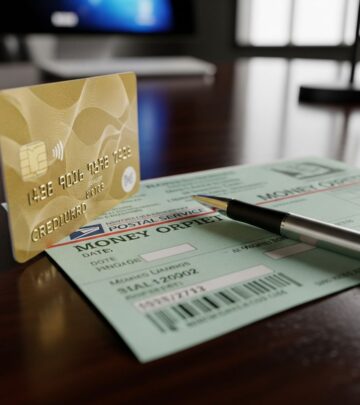
Yes, it is technically possible to obtain a money order with a credit card, but the process is not straightforward. In most cases, you won’t be able to pay for a money order directly with your credit card. Instead, you’ll need to use your credit card to withdraw cash from an ATM through a cash advance, and then use that cash to purchase the money order at your desired location.
Most retailers do not permit direct credit card payments for money orders. If you happen to find a retailer that allows credit card payment, your credit card issuer will likely still classify the transaction as a cash advance. This classification is crucial because it means you’ll be subject to different fees and interest rates compared to regular credit card purchases.
Understanding Cash Advances
When you take out a cash advance on your credit card, you’re essentially borrowing money against your card’s line of credit. This borrowed amount is added to your credit card balance and cannot exceed your current available credit limit. Cash advances are treated differently from regular purchases, which is why using one to buy a money order can become expensive.
The primary concern with using a cash advance to purchase a money order is the associated fees and interest rates. When your credit card issuer processes a cash advance, they will charge you a cash advance fee, which is typically calculated as a percentage of the total amount you’re withdrawing. Most cash advance fees range from 2 to 5 percent, though some cards may charge a flat minimum fee (such as $10) if the percentage would result in a smaller amount.
Where You Cannot Use a Credit Card
Most major retailers and financial institutions explicitly do not accept credit cards for money order purchases. Understanding which places reject credit card payments can help you plan ahead and choose the most convenient payment method:
– U.S. Postal Service- Walmart- Western Union- 7-Eleven- MoneyGram- Most banks and credit unions
These establishments typically accept only cash or debit cards for direct money order purchases. While some of these retailers may offer money transfer services via telephone or other methods using credit cards, these transactions are still classified as cash advances by credit card issuers, meaning you’ll still incur the associated fees.
Why Cash Advances Cost More
Using a cash advance to fund a money order purchase can become significantly more expensive than simply using cash or a debit card. There are several reasons why this payment method carries higher costs:
Cash Advance Fees
Your credit card issuer will charge a cash advance fee on top of the amount you withdraw. These fees are typically a percentage of the total, such as 5 percent, often with a minimum fee of $10. For a $100 cash advance, you could be paying an additional $5 to $10 before you even purchase the money order.
Higher Interest Rates
Cash advances are subject to higher Annual Percentage Rates (APR) compared to regular credit card purchases. This higher interest rate begins accruing immediately, with no grace period like you might have with standard purchases. If you can’t pay off the cash advance immediately, the interest charges will accumulate quickly.
No Rewards or Cashback
Unlike regular credit card purchases, cash advances typically do not earn rewards points or cashback. This means you’re missing out on potential benefits that could offset some of the transaction costs.
Better Payment Methods for Money Orders
Rather than using a credit card to purchase a money order, there are several more cost-effective payment methods you should consider:
Cash
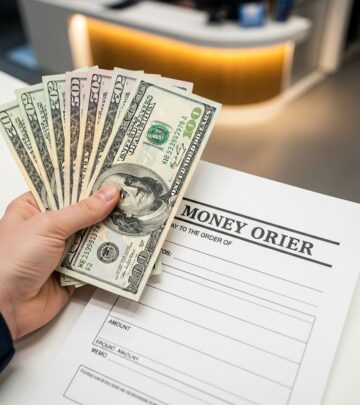
Paying with cash is the most straightforward and cost-effective option. Cash is accepted at virtually all locations that sell money orders, and you avoid any additional fees or interest charges. If you have the cash available, this is the ideal payment method.
Debit Card
Most retailers that don’t accept credit cards for money order purchases will still accept debit cards. Debit cards draw funds directly from your bank account, making them a convenient and cost-effective alternative to cash. Unlike credit cards and cash advances, debit card transactions don’t incur additional fees.
Bank Transfer
Many banks allow direct transfers from your bank account to purchase a money order. This method is secure and doesn’t involve carrying cash or using a card. Check with your specific financial institution about available options.
Traveler’s Checks
While less common today, some locations may accept traveler’s checks as payment for money orders. This is another option worth exploring if you have traveler’s checks available.
Money Order Fees and Costs
Regardless of your payment method, be aware that money order issuers typically charge a fee for issuing the money order itself. These fees generally range from less than $1 to $5, depending on the amount of the money order and the location where you purchase it. When combined with cash advance fees and interest, using a credit card can make the total cost quite high.
For example, if you’re purchasing a $500 money order with a credit card cash advance that charges a 5 percent fee ($25), plus a money order fee of $2, plus interest charges, you could easily be spending $30 or more just to make a $500 transaction. This same transaction with cash or a debit card would only cost you the $2 money order fee.
Can You Buy a Money Order Online With a Credit Card?
Unfortunately, money orders must be purchased in person, so you cannot typically use a credit card to pay for a money order through online retailers or services. The requirement for in-person purchase is a standard industry practice across most money order providers.
There are some small companies that act as intermediaries and claim they can print and mail money orders on your behalf that you’ve paid for online. However, these services are few and far between, and they carry significant risks. It’s generally advisable to avoid using these services, as they may not be reliable or secure. The safest approach is to purchase your money order in person using accepted payment methods.
Alternative Methods to Send Money
Before you decide to purchase a money order, consider whether alternative payment methods might better serve your needs:
Electronic Funds Transfers (EFT)
Wire transfers and direct transfers between bank accounts offer faster, more cost-effective alternatives to money orders. Many financial institutions offer these services at competitive rates, and they can be completed quickly.
Certified Checks
For transactions with known and trusted parties, certified checks can be a cost-effective alternative to money orders. Certified checks provide similar guarantee of funds as money orders but are issued directly by your bank.
Personal Checks
For trusted recipients, personal checks are often the simplest and most economical option. While they don’t provide the same guarantee as money orders or certified checks, they eliminate transaction fees entirely.
Mobile Payment Services
Services like Venmo, PayPal, Cash App, and similar mobile payment platforms have largely replaced money orders for many personal transactions. These services are faster, easier, and often free or low-cost.
Important Considerations Before Using a Credit Card
If you’ve decided to use a credit card cash advance despite the costs, keep the following important points in mind:
– Confirm your credit card issuer’s specific policies regarding cash advance fees and interest rates- Ask your credit card company about any additional charges or restrictions- Understand that cash advances do not earn rewards or cashback- Consider the total cost, including fees and interest, before proceeding- Calculate whether using a credit card makes financial sense for your specific situation- Check with the money order provider about their accepted payment methods before visiting
What You Need When Buying a Money Order
Before you head out to purchase a money order, make sure you have the following information and items prepared:
– Valid identification- Information about the recipient (including name and address)- The amount you want to send- An accepted payment method (cash or debit card recommended)- Funds to cover both the money order amount and any applicable fees
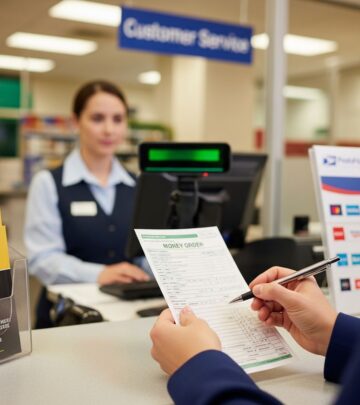
Most locations that sell money orders require you to fill out a form with information about both the purchaser and the recipient. Having this information ready will speed up the process considerably.
Frequently Asked Questions
Q: Can I use a credit card to buy a money order at the U.S. Postal Service?
A: No, the U.S. Postal Service only accepts cash or debit cards for money order purchases. Credit cards are not accepted as direct payment.
Q: What is the typical fee for a cash advance when buying a money order?
A: Cash advance fees typically range from 2 to 5 percent of the amount withdrawn, often with a minimum fee of $10. This is in addition to the money order fee itself.
Q: Will I earn credit card rewards on a money order purchased with a cash advance?
A: No, cash advances do not earn rewards points or cashback. This is one of the disadvantages of using this method.
Q: Is there interest charged on credit card cash advances immediately?
A: Yes, interest on cash advances begins accruing immediately with no grace period, unlike regular credit card purchases which may have a grace period.
Q: What is the most cost-effective way to buy a money order?
A: Using cash or a debit card is the most cost-effective way to purchase a money order. Both methods avoid cash advance fees and interest charges.
Q: Can I buy a money order online using a credit card?
A: No, money orders must be purchased in person at authorized locations. Online purchases are not available through legitimate providers.
Q: What should I do if I don’t have cash available for a money order?
A: If you don’t have cash available, consider using a debit card, bank transfer, or exploring alternative payment methods like wire transfers or mobile payment services.
References
- Can I Buy a Money Order With a Credit Card? — NerdWallet. Retrieved from https://www.nerdwallet.com/credit-cards/learn/can-i-buy-a-money-order-with-a-credit-card
- Can You Buy a Money Order With a Credit Card? — Experian. 2024-02-04. Retrieved from https://www.experian.com/blogs/ask-experian/can-you-buy-a-money-order-with-a-credit-card/
- Can You Buy a Money Order With a Credit Card? — American Express. Retrieved from https://www.americanexpress.com/en-us/credit-cards/credit-intel/buy-money-order-with-credit-card/
- Can you buy a money order with your credit card? — Bankrate. Retrieved from https://www.bankrate.com/credit-cards/advice/how-to-buy-money-order-with-credit-card/
- Can You Buy a Money Order with a Credit Card? — Chase.com. Retrieved from https://www.chase.com/personal/credit-cards/education/basics/can-you-buy-money-orders-with-credit-cards
- Can You Buy a Money Order with a Credit Card? — Discover. Retrieved from https://www.discover.com/credit-cards/card-smarts/can-you-buy-a-money-order-with-a-credit-card/
Similar Articles








Read full bio of Sneha Tete