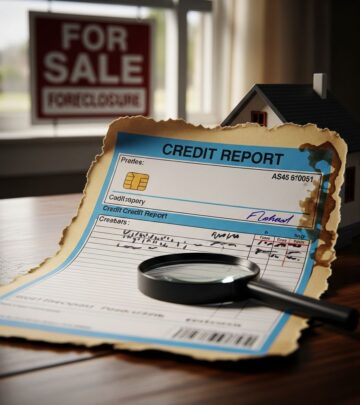
How To Buy A Home With Bad Credit: 4 Practical Steps
Complete guide to purchasing a home despite poor credit scores and limited financial history.
How to Buy a Home With Bad Credit
Purchasing a home is one of the most significant financial decisions you’ll make in your lifetime. However, if you have a poor credit score, the prospect of obtaining a mortgage can feel overwhelming and impossible. The good news is that having bad credit doesn’t necessarily mean you can’t buy a home. Many lenders specialize in working with borrowers who have less-than-ideal credit histories, and there are several loan programs designed specifically to help people in your situation.
Understanding your options and taking the right steps can help you navigate the home buying process successfully, even with a low credit score. This comprehensive guide will walk you through the strategies, loan types, and actionable steps you need to take to achieve homeownership despite credit challenges.
Understanding Credit Scores and Mortgage Requirements
Before diving into specific strategies, it’s important to understand how credit scores affect your mortgage eligibility. Credit scores typically range from 300 to 850, with higher scores indicating better creditworthiness. According to FICO scoring standards, a score below 580 is considered poor, while scores between 580 and 669 fall into the fair category. The average credit score for outstanding mortgages in the United States as of the first quarter of 2025 was 742, which shows that most borrowers have significantly higher scores than those with bad credit.
The minimum credit score required to obtain a mortgage varies depending on the loan type. Conventional loans typically require a credit score of 620 to 660, while FHA loans accept scores as low as 580 with a 3.5% down payment, or 500 with a 10% down payment. VA loans and USDA loans have no official minimum credit score requirements, though most lenders prefer a score around 620 or higher.
Steps to Prepare for Homeownership With Bad Credit
Step 1: Check Your Credit Report for Errors
Your first action should be to obtain and carefully review your credit report from all three major credit bureaus: Equifax, Experian, and TransUnion. You can access a free copy of your credit report annually through AnnualCreditReport.com. While reviewing your report, look for any errors, inaccuracies, or outdated information that may be negatively affecting your score.
Common errors include incorrect payment statuses, accounts that don’t belong to you, or duplicate entries. If you find any mistakes, contact the relevant credit bureau to dispute the inaccurate information. Correcting these errors can potentially improve your credit score without requiring additional financial effort on your part. Even small score improvements can make a significant difference in your mortgage eligibility and interest rates.
Step 2: Pay Down or Pay Off Existing Debt
One of the most effective ways to improve your credit profile is to reduce your existing debt load. This accomplishes two important goals: it can boost your credit score over time, and it improves your debt-to-income (DTI) ratio, which is a crucial factor that lenders evaluate. Your DTI ratio is calculated by dividing your total monthly debt payments by your gross monthly income.
Lenders view a lower DTI ratio as a sign of financial stability and reduced risk. By paying down credit cards, auto loans, or other outstanding debts, you demonstrate responsible financial management. If you can significantly improve your DTI ratio, you may qualify for a larger mortgage amount despite your lower credit score. Additionally, reducing your debt shows lenders that you take your financial obligations seriously, which can offset concerns about your poor credit history.
Step 3: Save for a Larger Down Payment
The size of your down payment plays a critical role in mortgage approval, especially when you have bad credit. A larger down payment reduces the lender’s risk because you have more equity in the property from day one. While some loan programs allow down payments as low as 1% to 3.5%, saving for a more substantial down payment can dramatically improve your approval odds and may even help you avoid mortgage insurance requirements.
If you can save for a 20% down payment, many lenders will overlook a lower credit score entirely, as the substantial equity protects their investment. Even if you can’t reach 20%, striving for 10% or 15% significantly strengthens your application. The larger your down payment, the lower your loan-to-value ratio, making you a more attractive borrower despite credit challenges.
Step 4: Work With a Mortgage Broker
A mortgage broker can be an invaluable resource when buying a home with bad credit. Licensed mortgage brokers have access to multiple lenders and loan programs, allowing them to match you with options tailored to your specific financial situation. When selecting a broker, verify they have an NMLS (Nationwide Multistate Licensing System) number, which confirms they are licensed and legitimate.
Brokers can save you considerable time by presenting multiple loan options and helping you understand which programs align with your credit profile and financial goals. They often have relationships with lenders who specialize in bad credit mortgages and understand the nuances of underwriting for borrowers with less-than-perfect credit histories.
Types of Mortgages for Bad Credit Borrowers
FHA Loans
FHA (Federal Housing Administration) loans are among the most accessible mortgage options for borrowers with bad credit. These government-backed loans are designed to help people who might not qualify for conventional mortgages. FHA loans allow credit scores as low as 580 with a 3.5% down payment, or 500 with a 10% down payment.
The primary advantage of FHA loans is their flexible credit requirements and low down payment options. They are particularly appealing for first-time homebuyers with poor credit. However, FHA loans do come with mortgage insurance premiums—both an upfront insurance premium and annual insurance payments—that you must pay regardless of your down payment size. Despite this additional cost, FHA loans remain a popular choice for bad credit borrowers because the overall monthly payment may still be manageable.
Conventional Loans
Conventional mortgages are backed by Fannie Mae and Freddie Mac and typically require a credit score of 620 to 660. These loans require a minimum 3% down payment and may offer either fixed or variable interest rates. While conventional loans have stricter qualification criteria than FHA or VA loans, they may offer better interest rates and terms if your credit score improves or if you have other strong financial credentials.
Some conventional loan programs, such as HomeReady and Home Possible, offer more flexible credit criteria and may work with borrowers who have lower scores or limited credit history. These programs can allow down payments as low as 3%, making them more accessible than traditional conventional mortgages.
VA Loans
Veterans and active-duty service members may be eligible for VA loans through the Department of Veterans Affairs. While there is no official minimum credit score requirement for VA loans, most lenders prefer a score of at least 620. Some VA-approved lenders will work with borrowers who have scores of 580 or even lower, particularly if you can provide a reasonable explanation for past credit issues.
VA loans offer numerous benefits, including no down payment requirement, no mortgage insurance requirement, and competitive interest rates. If you are eligible for a VA loan, this option may provide significant advantages over FHA or conventional loans.
USDA Loans
USDA loans are designed for borrowers purchasing homes in rural or designated suburban areas. Like VA loans, USDA loans have no official minimum credit score requirement, though lenders typically prefer a score around 640. These loans offer the advantage of no down payment requirement and no mortgage insurance, similar to VA loans.
How Lenders Evaluate Your Credit
Understanding how mortgage lenders assess creditworthiness can help you present your application in the best possible light. Lenders rely on data from the three major credit reporting bureaus: Equifax, Experian, and TransUnion. When evaluating your credit, lenders typically look at the middle credit score of the three bureaus rather than the highest or lowest score.
Lenders examine multiple factors beyond just your credit score, including your credit report details, total debt, payment history, and any negative items such as defaults or late payments. Most mortgage lenders use the FICO credit scoring model, which weighs different factors to calculate your overall score. Your payment history accounts for 35% of your score, amounts owed represent 30%, length of credit history comprises 15%, credit mix makes up 10%, and new credit inquiries constitute 10%.
How Bad Credit Affects Your Mortgage Rate
One of the most significant impacts of having bad credit is that you will pay a higher interest rate on your mortgage. According to current mortgage rate data, borrowers with a credit score of 740 or above might qualify for an APR of approximately 6.375%, resulting in a monthly payment of around $2,495 on a $400,000 loan. By contrast, borrowers with a credit score between 660 and 679 might face an APR of 6.638%, with a monthly payment of approximately $2,565.
This seemingly small difference in interest rates adds up significantly over the life of your loan. The total interest paid over 30 years could differ by tens of thousands of dollars between a borrower with excellent credit and one with poor credit. This underscores the importance of working to improve your credit score before applying for a mortgage, as even modest improvements can result in substantial savings.
Best Mortgage Lenders for Bad Credit
Several mortgage lenders specialize in working with borrowers who have poor credit scores. These lenders understand the challenges faced by borrowers with less-than-ideal credit histories and have developed flexible loan programs and underwriting processes to accommodate them.
Guild Mortgage is among the top FHA lenders for bad credit borrowers, accepting credit scores as low as 540 if you can put down 10%, or 580 if you can provide 3.5% down. Guild also offers specialized programs like their Zero Down program, which combines an FHA mortgage with a second loan to cover additional down payment assistance, and their 1% Down Payment Advantage program, which provides qualified borrowers with a 2% grant. Additionally, Guild connects borrowers to over 700 down payment assistance programs, combining financial help with homebuyer education.
Sage Mortgage (Sage Home Loans) is recognized as one of the top mortgage lenders working with bad credit borrowers, primarily due to competitive interest rates for those with low credit scores or limited credit history. They allow qualification for FHA loans with a 580 credit score and 3.5% down, or as low as 500 with 10% down.
Rate (formerly Guaranteed Rate) is another top lender specializing in low credit score mortgages, offering practical solutions for borrowers who may not qualify with traditional lenders. They work with FHA loan applications starting at 580 credit scores with 3.5% down, and some borrowers with 500 credit scores may qualify with 10% down and other qualifying criteria.
What If Your Credit Score is Too Low for a Mortgage?
If your current credit score feels too low to qualify for a mortgage, don’t lose hope. Even if you don’t meet the minimum credit score requirements for any loan program right now, you still have options. The most effective strategy is to focus on improving your credit score before you apply for a mortgage.
To improve your score, maintain a timely payment history going forward, reduce your outstanding debt, and hold off on applying for new credit in the near term. These actions take time to show results, but they demonstrate genuine financial improvement to lenders. Be aware that serious negative marks on your credit report, such as bankruptcy or foreclosure, may remain on your report for several years and will significantly impact your ability to qualify for a mortgage.
In the meantime, focus on saving for a larger down payment and reducing your debt-to-income ratio. These steps strengthen your overall financial profile and can compensate for a lower credit score. Additionally, if you can find a co-signer with better credit who is willing to sign the mortgage with you, this may improve your approval odds and interest rate.
Additional Strategies to Improve Your Approval Odds
Beyond the primary steps outlined above, several additional strategies can increase your chances of mortgage approval with bad credit. First, consider seeking free credit counseling from lenders or credit counseling agencies. Some mortgage lenders offer free credit counseling to help borrowers understand their credit profiles and develop improvement plans.
Second, shop around with multiple lenders and loan programs. Different lenders have different underwriting criteria, and what one lender declines, another may approve. Don’t apply with too many lenders simultaneously, as multiple hard inquiries can temporarily lower your score, but comparing 2-3 lenders is beneficial.
Third, prepare thorough documentation of your finances. Lenders want to see that despite your credit challenges, you are reliable and capable of making mortgage payments. Gather recent pay stubs, tax returns, bank statements, and employment verification. If you have an explanation for past credit issues—such as a medical emergency or temporary job loss—include a written statement explaining the circumstances and what has changed.
Frequently Asked Questions
Q: What is the lowest credit score needed to get a mortgage?
A: The lowest credit score typically required is 500, which applies only to FHA loans with a 10% down payment. Most other mortgage programs require a minimum score of 580 to 660.
Q: Will I pay a higher interest rate with bad credit?
A: Yes, borrowers with bad credit typically pay higher interest rates than those with good or excellent credit. The difference can amount to tens of thousands of dollars over the life of the loan.
Q: Can I get an FHA loan with a 500 credit score?
A: Yes, you can qualify for an FHA loan with a 500 credit score if you can provide a 10% down payment.
Q: How long does it take to improve my credit score?
A: Credit score improvements take time. Negative items remain on your report for 7 years (or longer for bankruptcy), but your score can begin improving within 3-6 months of responsible credit management.
Q: Should I get a co-signer to help with mortgage approval?
A: A co-signer with good credit may help improve your approval odds and interest rate, but they will be equally responsible for the loan and it will appear on their credit report.
Q: What is a debt-to-income ratio and why does it matter?
A: Your debt-to-income ratio is your total monthly debt payments divided by gross monthly income. Lenders use this to assess whether you can afford additional mortgage payments. A lower DTI makes you a more attractive borrower.
Q: Are there down payment assistance programs for bad credit borrowers?
A: Yes. Many lenders, like Guild Mortgage, connect borrowers to hundreds of down payment assistance programs, including grants that don’t require repayment.
Q: What’s the difference between FHA and conventional loans for bad credit?
A: FHA loans are more flexible with credit scores (accepting 580 or 500) but require mortgage insurance. Conventional loans require higher credit scores (620-660) but may offer better rates if you qualify.
References
- Best Bad Credit Mortgage Lenders — The Mortgage Reports. 2026. https://themortgagereports.com/71499/best-bad-credit-mortgage-lenders
- How To Buy A House With Bad Credit — Bankrate. 2025. https://www.bankrate.com/mortgages/get-a-mortgage-with-bad-credit/
Similar Articles








Read full bio of Sneha Tete