How To Build Equity In Your Home: 10 Practical Ways In 2026
Unlock the secrets to growing your home's value and shrinking your mortgage for lasting financial security.

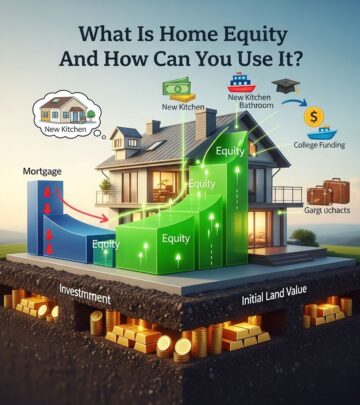
Equity is the difference between what you owe on your mortgage loan and what your home is currently worth. Say you owe $150,000 on your mortgage and your home is worth $350,000. You have $200,000 in equity, representing your ownership stake in the property. Building this equity is a cornerstone of personal wealth, providing financial flexibility through loans or lines of credit while enhancing your net worth over time.
In today’s housing market, where median home equity reached $213,000 according to ICE Mortgage Technology data, homeowners have unprecedented opportunities to accelerate equity growth. Whether through strategic purchasing decisions, ongoing payments, or value-adding improvements, these methods can turn your home into a powerful asset. This guide covers all essential strategies, drawing from proven financial practices to help you build equity efficiently.
Understanding Home Equity
Home equity represents your ownership interest in your property, calculated simply as current market value minus outstanding mortgage balance. For instance, a $350,000 home with a $150,000 mortgage yields $200,000 in equity—a 57% stake. As property values rise or you pay down principal, this figure grows, creating a reliable path to wealth accumulation.
Equity builds naturally over time but can be supercharged with deliberate actions. It’s not just theoretical; substantial equity (15-20%) unlocks home equity loans or HELOCs for emergencies, renovations, or investments. In 2026, with stable interest rates and appreciating markets, proactive homeowners can significantly outpace average growth.
1. Make a Large Down Payment
The journey to equity begins at purchase. A substantial down payment immediately establishes a strong ownership base, reducing the loan-to-value (LTV) ratio from the start. While 3% or zero-down options exist, aiming for 20% or more—such as $70,000 on a $350,000 home—instantly creates $70,000 in equity.
Beyond the initial boost, larger down payments mean smaller mortgages, less interest paid over time, and lower monthly payments, freeing cash for further investments. First-time buyers can leverage FHA loans (3.5% down) or VA loans (0% down for veterans), but saving for 20% avoids private mortgage insurance (PMI), saving thousands annually.
- Pros: Immediate equity, no PMI, lower interest costs.
- Cons: Ties up cash that could earn returns elsewhere.
- Tip: Use windfalls like bonuses or gifts to maximize this step.
2. Buy a Home You Can Afford
Overextending on a McMansion leads to negative equity if values dip. Opt for a modestly priced home in a stable or appreciating neighborhood to ensure payments build equity rather than strain finances. Renting builds no equity, while affordable homeownership turns payments into assets.
Consider total costs: mortgage, taxes, insurance, maintenance. A home at 25-30% of income allows extra payments, accelerating payoff. In volatile markets, this conservative approach protects against downturns, preserving equity gains.
3. Get the Best Mortgage Rate
Securing the lowest interest rate minimizes interest waste, directing more payments to principal. Shop multiple lenders—rates vary by 0.5% or more, saving tens of thousands over 30 years. Shorter terms like 15-year mortgages offer lower rates (often 1% less) and faster equity buildup.
| Mortgage Type | Avg. Rate (2026) | Equity Build Speed |
|---|---|---|
| 30-Year Fixed | 6.5% | Slow |
| 15-Year Fixed | 5.5% | Fast |
| Adjustable (ARM) | 5.75% | Variable |
Compare offers using tools from official sources like Freddie Mac for benchmarks.
4. Make Extra Principal Payments
Standard mortgages front-load interest; extra principal payments shift this balance. Adding $100 monthly to a $200,000 30-year loan at 6% shaves years off and boosts equity rapidly. Confirm with your servicer that extras apply to principal, not future payments.
- Bi-weekly payments: 26 half-payments equal 13 full ones yearly.
- Windfall strategy: Apply bonuses, tax refunds directly to principal.
- Impact: Could own free-and-clear 5-10 years early.
5. Refinance to a Shorter Term
If rates drop or finances improve, refinance to a 15- or 20-year loan. Lower rates and amplified principal payments accelerate equity. Example: Refinancing $150,000 at 6% (30-year) to 5% (15-year) builds equity twice as fast.
Weigh closing costs (2-5% of loan); break-even in 2-3 years makes it worthwhile. Avoid cash-out refinances, as they reduce equity.
6. Invest in Energy-Efficient Improvements
Upgrades like new windows, insulation, or solar panels cut utility bills and boost resale value. Energy Star-certified improvements can increase value by 7-10%, per federal studies. These qualify for tax credits via IRS Form 5695.
ROI examples:
- Attic insulation: 100%+ ROI.
- LED lighting: Immediate savings, high appeal.
7. Renovate Strategically
Not all improvements equal; focus on high-ROI projects. Kitchen remodels (60-80% ROI), minor bathroom updates (70%), curb appeal (100%) per Remodeling Magazine’s Cost vs. Value report. Avoid pools or luxury additions unless in premium markets.
Prioritize:
| Project | Cost | ROI |
|---|---|---|
| Kitchen Remodel (Minor) | $25,000 | 80% |
| Bathroom Update | $20,000 | 70% |
| Siding Replacement | $18,000 | 95% |
8. Appeal Your Property Taxes
Overassessed taxes inflate costs, slowing equity. Review assessments annually; if comparable homes are valued lower, appeal via local tax board. Success rates average 50-60%, saving hundreds yearly.
9. Rent Out Unused Space
Accessory dwelling units (ADUs), basements, or rooms generate income to fund extra payments. Platforms like Airbnb or long-term tenants can cover mortgage portions, indirectly building equity. Check zoning laws; average returns $500-1,500/month.
10. Avoid Home Equity Loans Unless Necessary
HELOCs or loans tap equity but reduce your stake—counterproductive to building. Reserve for high-ROI renovations; otherwise, they risk foreclosure if markets dip.
Why Build Equity?
Equity is forced savings: a wealth source for retirement, education, or emergencies. It hedges inflation, provides borrowing power without high rates, and maximizes sale proceeds. Homeowners with equity outperform renters in net worth growth.
Frequently Asked Questions (FAQs)
Q: How long does it take to build significant equity?
A: 5-10 years typically, faster with extra payments or appreciation. Larger down payments start you ahead.
Q: Can I build equity renting?
A: No, rent builds landlord equity. Homeownership converts payments to your asset.
Q: Is refinancing always good for equity?
A: Only shorter terms without cash-out; otherwise, it may slow progress.
Q: What if home values drop?
A: Conservative buying and payments protect against negative equity.
Q: Best first improvement?
A: Curb appeal—landscaping, paint—for quick, high-ROI value boost.
References
- How to build equity in your home in 2026 (and why you should) — Bankrate. 2026. https://www.bankrate.com/home-equity/how-to-build-equity-in-your-home/
- 10 Ways to Increase Your Net Worth This Year — Wise Bread. N/A. https://www.wisebread.com/10-ways-to-increase-your-net-worth-this-year
- The Pros and Cons of Paying Cash for a House — Wise Bread. N/A. https://www.wisebread.com/the-pros-and-cons-of-paying-cash-for-a-house
- 4 Smartest Ways to Use a Home-Equity Loan — Wise Bread. N/A. https://www.wisebread.com/4-smartest-ways-to-use-a-home-equity-loan
- How to Build Equity in Your Home — Wise Bread. N/A. https://www.wisebread.com/how-to-build-equity-in-your-home
Similar Articles








Read full bio of medha deb