How to Boost Your Credit with a Balance Transfer
Discover proven strategies to improve your credit score using balance transfer credit cards while saving on interest and avoiding common pitfalls.

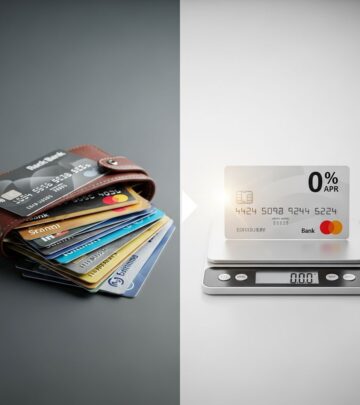
A balance transfer can be a powerful tool to improve your credit score while tackling high-interest debt. By moving balances to a card with a 0% introductory APR, you can save on interest, consolidate payments, and demonstrate responsible credit behavior to boost your score.
What Is a Balance Transfer?
A
balance transfer
involves moving debt from one credit card to another, typically one offering a low or 0% introductory annual percentage rate (APR) for a promotional period of 12 to 21 months. This allows you to pay down principal faster without accruing interest, potentially improving your credit utilization ratio—a key factor in your FICO score, which comprises 30% of your total score.Unlike regular purchases, balance transfers often incur a fee of 3% to 5% of the transferred amount, but the interest savings usually outweigh this cost if you have a repayment plan.
Pros of Balance Transfers
Balance transfers offer several advantages for debt management and credit improvement:
- Significant Interest Savings: Transferring from a card with 20%+ APR to a 0% intro offer can save hundreds or thousands. For example, on $6,000 debt at 21.47% APR (Federal Reserve average), you’d pay $814 in interest over 14 months at $500/month; a 5% transfer fee costs just $300.
- Faster Debt Payoff: Without interest, more of your payment goes to principal, accelerating payoff and freeing up cash flow.
- Debt Consolidation: Combine multiple balances into one payment, simplifying budgeting.
- Credit Score Boost: Lowering utilization (aim for under 30%) can raise scores; on-time payments further help.
Cons and Risks of Balance Transfers
While beneficial, balance transfers have drawbacks that require caution:
- Transfer Fees: 3%-5% of the amount, e.g., $150-$250 on $5,000. Calculate if savings justify it.
- Temporary Low APR: Reverts to 15%-25%+ after promo period; unpaid balances accrue retroactively in some cases.
- Credit Limit Restrictions: New card limits may not cover full debt plus fees, leaving residual balances.
- Hard Inquiry Impact: Application dings score 5-10 points temporarily; frequent transfers signal risk.
- Risk of More Debt: Temptation to reuse old cards can worsen debt; requires discipline.
- High Credit Score Needed: Best offers require good/excellent credit (670+ FICO).
Does a Balance Transfer Boost Your Credit Score?
Yes, but indirectly and with caveats. Positive effects include:
- Reduced credit utilization as debt decreases.
- Lengthened average account age if you keep old cards open.
- Positive payment history from on-time payments.
Negatives: Initial hard inquiry and potential higher utilization if new limit is low. Avoid frequent transfers, as they hurt by showing reliance on new credit.
| Factor | Impact on Score | Balance Transfer Effect |
|---|---|---|
| Payment History (35%) | Positive if on-time | Supports with consistent payments |
| Credit Utilization (30%) | Positive if <30% | Major boost as debt pays down |
| Length of History (15%) | Neutral/Positive | Keep old accounts open |
| New Credit (10%) | Negative short-term | Hard inquiry dip |
| Credit Mix (10%) | Neutral | Minimal change |
Steps to Do a Balance Transfer
- Check Eligibility: Review credit score (free at Equifax/Experian); need good credit for best rates.
- Compare Cards: Look for longest 0% APR (15-21 months), low fees, high limits. Use tools like Bankrate or NerdWallet comparators.
- Calculate Savings: Use payoff calculators to project interest vs. fees.
- Apply: Get pre-approved to minimize inquiries.
- Initiate Transfer: Online, phone, or check; pay off old cards immediately.
- Set Repayment Plan: Divide balance by promo months; pay more than minimum.
- Monitor: Track via app; cut up old cards if tempted.
How to Choose the Best Balance Transfer Card
Select based on:
- Intro APR Length: Longer = more payoff time (e.g., 21 months).
- Fee Percentage: 3% preferred; check time limits for lower rates.
- Credit Limit: High enough for debt + fee.
- Rewards/Post-Promo APR: Low ongoing rate if needed.
- No Purchase APR Trap: New buys may accrue at high rate.
Top factors in a table:
| Feature | Ideal | Why It Matters |
|---|---|---|
| Intro APR | 0% for 18+ months | Maximizes savings |
| Transfer Fee | 3% or less | Reduces upfront cost |
| Limit | > Your debt | Allows full transfer |
| Post-Promo APR | <15% | Safety net |
Using a Balance Transfer Calculator
Online calculators (e.g., Bankrate, Credit Karma) estimate savings. Input: balance, current APR, transfer fee, promo length, monthly payment. Example: $10,000 at 22% APR vs. 0% for 18 months with 4% fee saves ~$1,500.
Pro Tip: Factor minimum payments and run scenarios for aggressive payoffs.
Balance Transfer Tips and Strategies
- Pay Off Before Promo Ends: Automate payments; overpay principal.
- Avoid New Purchases: Many cards exclude them from 0% APR.
- Don’t Close Old Accounts: Preserves credit age and mix.
- Build Budget: Track expenses; cut non-essentials to pay extra.
- Emergency Fund First: Avoid new debt cycles.
- Multiple Transfers: OK if disciplined, but limit inquiries.
- Alternatives if Denied: Debt consolidation loans or negotiation.
Common Balance Transfer Mistakes to Avoid
- Ignoring fees and limits, leading to partial transfers.
- Missing promo end date, facing penalty APRs.
- Charging on new card or old ones, increasing debt.
- No repayment plan, reverting to high interest.
- Frequent transfers, hurting score.
Frequently Asked Questions (FAQs)
Can a balance transfer improve my credit score?
Yes, by lowering utilization and showing on-time payments, though initial inquiry dips it slightly.
How long does a balance transfer take?
Typically 1-3 weeks; confirm payoff to avoid double interest.
Is there a minimum transfer amount?
Often $500+; check issuer terms.
What if I can’t pay off before promo ends?
Balance accrues at high APR; have backup plan.
Can I transfer from store cards?
Usually yes, but confirm eligibility.
Final Thoughts
Balance transfers boost credit when used strategically: save interest, lower utilization, and pay off aggressively. Discipline is key to avoid pitfalls. Combine with budgeting for lasting financial health.
References
- The pros and cons of balance transfer credit cards — The Points Guy. 2023. https://thepointsguy.com/credit-cards/pros-cons-balance-transfer-credit-cards/
- 3 Little-Known Risks of Using a Balance Transfer Credit Card — Old National Bank. 2024. https://www.oldnational.com/resources/insights/3-little-known-risks-of-using-a-balance-transfer-credit-card/
- What is a Balance Transfer on a Credit Card? — Equifax. 2025. https://www.equifax.com/personal/education/credit-cards/articles/-/learn/balance-transfer-credit-card/
- Pros and Cons of Balance Transfer Cards — Experian. 2024. https://www.experian.com/blogs/ask-experian/pros-cons-balance-transfer-credit-cards/
- Pros And Cons Of A Balance Transfer — Bankrate. 2025. https://www.bankrate.com/credit-cards/balance-transfer/balance-transfer-pros-and-cons/
- Is doing a balance transfer good for credit scores? — Chase. 2024. https://www.chase.com/personal/credit-cards/education/credit-score/how-does-balance-transfer-affect-credit-score
Similar Articles








Read full bio of medha deb