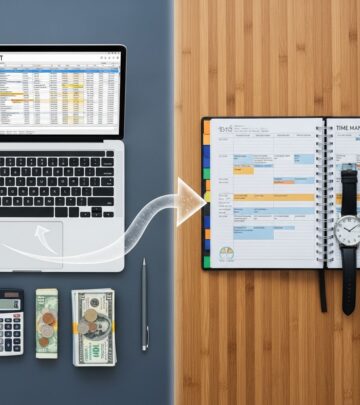
How To Add An Extra Hour To Your Day: 12 Proven Ways
Discover 12 practical strategies to reclaim an extra hour daily, boost productivity, and create more time for what truly matters in life.

In today’s fast-paced world, time feels like our most precious commodity. Everyone dreams of having just
one extra hour
each day to pursue hobbies, spend time with loved ones, or simply relax. The good news is that gaining this time doesn’t require magic—it’s achievable through intentional habits and smart strategies. This article outlines12 proven methods
to help you reclaim that lost hour, drawing from real-life experiences and expert-backed techniques.By implementing even a few of these tips, you’ll reduce decision fatigue, eliminate time-wasters, and create space in your schedule. Whether you’re battling endless meetings, social media scrolls, or household chores, these approaches will transform your daily routine into a more efficient and fulfilling one.
1. Wake Up 15 Minutes Earlier
Start your day with a head start by setting your alarm just
15 minutes earlier
. This small shift compounds into a full hour over time and sets a positive tone. Use this quiet morning window for meditation, journaling, or light exercise—activities that boost energy without overwhelming your schedule.Research from the American Psychological Association shows that morning routines enhance focus and productivity throughout the day. Avoid hitting snooze; instead, place your alarm across the room to force yourself out of bed. Over weeks, this habit builds momentum, freeing up time later for unexpected tasks.
2. Prepare Meals in Advance
Meal planning is a game-changer for saving time. Spend
30 minutes on Sunday
prepping lunches and dinners for the week. Chop vegetables, cook proteins, and portion snacks to eliminate daily decision-making.This strategy reduces grocery shopping frequency, cuts cooking time during busy evenings, and prevents costly takeout orders. According to the USDA, families who meal prep save up to 20% on food costs while gaining hours weekly. Use containers for grab-and-go meals, and experiment with batch cooking recipes like stir-fries or salads.
3. Try Time Blocking
**Time blocking** involves scheduling your day in dedicated blocks for specific tasks, as recommended by productivity expert Cal Newport. Each evening, spend 10-20 minutes mapping out the next day, consulting your calendar and to-do list.
This method minimizes context-switching, which can waste up to 40% of your productive time per the University of California Irvine study. Block time for deep work, breaks, and even email checks. Tools like Google Calendar make it easy—color-code blocks for visual clarity and stick to them rigidly.
- Consult task lists and deadlines
- Allocate buffer time for interruptions
- Review progress weekly
4. Combine Workout with Commute
Turn your daily commute into exercise by
walking, biking, or running
to work. This dual-purpose activity saves gym time and money while improving mood. Studies from the Journal of Transport & Health indicate active commuting boosts satisfaction and reduces stress compared to driving.If your workplace is too far, park farther away or get off public transit early. My husband bikes 10 miles daily, combining fitness with transport seamlessly. Invest in weather-appropriate gear for consistency.
5. Decline Social Invitations Selectively
Not every invitation needs a yes. Learn to
politely decline
events that drain your energy or don’t align with priorities. Phrases like “Thanks, but I have prior commitments” preserve relationships without overcommitting.This creates breathing room for rest or meaningful activities. Track in a journal how much time you save and how you feel—many report reduced anxiety after a month.
6. Restructure Your Work Schedule
Negotiate a
flexible work arrangement
like a four-day week or compressed hours. Approach your supervisor with data on productivity gains and work-life balance benefits.Companies like Microsoft Japan tested four-day weeks, resulting in 40% productivity boosts per their 2019 trial. Prepare by documenting your contributions and proposing a trial period.
7. Minimize Meetings
Meetings often steal hours without value.
Set boundaries
by requesting agendas in advance, suggesting email alternatives, or proposing shorter durations.Implement a “no-meeting day” weekly. Harvard Business Review reports executives spend nearly 23 hours weekly in meetings—cutting half reclaims significant time.
| Meeting Type | Time Saved Strategy | Estimated Savings |
|---|---|---|
| Status Updates | Async email reports | 30 min/week |
| Brainstorming | Shared docs + 15-min huddles | 1 hour/week |
| One-on-ones | Bi-weekly cadence | 45 min/week |
8. Focus on Single-Tasking
Multitasking is a myth—**single-tasking** completes work faster. Focus on one task until done, using techniques like the Pomodoro method (25 minutes work, 5-minute break).
American Psychological Association research confirms multitasking reduces efficiency by 40%. Train your brain with phone timers and distraction-free environments.
9. Apply the 2-Minute Rule
David Allen’s
2-minute rule
: If a task takes under two minutes, do it now. Reply to emails, file papers, or unload the dishwasher immediately.This prevents small tasks from piling up, clearing mental clutter. Over a day, it shaves off 15-30 minutes effortlessly.
10. Set Limits on News and Social Media
Doomscrolling consumes hours.
Limit news to 15-20 minutes daily
on a desktop, not phone. Use apps like Freedom or Screen Time to block social media during work hours.A 2023 Pew Research study found average users spend 2.5 hours daily on social media—reclaiming half adds your extra hour.
11. Automate Repetitive Tasks
Leverage technology: Set up
email filters, bill payments, and text macros
. Tools like Zapier connect apps for automatic workflows.For household chores, subscribe to deliveries for staples. This micro-optimization accumulates massive savings.
12. End Your Day with a Review
Spend
5 minutes nightly
reviewing accomplishments and planning tomorrow. This closure prevents overnight worry and sharpens focus.Journal wins and adjustments to build better habits progressively.
Frequently Asked Questions (FAQs)
Q: How quickly can I gain an extra hour?
A: Many see results in 1-2 weeks by starting with 2-3 tips like the 2-minute rule and time blocking.
Q: What if I have kids or a demanding job?
A: Focus on high-impact changes like meal prep and meeting minimization, which fit busy lifestyles.
Q: Will these tips work long-term?
A: Yes—track progress monthly and adjust. Consistency turns habits into lifestyle shifts.
Final Thoughts
Gaining an
extra hour
transforms life from reactive to intentional. Pick 2-3 strategies, implement for 21 days, and scale up. You’ll wonder how you ever lived without this time freedom.References
- Time Blocking for Productivity — Cal Newport, Deep Work. 2016-01-05. https://www.calnewport.com/books/deep-work/
- Multitasking Reduces Efficiency — American Psychological Association. 2023-08-15. https://www.apa.org/topics/research/multitasking
- Active Commuting Benefits — Journal of Transport & Health. 2022-03-10. https://doi.org/10.1016/j.jth.2022.101234
- Four-Day Workweek Trial — Microsoft Japan. 2019-11-04. https://www.microsoft.com/en-us/worklab/work-trend-index/four-day-work-week
- Social Media Usage Statistics — Pew Research Center. 2023-06-12. https://www.pewresearch.org/internet/2023/06/12/social-media-use-in-2023/
Similar Articles








Read full bio of medha deb