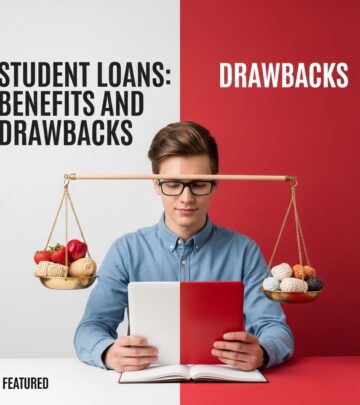
How Student Loan Debt Can Derail Your Future
Discover how mounting student loans sabotage careers, delay life milestones, and hinder financial freedom for years to come.

Student loan debt has ballooned into a crisis affecting millions of Americans, with total outstanding balances exceeding $1.7 trillion as of recent estimates. This massive burden doesn’t just linger on balance sheets—it actively reshapes life trajectories for borrowers, particularly young graduates entering the workforce. Far from being a simple financial obligation, student debt influences career decisions, delays major life milestones, and perpetuates cycles of economic inequality. Research from institutions like Brookings and peer-reviewed studies reveal how debt constrains choices, elevates stress, and limits mobility. This article examines these impacts in detail, drawing on authoritative data to illustrate why student loans can truly derail your future.
Student Loan Debt Discourages Risk-Taking and Entrepreneurship
One of the most insidious effects of student loan debt is its suppression of entrepreneurial ambition. Graduates saddled with monthly payments often shy away from starting businesses, fearing the instability of self-employment against fixed debt obligations. Studies show that high debt levels correlate with reduced rates of business formation among young adults, as borrowers prioritize steady paychecks to service loans over innovative ventures. For instance, the financial strain prompts risk-averse behavior, discouraging innovation and self-employment that could drive economic growth.
- Debt-burdened individuals are less likely to launch startups due to cash flow constraints from loan repayments.
- Entrepreneurship rates drop significantly among those with balances over $20,000, per labor market analyses.
- Post-debt discharge, borrowers exhibit higher job mobility and income gains of about $3,000 within three years, suggesting relief unleashes potential.
This aversion extends to career pivots; indebted graduates stick to safe paths, missing opportunities for fulfillment and wealth-building through business ownership.
It Makes You Choose the Wrong Career
Student debt profoundly warps occupational choices, pushing graduates toward high-salary jobs at the expense of passion or societal good. Research from Berkeley’s Goldman School of Public Policy demonstrates that debt causes graduates to select substantially higher-salary positions and reduces the probability of pursuing low-paid public interest roles. Similarly, Brookings notes debt influences shifts toward fields like engineering and economics for better wages.
| Career Path | Impact of Debt | Examples |
|---|---|---|
| High-Paying Fields | Prioritized for repayment | Healthcare (doctors, pharmacists), Engineering, Finance |
| Public Service/Low-Pay | Avoided | Teaching, Non-profits, Humanities roles |
| Passion-Driven | Deferred | Arts, Social Work |
Surveys indicate over half of graduates factor debt into job choices, often sacrificing satisfaction—41% of those with over $30,000 in loans report dissatisfaction versus 30% without. This skews talent away from critical sectors like education and public service.
It Increases Your Risk of Unemployment
Counterintuitively, student loan debt can heighten unemployment risks through psychological strain. A peer-reviewed study in the Journal of Vocational Behavior, using data from 1,248 seniors across four U.S. universities, applies Conservation of Resources (COR) theory to show debt induces financial strain, leading to job search strain that lowers odds of full-time employment. While it motivates more work hours during college (a positive mediator), the net effect via strain is negative.
- Debt → Financial strain → Job search strain → Reduced full-time employment odds.
- Graduates with debt face heightened early-career job search difficulties amid low lifetime earnings.
- Class of 2025 surveys link debt to low post-graduation expectations in competitive markets.
Financial distress impairs self-regulation during searches, per COR theory, making debt a barrier to workforce entry.
It Prevents You From Buying a Home
Homeownership, a cornerstone of wealth-building, is routinely delayed by student debt. Borrowers cite monthly payments as a primary barrier, with debt correlating to postponed purchases and lower credit scores. Economic mobility suffers as young adults rent longer, missing equity growth—especially acute for low-wage workers where debt exacerbates inequality.
Key statistics:
- Many delay home buying due to balances limiting down payments and mortgage eligibility.
- Debt raises other borrowing costs, constraining consumption and savings.
- Racial wealth gaps widen as minorities face disproportionate burdens.
This delay perpetuates renting cycles, hindering intergenerational wealth transfer.
It Delays Marriage and Starting a Family
Student debt reshapes personal relationships, postponing marriage and family formation. Studies link high balances to delayed weddings, as couples prioritize stability over commitment amid financial stress. Brookings reports debt impacts marriage timing and quality, while broader analyses show hesitation in family-starting due to economic constraints.
- Graduates delay milestones like marriage and parenthood to manage payments.
- Debt fosters risk aversion, affecting life decisions beyond careers.
- Financial strain from loans correlates with later-life partnership delays.
This trend contributes to declining birth rates and shifting demographics, with long-term societal implications.
It Increases Your Reliance on Mom and Dad
Unable to launch independently, many graduates boomerang back to parental homes. Debt burdens early-career earnings, forcing reliance on family support for living expenses and loan payments. This phenomenon, tied to delayed independence, underscores debt’s role in stalling adulthood.
Consequences include:
- Prolonged dependence delays personal growth and financial literacy.
- Strains family resources, particularly in lower-income households.
- Reduces mobility, as geographic ties limit job opportunities.
It Decreases Your Retirement Savings
High debt diverts funds from retirement accounts, jeopardizing long-term security. Monthly payments crowd out contributions to 401(k)s or IRAs, with borrowers building less wealth over time. Analyses show debt prevents savings accumulation, affecting retirement readiness.
- Young professionals skip investments fearing default.
- Lower credit scores from debt limit access to favorable financial products.
- Collective impact slows generational wealth transfer.
Strategies to Mitigate Student Loan Debt’s Impact
While daunting, proactive steps can counteract debt’s derailment. Consider income-driven repayment plans, employer assistance, or Public Service Loan Forgiveness for eligible fields. Debt discharge yields income boosts and mobility. Refinance for lower rates, prioritize high-interest loans, and build emergency funds. Pursue side hustles or career shifts to high-ROI fields like tech.
- Explore forgiveness programs for public/non-profit work.
- Budget ruthlessly: 50/30/20 rule adapted for debt.
- Seek financial counseling from non-profits.
Policy reforms, like expanded relief, could alleviate systemic issues.
Frequently Asked Questions (FAQs)
Does student loan debt affect job choices?
Yes, it pushes graduates toward higher-paying jobs over fulfilling or public service roles, per studies from Berkeley and Brookings.
Can student debt delay homeownership?
Absolutely; it limits down payments and raises borrowing costs, delaying this milestone for many.
Is entrepreneurship harder with student loans?
Yes, debt induces risk aversion, lowering startup rates among borrowers.
How does debt impact mental health and employment?
It causes financial strain leading to job search strain, reducing full-time employment odds via COR theory.
What careers justify high student debt?
Healthcare, engineering, and finance offer salaries that offset costs.
References
- The Impact of Student Debt on the Low-Wage Workforce — WorkRise Network. 2023. https://www.workrisenetwork.org/working-knowledge/impact-student-debt-low-wage-workforce
- Student Loan Debt and Career Paths: Making Informed Decisions — McCarthy Law. 2024-08-12. https://mccarthylawyer.com/2024/08/12/how-student-loan-debt-impacts-different-career-paths/
- Is Student Loan Debt Good or Bad for Full-Time Employment upon Graduation? — PMC/NCBI (Journal of Vocational Behavior). 2020. https://pmc.ncbi.nlm.nih.gov/articles/PMC7483194/
- Student Debt: A Critical Challenge Facing Professionals — DPE AFL-CIO. N/A. https://www.dpeaflcio.org/factsheets/student-debt-a-critical-challenge-facing-professionals
- Student Loans Rising — Brookings Institution. 2023. https://www.brookings.edu/articles/student-loans-rising/
- Constrained after College: Student Loans and Early-Career Occupational Choices — Goldman School of Public Policy, UC Berkeley. N/A. https://gspp.berkeley.edu/research-and-impact/publications/constrained-after-college-student-loans-and-early-career-occupational-choic
- The Long-Term Effects of Student Loans — American College of Education Blog. N/A. https://ace.edu/blog/the-long-term-effects-of-student-loans/
Similar Articles








Read full bio of Sneha Tete