How Savers Can Adjust to Falling Fed Interest Rates
Learn how to protect your savings income and adjust your strategy when the Federal Reserve lowers interest rates over time.
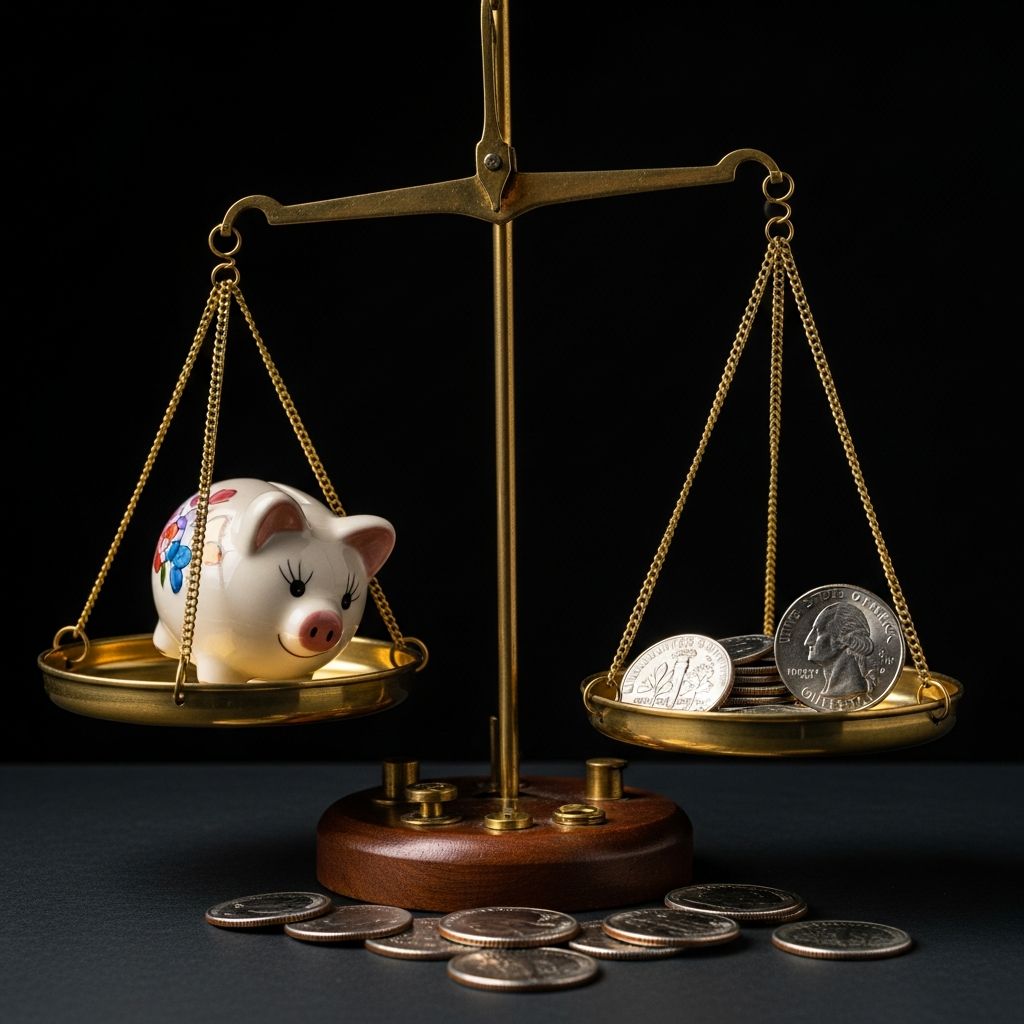
When the Federal Reserve lowers interest rates, borrowers often benefit from cheaper loans, but savers face a very different reality. Falling rates usually mean lower yields on savings accounts, certificates of deposit (CDs), and money market funds, putting pressure on anyone who relies on interest income to meet financial goals.
This article explains how Federal Reserve rate cuts work, why they matter to savers, and what practical steps you can take to protect and improve your returns when rates move lower.
How the Federal Reserve Influences Interest Rates
The Federal Reserve (the Fed) is the U.S. central bank. One of its main tools is the federal funds rate, a short-term interest rate that influences many other borrowing and saving rates in the economy.
- The Fed raises rates to cool inflation and slow an overheated economy.
- The Fed cuts rates to support growth, reduce borrowing costs, and help during economic slowdowns.
- Changes in the federal funds rate affect yields on Treasury bills, bank deposits, credit cards, and other products across the financial system.
Because banks and credit unions generally set their deposit rates using market benchmarks like short-term Treasury yields and the federal funds rate, Fed cuts tend to push deposit yields down over time.
Why the Fed Lowers Interest Rates
The Fed has a dual mandate: maximum employment and stable prices (low, predictable inflation). To pursue these goals, it reduces rates when:
- Economic growth is slowing or a recession threatens.
- Unemployment is rising or expected to rise.
- Inflation is at or below the Fed’s 2% target and appears under control.
Lower rates encourage households and businesses to borrow and spend more, which can support jobs and growth. But this same policy makes it harder for savers to earn income on safe, interest-bearing assets.
What Lower Rates Mean for Savers
When the Fed begins a rate-cutting cycle, the impact on savers generally follows a clear pattern:
- Savings account rates decline as banks adjust to lower market yields.
- Money market yields fall, tracking short-term interest rates.
- New CD rates drop, especially on shorter maturities linked closely to Fed policy.
- Existing fixed-rate CDs hold their yields until maturity, which can become relatively more attractive.
According to analysis by the Federal Reserve and private forecasters, rate-cut cycles tend to narrow the gap between high- and low-yielding savings options, compressing returns across the board.
Who Is Most Affected by Lower Rates?
Falling interest rates affect all savers, but some groups feel the impact more acutely:
- Retirees and near-retirees who rely on interest income for living expenses.
- Conservative investors who hold large balances in savings accounts, CDs, and money market funds.
- Short-term savers building cash for goals like a down payment or tuition.
For these households, a sustained period of low rates can reduce annual income, make it harder to keep up with inflation, and push them to rethink their risk tolerance and strategy.
Adjusting Your Savings Strategy When the Fed Cuts Rates
While you cannot control Federal Reserve decisions, you can adjust how and where you save. The key is to combine safety, liquidity, and yield in a way that matches your time horizon and risk comfort.
1. Reevaluate Your Emergency Fund and Cash Reserves
An emergency fund should remain safe and readily accessible, even if rates are low. However, you do not need to accept the lowest yields available.
- Compare high-yield online savings accounts with traditional brick-and-mortar banks.
- Check FDIC-insured banks and NCUA-insured credit unions for competitive rates.
- Keep at least 3–6 months of essential expenses in liquid accounts, even if yields decline.
Online banks often offer significantly higher deposit rates than the national average, especially in competitive rate environments.
2. Use CD Laddering to Manage Rate Risk
A CD ladder is a strategy that spreads your savings across multiple CDs with different maturities. This approach helps manage reinvestment risk when rates are falling.
For example, instead of placing $20,000 into a single 3-year CD, you might:
- Invest $5,000 in a 1-year CD.
- Invest $5,000 in a 2-year CD.
- Invest $5,000 in a 3-year CD.
- Invest $5,000 in a 4-year CD.
As each CD matures, you can decide whether to lock in longer terms, roll into shorter ones, or hold more cash, depending on the rate outlook.
| CD Term | Purpose | Benefit in Falling-Rate Environment |
|---|---|---|
| Short-term (6–12 months) | Liquidity and flexibility | Allows adjustments if conditions change |
| Intermediate (2–3 years) | Balance of yield and access | May capture higher rates from before cuts |
| Long-term (4–5+ years) | Maximize yield | Locks in rates before they fall further |
In a falling-rate cycle, longer-term CDs opened before rates drop further can become especially valuable, since they preserve higher yields while new CDs offer less.
3. Consider Variable-Rate and Step-Up CDs Carefully
Some institutions offer variable-rate or step-up CDs whose yields can change over time. These can be appealing in certain environments, but when rates are trending lower, they may offer less protection than fixed-rate CDs.
- Variable-rate CDs adjust periodically based on a benchmark; in a cutting cycle, that often means lower future yields.
- Step-up CDs allow one or more rate increases, but the starting rate is sometimes lower than comparable fixed-rate CDs.
Before choosing these products, review how often the rate can change, what triggers changes, and any limitations on early withdrawal.
4. Shop Aggressively for Best-In-Class Rates
Even when overall yields are down, the difference between the lowest and highest rates can be material. The spread between top-yielding and average savings products often remains meaningful even in low-rate environments.
To improve your earnings:
- Compare rates at multiple banks and credit unions rather than defaulting to a single provider.
- Check whether promotional or introductory rates convert to lower rates later.
- Verify that any institution you use is properly insured (FDIC or NCUA).
Small rate improvements on large balances can add up significantly over time, especially when compounded.
Balancing Safety, Income, and Inflation
Lower interest rates pose a particular challenge: they reduce the income from safe assets while inflation quietly erodes purchasing power. Savers must decide how much risk, if any, they are willing to accept in pursuit of higher returns.
Understanding Real Returns
Your real return is your nominal interest rate minus inflation. For example:
- If your savings account yields 2% and inflation is 3%, your real return is −1%.
- If a CD yields 4% and inflation is 2%, your real return is +2%.
Central bank projections and independent forecasts often show inflation converging near 2% over the long run, though short-term fluctuations are common. When nominal rates are low, the margin above inflation may be small, increasing the risk that your savings lose purchasing power over time.
When to Consider Moderate Risk for Higher Income
Some savers respond to lower deposit rates by considering a modest allocation to assets with higher potential returns and higher risk, such as:
- Investment-grade bond funds with intermediate maturities.
- Dividend-paying stocks or equity income strategies.
- Balanced funds that combine stocks and bonds.
Research from major asset managers indicates that when central banks cut rates toward more neutral or accommodative levels, medium-duration bonds and equity income strategies can sometimes offer more attractive yields than cash, albeit with greater price volatility.
Before adding riskier assets, consider:
- Your time horizon for the funds (short, medium, or long term).
- Your ability to tolerate market swings and potential losses.
- Whether you have sufficient safe reserves set aside for emergencies.
Practical Steps for Different Types of Savers
Different financial situations call for different responses to lower interest rates. Below are example approaches tailored to common saver profiles.
Conservative Retiree Focused on Income
- Maintain a robust emergency fund in high-yield savings or money market accounts.
- Use a CD ladder with staggered maturities to smooth income and manage reinvestment risk.
- Consider a limited allocation to high-quality bond funds for diversified income, if suitable.
- Review spending plans and adjust budgets if interest income declines substantially.
Working Saver with Medium-Term Goals
- Keep short-term goals (1–3 years) in liquid savings and short CDs.
- For 3–7 year goals, consider a mix of CDs and low- to moderate-risk bond funds.
- Monitor rate changes regularly and refinance CDs or move cash when meaningfully better rates are available.
Long-Term Investor Balancing Growth and Safety
- Use cash and CDs primarily for emergency reserves and planned near-term expenses.
- Allocate long-term funds to a diversified portfolio of stocks and bonds aligned with your risk tolerance.
- Recognize that lower interest rates may support asset prices over time, but do not rely solely on that effect when planning.
Monitoring Fed Policy and Market Conditions
Because the impact of rate cuts unfolds over time, it helps to follow credible information about monetary policy and broader financial conditions.
- Review Fed statements and projections for insight on future rate paths and inflation expectations.
- Track market-based indicators such as Treasury yields and CD averages reported by regulators or major data providers.
- Consider independent research from reputable institutions to understand how rate changes may affect asset classes and economic growth.
Armed with this information, you can make more timely decisions about locking in CD rates, reallocating between cash and other assets, and adjusting your expectations for interest income.
Frequently Asked Questions (FAQs)
Q: How quickly will my savings account rate fall after the Fed cuts rates?
A: Banks are not required to adjust deposit rates immediately after a Fed decision, but many change rates within days or weeks as market conditions shift. Some institutions move slower than others, so it is worth checking whether your bank is still competitive as the rate cycle evolves.
Q: Are CDs still worth using when interest rates are falling?
A: CDs can be valuable in a falling-rate environment because they lock in a fixed yield for the term of the deposit. If you open a CD before rates decline further, that rate may look more attractive compared with future offerings. A CD ladder can help you balance liquidity and yield while managing reinvestment risk.
Q: Should I move money from savings into stocks when rates are low?
A: Some investors shift part of their assets from cash to stocks or bond funds when rates are low to seek higher returns, but this decision depends on your risk tolerance, time horizon, and overall financial plan. Stocks and longer-term bonds involve price volatility and the possibility of loss, so emergency funds and short-term goals are usually better kept in safe, liquid accounts.
Q: How do I know if I am getting a good rate on my savings?
A: Compare your current rates to national averages and top-Yield offers reported by regulators, major financial institutions, or reputable data sources. If your rate is well below the competitive range and switching costs are low, moving to another FDIC- or NCUA-insured institution may increase your income over time.
Q: Can inflation still be a problem even when interest rates are low?
A: Yes. Low interest rates do not necessarily mean zero inflation. If inflation runs higher than the yields on your savings, your purchasing power declines even though your account balance is growing. Monitoring inflation and aiming for a positive real return where possible is important for long-term savers.
References
- Monetary Policy — Board of Governors of the Federal Reserve System. 2024-10-01. https://www.federalreserve.gov/monetarypolicy.htm
- National Rates and Rate Caps — Federal Register Notice — Federal Deposit Insurance Corporation (FDIC). 2024-07-01. https://www.fdic.gov/resources/bankers/national-rates/
- What do Fed rate cuts mean for investors? — UBS Global Wealth Management. 2025-12-15. https://www.ubs.com/us/en/wealth-management/insights/market-news/article.2944743.html
- Fed Outlook 2026: Rate Forecasts and Fixed Income Strategies — BlackRock iShares Insights. 2025-11-20. https://www.ishares.com/us/insights/fed-outlook-2026-interest-rate-forecast
- Budget Office Expects Federal Reserve to Cut Rates in 2026 — Congressional Budget Office via ABC News / Associated Press. 2025-01-09. https://abcnews.go.com/Business/budget-office-expects-federal-reserve-cut-rates-2026-129032633
Similar Articles








Read full bio of medha deb