Price Elasticity Of Supply: 6 Key Determinants Explained
Understanding how price elasticity influences supply decisions and market dynamics.
Understanding Price Elasticity of Supply
Price elasticity of supply (PES) is a fundamental economic concept that measures the responsiveness of quantity supplied to changes in price. When prices fluctuate in the market, producers must decide whether to increase or decrease production. The degree to which suppliers respond to these price changes is determined by the price elasticity of supply. This measure is crucial for understanding market dynamics, predicting producer behavior, and analyzing how different industries respond to economic shifts.
The price elasticity of supply quantifies the percentage change in quantity supplied relative to the percentage change in price. This relationship helps economists and business professionals understand how sensitive a particular market is to price movements. A supplier who operates in a market with high price elasticity will see dramatic changes in production levels when prices shift even slightly. Conversely, suppliers in markets with low price elasticity will maintain relatively consistent production levels regardless of price changes.
Defining Price Elasticity of Supply
Price elasticity of supply is formally defined as the measure of responsiveness in quantity supplied to a change in price for a specific good or service. The mathematical formula for calculating PES is:
PES = (% Change in Quantity Supplied) / (% Change in Price)
This formula allows economists to quantify exactly how much suppliers will adjust their production in response to price changes. The resulting coefficient reveals whether supply is elastic, inelastic, or unit elastic. Understanding this calculation is essential for businesses making production decisions and policymakers designing economic interventions.
Elastic vs. Inelastic Supply
The results of the price elasticity calculation determine whether a good’s supply is classified as elastic or inelastic. These classifications have significant implications for how markets function and how prices adjust to equilibrium.
Elastic Supply
When the price elasticity of supply is greater than one (PES > 1), the supply is considered elastic. This means that the percentage change in quantity supplied is larger than the percentage change in price. For example, if a 10 percent increase in price leads to a 20 percent increase in quantity supplied, the supply is elastic. In markets with elastic supply, producers are highly responsive to price changes and will significantly adjust their production levels in response to market opportunities. These producers typically have spare production capacity, access to variable inputs, and the flexibility to ramp up production quickly.
Inelastic Supply
When the price elasticity of supply is less than one (PES < 1), the supply is considered inelastic. In this case, the percentage change in quantity supplied is smaller than the percentage change in price. If a 20 percent increase in price results in only a 5 percent increase in quantity supplied, the supply is inelastic. Inelastic supply occurs when producers face constraints that limit their ability to increase production quickly. These constraints might include limited available resources, fixed production facilities, or lengthy production timelines. Products with inelastic supply often include those requiring specialized equipment or extended production periods.
Unit Elastic Supply
When the price elasticity of supply equals exactly one (PES = 1), the supply is considered unit elastic. This means that the percentage change in quantity supplied exactly matches the percentage change in price. Unit elastic supply represents a middle ground between perfectly elastic and perfectly inelastic supply, indicating a proportional relationship between price and quantity supplied.
Key Determinants of Price Elasticity of Supply
Several factors influence whether a good or service has elastic or inelastic supply. Understanding these determinants helps explain why different industries exhibit different supply elasticities.
Production Capacity and Spare Capacity
The availability of spare production capacity is one of the most critical determinants of supply elasticity. A producer with unused capacity can quickly respond to price changes if variable factors of production are readily available. Firms with significant spare capacity can increase output without substantial additional investment, making their supply more elastic. Conversely, when production facilities are operating at full capacity, increasing production requires significant investment in new equipment and infrastructure, making supply less elastic in the short term.
Time Period
The time horizon under consideration significantly affects supply elasticity. In the short run, supply tends to be inelastic because producers cannot quickly adjust production capacity, retrain workers, or secure additional raw materials. However, in the long run, supply becomes more elastic as producers have time to build new facilities, develop new production methods, and source additional inputs. This time distinction is crucial for understanding how markets adjust to shocks.
Availability of Raw Materials and Resources
The ease with which producers can access necessary raw materials, labor, and other inputs directly affects supply elasticity. When critical inputs are readily available and easy to source, producers can respond more elastically to price changes. If raw materials are scarce or difficult to obtain, supply becomes more inelastic because producers cannot quickly expand production regardless of price increases.
Number of Producers
Markets with many producers tend to have more elastic supply than markets with few producers. When there are numerous potential entrants into an industry, existing producers face incentives to respond to price increases by expanding production. Markets with barriers to entry or few existing producers typically exhibit more inelastic supply.
Ease of Switching Production
Industries where producers can easily switch between producing different goods tend to have more elastic supply. For example, a farm that can grow either corn or wheat can respond more elastically to price changes in either crop. Industries with specialized equipment dedicated to producing specific products have less ability to switch and therefore exhibit more inelastic supply.
Storage Capability
Goods that can be easily stored allow producers to hold inventory and respond more elastically to price changes. Products that are perishable or expensive to store exhibit more inelastic supply because producers cannot easily accumulate inventory to capitalize on price increases.
How Price Elasticity Affects Market Equilibrium
Price elasticity of supply plays a crucial role in determining how markets respond to demand shocks and reach new equilibrium points. When demand increases in a market, the outcome depends significantly on the elasticity of supply.
If supply is elastic, an increase in demand leads to a relatively small increase in price but a substantial increase in quantity supplied. The market adjusts primarily through quantity expansion rather than price increases. This scenario is common in competitive markets with low barriers to entry and flexible production capacity.
If supply is inelastic, an increase in demand leads to a substantial increase in price with minimal quantity expansion. Because producers cannot quickly increase production, prices must rise considerably to clear the market. This scenario often occurs in markets with fixed resources or long production timelines, such as real estate or agricultural markets.
Real-World Examples of Supply Elasticity
Understanding price elasticity of supply becomes clearer through practical examples across different industries.
Agricultural Products
Agricultural supply is typically inelastic in the short run because crop production follows seasonal cycles and requires lengthy growing periods. Farmers cannot quickly increase supply even if prices rise significantly. However, agricultural supply can become more elastic over longer periods as farmers adjust planting decisions and acreage allocation.
Manufacturing and Industrial Goods
Many manufactured goods exhibit elastic supply because producers have invested in production capacity and can adjust output by running facilities longer or adding shifts. If prices increase, manufacturers can often respond quickly by utilizing existing capacity more intensively.
Services and Labor-Intensive Goods
Service industries often have moderately elastic supply in the medium term, as businesses can hire additional workers and expand operations. However, supply becomes inelastic if skilled labor is scarce or training periods are lengthy.
The Relationship Between Supply Curve Shape and Elasticity
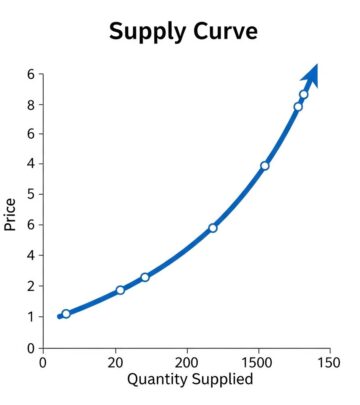
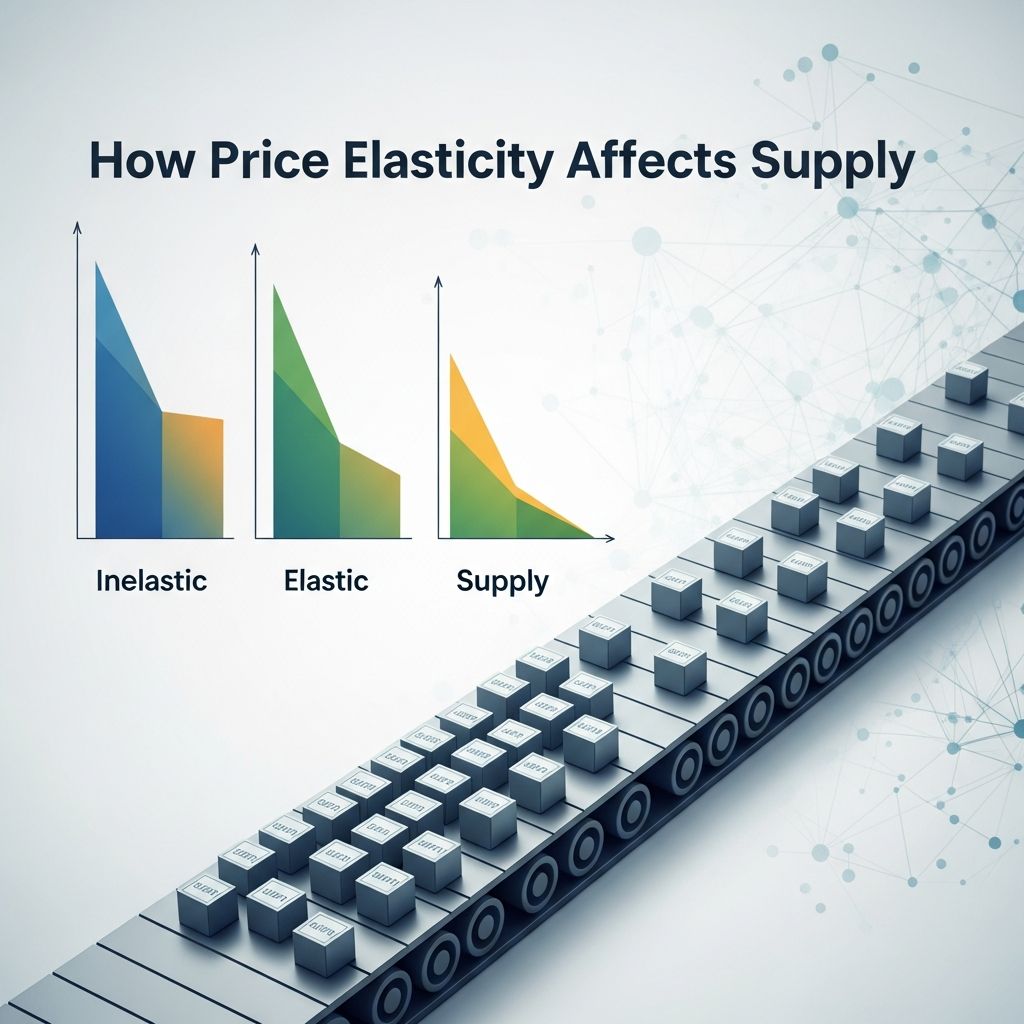
The visual representation of supply curves provides intuitive understanding of elasticity. A steep supply curve indicates inelastic supply because quantity changes are small relative to price changes. A flatter supply curve indicates elastic supply because quantity changes substantially in response to price movements. The slope of the supply curve relates changes in price to changes in quantity supplied, with steeper curves showing less responsive producers and flatter curves showing more responsive producers.
It is important to note that elasticity and slope are distinct concepts. While slope measures absolute changes in quantity and price, elasticity measures percentage changes. This distinction means that elasticity can vary along the same supply curve even though slope remains constant, particularly when calculating elasticity at different points on the curve.
Strategic Implications for Businesses and Policymakers
Understanding price elasticity of supply has practical applications for business strategy and economic policy. Businesses operating in markets with elastic supply must remain competitive on price because competitors can quickly enter the market or expand production. Companies in markets with inelastic supply can sustain higher price increases without losing significant market share, but they face less flexibility in adjusting to changing market conditions.
Policymakers use supply elasticity analysis to predict the effectiveness of price controls, subsidies, and taxes. Policies designed to support producers are more effective in markets with elastic supply, while policies attempting to restrict supply are more effective in markets with inelastic supply.
Frequently Asked Questions
Q: What is the difference between price elasticity of supply and price elasticity of demand?
A: Price elasticity of supply measures producer responsiveness to price changes, while price elasticity of demand measures consumer responsiveness. Supply elasticity focuses on how much producers will increase or decrease output, while demand elasticity focuses on how much consumers will increase or decrease purchases in response to price changes.
Q: Can price elasticity of supply change over time?
A: Yes, supply elasticity typically increases over longer time periods. In the short run, producers face constraints that limit their ability to adjust production, making supply more inelastic. Over longer periods, producers can invest in new capacity, source additional inputs, and develop more flexible production systems, making supply more elastic.
Q: What does it mean if a good has perfectly inelastic supply?
A: Perfectly inelastic supply (PES = 0) occurs when the quantity supplied does not respond at all to price changes. This means the supply curve is vertical. Examples include original artworks or land in fixed locations, where the quantity cannot be increased regardless of how much prices rise.
Q: How does spare production capacity affect supply elasticity?
A: Producers with spare production capacity can respond more elastically to price increases. They can utilize existing equipment and facilities to produce more goods without significant additional investment. This makes their supply more elastic compared to producers operating at full capacity.
Q: Why is agricultural supply typically inelastic?
A: Agricultural supply is inelastic in the short run because crop production requires lengthy growing periods and follows seasonal cycles. Farmers cannot quickly increase supply even when prices rise, since they must wait for the next growing season to plant additional crops or increase acreage.
References
- Price Elasticity of Supply — Social Sci LibreTexts. Accessed 2025-11-30. https://socialsci.libretexts.org/Bookshelves/Economics/Introductory_Comprehensive_Economics/Economics_(Boundless)/06:_Elasticity_and_its_Implications/6.03:_Price_Elasticity_of_Supply
- Price Elasticity of Supply — Khan Academy. Accessed 2025-11-30. https://www.khanacademy.org/economics-finance-domain/microeconomics/elasticity-tutorial/price-elasticity-tutorial/a/price-elasticity-of-demand-and-price-elasticity-of-supply-cnx
- Price Elasticity of Supply — Economics Help. Accessed 2025-11-30. https://www.economicshelp.org/microessays/equilibrium/elasticity-supply/
- Price Elasticity of Supply — Wikipedia. Accessed 2025-11-30. https://en.wikipedia.org/wiki/Price_elasticity_of_supply
- Elasticity of Supply — MRU (Microeconomics). Accessed 2025-11-30. https://mru.org/courses/principles-economics-microeconomics/elasticity-supply-midpoint-formula
- Supply Elasticity: Definition and Examples — Outlier Articles. Accessed 2025-11-30. https://articles.outlier.org/examples-of-supply-elasticity
- Price Elasticity of Supply — Fiveable (Principles of Microeconomics). Accessed 2025-11-30. https://fiveable.me/key-terms/principles-microeconomics/price-elasticity-supply
Similar Articles








Read full bio of medha deb