Forex Scam: 4 Common Tricks, 5 Red Flags & Protection Tips
Learn how forex scams work, the red flags to look for, and how to protect your money before you start trading currencies.
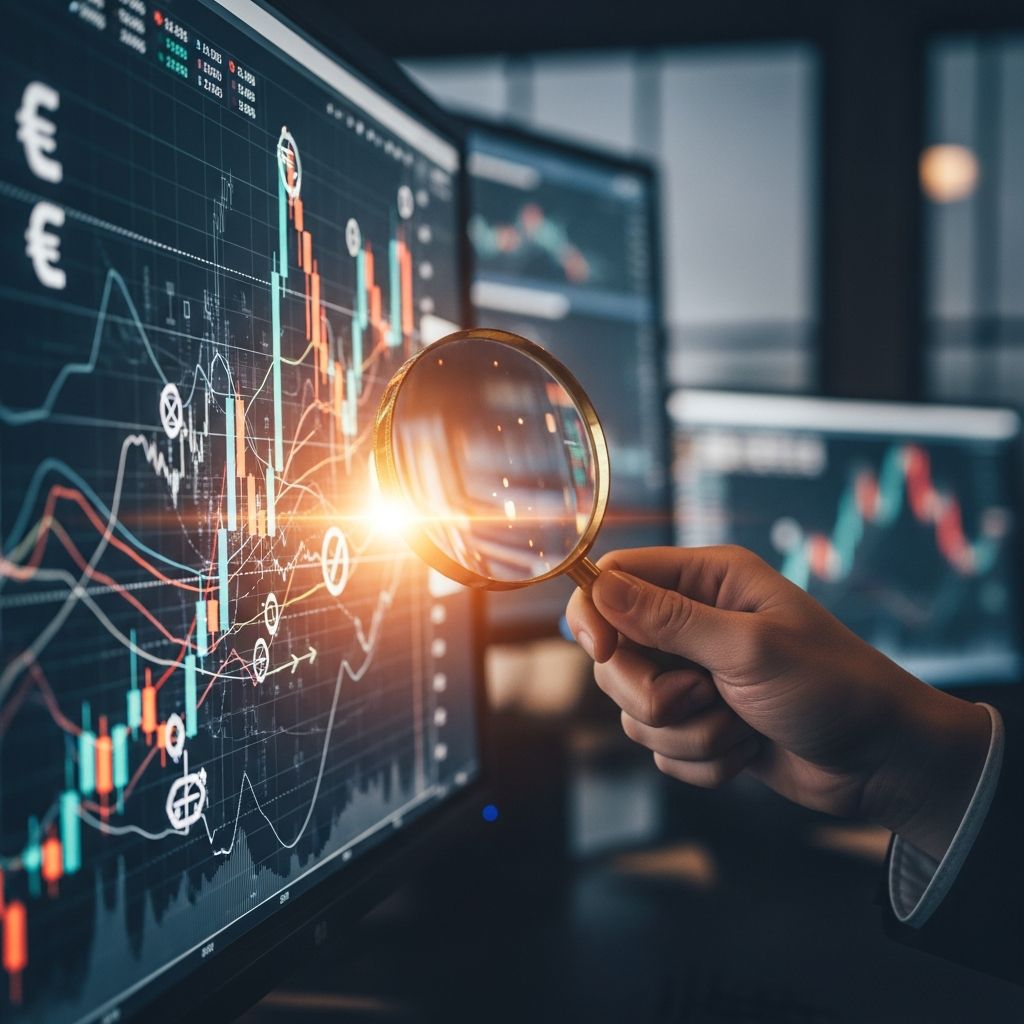
Foreign exchange trading, often called forex trading, is a legitimate global market where currencies are bought and sold for profit. However, the same features that make forex accessible and fast-moving also make it a magnet for scammers. If you want to explore forex as a way to earn extra income, it is critical to understand how forex scams work and how to avoid them.
This article explains what forex trading is, the most common types of forex scams, key warning signs to watch out for, how to check if a broker or platform is legitimate, and practical tips to protect your hard-earned money.
What is forex trading and how does it work?
The foreign exchange (forex) market is the marketplace where currencies are traded in pairs, such as EUR/USD (euro against the U.S. dollar). Traders attempt to profit from changes in exchange rates over time. According to the Bank for International Settlements, the forex market has an average daily turnover of more than 6 trillion U.S. dollars, making it the largest financial market in the world.
Currencies are always traded in pairs. One currency is bought while the other is sold. The price of the pair is called the exchange rate.
- Base currency: The first currency in the pair (e.g., EUR in EUR/USD).
- Quote currency: The second currency in the pair (e.g., USD in EUR/USD).
- Exchange rate: How much of the quote currency is needed to buy one unit of the base currency.
For example, imagine the EUR/USD exchange rate is 1.18. That means it costs $1.18 (USD) to buy 1 euro (EUR). If you buy 1,000 euros at this rate, you would pay about $1,180. If the exchange rate later rises to 1.20 and you sell the 1,000 euros back, you would receive $1,200, earning a $20 profit before fees.
Legitimate forex trading involves:
- Using a regulated brokerage or trading platform.
- Understanding the risks, including the possibility of losing all the money you invest.
- Managing leverage carefully, because borrowing to trade can magnify both gains and losses.
Because the market is decentralized and heavily marketed online, scammers exploit people’s limited knowledge of how forex truly works, promising quick, guaranteed profits without effort or risk.
What kinds of forex scams exist?
The combination of high trading volumes, online platforms, and the promise of fast money has led to a wide variety of forex fraud schemes. Many of them share a common theme: bold promises, fake track records, and pressure to send money quickly.
Some of the most common forex scams include:
- Robot trading systems scams
- Signal seller scams
- Multi-level marketing (MLM) forex scams
- Fake forex funds and managed accounts
Robot trading systems forex scams
Automated trading tools and algorithms exist in legitimate markets, but scammers abuse this concept by selling fake or misleading forex robots and automated systems that claim they can generate high profits with little or no effort.
These scam systems typically promise that a computer program will trade for you 24/7, using a “secret strategy” to lock in gains while you sleep. Often they advertise:
- Very high and consistent monthly returns.
- No or extremely low risk of loss.
- No need for trading experience or knowledge.
Red flags for robot trading scams include:
- Lack of independent testing or third-party verification of performance.
- Unrealistic profit claims over short time periods.
- Results shown only for winning trades, with losses hidden or omitted.
- Pressure to buy expensive software or subscriptions up front.
Regulators like the U.S. Commodity Futures Trading Commission (CFTC) and National Futures Association (NFA) regularly warn consumers about automated trading systems that overstate potential profits and hide risks.
Signal seller scams
Signal sellers offer to tell you exactly when to buy or sell certain currency pairs in exchange for a fee, subscription, or profit share. In theory, signals can be a tool for experienced traders. In practice, many signal sellers online are unqualified and operate as scams.
Typical characteristics of signal seller scams:
- They promote themselves as experts or insiders with a “proprietary system.”
- They highlight screenshots of impressive gains but never show complete, audited trading histories.
- They use fake or paid testimonials to appear trustworthy.
- They charge high ongoing fees for access to a private chat, channel, or “VIP group.”
Often, the signals are random, copied from other traders, or even intentionally misleading. In some cases, the scammer receives a commission from a broker for bringing in new clients, so their real goal is to push you to open and fund an account rather than help you make money.
Multi-level marketing (MLM) forex scams
Some forex scams are disguised as multi-level marketing (MLM) businesses. These companies often sell trading education, signals, or software alongside a recruiting structure where existing members earn commissions for bringing in new members.
Common traits of MLM-style forex scams include:
- Monthly membership fees for access to signals, courses, or trading tools.
- Strong emphasis on recruiting friends and family to earn bonuses or rank upgrades.
- Use of lifestyle marketing — flashy cars, luxury trips, and claims of early retirement.
- Very little transparent information about actual trading performance.
The U.S. Federal Trade Commission (FTC) notes that many MLMs are structured so that most participants lose money, while those at the top earn from recruitment rather than real product value. When you combine this with speculative forex trading, the risk multiplies: people not only lose on trades, they also lose money to the business model itself.
Fake forex funds and managed accounts
Another common scheme involves fake or unregistered forex investment funds or “managed accounts.” Fraudsters claim you can simply deposit money with them and they will trade on your behalf, guaranteeing high returns.
Warning signs of fake forex funds include:
- Promises of guaranteed or extremely high annual returns, sometimes 30%, 50%, or more.
- Claims that the fund can generate profits regardless of market conditions.
- No clear regulatory registration, licensing, or oversight.
- Difficulty withdrawing your money or unexplained delays and fees.
In many cases, these funds operate like Ponzi schemes, paying early “profits” with money from new investors until the scheme collapses. The CFTC and other regulators regularly bring enforcement actions against such unregistered pooled investment vehicles in forex and other derivatives markets.
| Type of forex scam | What they promise | Key red flag |
|---|---|---|
| Robot trading systems | Automatic profits with no effort | No independent verification, unrealistic win rates |
| Signal sellers | Expert trade alerts that rarely lose | Unverified track records, flashy screenshots only |
| MLM forex schemes | Income from trading and recruiting | More focus on recruitment than real trading results |
| Fake forex funds | Guaranteed high returns from managed accounts | No regulation, withdrawal problems, vague strategies |
How do you identify forex trading scams?
Scammers work hard to hide their intentions, but most forex scams share predictable warning signs. Before you send money, take time to look for these red flags.
1. A guarantee of success and/or large profits
No legitimate trader or firm can guarantee profits in the forex market. Currency prices are influenced by interest rates, economic data, political events, and market sentiment — all of which can change quickly.
Be extremely cautious of anyone who promises:
- Guaranteed monthly or weekly returns.
- Profits with “zero” or “minimal” risk.
- Extremely high returns in a short period (for example, 30%–50% per month).
Regulatory agencies like the CFTC stress that high returns always come with high risks, and any promise of guaranteed profits is a strong sign of fraud.
2. No substantial proof or background information
Many scams rely on persuasive marketing instead of real data. You might see:
- Pictures of trading screens showing only profitable trades.
- Short-term performance snapshots that cherry-pick the best days or weeks.
- Fake or anonymous testimonials with no way to verify the people or results.
Before trusting a person, service, or platform with your money:
- Ask for a full track record of trading results, including losses, over a meaningful period (at least a year).
- Check whether performance has been independently audited or verified.
- Look up the company or individual on official regulatory databases.
If they refuse to provide detailed information, become hostile or evasive, or try to rush you into a decision, treat that as a major warning sign.
3. Pressure to send money quickly or privately
Many investment scams, including forex fraud, involve urgent pressure to send money through irreversible channels such as cryptocurrency, wire transfers, or certain payment apps. Scammers may say:
- “This opportunity is time-limited; you must act now.”
- “Don’t tell anyone; others won’t understand this strategy.”
- “Use crypto or a specific wallet so you can withdraw profits faster.”
Legitimate firms do not need you to act instantly and will be transparent about funding and withdrawal methods. The more someone pushes secrecy and speed, the more likely it is a scam.
4. Unregistered or offshore brokers and platforms
One of the simplest checks you can do is to verify whether a broker or trading platform is properly regulated in your country.
- In the United States, most forex dealers for retail clients must be registered with the CFTC and be members of the NFA.
- The NFA offers a free online tool called the Background Affiliation Status Information Center (BASIC), which allows you to check registrations, firm history, and disciplinary actions.
Similar tools exist in many other countries (for example, the UK’s Financial Conduct Authority (FCA) register or the Australian Securities and Investments Commission (ASIC) register). If a broker cannot be found in any official database or is located in a jurisdiction known for weak oversight, proceed with caution or walk away.
5. Complicated or secret strategies you are not allowed to understand
Some scammers claim to use proprietary algorithms, inside information, or complex arbitrage strategies that they cannot explain. Complexity is used as a shield: if you don’t understand it, you are less likely to question it.
A good rule: if you cannot clearly explain how an investment works, including how it could lose money, you should not invest in it.
How to protect yourself from forex scams
You do not need to become a professional trader to defend yourself from scams. A handful of practical habits can significantly reduce your risk.
Do your due diligence on any broker or service
Before opening an account or paying for signals, robots, or courses, take time to research:
- Regulatory status: Verify registration with the appropriate regulator (CFTC, NFA, FCA, etc.) using official websites.
- Company history: How long has the firm been in business? Are there unresolved complaints or enforcement actions?
- Fee structure: Understand how they make money (spreads, commissions, subscriptions) and whether incentives might conflict with your interests.
Be realistic about returns
There is no low-risk path to high guaranteed returns. Stocks, bonds, and diversified index funds have historically provided positive average returns over long periods, but they also involve volatility and no guarantees. Forex trading is typically more volatile and risky than diversified stock market investing.
If you are primarily seeking to build long-term wealth, you may be better served by straightforward strategies like broadly diversified index funds and regular contributions, rather than speculative forex trading.
Diversify and never risk money you cannot afford to lose
If you do choose to trade forex:
- Only use money you can afford to lose completely.
- Avoid borrowing or using high leverage early on.
- Keep the bulk of your long-term savings in diversified, regulated investments.
Stay informed about common scam tactics
Regulators and consumer protection agencies regularly publish alerts and case studies of current fraud schemes. Reviewing these can help you recognize patterns when you see them in real life.
Frequently Asked Questions (FAQs)
Q: Is forex trading itself a scam?
A: No. Forex trading is a legitimate global market where governments, banks, corporations, and individuals trade currencies. The scams arise from unregulated brokers, fraudulent services, and dishonest individuals who exploit the market’s complexity and online nature.
Q: Are all forex robots and signal services scams?
A: Not all, but many services marketed aggressively on social media are unverified or misleading. Any tool or service should be approached with skepticism, independently evaluated, and used only with money you can afford to lose. Avoid providers that guarantee profits or refuse to show full, audited performance data.
Q: How can I check if a forex broker is legitimate?
A: Start by checking whether the broker is registered with the appropriate regulator in your country (for example, the CFTC and NFA in the U.S., the FCA in the UK, or other national authorities). Use official online registers rather than links provided by the broker, and avoid firms that operate only from offshore jurisdictions with little oversight.
Q: What should I do if I think I have been caught in a forex scam?
A: Stop sending money immediately. Gather all records of payments, messages, and account details. Report the situation to your local financial regulator, consumer protection agency, and, if appropriate, law enforcement. While recovery can be difficult, quick reporting may help authorities act and could prevent others from being victimized.
Q: Is forex a good way to build long-term wealth?
A: Forex trading is speculative and high risk. For most individuals, long-term wealth is better built through consistent saving, diversified investing (such as index funds), and a focus on financial planning rather than short-term trading. If you choose to trade forex, treat it as a high-risk activity with a limited portion of your overall financial portfolio.
References
- Triennial Central Bank Survey of foreign exchange and OTC derivatives markets — Bank for International Settlements. 2019-12-08. https://www.bis.org/statistics/rpfx19.htm
- Forex Trading: Investor Bulletin — U.S. Securities and Exchange Commission. 2014-02-18. https://www.sec.gov/investor/alerts/forextrading.pdf
- Customer Advisory: Beware of Foreign Currency Trading Fraud — U.S. Commodity Futures Trading Commission. 2020-09-01. https://www.cftc.gov/LearnAndProtect/AdvisoriesAndArticles/fx_trading.html
- How to Avoid a Cryptocurrency Scam — Federal Trade Commission. 2022-06-03. https://consumer.ftc.gov/articles/what-know-about-cryptocurrency-and-scams
- Historical Returns of Stocks, Bonds, Bills, and Inflation (SBBI) — Morningstar / Ibbotson data summary. 2023-01-31. https://www.morningstar.com/lp/ibbotson-sbbi
Similar Articles








Read full bio of medha deb