How Near-Zero Fed Rates Affect Borrowers
Understand how the Federal Reserve’s near-zero interest rate policy really affects personal loans, mortgages, credit cards, and your overall borrowing costs.
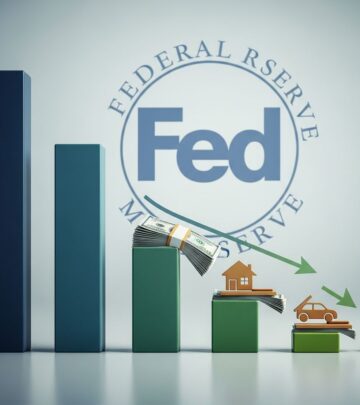
When the Federal Reserve slashes its benchmark interest rate toward zero, the headlines can make it sound as if borrowing suddenly becomes almost free. In reality, the way those rate cuts filter through to everyday products like personal loans, mortgages, and credit cards is more complex, and the benefits vary widely by borrower.
This article explains how near-zero Fed rates work, which types of borrowing see the biggest impact, why personal loan and credit card rates often remain much higher, and how to decide if refinancing or debt consolidation makes sense for you.
What Does It Mean When the Fed Cuts Rates to Near Zero?
The Federal Reserve sets a target range for the federal funds rate, the interest rate banks charge each other for overnight loans. According to the Federal Reserve, this rate is a key tool for promoting maximum employment and stable 2% inflation, not a mechanism for directly setting consumer loan rates.
When the Fed moves the federal funds rate close to zero, it is trying to make borrowing cheaper across the economy and encourage spending and investment during periods of economic stress or weak growth.
How the Fed Funds Rate Transmits to the Economy
Changes in the federal funds rate influence a wide range of short-term interest rates and financial conditions:
- Short-term market rates (such as rates on overnight and 3-month instruments) move closely with the federal funds rate.
- Prime rate—used as a benchmark by many banks for variable-rate loans—typically moves in lockstep with Fed changes.
- Longer-term rates, like those on 10-year Treasury notes and fixed-rate mortgages, are influenced more by expectations for future inflation, economic growth, and future Fed policy than by the current funds rate alone.
Because of this, bond yields and mortgage rates may not fall as dramatically as the policy rate, especially if investors expect inflation or stronger growth ahead.
Why Near-Zero Fed Rates Don’t Make All Borrowing Cheap
Borrowers often assume that if the Fed cuts rates to near zero, their loan and credit card rates will plummet too. There are several reasons that does not fully happen in practice:
- Credit risk: Lenders charge higher rates to consumers than to banks lending overnight, because households are far more likely to default than large financial institutions.
- Term risk: Longer-term loans lock in a rate for years, so lenders demand compensation for inflation and interest-rate uncertainty.
- Overhead and profit: Banks and lenders incorporate operating costs, funding costs, and profit margins into consumer loan rates.
- Regulatory and capital requirements: Rules about how much capital banks must hold against different types of loans can affect the pricing of those products.
As a result, a move from, say, 1% to near 0% in the federal funds rate might translate into only modest declines in consumer borrowing costs, and some products may barely move at all.
Which Borrowers Benefit the Most from Near-Zero Fed Rates?
Different types of borrowers experience the Fed’s near-zero rate policy in very different ways. Generally, the biggest and fastest effects are seen in variable-rate debt and in new fixed-rate borrowing tied closely to market benchmarks.
| Type of Borrower / Debt | Typical Link to Fed Rate | How Strong Is the Impact? | How Quickly Does It Show Up? |
|---|---|---|---|
| Credit cards (variable APR) | Often linked to prime rate (tracks Fed funds) | Moderate – APR moves but remains high | Relatively fast (within a billing cycle or two) |
| Adjustable-rate mortgages & HELOCs | Linked to prime or short-term market benchmarks | Moderate to strong | At next reset date (months to a year) |
| New fixed-rate mortgages | Tied to longer-term Treasury yields and expectations | Moderate – influenced but not directly controlled by Fed | Can adjust quickly as markets move |
| Personal loans (fixed rate) | Based on lender funding costs and credit risk | Modest – may fall, but often less than headlines suggest | Gradual, as lenders reprice products |
| Existing fixed-rate loans | Rate locked in at origination | No direct impact (unless refinanced) | Only changes if you refinance |
Borrowers with Strong Credit Profiles
Consumers with high credit scores and stable income often capture the largest savings:
- They qualify for the lowest advertised rates when lenders’ cost of funds falls.
- They can refinance existing high-rate loans at more attractive terms.
- They may access balance-transfer offers or consolidation loans at relatively low fixed rates.
Even in a low-rate environment, applicants with lower credit scores may not see big improvements because lenders remain cautious about default risk.
Impact on Mortgages vs. Personal Loans vs. Credit Cards
Near-zero Fed policy affects each major borrowing category differently. Understanding these differences is crucial for making smart refinancing and borrowing decisions.
Mortgages
Mortgage rates, particularly 30-year fixed rates, are closely tied to yields on longer-term Treasury securities, especially the 10-year note. These yields reflect:
- Expectations for future Fed policy
- Inflation expectations
- Global demand for safe assets
- Overall economic outlook
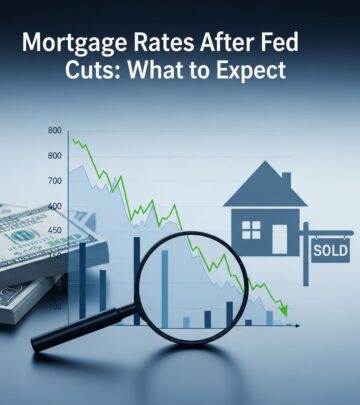
While Fed rate cuts often coincide with lower mortgage rates, they are not a one-for-one relationship. For example, credible projections from the Congressional Budget Office indicate that 10-year Treasury yields can rise even while the Fed is expected to lower its short-term policy rate, suggesting mortgages could become more expensive despite policy easing.
Who Benefits on the Mortgage Side?
- New homebuyers may lock in lower monthly payments compared with periods of high rates, though affordability is also shaped by home prices.
- Existing homeowners with higher-rate loans can refinance if the rate drop is substantial enough to offset closing costs.
- Borrowers with adjustable-rate mortgages may see payments fall at their next reset date, depending on the index used.
Personal Loans
Personal loans are usually unsecured fixed-rate loans, meaning the interest rate is locked in at origination and the lender has no collateral. Because of that:
- Rates are higher than on secured products like mortgages and auto loans.
- Pricing depends heavily on credit score, debt-to-income ratio, and lender underwriting standards.
- Funding costs influenced by the Fed are only one input into the final APR.
In a near-zero Fed environment, some lenders will lower personal loan rates, but the reductions are often modest relative to the change in the policy rate. Lenders may also tighten standards during economic downturns, offsetting some of the benefit of cheaper funding.
Credit Cards
Credit card APRs are typically variable and tied to the prime rate, which closely follows the federal funds rate. When the Fed cuts rates:
- The prime rate often drops by the same amount.
- Card APRs that are prime + margin should, in principle, decline in tandem.
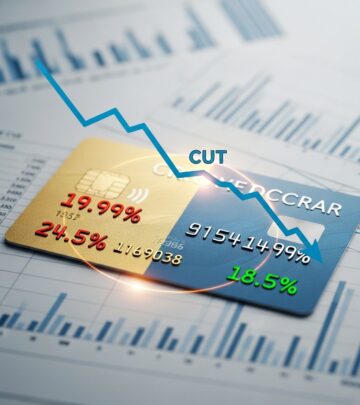
However, credit card APRs usually remain very high even after cuts. The average card APR in recent years has often been in the mid-teens or higher, far above the federal funds rate, reflecting unsecured risk, marketing costs, and issuer profit margins.
Refinancing and Debt Consolidation in a Near-Zero Rate Environment
One of the most practical questions borrowers face during a near-zero rate period is whether to refinance existing loans or consolidate multiple debts into a new product, such as a personal loan.
When Does Refinancing Make Sense?
Refinancing can be beneficial when you can secure a lower interest rate or more favorable terms that outweigh the costs involved. Key considerations include:
- Rate differential: The new rate should be meaningfully lower than your current rate.
- Fees and closing costs: Especially for mortgages, these can be substantial and should be factored into your savings calculations.
- Loan term: Extending the term can reduce monthly payments but may increase total interest paid.
- Remaining balance and time: Small balances or loans near the end of their term may not benefit much from refinancing.
Because refinancing decisions depend heavily on current rates, expectations for future policy, and your personal situation, tools such as amortization calculators and break-even analyses are helpful for quantifying potential savings.
Debt Consolidation with Personal Loans
During low-rate periods, borrowers with high-interest credit card debt may consider consolidating into a fixed-rate personal loan. Potential benefits include:
- Lower interest cost if the personal loan APR is significantly below your weighted-average card APR.
- Predictable payments over a set term, which can support budgeting and repayment discipline.
- Streamlined management by turning multiple monthly payments into a single one.
However, the strategy only works if you avoid running up new card balances. Additionally, approval and pricing will depend on your creditworthiness, and not all borrowers will qualify for substantially lower rates.
Limits of the Fed’s Power to Lower Your Borrowing Costs
It is important to understand that the Fed’s mandate is focused on inflation and employment, not specifically on lowering household borrowing costs. There are clear limits to how much relief consumers can expect from near-zero rates alone.
The Fed’s Dual Mandate and Independence
The Federal Reserve has a legally defined dual mandate to pursue maximum employment and stable prices, interpreted as 2% inflation over the longer run. Research from institutions such as Brookings emphasizes that the Fed is not intended to set policy primarily to lower government or private borrowing costs, but to support overall macroeconomic stability.
Maintaining independence from short-term political pressures is essential for preserving credibility, particularly in controlling inflation and anchoring expectations, which in turn influence long-term interest rates on products like mortgages.
Why Long-Term Rates May Stay Elevated
Even if the Fed keeps short-term rates low, long-term yields can be driven higher by factors such as:
- Concerns about future inflation
- Expectations that the Fed will eventually raise rates again
- Large government borrowing needs and bond supply
- Global risk sentiment and demand for safe assets
Projections from the Congressional Budget Office, for example, show that 10-year Treasury yields can gradually rise over time even as the Fed is expected to move policy rates lower, highlighting the distinction between short- and long-term rates.
Practical Steps for Borrowers in a Near-Zero Rate World
While you cannot control Fed policy, you can control how you respond to the rate environment. Consider the following actions:
- Review all existing debts: List balances, interest rates, and remaining terms on mortgages, personal loans, auto loans, and credit cards.
- Prioritize high-rate debt: Focus on paying down or consolidating the most expensive debt first, usually credit cards.
- Check refinance options: Get quotes for mortgage and personal loan refinancing, including fees, to see if the savings are real.
- Maintain or improve your credit score: Better credit expands your ability to benefit from low-rate offerings.
- Avoid extending terms unnecessarily: Lower monthly payments may be tempting, but be aware of total interest over the life of the loan.
Frequently Asked Questions (FAQs)
Q: Does the Fed’s near-zero rate mean I can get a 0% personal loan?
A: No. The federal funds rate applies to overnight lending between banks, not directly to consumer loans. Personal loans are unsecured and carry higher risk, so their interest rates remain much higher than zero even when Fed policy is very low.
Q: Why didn’t my credit card rate drop as much as the Fed cut rates?
A: Credit card APRs are typically prime plus a margin. While the prime rate tracks the Fed’s moves, issuers set large margins to cover credit risk and other costs. As a result, APRs may only decline modestly and can remain well above 15% despite low policy rates.
Q: Will mortgage rates always fall when the Fed cuts rates?
A: Not always. Mortgage rates depend largely on long-term Treasury yields and market expectations for inflation and future Fed policy, not just the current policy rate. In some periods, long-term yields can rise even as the Fed is expected to lower short-term rates, pushing mortgage rates higher.
Q: Is it always a good idea to refinance in a low-rate environment?
A: Not necessarily. You need to compare the new rate with your current one, factor in fees and closing costs, and consider how much time and balance are left on your existing loan. Refinancing can be worthwhile when the interest savings over the remaining term exceed the costs involved.
Q: How often does the Fed change rates, and should I wait for the next move?
A: The Fed typically meets about eight times a year to set policy and can change rates at any of those meetings. However, decisions are driven by economic data—such as inflation and employment—rather than a fixed schedule. Trying to time every move is difficult; it is usually better to evaluate available loan offers based on your current needs and the rates on offer now.
References
- Budget office expects Federal Reserve to cut rates in 2026 — Associated Press / Congressional Budget Office overview via ABC News. 2025-01-09. https://abcnews.go.com/Business/wireStory/budget-office-expects-federal-reserve-cut-rates-2026-129032633
- Fed Interest Rate Forecast for 2026: How Many Cuts To Expect — Realtor.com News & Insights. 2024-12-31. https://www.realtor.com/news/trends/fed-rate-cut-forecast-2026-mortgages/
- Federal Reserve issues FOMC statement — Board of Governors of the Federal Reserve System. 2025-12-10. https://www.federalreserve.gov/newsevents/pressreleases/monetary20251210a.htm
- Fed Outlook 2026: Rate Forecasts and Fixed Income Strategies — iShares by BlackRock. 2025-11-18. https://www.ishares.com/us/insights/fed-outlook-2026-interest-rate-forecast
- What’s Next for the Fed in 2026? — Morningstar. 2025-12-20. https://www.morningstar.com/markets/whats-next-fed-2026
- Should the Fed cut interest rates to make it cheaper for the federal government to borrow? — Hamilton Project, Brookings Institution. 2020-06-01. https://www.brookings.edu/articles/should-the-fed-cut-interest-rates-to-make-it-cheaper-for-the-federal-government-to-borrow/
Similar Articles








Read full bio of medha deb