How Natural Resources Boost the U.S. Economy
Discover how America's abundant natural resources drive economic growth, create jobs, and strengthen national prosperity.
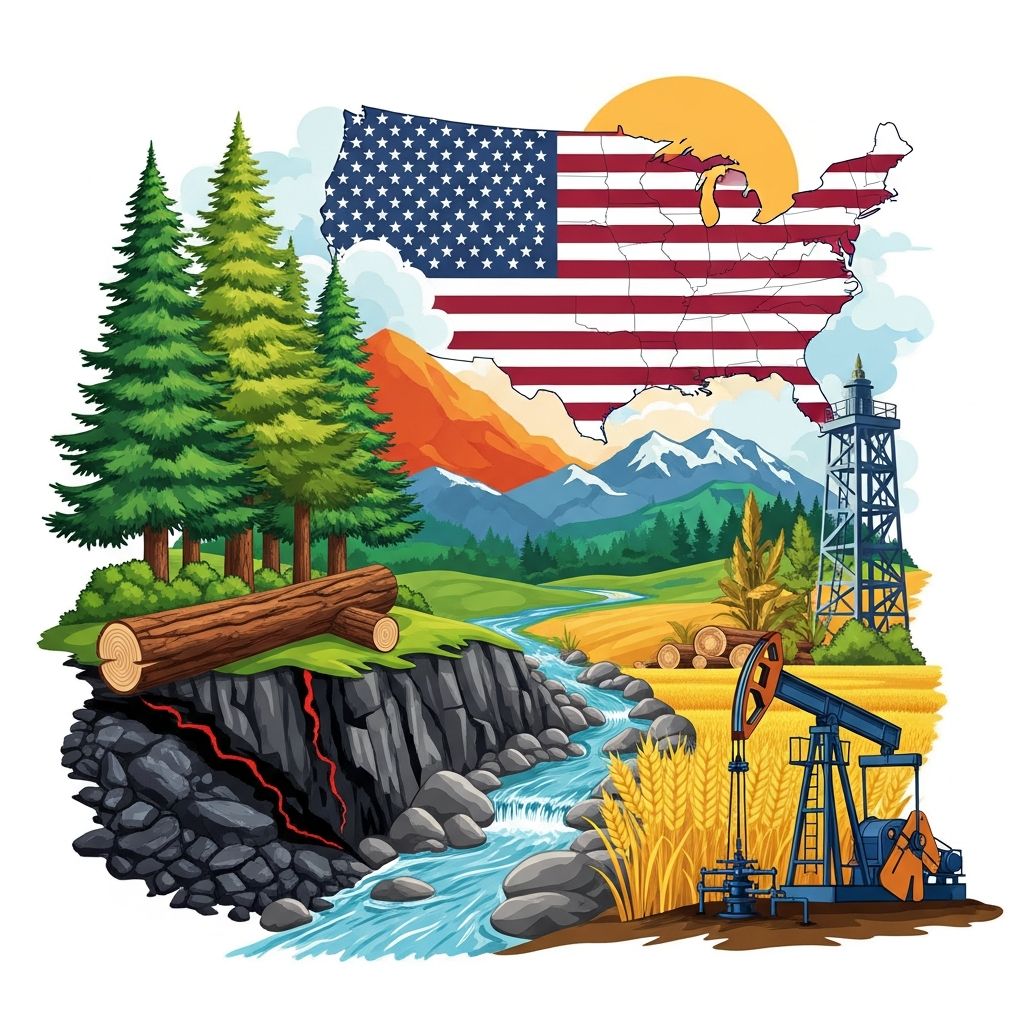
The United States possesses an extraordinary wealth of natural resources that form the backbone of its economic prosperity. From vast energy reserves to abundant mineral deposits and fertile agricultural lands, these resources have shaped America’s development for centuries and continue to drive significant economic benefits today. The nation’s strategic advantage in natural resource abundance positions it as a global economic powerhouse, generating trillions in economic activity while supporting millions of jobs across diverse industries. Understanding how these resources contribute to the economy reveals the critical connection between environmental stewardship and national economic security.
The Foundation of American Economic Strength
Natural resources serve as the fundamental pillars supporting the American economy. The United States ranks among the world’s top energy producers, holding the largest estimated coal reserves globally and leading in petroleum and natural gas production. This resource abundance, combined with advanced extraction technologies and strong regulatory frameworks that balance development with environmental protection, creates a competitive advantage in global markets. The country’s diverse geological formations yield a remarkable variety of resources distributed across different regions, from the Appalachian Mountains’ coal deposits to the Permian Basin’s oil reserves and Alaska’s mineral wealth.
The economic significance of these resources extends far beyond simple extraction. Natural resources generate substantial government revenue through leases, royalties, and permits, which fund public services and infrastructure development. Federal lands and waters containing these resources contribute significantly to the national treasury, supporting everything from national park maintenance to defense capabilities. When natural resource extraction is managed sustainably and efficiently, it creates a multiplier effect throughout the economy, stimulating growth in related industries and supporting communities that depend on resource extraction.
Energy Resources and Economic Growth
Oil Production and Global Leadership
Oil represents one of the most economically significant natural resources for the United States. The nation has transformed itself into the world’s largest producer and consumer of oil, a dramatic reversal from decades of increasing oil imports. This transformation resulted from technological innovations like hydraulic fracturing, which unlocked previously inaccessible oil reserves in formations such as North Dakota’s Bakken Field. Texas leads all states in oil production, with significant additional contributions from North Dakota, Alaska, California, and the Gulf of Mexico, where offshore drilling provides roughly one-fourth of America’s crude oil supply.
The economic implications of oil self-sufficiency are profound. Domestic oil production reduces dependence on foreign suppliers, strengthens national security, and keeps energy prices more stable for American consumers and businesses. The oil refining industry, where the U.S. leads globally in capacity, adds substantial value to crude production, creating high-wage jobs and supporting petrochemical manufacturing that supplies industries from agriculture to pharmaceuticals. Policies supporting American energy dominance could increase GDP by as much as 0.56-1.90 percent by 2035, demonstrating the significant economic potential of expanded oil and gas development.
Natural Gas and Clean Energy Transition
Natural gas has emerged as a crucial bridge fuel in America’s energy portfolio, providing both economic benefits and environmental advantages over other fossil fuels. The United States possesses substantial natural gas reserves distributed across numerous regions, contributing to heating, electricity generation, and industrial applications. As the world’s top exporter of liquefied natural gas (LNG), the country generates substantial export revenue while supplying energy to international markets.
Expanding natural gas production and exports offers significant economic opportunities. Increased LNG exports alone could raise GDP by at least 0.03 percent by 2035, while the broader natural gas sector supports thousands of jobs in extraction, processing, transportation, and export facilities. Natural gas plays an increasingly important role as industries seek lower-carbon energy sources, positioning American producers to meet growing global demand for cleaner fossil fuel alternatives.
Coal and Traditional Energy Security
Despite the global energy transition, coal remains economically important for the United States, which holds the world’s largest coal reserves. Most federally-owned coal is mined in Wyoming’s Powder River Basin, supporting regional economies and providing affordable electricity generation. While coal’s role in the energy mix continues to evolve, it remains essential for industrial applications and provides baseload power generation reliability that complements renewable energy sources.
Nuclear and Renewable Energy Development
The U.S. leads globally in nuclear power production, offering clean, reliable electricity and supporting high-skilled employment in advanced technology sectors. Renewable energy resources including solar, wind, geothermal, and hydrokinetic power represent growing economic opportunities, with federal lands hosting numerous renewable energy projects that generate revenue and create jobs while supporting climate goals.
Mineral Resources and Industrial Production
Critical Minerals for Manufacturing
Beyond energy resources, the United States extracts valuable minerals essential for modern manufacturing and technology. Copper, zinc, uranium, and rare earth elements support everything from electrical systems to advanced electronics and defense applications. These nonenergy minerals generate substantial federal revenues, with gold, copper, and iron being primary sources of mineral-related government income.
Zinc production exemplifies both the opportunities and challenges in mineral extraction. In 2006, the U.S. operated sixteen zinc mines producing 770,000 metric tons annually. By 2023, production had declined slightly to 750,000 metric tons, primarily due to global supply exceeding demand, demonstrating how natural resource economics depends on worldwide market conditions. Strategic mineral production remains crucial for American manufacturing competitiveness and national security, particularly as global demand for technology-related minerals increases.
Agricultural Natural Resources
Land and Water Resources
Agricultural natural resources form the foundation of American food production and rural economies. The nation’s diverse terrain and climate zones enable production of varied crops and livestock, supported by substantial water resources and fertile soils. U.S. agricultural production relies heavily on the nation’s land, water, and other natural resources, directly impacting food security and economic prosperity. Agricultural commodities markets remain dynamic, with prices influenced by global supply and demand, making efficient resource management essential for farmer profitability and food affordability for consumers.
Fisheries and Marine Resources
Economic Contribution of Fishing Industries
America’s fisheries represent a significant economic sector often overlooked in broader natural resource discussions. The U.S. fishing industry contributed $476.2 billion in value added to the gross national product in 2022, supporting thousands of jobs in commercial fishing, aquaculture, processing, and distribution. Major species including pollack, flatfish, salmon, crab, and shrimp generate substantial domestic consumption and export revenues.
Fisheries also demonstrate the importance of comprehensive natural resource accounting. Research highlighting the asset value of fish in the Gulf of Mexico showed how integrating environmental and economic data helps stakeholders from regulators to environmental organizations and commercial operators reach consensus on resource management policies. Sustainable fishery management that values both ecological integrity and economic productivity creates long-term prosperity.
Economic Multiplier Effects and Job Creation
Direct and Indirect Employment
Natural resource industries support employment across multiple sectors. Direct jobs in extraction, processing, and transportation represent only part of the employment story. Indirect employment in manufacturing, equipment supply, construction, and services multiplies the economic impact of resource development. Communities dependent on natural resource extraction benefit from stable, high-wage employment that often requires minimal formal education, providing pathways to middle-class prosperity.
Economic Growth and GDP Contribution
Policies supporting sustainable natural resource development could increase GDP by 0.31-1.23 percent without deregulation effects, rising to 0.56-1.90 percent with broader regulatory reform. Specific opportunities include removing restrictions on offshore oil production (0.03-0.13 percent GDP growth), increasing federal land production (0.025-0.11 percent annually), and reducing excess regulation (0.25-0.67 percent or more). These projections demonstrate the substantial economic potential of unlocking natural resources efficiently.
Natural Resources and National Security
Energy Independence and Strategic Positioning
Natural resource abundance strengthens American national security by reducing dependence on hostile or unreliable foreign suppliers. Domestic energy production protects against supply disruptions and price manipulation, ensuring stable electricity grids and industrial operations essential for defense capabilities. Strategic mineral resources support military equipment production and critical technologies, making domestic resource availability essential for national defense.
Trade and International Competitiveness
Export Markets and Global Trade
The United States leverages natural resource abundance in international commerce, ranking first globally in imports and second in exports (behind China). Natural gas exports, agricultural products, and processed minerals generate substantial foreign exchange earnings, strengthening the dollar and supporting international trade relationships. American natural resource industries benefit from advanced technology, efficient operations, and skilled workforces that create competitive advantages in global markets.
Accounting for Natural Resource Value
Moving Beyond Traditional GDP Measurements
Traditional GDP measurements fail to account fully for natural resource depletion and environmental impacts, creating incomplete pictures of economic health. When hurricanes or wildfires destroy ecosystems, GDP paradoxically increases due to reconstruction spending, even though natural capital—part of the nation’s savings account—has diminished. Incorporating natural capital accounting alongside traditional economic measures provides more accurate assessments of sustainable economic growth, helping policymakers make decisions that preserve resources for future generations while maximizing current economic benefits.
Challenges and Future Considerations
Balancing Development and Sustainability
Maximizing natural resource economic benefits requires careful management balancing extraction with environmental protection and long-term resource availability. Advanced technologies enable more efficient extraction with reduced environmental footprints, while improved monitoring ensures accountability and accuracy in resource management. As energy demand increases with domestic manufacturing reshoring and artificial intelligence development, the United States must expand energy output while meeting environmental objectives and maintaining regulatory predictability.
Indigenous Communities and Equitable Benefits
Natural resource extraction on Native American lands involves complex governance structures that ensure tribal communities benefit fairly from resource development. In 2019, federal authorities disbursed $1 billion to tribes and allottees from natural resource revenues, demonstrating commitments to equitable benefit-sharing. Future resource development must continue prioritizing tribal consultation and ensuring that Indigenous communities realize economic benefits from resources on their lands.
Frequently Asked Questions
Q: What are the primary natural resources that boost the U.S. economy?
A: The primary natural resources driving economic growth include petroleum, natural gas, coal, minerals (copper, zinc, uranium), timber, agricultural land, and fishery resources. These resources generate direct employment, export revenue, and government income while supporting thousands of related industries.
Q: How much does natural resource production contribute to U.S. GDP?
A: Policies supporting American energy dominance alone could increase GDP by 0.56-1.90 percent by 2035. The fishing industry alone contributed $476.2 billion in value added to gross national product in 2022, with energy and mineral sectors contributing substantially more.
Q: Is the United States self-sufficient in oil production?
A: Yes, the U.S. has become the world’s largest producer and consumer of oil, reversing decades of import dependence. Hydraulic fracturing technology unlocked previously inaccessible reserves, enabling domestic production to meet most American oil demands, though some imports continue.
Q: How do natural resources benefit rural communities?
A: Natural resource industries provide high-wage employment in extraction, processing, and transportation in rural areas, supporting stable middle-class jobs. These industries also generate government revenue funding infrastructure, education, and services in resource-dependent communities.
Q: What role do natural resources play in national security?
A: Domestic natural resource production reduces dependence on foreign suppliers, ensuring stable energy supplies and strategic mineral availability for defense industries. This independence strengthens national security by protecting against supply disruptions and geopolitical manipulation.
Q: How can the U.S. maximize natural resource economic benefits sustainably?
A: Balancing extraction with environmental protection, implementing efficient technologies, ensuring equitable benefit-sharing with Indigenous communities, and incorporating natural capital accounting into policy decisions helps maximize long-term economic benefits while preserving resources for future generations.
References
- The Economic Benefits of Unleashing American Energy — The White House. 2025-07. https://www.whitehouse.gov/research/2025/07/the-economic-benefits-of-unleashing-american-energy/
- United States’ Natural Resources — EBSCO Information Services. 2024. https://www.ebsco.com/research-starters/environmental-sciences/united-states-natural-resources
- How It Works: Natural Resources Revenue Data — U.S. Department of the Interior, Office of Natural Resources Revenue. 2024. https://archive.revenuedata.doi.gov/how-it-works/
- Natural Resource Economics — U.S. Geological Survey. 2024. https://www.usgs.gov/programs/science-and-decisions-center/science/natural-resource-economics
- The Decades-Long Effort to Account for the Value of Natural Resources — Yale School of Management Insights. 2023. https://insights.som.yale.edu/insights/the-decades-long-effort-to-account-for-the-value-of-natural-resources
- Land and Natural Resources — USDA Economic Research Service. 2024. https://www.ers.usda.gov/data-products/ag-and-food-statistics-charting-the-essentials/land-and-natural-resources
- Natural Resource Economics — USDA National Institute of Food and Agriculture. 2024. https://www.nifa.usda.gov/topics/natural-resource-economics
Similar Articles








Read full bio of Sneha Tete