Super Bowl Ring Value: What Collectors Pay And Why
Discover the true value of Super Bowl rings, from production costs to auction prices.
Understanding Super Bowl Ring Value
Super Bowl rings are among the most coveted pieces of sports memorabilia in the world. These championship rings represent the pinnacle of athletic achievement and have become highly sought-after collectibles. But exactly how much are these glittering symbols of victory worth? The answer is more complex than a simple dollar figure, as values vary dramatically based on production costs, player history, and market demand.
When a team wins the Super Bowl, they receive a substantial budget from the NFL to create championship rings for their players, coaches, and staff members. However, the true value of a Super Bowl ring extends far beyond what the team initially pays to produce it. Understanding the economics of Super Bowl rings reveals fascinating insights into sports collectibles and the market forces that shape their worth.
Production Costs of Super Bowl Rings
The NFL allocates a specific budget for Super Bowl ring production each year. The league contributes approximately $5,000 per ring for the first 150 rings awarded to team members. However, the actual cost to manufacture each ring typically ranges from $30,000 to $50,000.
This significant gap between the NFL’s contribution and the actual production cost means that winning teams must cover the remaining expenses. Teams have the option to pay these costs out of their operating budgets or, in rare cases, reduce player compensation to offset the expense. The 2024 Super Bowl winners, for instance, incorporated 14.8-carat diamonds into their rings, pushing production costs well above the standard range.
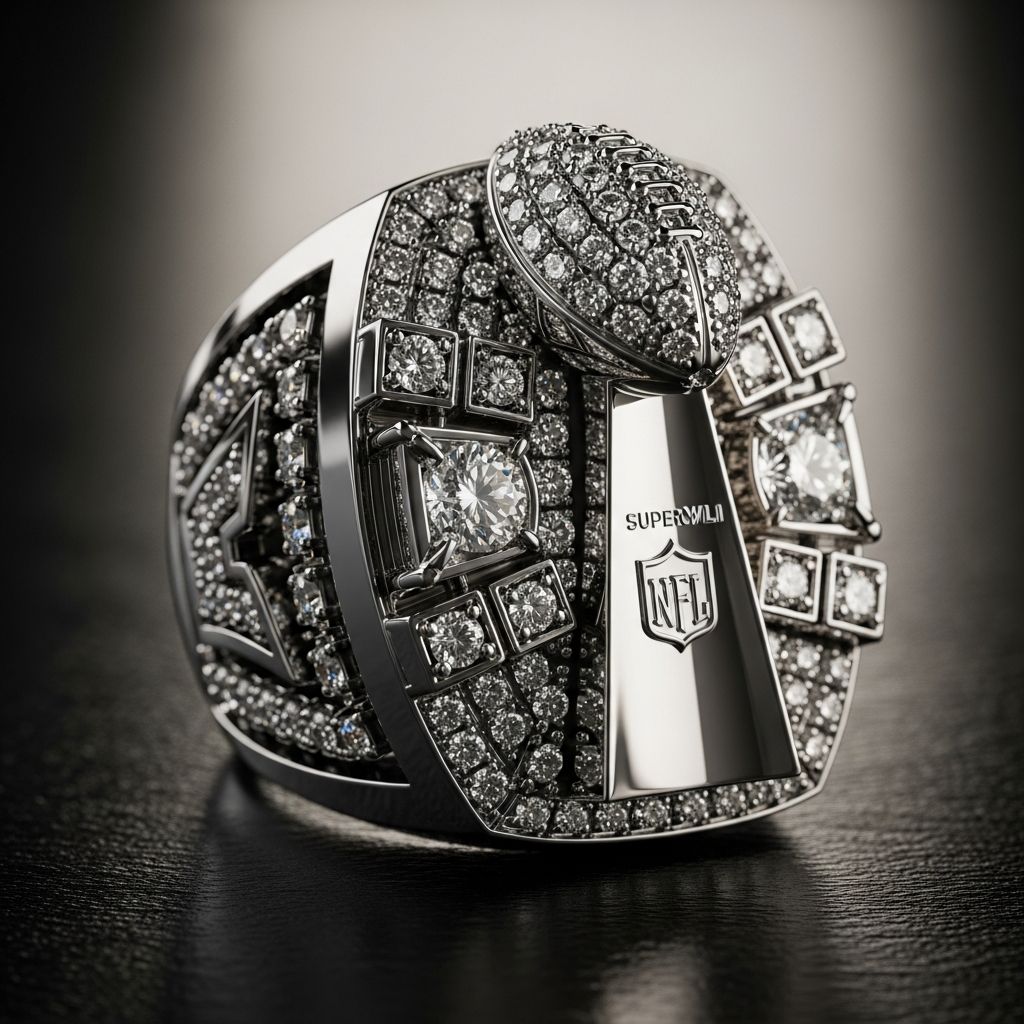
The variation in costs reflects the increasing complexity and luxury of ring designs over time. Modern Super Bowl rings feature:
- Multiple carats of diamonds and gemstones
- Custom engravings and personalization
- Team history and playoff game information
- Premium metals including gold and platinum
- Intricate custom designs specific to each championship year
The Kansas City Chiefs, for example, spent approximately $40,000 per ring for their championship rings, demonstrating how production costs can exceed $30,000 to $50,000 range. Despite the enormous expenditure, even premium rings occasionally contain errors, as demonstrated when the Chiefs’ rings mistakenly listed the Miami Dolphins as the No. 7 seed when they were actually the No. 6 seed.
Recent Super Bowl Ring Costs
Super Bowl ring production costs have remained relatively consistent in recent years, with most teams spending in the established $30,000 to $50,000 range per ring. The 2015 Super Bowl XLIX winners received rings valued at approximately $36,500 each. This consistency reflects the standardization of ring materials and design processes, though luxury upgrades continue to increase certain rings beyond the baseline cost.
Team owners ultimately decide whether to absorb these costs entirely or pass a portion to their players. Most organizations view the championship rings as non-negotiable symbols of their victory and absorb the additional expenses without complaint.
Resale Value and Auction Prices
Once a Super Bowl ring enters the secondary market, its value can increase exponentially. The resale price depends on numerous factors including the ring’s historical significance, the player who owned it, team popularity, and current collector demand.
Record-Setting Sales
The most expensive Super Bowl ring ever sold at auction is Lawrence Taylor’s Super Bowl XXV ring from the 1990 New York Giants championship. In 2012, SCP Auctions of Laguna Niguel, California sold this iconic ring for $230,401. The staggering price reflected the massive appeal of the Hall of Famer who owned the ring, with one auctioneer noting that “its mass appeal rested simply on the massive shoulders of the man who owned it.”
However, the record for any Super Bowl ring belongs to Robert Kraft, owner of the New England Patriots, who sold his personal Super Bowl LI ring for over $1 million in 2020. Additionally, a Brady family ring (not Tom Brady’s personal ring) from Super Bowl LI brought in $344,927 in 2018.
Notable Historical Sales
Several other Super Bowl rings have commanded impressive prices at auction, demonstrating the strong collector market for championship memorabilia:
| Player | Super Bowl | Year Sold | Auction Price |
|---|---|---|---|
| William “Refrigerator” Perry | Super Bowl XX (1985) | 2015 | $203,150 |
| Steve Wright | Super Bowl I (1966) | 2011 | $73,409 |
| Je’Rod Cherry | Super Bowl XXXVI (2001) | 2008 | $180,000+ |
| Jamal Lewis | Super Bowl XLVII (2012) | 2015 | $49,770 |
William “Refrigerator” Perry’s ring sold for $203,150 in 2015, making it the second-most expensive player ring ever sold. Perry’s ring was uniquely supersized to accommodate his massive finger size, which was estimated at an unprecedented size 25. This historical uniqueness and the icon status of Perry as a legendary defensive lineman contributed to the exceptional price.
Factors Influencing Super Bowl Ring Value
Multiple variables determine the resale price of a Super Bowl ring, transforming them from team memorabilia into valuable investment pieces:
Player Historical Significance
Rings belonging to Hall of Famers or legendary players command substantially higher prices than those from less prominent team members. Lawrence Taylor’s ring fetched $230,401 largely due to his legendary status in NFL history. Similarly, the prospect of Jerry Kramer’s 1967 Green Bay Packers Super Bowl I ring coming to auction in February 2026 is expected to exceed $100,000 based on his Hall of Fame credentials.
Team and Championship History
Collectors demonstrate a strong preference for “rings with content” and from “storybook teams” that have compelling historical narratives. Championship wins that ended droughts, featured perfect seasons, or represented dynasty-building moments tend to appreciate more significantly. The 1972 Miami Dolphins’ undefeated Super Bowl VII rings, for instance, are valued at approximately $45,000.
Ring Design and Materials
The complexity and luxury of the ring design influence its value. Rings featuring multiple diamonds, custom engravings, and unique design elements typically command higher prices than simpler designs. Modern rings with 14.8+ carats of diamonds represent significant upgrades over earlier championship rings.
Position and Player Prominence
There is a clear trend toward rings from actual players versus front-office and coaching staff rings, even though front-office rings typically cost less to produce. Defensive stars and offensive superstars generally see higher valuations than special teams or practice squad members. The positional prominence of the ring’s original owner significantly impacts its market appeal.
Provenance and Documentation
Clear ownership history, authentication, and accompanying documentation enhance a ring’s value considerably. Rings with well-documented provenance from reputable previous owners or sales command premium prices from collectors.
Market Trends in Super Bowl Ring Sales
The Super Bowl ring market has evolved significantly over the past few decades. Early rings from the 1960s and 1970s, particularly from winning teams and prominent players, have appreciated tremendously as collectors recognize their historical importance. The oldest championship rings represent irreplaceable pieces of NFL history, driving up their values.
Recent trends show that collectors increasingly seek rings with compelling stories and from recognizable franchises. The New England Patriots’ dynasty rings have proven especially valuable, reflecting both the team’s sustained excellence and the iconic status of that era.
Charity auctions have also introduced Super Bowl rings to broader audiences, sometimes achieving exceptional prices. Je’Rod Cherry’s Super Bowl XXXVI Patriots ring raised more than $180,000 when raffled off for charity in 2008, demonstrating public fascination with these items.
Investment Potential of Super Bowl Rings
For serious collectors and investors, Super Bowl rings represent a unique category of sports memorabilia with strong appreciation potential. The scarcity of authentic rings, combined with the increasing wealth of collectors, has created a robust secondary market. Unlike team merchandise or standard memorabilia, Super Bowl rings are limited in number and represent tangible connections to historic sporting moments.
However, investing in Super Bowl rings requires careful consideration of player selection, team history, and authentication. Not all rings appreciate equally, and market demand can fluctuate based on player careers, team success, and collector preferences. The most reliable investments tend to involve Hall of Famers from legendary teams or rings with unique historical significance.
Authentication and Fraud Concerns
The high values of Super Bowl rings have unfortunately attracted counterfeit producers. Legitimate collectors and auction houses work with expert authenticators to verify rings’ authenticity through detailed examination of materials, engravings, construction methods, and ownership documentation. Reputable auction houses like Heritage Auctions, SCP Auctions, and Grey Flannel Auctions maintain strict authentication protocols to protect buyers and maintain market integrity.
Frequently Asked Questions About Super Bowl Rings
Q: How much does the NFL contribute toward Super Bowl ring production?
A: The NFL provides $5,000 per ring for the first 150 rings awarded to winning team members. Winning teams cover all costs exceeding this amount.
Q: What is the average cost to produce a single Super Bowl ring?
A: The typical production cost ranges from $30,000 to $50,000 per ring, depending on design complexity, materials used, and customization.
Q: Which Super Bowl ring holds the auction record?
A: Lawrence Taylor’s Super Bowl XXV ring sold for $230,401 in 2012, making it the highest price ever paid for a player’s ring. Robert Kraft’s personal Super Bowl LI ring sold for over $1 million, but owner rings may not be classified in the same category.
Q: Why do some Super Bowl rings cost more than others?
A: Costs vary based on design complexity, the number and quality of diamonds and gemstones, customization requirements, and the team’s choices regarding materials and production standards.
Q: Can I invest in Super Bowl rings?
A: Yes, authenticated Super Bowl rings, particularly from Hall of Famers and legendary teams, have demonstrated strong appreciation potential. However, careful research and authentication are essential before making investment purchases.
Q: How are Super Bowl rings authenticated?
A: Reputable auction houses employ expert authenticators who examine construction quality, engravings, materials, and ownership documentation to verify authenticity and protect buyers.
Q: Are there counterfeit Super Bowl rings?
A: Unfortunately yes. This is why collectors should only purchase from reputable auction houses with established authentication procedures and comprehensive documentation of ownership history.
References
- 5 Unforgettable Super Bowl Rings That Sold For Sky-High Prices at Auction — AuctionReport.com. 2025. https://www.auctionreport.com/5-unforgettable-super-bowl-rings-that-sold-for-sky-high-prices-at-auction/
- How Much Does a Super Bowl Ring Cost to Make? — Sports Illustrated. 2025. https://www.si.com/nfl/how-much-does-a-super-bowl-ring-cost-to-make
- Every Super Bowl Championship Ring by Year — ESPN. 2025. https://www.espn.com/espn/feature/story/_/id/28360921/every-super-bowl-championship-ring
- The Top Ten Most Expensive Super Bowl Rings — KIRO 7 News Seattle. 2025. https://www.kiro7.com/living/shopping/the-top-ten-most-expensive-super-bowl-rings/77551689/
- Super Bowl Rings: Cost, History, Winners and More — Times of India. 2025. https://timesofindia.indiatimes.com/sports/nfl/news/super-bowl-rings-cost-history-winners-and-more/articleshow/118101824.cms
- Super Bowl Rings: Behind the Bling — The Mercury News. 2025. https://extras.mercurynews.com/super-bowl-rings/
Similar Articles








Read full bio of medha deb