How Much Is an Ounce of Gold Worth Today?
Discover current gold prices per ounce and factors influencing precious metal valuations.
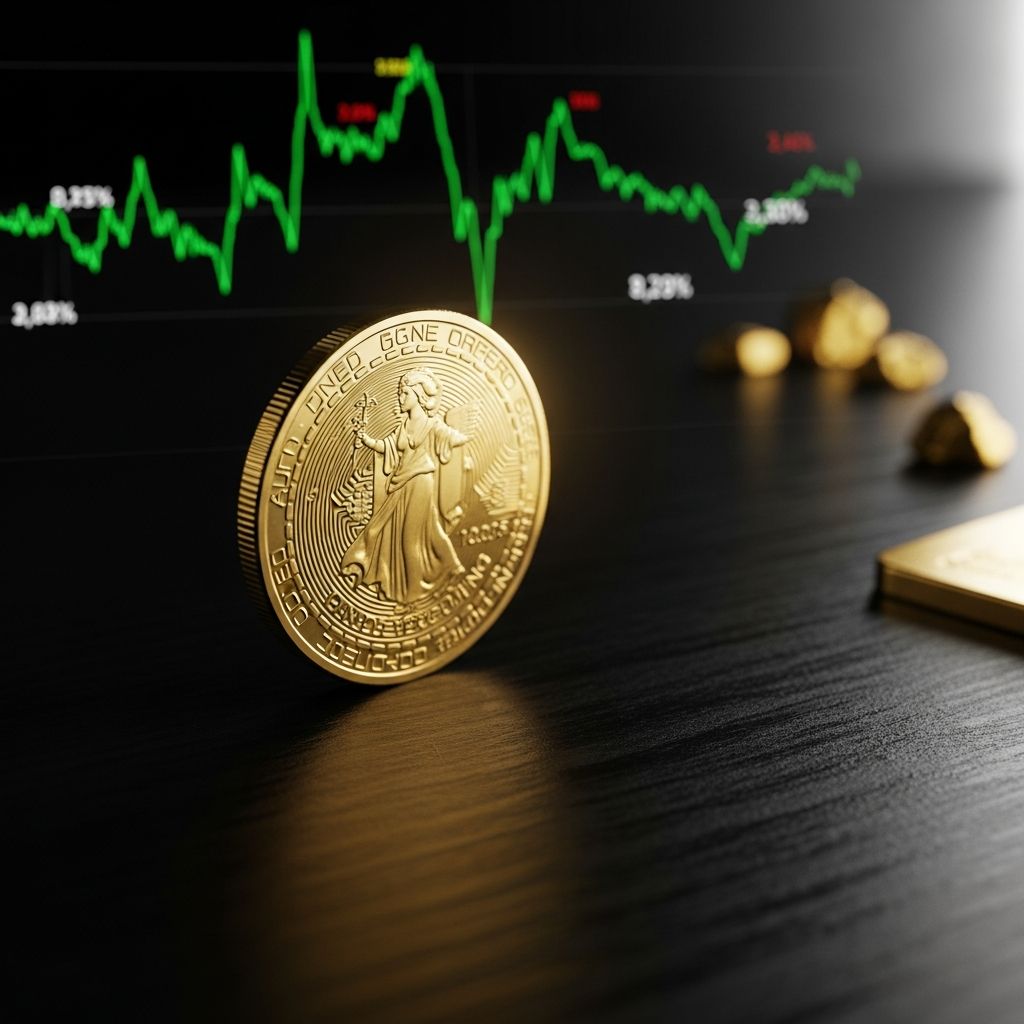
Gold remains one of the most valuable and sought-after precious metals in the world. As of November 2025, the price of gold has reached unprecedented levels, with spot gold trading at record highs. Understanding the current price of gold per ounce and the factors influencing these valuations is essential for investors, collectors, and anyone interested in precious metals. The price of gold fluctuates continuously based on market demand, economic conditions, and geopolitical factors, making it important to stay informed about current rates.
Current Gold Price Per Ounce
The price of gold is measured in troy ounces, which differs from standard avoirdupois ounces. One troy ounce equals approximately 31.1 grams. As of recent trading data, gold has shattered previous records and continues to climb. In March 2025, spot gold hit the symbolically significant threshold of $3,000 per troy ounce, a milestone that experts had predicted might not occur until the end of the year. By November 2025, gold has surged to approximately $4,300 per ounce, representing a remarkable 60% increase over the course of the year and a 40% rally over the past twelve months.
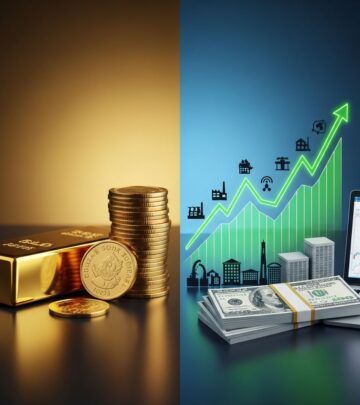
This exceptional performance far outpaces traditional investments, with the S&P 500 gaining approximately 14% during the same period. The rapid ascent of gold prices reflects a combination of economic, geopolitical, and policy-related factors that have created optimal conditions for precious metal appreciation.
Understanding Troy Ounces Versus Regular Ounces
An important distinction when discussing gold prices is the difference between troy ounces and avoirdupois ounces. The troy ounce is the standard measurement for precious metals and gemstones. One troy ounce equals 31.1035 grams, while a standard avoirdupois ounce, used for everyday measurements, equals only 28.35 grams. This means that a troy ounce is approximately 10% heavier than a regular ounce. When gold prices are quoted in financial markets, they always refer to troy ounces, so it’s crucial to understand this distinction when calculating the value of gold holdings.
Historical Context of Gold Pricing
Gold’s journey to current record highs has been remarkable. In 2023, gold traded near $1,920 per ounce as of the end of June. By December 2024, gold had struck $2,135 per troy ounce, setting what was then considered a record high. In early 2024, gold was valued at $2,330 per ounce, already representing a 13% increase from the beginning of the year. However, the price trajectory accelerated dramatically in 2025, with gold breaking through $3,000 in March and continuing to climb toward $4,300 by autumn.
Factors Driving Gold Prices
Multiple interconnected factors contribute to gold’s current valuations and recent price acceleration:
The U.S. Dollar and Currency Exchange Rates
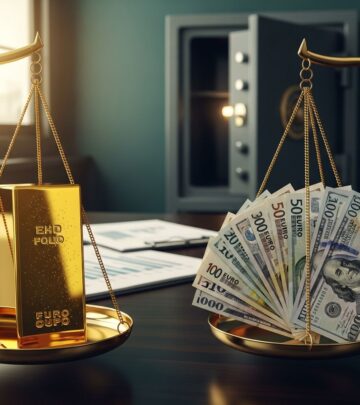
Gold prices have an inverse correlation with the strength of the U.S. dollar. When the dollar weakens, investors can purchase less gold per dollar due to decreased purchasing power, which increases the relative price of gold. Conversely, a stronger dollar typically suppresses gold prices. Recent currency fluctuations have been favorable for gold, with the dollar weakening over recent periods. Additionally, when the exchange rate of the U.S. dollar decreases relative to other currencies, international investors can purchase more gold with their local currency, increasing global demand. For example, in October 2024, the euro was valued at $1.08 in U.S. dollars, coinciding with gold reaching all-time highs.
Federal Reserve Policy and Interest Rates
Historically, gold prices rise as interest rates fall. Lower interest rates reduce the opportunity cost of holding non-yielding assets like gold, making the precious metal more attractive to investors. Federal Reserve Chair Jerome Powell has indicated that interest rate cuts are possible “at some point this year” if economic conditions align. Market data suggests there is a 73.9% probability that the Federal Reserve will cut its federal funds rate at its June meeting, serving as an ongoing catalyst for gold prices throughout the year. The expectation of lower interest rates has been a significant driver of recent gold appreciation.
Central Bank Gold Accumulation
Central banks worldwide, particularly China, have been aggressively accumulating gold reserves since 2022. In January alone, central banks increased gold reserves by 39 tons, more than double the amount purchased in December and marking the eighth consecutive month of net purchases. This sustained demand from institutional buyers provides structural support for gold prices and reflects confidence in gold as a store of value amid macroeconomic uncertainty.
U.S. Federal Debt and Inflation Concerns
The United States currently carries more than $36.383 trillion in debt, with an increasing percentage of government expenses devoted to interest payments. As interest payments consume a larger share of the federal budget, concerns about currency devaluation and inflation rise. Gold serves as a hedge against inflation and currency debasement, making it attractive during periods of expansionary fiscal policy and concerns about monetary dilution.
Trade Policy and Tariffs
The Trump administration’s aggressive protectionist trade policies and tariff implementations have created economic uncertainty. Elevated tariffs can drive inflation expectations and economic slowdown concerns, both of which support higher gold prices. Metals traders note that “gold is grinding higher on elevated uncertainty,” with tariff-driven concerns contributing significantly to the precious metal’s rally.
Geopolitical Risks and Uncertainty
Geopolitical tensions provide strong support for gold prices. Historical examples demonstrate this relationship clearly. During the Russia-Ukraine conflict in the first quarter of 2022, gold gained 6%. Similarly, when the Hamas-Israel conflict erupted in the third quarter of 2023, gold prices surged. On the day before the Hamas attack, gold traded at $1,834.60 per troy ounce. Within 20 days, by October 27, 2023, the price had increased 8.78% to $1,995.80 per ounce. Current Middle East tensions and ongoing conflicts continue to support elevated gold prices as investors seek safe-haven assets.
Expert Price Predictions for Gold
Major financial institutions have provided differing but generally bullish outlooks for gold prices:
Goldman Sachs Price Target
Goldman Sachs research suggests that gold can exceed $3,000 per troy ounce by the end of 2025. This projection has already been surpassed, with gold reaching $4,300. The analysis highlights central bank accumulation as a bullish catalyst for continued appreciation.
Deutsche Bank Price Range
Deutsche Bank believes gold will remain within a range of $2,450 on the lower end and $3,050 on the higher end, suggesting a 10.62% potential return from mid-range levels. The bank cites ramped-up central bank activity and debt concerns across nations as catalysts for long-term performance.
JPMorgan’s Outlook
JPMorgan projects that gold will reach $3,000 per troy ounce, citing policy uncertainty and geopolitical risks as bullish factors. However, the investment bank acknowledges that price appreciation may not be linear. JPMorgan expects a short-term downturn due to tariff implementations but anticipates recovery in the second half of the year, with gold ultimately reaching its price target.
How to Track Gold Prices
Investors and interested parties can monitor gold prices through several channels. Real-time spot prices are available through financial news websites, commodity trading platforms, and precious metals dealers. Spot prices represent the current market price for immediate delivery of gold. Different sources may show slight variations due to bid-ask spreads and timing differences. Most reputable financial sources update gold prices continuously during trading hours.
Gold as an Investment
Gold serves multiple purposes in investment portfolios. As a safe-haven asset, gold tends to maintain value or appreciate during periods of economic uncertainty, inflation, and currency weakness. Unlike bonds or stocks that depend on issuer creditworthiness or corporate performance, gold’s value is based on its physical properties and universal acceptance. Investors can access gold through various vehicles including physical bullion, gold ETFs, mining company stocks, and futures contracts.
Gold Price Performance Comparison
| Asset Class | 2024 Performance | Year-to-Date 2025 Performance |
|---|---|---|
| Gold | ~40% increase | ~15% increase |
| S&P 500 | Positive gains | ~14% increase |
Frequently Asked Questions About Gold Prices
Q: What is the difference between spot price and futures price for gold?
A: Spot price represents the current market price for immediate delivery of gold, while futures prices are for contracts for future delivery at a specified date. Spot prices are typically lower than futures prices due to time value and storage costs.
Q: Why does gold perform well during economic uncertainty?
A: Gold is considered a safe-haven asset because it maintains intrinsic value regardless of government policies or corporate performance. During economic crises, investors move away from riskier assets and toward gold, increasing demand and prices.
Q: How much gold should I invest in my portfolio?
A: Portfolio allocation depends on individual risk tolerance, investment goals, and time horizon. Financial advisors typically recommend 5-10% in precious metals for diversification, though some conservative investors hold up to 15%.
Q: Can I buy physical gold directly?
A: Yes, physical gold is available in multiple forms including bars, coins, and rounds from precious metals dealers, mints, and some banks. Storage and insurance costs should be considered.
Q: How is gold price determined?
A: Gold prices are determined by supply and demand in global markets. Major exchanges like COMEX set benchmark prices based on trading activity, with factors including currency values, interest rates, and geopolitical events influencing supply and demand.
Q: Will gold prices continue to rise?
A: Future gold prices depend on numerous unpredictable factors including monetary policy, geopolitical developments, and currency movements. While current conditions support elevated prices, markets can shift rapidly.
Q: What is a troy ounce and why is it used for gold?
A: A troy ounce equals 31.1 grams and is the standard measurement for precious metals. It has been used for centuries in trade and provides consistency across global markets for precious metal transactions.
References
- Why the Price of Gold Just Hit an All-Time High — Money. 2024. https://money.com/gold-price-all-time-high/
- Gold’s Price Outlook for 2025 — Money. 2025. https://money.com/gold-price-outlook-2025/
- What Drives the Price of Gold? — Money. 2024. https://money.com/what-drives-the-price-of-gold/
- Gold Prices Can’t Stop Breaking Records — Even as Stocks Slump — Money. 2025. https://money.com/why-gold-keeps-breaking-records/
- Gold Has Outperformed the S&P 500 So Far This Year — Money. 2024. https://money.com/gold-vs-stocks-performance/
- These Wall Street Titans Say Buy Gold. Should You? — Money. 2025. https://money.com/gold-record-price-ray-dalio-jamie-dimon-investing-advice/
Similar Articles








Read full bio of medha deb