How Much Is a $100 Savings Bond Worth After 30 Years?
Discover the growth of a $100 U.S. savings bond over 30 years, from doubling guarantees to maturity impacts and redemption strategies.
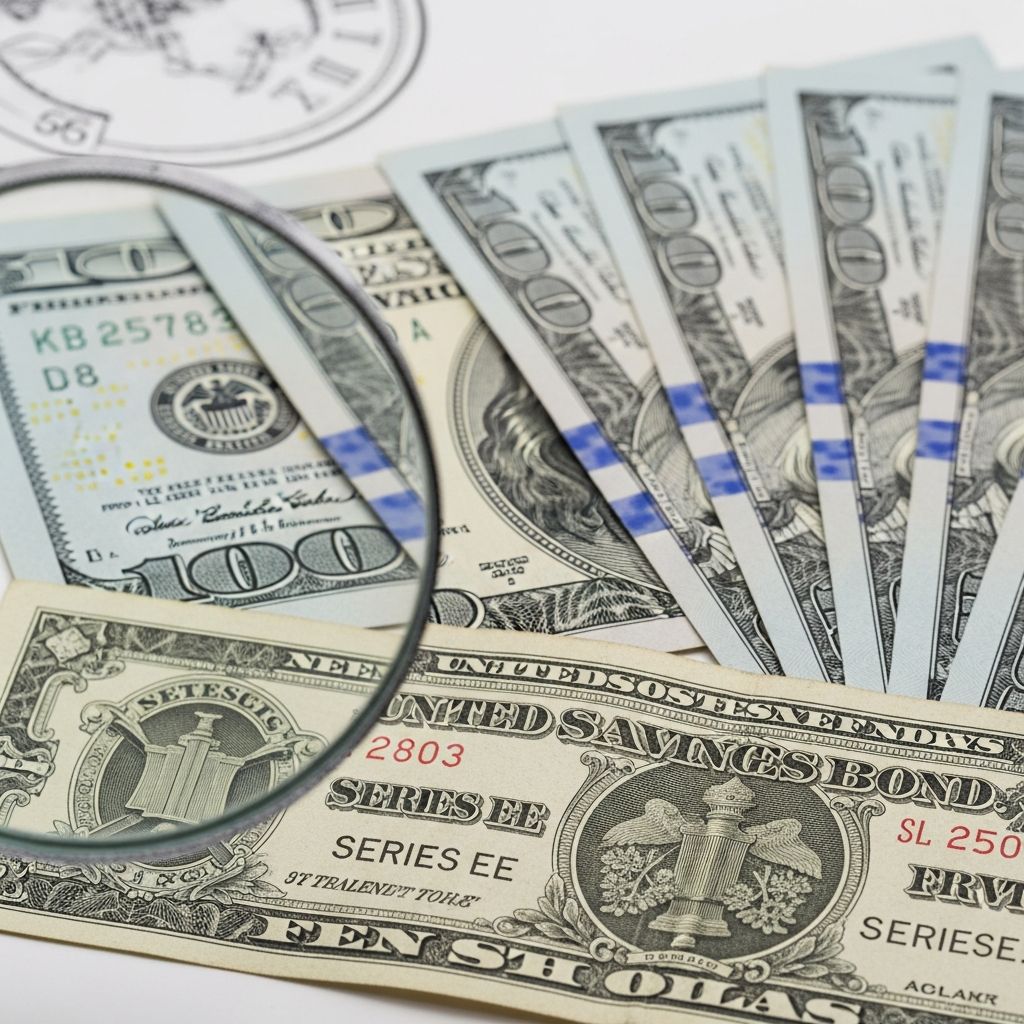
U.S. savings bonds, particularly Series EE bonds, offer a secure way to grow investments over decades, backed fully by the U.S. government. A $100 Series EE savings bond issued in October 1994, for example, grows to approximately $164.12 after 30 years, including $114.12 in compounded interest.
These bonds finance government operations while providing predictable, low-risk returns. Unlike stocks or mutual funds, savings bonds guarantee principal protection and specific growth milestones, such as doubling in value after 20 years for Series EE bonds. However, their value depends on the series type, issue date, and holding period, making tools like the TreasuryDirect calculator essential for precise calculations.
What Are Savings Bonds?
Savings bonds are low-denomination, government-issued debt securities designed for individual investors. They come in Series EE and Series I varieties, each with distinct earning mechanisms. Series EE bonds, purchased at a discount (e.g., $50 for a $100 face value bond in some eras), accrue interest monthly and compound semiannually.
Series I bonds protect against inflation by combining a fixed rate with a variable inflation-adjusted component. For bonds issued in recent periods, this yields a composite rate like 3.98%, with 1.10% fixed and the rest inflation-linked. Both types earn interest for up to 30 years, but early redemption before five years incurs a three-month interest penalty.
- Series EE: Guarantees doubling after 20 years; continues earning until 30 years.
- Series I: Inflation-protected; fixed plus variable rates reset semiannually.
- Common traits: Non-marketable, tax-deferred interest, minimum $25 purchase.
Interest calculation applies the rate to an inflating principal (original plus accrued interest), leading to exponential growth over time. This makes long-term holding key to maximizing returns.
When Do Savings Bonds Mature?
Savings bonds have a 30-year maximum lifespan, earning interest throughout. They can be redeemed after 12 months, but a penalty applies if cashed before five years: forfeiture of the last three months’ interest.
Series EE bonds hit a key milestone at 20 years, doubling the original purchase price. For instance, a $50 purchase price bond reaches $100 face value, then earns additional interest for 10 more years. At 30 years, interest accrual stops entirely—holding beyond maturity exposes the fixed amount to inflation erosion.
| Event | Timeline | Details |
|---|---|---|
| Minimum Hold | 12 months | Redeemable, but suboptimal returns. |
| Penalty Period | Before 5 years | Lose last 3 months’ interest. |
| Doubling (EE) | 20 years | Guaranteed value double purchase price. |
| Final Maturity | 30 years | Interest stops; cash immediately. |
Maximizing value means holding to or near 30 years, as each additional day before maturity adds compounded interest. Post-maturity, the bond’s nominal value remains static while purchasing power declines.
TreasuryDirect Savings Bond Calculator
The official TreasuryDirect calculator provides instant, accurate valuations for paper bonds of Series EE, E, and I. It’s free, requires no account, and updates for current rates.
What Details You Need to Enter
To use the calculator, input three essentials:
- Series: EE, E, or I—dictates rates and rules.
- Denomination: Face value, e.g., $100.
- Issue Date: Month and year from the bond’s face.
Optional: Serial number (lower right corner) for tracking. Locate details on paper bonds: series upper right, date below it, serial lower right. Electronic bonds in TreasuryDirect accounts show values directly.
Enter data, select ‘Calculate,’ and view current value, interest earned, and next compounding date. This tool accounts for variable rates in I bonds and historical EE guarantees.
How Much Is a $100 Series EE Bond Worth After 30 Years?
For a $100 face value Series EE bond issued October 1994 (purchased for ~$50), the 30-year value is $164.12, with $114.12 interest. It doubles to $100 at 20 years, then grows further.
Values vary by issue date due to rate changes:
| Denomination | Issue Date | Purchase Price | Total Interest (30 Yrs) | Current Value |
|---|---|---|---|---|
| $100 | Oct 1994 | $50 | $114.12 | $164.12 |
| $1,000 | Oct 1994 | $500 | $1,141.20 | $1,641.20 |
| $10,000 | Oct 1994 | $5,000 | $11,412.00 | $16,412.00 |
Source: TreasuryDirect and Bankrate examples. Actual values depend on exact rates; always verify via official calculator.
How Inflation Affects Matured Bonds
Post-30 years, bonds cease earning interest, becoming vulnerable to inflation. A $1,600 matured bond retains $1,600 nominal value, but if inflation averages 2.5% annually, its real value could drop to ~$1,150 in 10 years (or more with higher inflation, e.g., $1,600 to $1,550 equivalent at 3%).
Example: If costs rise 28% over 10 years, $1,600 buys what $1,248 did before—$352 real loss. Cash at maturity to reinvest in yielding assets. Inflation erodes fixed holdings universally, underscoring prompt redemption.
Cashing In Savings Bonds: Timing and Penalties
Redeem via banks, credit unions, or TreasuryDirect (electronic). Paper bonds require mailing or in-person. Avoid pre-five-year cashing to dodge penalties; post-20 years for EE maximizes doubling plus extra.
- Early (1-5 yrs): Penalty hits returns hard.
- 20 yrs (EE): Guaranteed double.
- 30 yrs: Peak value; act fast vs. inflation.
Taxes apply federally on interest (state-exempt); defer until redemption or maturity.
Conclusion
A $100 savings bond can substantially grow over 30 years into a meaningful nest egg, exemplified by Series EE reaching ~$164 from 1994 issues. These government-backed instruments prioritize safety over high yields, ideal for conservative portfolios, education funding, or gifting.
Regularly check values via TreasuryDirect as maturity nears—timing redemption optimizes returns while sidestepping inflation risks. Whether holding legacy paper bonds or new electronic ones, understanding maturity, rates, and tools empowers informed decisions.
Frequently Asked Questions (FAQs)
Q: How much is a $100 savings bond worth after 30 years?
A: Depends on type and issue date; a Series EE from Oct 1994 is ~$164.12. Use TreasuryDirect calculator for exacts.
Q: Do savings bonds double in value?
A: Series EE yes, after 20 years guaranteed; continues to 30 years.
Q: When should I cash in my savings bond?
A: At or near 30-year maturity to avoid inflation loss; after 5 years to skip penalties.
Q: Can I check electronic bond values?
A: Yes, log into TreasuryDirect account for instant views.
Q: Are savings bonds taxable?
A: Federal tax on interest deferred until cashed; state tax-exempt.
References
- How much is a $100 savings bond worth after 30 years? — MoneyRates. 2023. https://www.moneyrates.com/investment/how-much-is-a-100-savings-bond-worth-after-30-years.htm
- Check or calculate the value of a savings bond online — Bankrate. 2023. https://www.bankrate.com/investing/check-value-of-savings-bond-online/
- Savings Bond Calculator — NerdWallet. 2023. https://www.nerdwallet.com/investing/calculators/savings-bond-calculator
- Calculate the Value of Your Paper Savings Bond(s) — TreasuryDirect.gov. Accessed 2026. https://www.treasurydirect.gov/BC/SBCPrice
- Paper Savings Bond Calculator — TreasuryDirect.gov. Accessed 2026. https://www.treasurydirect.gov/savings-bonds/savings-bond-calculator/
- U.S. savings bonds — USAGov. Accessed 2026. https://www.usa.gov/savings-bonds
Similar Articles








Read full bio of Sneha Tete