How Much In Savings Should You Have? 2025 Guide & Benchmarks
Discover expert-recommended savings targets for emergency funds, retirement, and life goals to secure your financial future.

Determining
how much savings
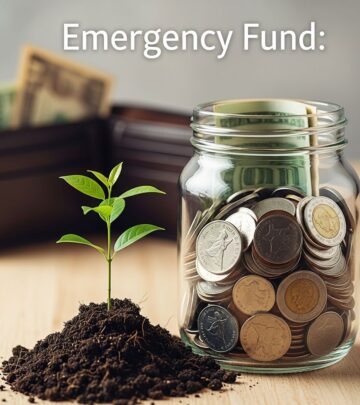
you should have depends on your income, expenses, life stage, and goals. Financial experts generally recommend anemergency fund
covering 3-6 months of living expenses, plus targeted savings for retirement, home down payments, and other milestones. In today’s economy, with 45% of Americans having drained their savings at least once, building these buffers is crucial for financial security.This comprehensive guide draws from expert guidelines, recent surveys on American saving habits, and practical strategies to help you assess and grow your savings. Whether you’re starting from zero or optimizing existing funds, you’ll find benchmarks, calculators, and tips tailored to your situation.
Why Savings Matter: The State of American Savings
Americans face a savings crisis amid rising costs. According to a Penny Hoarder survey,
42% cite insufficient income
as the top barrier to saving, while34% blame everyday price hikes
like groceries ($418/person monthly) and rent ($1,630 average). Shockingly,45% have fully depleted savings accounts
, and11% multiple times
, leaving many vulnerable to emergencies.Common saving strategies reveal gaps:
48% save only leftovers after bills
,27% save fixed amounts
,11% have no plan
, and just9% spend all disposable income
. Despite this,67% would save a surprise $1,000
, showing intent but execution challenges.| Type of Monthly Expense | Average Cost |
|---|---|
| Mortgage/Rent | $2,067 / $1,630 |
| Childcare | $1,100 |
| Transportation | $1,100 |
| Health Care Premiums | $1,514 per person |
| Groceries | $418 per person |
These costs highlight why
70% maintain generic savings
,37% have emergency funds
,24% goal-based accounts
, and41% retirement savings
.Emergency Fund: Your First Savings Priority
Start with an
emergency fund
for surprises like car repairs or medical bills. Experts advise$1,000 minimum
as a starter goal, then3-6 months of expenses
. For a $4,000 monthly budget, that’s $12,000-$24,000.- Begin small: Automate $25-50/paycheck into a high-yield savings account.
- Build to $1,000: Prevents credit card debt at 20%+ interest.
- Scale up: Single earners aim for 6 months; dual-income for 3.
Only
37% of working Americans
have a dedicated emergency fund, underscoring the gap. Keep it separate from checking—aim for accounts yielding 4-5% APY.Retirement Savings: How Much by Age?
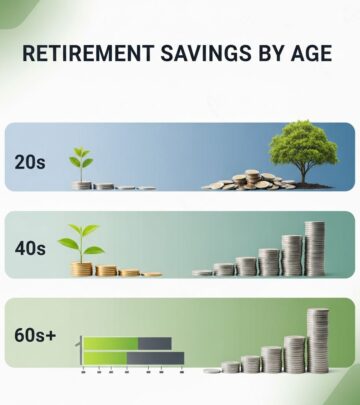
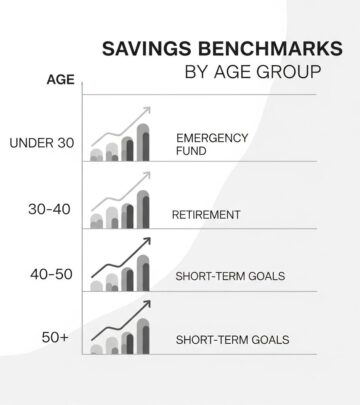
Retirement requires consistent saving. Fidelity guidelines: by age 30,
1x annual salary
; age 40,3x
; age 50,6x
; age 67,10x
.| Age | Savings Multiple of Salary | Example ($60K Salary) |
|---|---|---|
| 25 | 0.5x | $30,000 |
| 30 | 1x | $60,000 |
| 40 | 3x | $180,000 |
| 50 | 6x | $360,000 |
| 60 | 8x | $480,000 |
| 67 | 10x | $600,000 |
Max 401(k)s ($23,500 in 2026) and IRAs ($7,000). One in five say retirement lags peers.
Savings Goals by Life Stage
Single, No Kids
**3 months expenses** ($9,000 for $3,000/month). Focus: high-yield savings, Roth IRA.
Married, No Kids
**3-6 months** combined. Add home fund (20% down payment).
Family with Kids
**6-9 months**. Include college 529 plans ($235/month/child for $50K at 18).
Near Retirement
**10x salary** + Social Security. Shift to conservative investments.
How to Calculate Your Ideal Savings
1.
Track expenses:
1 month via app.2.
Apply 50/30/20:
50% needs, 30% wants,20% savings/debt
($600 on $3,000 income).3.
Emergency target:
Expenses x 3-6.4.
Use calculators:
Bankrate or Excel.Alternatives: Zero-based (every dollar assigned), envelope system.
Strategies to Build Savings Faster
- Automate transfers: Post-paycheck to savings.
- High-yield accounts: 4%+ vs. 0.01%.
- Meal plan: Save $2,000/year cooking home.
- Cashback apps: $290/year.
- Buy used/repair: Fraction of new cost.
- No-spend challenge: Skip non-essentials, save $400/month.
- Side hustles: 19% plan this for boosts.
In crises,
30% cut spending
,21% sell items
.Common Savings Accounts Types
- HYSA: Liquid, high interest.
- Money market: Checks, higher minimums.
- CDs: Locked rates for goals.
- Goal-based: 24% use for vacations/homes.
Frequently Asked Questions (FAQs)
Q: How much emergency savings do I need?
A: $1,000 starter, then 3-6 months expenses (e.g., $12K-$24K for $4K/month).
Q: What’s a good savings rate?
A: 20% of income via 50/30/20 rule.
Q: Where to keep savings?
A: High-yield savings (4-5% APY), not checking.
Q: How to save with low income?
A: Automate $5-10/paycheck, cut wants 10%, use apps.
Q: Is $10K enough savings?
A: For low expenses yes; scale to your lifestyle.
Next Steps: Start Project Piggy Bank Today
Set $1,000 goal. Automate deposits. Track progress monthly. Small habits compound—with median savings low, you’re poised to outperform. Cash is king in high-rate era.
References
- The State of Savings in America — The Penny Hoarder. 2025. https://www.thepennyhoarder.com/save-money/state-of-savings/
- How to Save Money: 25 Proven Tips — The Penny Hoarder. 2025. https://www.thepennyhoarder.com/save-money/how-to-save-money/
- Americans Facing Savings Crisis — MoneyTalksNews / The Penny Hoarder. 2025. https://www.moneytalksnews.com/slideshows/americans-are-facing-a-savings-crisis-heres-what-keeps-them-from-hitting-their-goals/
- Best Savings Accounts December 2025 — The Penny Hoarder. 2025-12. https://www.thepennyhoarder.com/bank-accounts/best-savings-accounts/
- Cash Is King Again — The Penny Hoarder. 2025. https://www.thepennyhoarder.com/investing/cash-is-king/
Similar Articles








Read full bio of medha deb