How Much House Can I Afford? A Complete Guide
Calculate your home affordability with expert tips on mortgages, down payments, and budgeting.
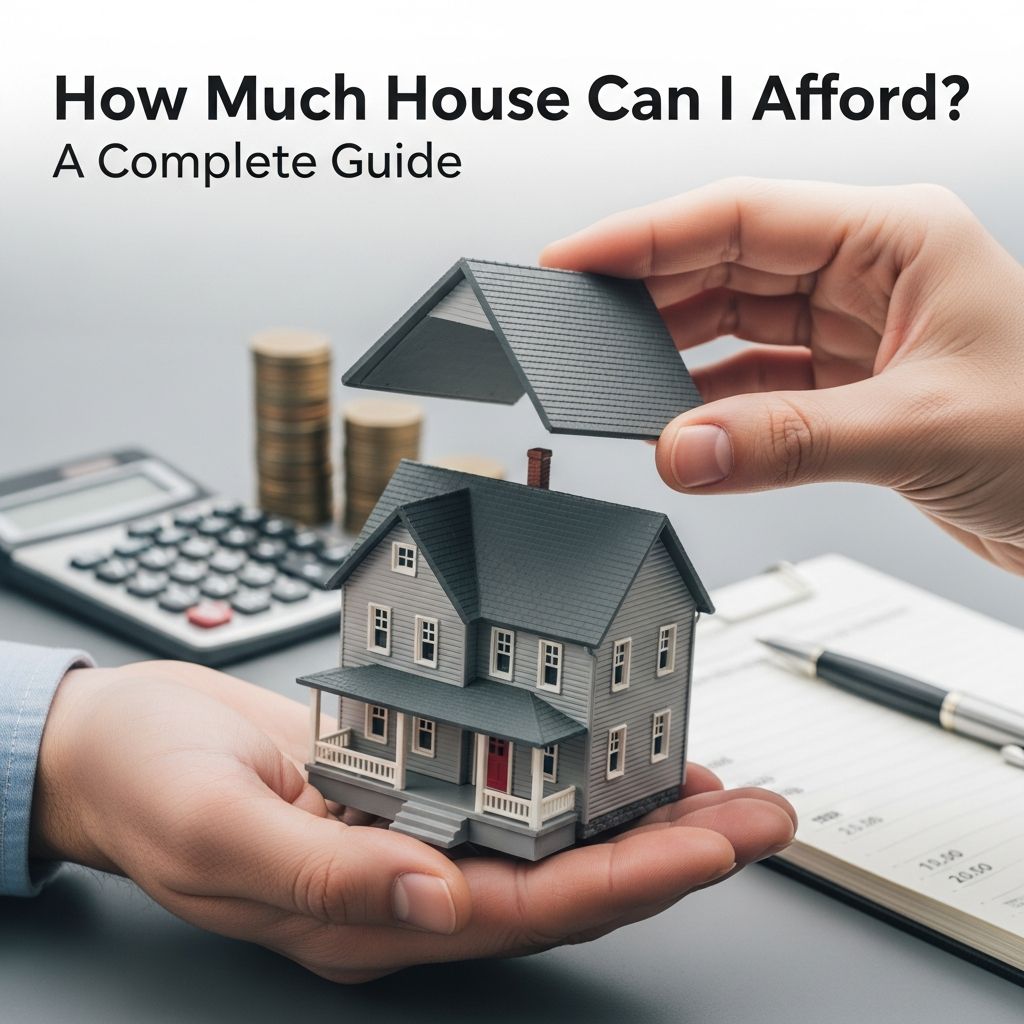
How Much House Can I Afford?
Purchasing a home is one of the most significant financial decisions you’ll make, impacting your finances for years to come. Before you start browsing real estate listings or meeting with lenders, it’s essential to understand exactly how much house you can afford. The answer depends on multiple factors, including your income, credit score, debt obligations, down payment savings, and the type of mortgage you’re pursuing.
Many prospective homebuyers jump into the process without properly calculating their affordability, which can lead to financial strain and even foreclosure risk. This comprehensive guide will walk you through the key factors that determine home affordability and provide you with practical tools to make an informed decision.
Key Factors That Determine Home Affordability
Your ability to afford a home depends on several interconnected factors that lenders evaluate carefully:
Your Credit Score
Your credit score is one of the first things lenders examine when you apply for a mortgage. It reflects your history of managing debt and making payments on time. Borrowers with higher credit scores typically qualify for better interest rates, which can significantly reduce your monthly mortgage payment and increase the home price you can afford. Conversely, a lower credit score may limit your options or result in higher interest rates, making homeownership more expensive.
Mortgage Type
The type of mortgage you choose dramatically affects how much you can borrow. Different loan programs have different requirements regarding down payments, credit scores, and debt-to-income ratios. For example, FHA loans are designed to help first-time homebuyers and borrowers with limited down payment savings, while conventional loans typically require stronger credit and financial profiles.
Down Payment Amount
Your down payment represents the initial cash you contribute toward the home purchase. A larger down payment reduces the amount you need to borrow and typically results in better loan terms. Conversely, a smaller down payment means a larger loan, higher monthly payments, and potentially mortgage insurance costs.
Monthly Income and Expenses
Lenders evaluate your monthly income relative to your existing debt obligations and proposed housing costs. This relationship is expressed as your debt-to-income ratio, which is a critical metric in mortgage approval decisions.
Understanding the 28/36 Rule
One of the most important guidelines in real estate is the 28/36 rule, a time-tested principle that helps borrowers determine affordability:
The 28% Housing Rule
Your housing expenses—including mortgage principal, interest, property taxes, and homeowners insurance—should not exceed 28% of your gross monthly income. This ensures you have sufficient income remaining for other essential expenses and savings. For example, if you earn $5,000 per month before taxes, your total housing costs should not exceed $1,400 monthly.
The 36% Total Debt Rule
Your combined monthly debt payments, including your mortgage, credit card payments, car loans, and other obligations, should not exceed 36% of your gross monthly income. This prevents you from becoming overextended with multiple debt obligations.
Practical Example
A borrower earning $5,000 monthly should limit housing costs to $1,400 (28%) and total debt payments to $1,800 (36%). If they already have $300 in monthly car payments and credit card debt, they can afford a maximum monthly housing payment of $1,500 while staying within the 36% guideline.
Calculating Your Home Affordability
Before you begin your home search, take time to calculate a realistic price range for your purchase:
Step 1: Calculate Your Debt-to-Income Ratio
Start by listing all your monthly debt obligations, including credit card payments, auto loans, student loans, and any other recurring debts. Divide this total by your gross monthly income. This gives you your current debt-to-income ratio, which shows lenders how much of your income already goes toward debt service.
Step 2: Account for All Monthly Expenses
Beyond debt payments, consider your regular monthly expenses such as utilities, groceries, insurance, childcare, and savings goals. While these aren’t technically “debt,” they’re essential expenses that reduce your available monthly income for housing costs.
Step 3: Determine Your Target Monthly Payment
Based on the 28/36 rule, calculate the maximum monthly housing payment you can afford. Subtract this from your available monthly income to verify you have sufficient funds for other expenses and savings.
Step 4: Use a Mortgage Calculator
Online mortgage calculators can convert your target monthly payment into an estimated home purchase price. These calculators account for interest rates, loan terms, property taxes, and insurance, providing a more accurate affordability estimate than simple multiplication.
FHA Loans and Borrowing Limits
FHA (Federal Housing Administration) loans are popular among first-time homebuyers due to their flexible requirements:
Down Payment Requirements
Borrowers with FHA loans can put down as little as 3.5% if their credit score is 580 or higher. This is significantly lower than the typical 10% down payment required for borrowers with lower credit scores, making homeownership more accessible to those with limited savings.
Maximum Loan Amounts
FHA loans have maximum borrowing limits that vary by county and property type. For single-family homes, limits range from $524,225 in low-cost areas to $1,209,750 in high-cost areas. In many standard areas, the limit is $806,500. These limits help ensure FHA loans serve their intended purpose of making homeownership accessible to middle-income borrowers.
Income Eligibility Parameters
Beyond loan limits, FHA borrowers must meet income requirements. Generally, borrowers cannot earn more than 115% of the median household income for their area. Additionally, the home itself must meet size and condition requirements established by the FHA.
USDA Loans for Rural Areas
USDA loans offer another alternative for qualified borrowers in rural and some suburban areas. These loans often require no down payment and have favorable terms for eligible borrowers. However, income eligibility parameters apply, and you must verify that your intended property is in a qualifying rural area through the USDA website.
Don’t Overextend Yourself
Just because you can afford a certain monthly payment doesn’t mean you should. Overextending yourself financially creates stress and reduces your financial flexibility for emergencies, home repairs, and other life events:
The 30% Guidelines
A general rule of thumb suggests that no more than 30% of your pre-tax income should go toward housing costs. Some lenders may allow up to 50% of your post-tax income for housing, but this leaves little room for other expenses and savings. The 30% threshold is considered the “ideal” level by most financial experts.
Budget Realistically
When calculating affordability, use your actual take-home pay (net income) rather than gross income for a realistic picture. After taxes, 401(k) contributions, and other deductions, your actual available funds may be significantly less than your gross salary.
Account for Additional Costs
Remember that your monthly mortgage payment is just one part of your housing costs. Property taxes, homeowners insurance, mortgage insurance (if applicable), HOA fees, maintenance, and utilities all add to your actual housing expenses. Failing to account for these can result in unaffordable monthly payments.
Current Housing Affordability Challenge
Recent market data reveals a significant affordability crisis in the United States. To afford a typical home at the median U.S. price of $367,969, you now need an annual salary of approximately $99,800. This creates a substantial gap for households earning the U.S. median income of $82,200, requiring an additional $17,670 annually to comfortably purchase a median-priced home.
The affordability gap widens significantly with a smaller down payment. Households with only 10% saved for a down payment would need a raise of $36,287 to purchase a median-priced home. In the most expensive markets like Los Angeles, typical annual housing costs exceed typical annual income, making homeownership unrealistic for many residents without substantial down payments of 90-95%.
The Affordability Calculator Approach
Before browsing listings, use Money’s home affordability calculator or similar tools to establish your price range. These calculators consider your debt-to-income ratio or your estimated budget and provide an estimated maximum home purchase price along with your projected monthly mortgage payment. This data-driven approach prevents surprises and keeps you focused on realistic options.
Key Steps to Remember
As you prepare for homeownership, keep these essential steps in mind:
Calculate Your Debt-to-Income Ratio
Compare your total monthly debt to your monthly gross income to understand your current financial obligations and available borrowing capacity.
Consider All Monthly Expenses
Beyond housing, account for utilities, groceries, insurance, childcare, and emergency savings in your budget planning.
Save for Your Down Payment
Accumulate savings for your down payment, recognizing that larger down payments provide better loan terms and lower monthly payments.
Explore Loan Options
Research FHA loans, VA loans (for veterans), USDA loans, and conventional mortgages to find the program that best fits your financial situation.
Use Online Mortgage Calculators
Leverage free online calculators from reputable sources to estimate your maximum purchase price and monthly payment before meeting with lenders.
Frequently Asked Questions
Q: What is the 28/36 rule, and why is it important?
A: The 28/36 rule states that housing expenses should not exceed 28% of gross income, while total debt payments should not exceed 36%. This guideline helps ensure you don’t overextend yourself financially and can comfortably meet all obligations while maintaining savings.
Q: Can I buy a home with a lower credit score?
A: Yes, FHA loans allow borrowers with credit scores as low as 580 to qualify, though you may face higher interest rates. Traditional mortgages typically require higher credit scores for better rates and terms.
Q: What’s the minimum down payment required?
A: FHA loans allow down payments as low as 3.5% for borrowers with credit scores of 580 or higher. However, larger down payments typically result in better loan terms and lower monthly payments.
Q: How do I calculate my maximum home price?
A: Start with your gross monthly income, apply the 28% housing guideline, and use a mortgage calculator to convert your affordable monthly payment into an estimated home purchase price accounting for interest rates, taxes, and insurance.
Q: Are USDA loans available in my area?
A: USDA loans are available in qualifying rural and some suburban areas. You can verify your property’s eligibility and review income requirements by visiting the USDA website and checking qualifying areas by county.
References
- How Much House Can I Afford? — Money Magazine. 2025. https://money.com/how-much-house-can-i-afford/
- To Afford a Typical House, Americans Now Need to Earn Six Figures — Money Magazine. 2025. https://money.com/homeownership-income-gap-2025-housing-affordability/
- How Much House Can I Afford? Calculator — Intuit Credit Karma. 2025. https://www.creditkarma.com/calculators/mortgage/home-affordability
- How to Budget for a New Home — Money Magazine. 2025. https://money.com/how-much-to-spend-on-a-home/
- Federal Housing Administration Loan Limits and Requirements — U.S. Department of Housing and Urban Development. 2025. https://www.hud.gov/
Similar Articles








Read full bio of Sneha Tete