How Much Does Your Credit Card Debt Cost You?
Discover the hidden costs of minimum credit card payments and learn strategies to pay off debt faster while saving thousands in interest.
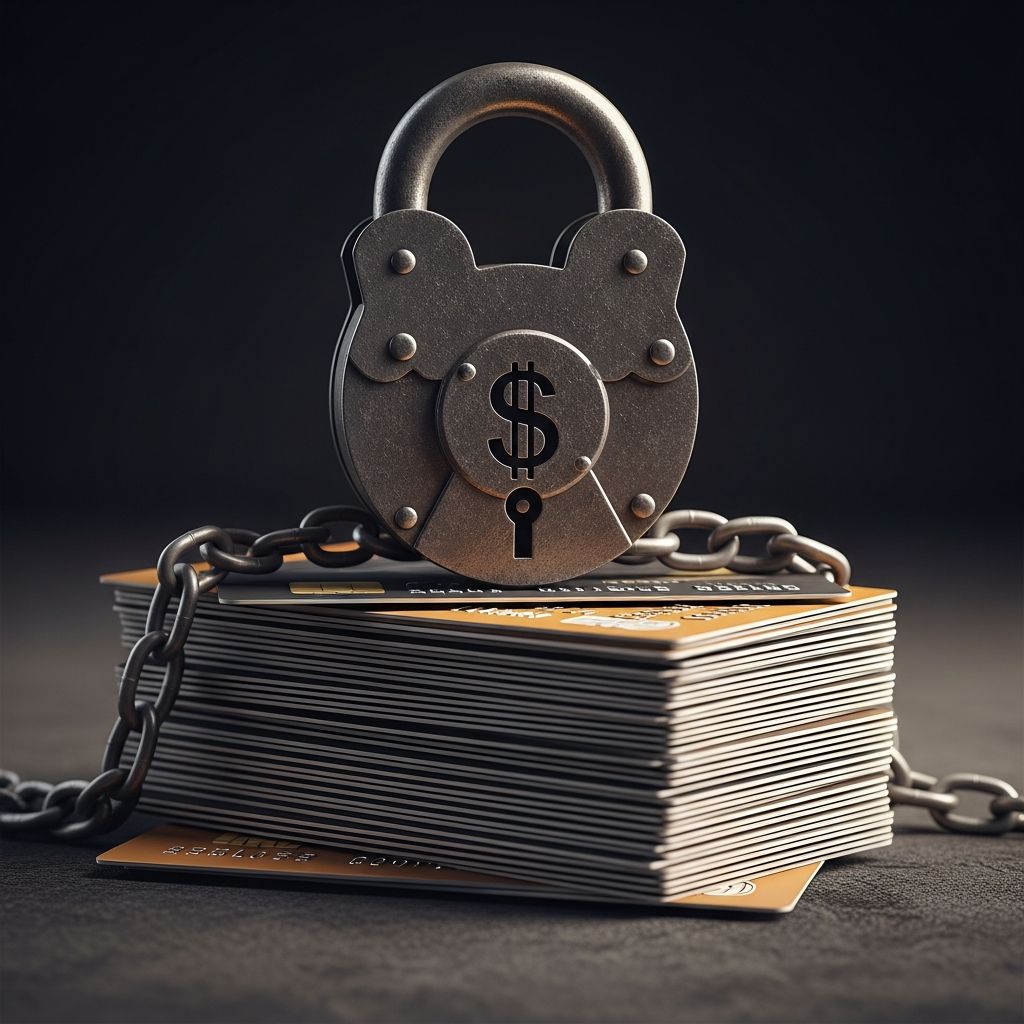
Credit cards offer convenience for purchases, but carrying a balance can lead to substantial interest costs over time. For instance, a $3,000 purchase with only minimum payments at 15% APR can cost over $3,600 in interest alone, extending repayment to 16 years.
The Temptation of Minimum Payments
Credit cards make large purchases seem affordable by spreading payments over time. A $3,000 item might require just $60 monthly minimum (2% of balance), fitting easily into budgets. However, this overlooks the interest accrual, where most of the payment services debt rather than principal.
New cardholders often fall into this trap, viewing minimums as manageable until statements reveal the long-term impact. Paying only the minimum keeps accounts current and protects credit scores but prolongs debt significantly.
Breaking Down the Math: A $3,000 Debt Example
Consider a $3,000 balance at 15% APR with 2% minimum payments ($60 initially). Monthly interest is roughly $37.50 (0.04% daily rate x 30 days x $3,000 ≈ 1.2%), leaving $22.50 toward principal after interest.
After one payment, the balance drops to $2,977.50. Minimums decrease accordingly, slowing payoff. Over time:
- Year 1: Pay ~$720, interest ~$430, principal reduction ~$290.
- Total payoff: 16 years, $6,641 total paid ($3,641 interest).
This turns a $3,000 item—likely obsolete by then—into double the cost. Fixed $60 payments instead shorten this to 6.5 years with $1,737 interest, halving costs.
| Strategy | Time to Payoff | Total Interest | Total Paid |
|---|---|---|---|
| Minimum Payments (2%) | 16 years | $3,641 | $6,641 |
| Fixed $60/month | 6.5 years | $1,737 | $4,737 |
Higher rates (18-25%) exacerbate this; department store cards often exceed 20%, trapping users longer.
Hidden Costs Beyond Interest
Interest isn’t the only expense. Factor in:
- Sales Tax: 8-10% on the original purchase, paid upfront.
- Income Taxes: Up to 33% on earnings used for payments (after-tax dollars).
- Inflation: 3-8% annual loss in purchasing power on pre-tax amounts.
- Opportunity Costs: Funds tied up could invest elsewhere, potentially appreciating.
Multiplying these over 16 years reveals the full burden, often exceeding the purchase price several times. Small interest charges across multiple cards ($20 here, $15 there) accumulate unnoticed into major expenses.
Smarter Strategies: Debt Avalanche vs. Debt Snowball
When juggling multiple cards, allocation matters. Common pitfalls include balance-matching (paying proportionally), ignoring rates and prolonging high-interest debt.
Debt Avalanche Method
Prioritize highest-APR card with extra payments while minimums on others. Once cleared, roll funds to next highest. This minimizes interest mathematically.
Example: Cards A (20% APR, $2,000), B (15% APR, $1,000). Extra $100/month to A first saves ~$500 vs. balance-matching.
Debt Snowball Method
Target smallest balance first for psychological wins, then next smallest. Ignores rates but builds momentum.
Snowball suits motivation; avalanche saves most money. Choose based on needs.
Balance Transfers and 0% Offers
0% APR promotions (12-21 months) via balance transfers can pause interest. Fees (3-5%) apply; calculate if savings exceed.
Avoid if unable to pay off before promo ends—rates revert high. Useful for disciplined payers transitioning to aggressive payoff.
Worst Ways to Tackle Credit Card Debt
Some methods worsen situations:
- Cash Advances: High fees (3-5%) + immediate interest, no grace period.
- 401(k) Loans: Repay with after-tax dollars; job loss risks full taxation + penalties.
- Family/Friends: Strains relationships if defaulted.
- High-Interest Consolidation: Lower payments but more total cost.
- Debt Settlement Firms: High fees (15-25% of debt), credit damage, tax on forgiven amounts.
DIY settlement avoids fees but requires negotiation skills.
Steps to Eliminate Credit Card Debt
- Stop New Charges: Use cash/debit until balances zero.
- List All Debts: Note balances, APRs, minimums.
- Choose Strategy: Avalanche for savings, snowball for motivation.
- Automate Extras: Direct windfalls (tax refunds, bonuses) to priority debt.
- Track Progress: Monthly reviews build discipline.
- Build Emergency Fund: $1,000+ prevents new debt.
Tools like spreadsheets or apps simulate payoffs.
Frequently Asked Questions (FAQs)
Q: How long does it take to pay off $3,000 credit card debt with minimum payments?
A: Approximately 16 years at 15% APR, costing $3,641 in interest, totaling $6,641.
Q: What’s the difference between debt avalanche and debt snowball?
A: Avalanche targets highest interest first for minimum cost; snowball smallest balance first for motivation.
Q: Are balance transfers worth it?
A: Yes if you can pay off during 0% period; fees 3-5%, but saves hundreds vs. high APR.
Q: Can I negotiate debt settlement myself?
A: Yes, avoiding firm fees (15-25%), but expect credit hit and potential taxes on forgiven debt.
Q: How do I avoid credit card debt over holidays?
A: Budget cash-only, track spending, prioritize needs over wants.
Final Thoughts on Escaping the Debt Cycle
Understanding credit card debt’s true cost empowers action. Shift from minimums to strategic payoffs, and a $3,000 burden shrinks dramatically. Consistent extra payments compound savings, freeing funds for savings or investments sooner. Start today—calculate your payoff timeline and commit to one extra payment monthly for lasting financial freedom.
References
- How Much Does Your Credit Card Debt Cost You? — Wise Bread. 2009-05-15. https://www.wisebread.com/how-much-does-your-credit-card-debt-cost-you
- Are You Paying Off Credit Card Debt the Wrong Way? — Wise Bread. 2010-03-10. https://www.wisebread.com/are-you-paying-off-credit-card-debt-the-wrong-way
- 10 Worst Ways to Pay Off Your Credit Card Debt — Wise Bread. 2009-08-20. https://www.wisebread.com/10-worst-ways-to-pay-off-your-credit-card-debt
- Credit Cards — Wise Bread. 2023-12-01. https://www.wisebread.com/topic/personal-finance/credit-cards
- Understanding Credit Card Interest — Investopedia (via FIU Library). 2024-01-15. https://library.fiu.edu/finliteracy/credit
Similar Articles








Read full bio of medha deb