How Much Collateral Do You Need for a Business Loan?
Understand how much collateral lenders expect, what assets you can pledge, and how to qualify even with limited collateral.

Collateral is one of the most important factors lenders evaluate when deciding whether to approve your business loan. Understanding how much collateral you need, what counts as acceptable security, and how lenders value your assets can help you prepare a stronger application and negotiate better terms.
This guide explains how collateral works for business loans, typical requirements for bank and SBA loans, and what you can do if you do not have enough assets to fully secure your financing.
What Is Collateral for a Business Loan?
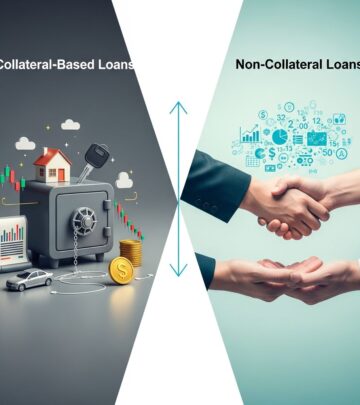
Collateral is any property or asset that you pledge to a lender to secure a loan. If you default on the loan, the lender has the legal right to seize and sell that collateral to recover part or all of the outstanding balance.
Collateral is a core part of a lender’s risk analysis and is often listed alongside other key factors such as capacity, capital, character, conditions, and communication (the “six C’s of credit”). When you pledge collateral, you give the lender an additional layer of protection beyond your promise to repay.
Why Lenders Require Collateral
Lenders use collateral to:
- Reduce risk of loss if you cannot repay the loan.
- Encourage responsible borrowing by ensuring you have “skin in the game.”
- Support larger loan amounts and longer repayment terms.
- Offer better pricing (lower interest rates) compared with unsecured loans.
Because of this, most traditional bank loans and many government-backed loans are structured as secured loans—loans backed by collateral rather than only by your credit profile.
Common Types of Collateral for Business Loans
Lenders typically prefer assets that are relatively stable in value and easy to liquidate. The most common forms of collateral include:
- Commercial real estate (office, retail, industrial, or mixed-use property).
- Business equipment (machinery, vehicles, technology, and tools).
- Inventory held for sale.
- Accounts receivable (invoices owed to your business).
- Cash or marketable securities (in some cases).
- Personal assets such as a residence or other investment property, when required.
For many loans, the asset being financed—such as a building or new equipment—automatically becomes part of the collateral package.
How Much Collateral Do You Typically Need?
There is no single universal percentage of collateral that all lenders require. Instead, each lender sets its own policies based on the type of loan, the borrower’s risk profile, and regulatory guidelines. However, some general patterns apply.
Collateral Usually Must Exceed the Loan Amount
In many bank underwriting models, lenders expect collateral with a market value that is higher than the loan amount because they discount the collateral to reflect the costs and uncertainty of liquidation. The amount the lender is willing to lend against an asset is called the advance rate.
| Type of Collateral | Typical Advance Rate (Illustrative) | Example: Asset Value | Approx. Loan Amount Secured |
|---|---|---|---|
| Owner-occupied commercial real estate | 60%–80% | $500,000 | $300,000–$400,000 |
| Equipment | 50%–75% | $200,000 | $100,000–$150,000 |
| Inventory | 20%–60% | $150,000 | $30,000–$90,000 |
| Accounts receivable (eligible) | 70%–85% | $100,000 | $70,000–$85,000 |
These ranges are examples, not fixed rules. Individual lenders may be more conservative or more flexible depending on their policies and market conditions.
Collateral Expectations by Loan Size and Type
Collateral requirements often become stricter as loan amounts increase. For example, SBA guidance and lender practices typically follow patterns such as:
- Small loans (under about $25,000–$50,000): Often no specific collateral required, especially for certain SBA products, though a personal guarantee is still common.
- Mid-size loans (above $25,000–$50,000): Lenders usually expect available business assets as collateral and may apply their standard commercial loan collateral policies.
- Larger loans (above roughly $350,000): Lenders typically look to fully secure the loan with business assets and, if necessary, additional personal collateral.
In practice, many lenders aim for 100% collateral coverage, meaning the discounted value of the pledged collateral equals or exceeds the loan amount. Where full coverage is not possible, they may still lend as long as other aspects of your application are strong.
Collateral and SBA-Backed Business Loans
Small Business Administration (SBA) loans are partially guaranteed by the U.S. government but are issued by banks and authorized lenders. SBA programs have specific collateral policies that lenders must follow, though lenders can also apply their own additional requirements.
General SBA View on Collateral
According to SBA lender guidance, most SBA loans require some form of collateral, and all SBA programs require personal guarantees from owners with 20% or more equity in the business. SBA policy emphasizes that:
- Lenders must take available collateral when it is reasonably obtainable.
- SBA lenders cannot decline a loan solely because collateral is inadequate, provided the borrower is otherwise creditworthy and all available collateral is pledged.
SBA 7(a) Loan Collateral
The SBA 7(a) program is the most widely used SBA loan. Collateral requirements vary by loan size and subtype:
- Standard 7(a) loans: Typically secured by the assets being acquired, refinanced, or improved, plus any additional fixed assets necessary to reach the target collateral coverage.
- 7(a) small loans and SBA Express loans:
- No specific collateral is required for loans up to $50,000.
- For loans above $50,000, lenders must follow their standard collateral policies for comparable non-SBA loans.
- Loans above certain thresholds (commonly around $350,000): Lenders are expected to take all available business assets and may require liens on personal real estate when the loan is not fully secured by business collateral.
SBA 504 (CDC/504) Loan Collateral
SBA 504 loans finance major fixed assets such as commercial real estate and large equipment. They have a distinctive three-part structure (bank, Certified Development Company, and borrower contribution). For collateral:
- The project assets themselves (e.g., the building or equipment being financed) serve as primary collateral.
- The bank and the CDC each take a lien on the project property for their respective portions of the loan.
- Additional collateral is not typically required unless risk factors are elevated.
SBA Microloans and Disaster Loans
For smaller and special-purpose SBA programs:
- Microloans (up to $50,000): Intermediary lenders usually require some collateral plus a personal guarantee, but they may be more flexible with startups and very small businesses.
- Disaster loans: Collateral is generally required for loans above specific thresholds (commonly $50,000, with lower limits under some declarations). These loans often take a lien on real or business property when available.
How Lenders Value and Discount Collateral
When deciding how much they can safely lend, banks and SBA lenders look at both the quality and liquidity of collateral.
Key Factors in Collateral Valuation
- Market value: What the asset would reasonably sell for in its current condition.
- Condition and age: Newer and well-maintained assets command higher values and better advance rates.
- Liquidity: How quickly the asset can be sold for a fair price.
- Existing liens: Any prior claims on the asset reduce the available collateral value.
- Volatility: Assets with rapidly changing values (e.g., some types of inventory) are often discounted more heavily.
Loan-to-Value (LTV) and Advance Rates
The relationship between loan amount and collateral value is often expressed as a loan-to-value ratio (LTV) or an advance rate. For example, if collateral is worth $400,000 and the lender offers a 75% advance rate, the maximum loan secured by that asset would be $300,000.
Lenders may combine multiple types of collateral and apply different advance rates to each, resulting in an overall collateral coverage figure they use in underwriting.
Personal Guarantees and Personal Collateral
Most small business loans—especially SBA loans—require a personal guarantee from owners who hold a significant stake in the company, often 20% or more.
What a Personal Guarantee Means
A personal guarantee is a legal promise that you will personally repay the loan if your business cannot. When you sign a guarantee:
- You become personally liable for the outstanding balance.
- The lender may be able to pursue your personal assets in a default scenario, subject to laws and the loan agreement.
- In some cases, the lender may also file liens on specific personal assets, such as your primary residence or investment property, if business assets are insufficient.
Personal guarantees do not replace collateral; rather, they work alongside business and personal collateral to reduce the lender’s risk and align incentives.
What If You Don’t Have Enough Collateral?
Many small businesses, particularly younger or asset-light companies, do not have enough hard assets to fully secure a loan. Lenders and SBA guidance recognize this reality and provide several ways to move forward when collateral is limited.
Strengthening Other Parts of Your Application
When collateral is weak, lenders may place more weight on other factors, including:
- Strong personal credit scores (often 680–700+ helps for prime lenders).
- Consistent business cash flow and profitability.
- Reasonable debt service coverage ratio (your ability to comfortably make loan payments).
- Solid business plan that clearly explains how the loan will generate revenue and profits.
- Relevant industry experience of the owners or management team.
Alternative Options When Collateral Is Limited
- Smaller loan amounts: Requesting a lower loan amount can reduce the collateral required and increase approval odds.
- Using personal assets: Some owners choose to pledge personal real estate or savings to make up for limited business assets, after carefully weighing the risk.
- Pursuing SBA microloans or community-based lenders: These programs may have more flexible collateral expectations for very small businesses.
- Unsecured or limited-collateral products: Certain lines of credit, online lenders, or card-based products may rely more heavily on cash flow and credit instead of hard collateral, though costs are often higher.
- Building collateral over time: Leasing or financing equipment and then using it as collateral for future loans once equity accumulates.
Practical Steps to Prepare Your Collateral Package
Before applying for a business loan, take time to organize and document your potential collateral. This preparation can speed up underwriting and improve the quality of your application.
1. List All Available Assets
- Real estate owned by the business or by owners.
- Major equipment, vehicles, and specialized machinery.
- Salable inventory and raw materials.
- Accounts receivable (with aging reports).
- Intangible assets that may have value in certain structures (e.g., intellectual property), recognizing many lenders focus on tangible assets.
2. Gather Documentation
- Recent appraisals or property tax statements for real estate.
- Purchase invoices, depreciation schedules, or equipment lists for fixed assets.
- Inventory reports and valuation methods.
- Accounts receivable aging summaries and major customer lists.
- Proof of ownership and any existing liens on the assets.
3. Discuss Collateral Strategy with Your Lender
Each lender will apply its own policy to your collateral. In your early conversations:
- Ask what types of collateral they accept and how they apply advance rates.
- Clarify whether they will require personal guarantees and personal real estate liens.
- Understand how they treat under-collateralized loans and what other strengths can offset collateral gaps.
Frequently Asked Questions (FAQs)
Q: Do all business loans require collateral?
A: No. Some loans, such as certain credit cards, merchant cash advances, or very small working capital loans, may be effectively unsecured, relying primarily on credit and cash flow. However, most traditional bank loans and SBA loans require collateral when available, especially as loan sizes increase.
Q: How much collateral do I need for an SBA 7(a) loan?
A: Lenders are generally expected to take all available business collateral and, if necessary, personal real estate to secure larger 7(a) loans. For smaller 7(a) and SBA Express loans up to $50,000, lenders are not required to take specific collateral, though personal guarantees are still standard.
Q: Can I get an SBA loan if my collateral does not fully cover the loan?
A: Yes, in many cases. SBA policy instructs lenders not to decline an otherwise sound loan application solely due to insufficient collateral, provided that all available collateral is pledged and other credit factors—such as cash flow, credit history, and management capacity—are strong.
Q: What happens to my collateral if I default?
A: If you default, the lender may seize and liquidate the collateral to recover the outstanding debt, subject to applicable laws and loan documents. If sale proceeds are insufficient to pay off the loan and you have signed a personal guarantee, you may still owe the remaining balance and could be personally pursued for repayment.
Q: Is using personal real estate as collateral a good idea?
A: Pledging personal real estate can help you qualify for larger or more favorably priced loans, but it also increases your personal risk. Before doing so, consider your tolerance for risk, the stability of your business, and alternative financing options. Consulting with legal and financial advisors is strongly recommended.
References
- What is a Business Loan and How Do I Get One? — Bank of America Business Banking. 2024-05-01. https://business.bankofamerica.com/en/resources/what-is-business-loan-and-how-do-i-get-one
- Do You Need Collateral for SBA Loans? A Guide for Local Business Owners — Locality Bank. 2024-03-12. https://localitybank.com/resources/do-you-need-collateral-for-sba-loans/
- SBA Loan Collateral Requirements — NerdWallet (citing U.S. Small Business Administration SOP). 2024-11-15. https://www.nerdwallet.com/business/loans/learn/sba-loan-collateral
- SBA Loan Collateral Requirements — First Business Bank. 2023-08-10. https://firstbusiness.bank/resource-center/collateral-requirements-sba-loans/
- Five Things You Need to Know About Collateral for a Business Loan — Live Oak Bank. 2023-06-20. https://resources.liveoak.bank/blog/five-things-you-need-to-know-about-collateral-for-a-business-loan
- How to Qualify for a Business Loan: Requirements & Documents — NBC (National Bank of Commerce). 2024-02-05. https://www.nbcbanking.com/business-banking/business-lending-guide/business-loan-requirements/
Similar Articles








Read full bio of medha deb