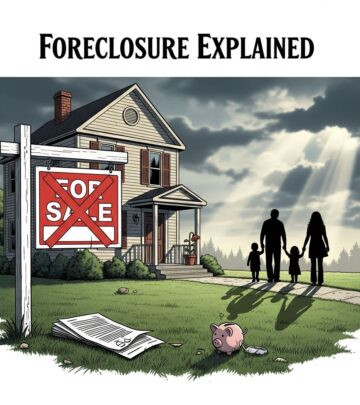
How Many Mortgage Payments Can I Miss Before Foreclosure?
Understand mortgage payment grace periods, foreclosure timelines, and options to avoid losing your home.
What Happens When You Miss a Mortgage Payment?
A mortgage is a financial agreement where a lender provides you with a substantial sum of money to purchase a home, and you commit to repaying this loan over time through monthly installments. Despite your best intentions, you might find yourself missing a mortgage payment—whether due to a momentary lapse or financial hardship. Being slightly late with a mortgage payment is typically manageable, but missing one entirely carries consequences that escalate significantly with each additional missed payment.
Understanding what happens when you miss a mortgage payment is crucial for homeowners. The consequences vary depending on how late you are and how many payments you’ve missed. Most importantly, proactive communication with your lender can help you avoid the most severe outcomes.
The Grace Period and Initial Consequences
When you fail to make your mortgage payment on the due date, the first thing to understand is that most lenders offer a 15-day grace period. During this window, you can make your payment without incurring any penalty fees. This grace period is your safety net—a buffer that acknowledges that life happens and payments sometimes slip minds.
However, once you pass the 15-day mark without paying, your lender will likely send you a warning letter about potential actions they might take if you continue to miss payments. At this point, late payment fees begin to accumulate. These fees are typically calculated as a percentage of your monthly mortgage payment, often ranging from 2% to 6%. For example, if your monthly mortgage payment is $2,200 and your lender charges a 5 percent late fee, you would owe an additional $110 for each month you’re late. It’s important to recognize that late fees are not one-time charges—you’ll be assessed them every month you miss a payment, which can compound your financial burden.
Understanding the Foreclosure Timeline
Many homeowners wonder: how many mortgage payments can I miss before foreclosure begins? The answer is that typically, foreclosure proceedings begin after you miss four consecutive mortgage payments or are 120 days delinquent without working out a solution with your lender. However, it’s crucial to understand that this timeline varies significantly based on your municipality, the housing market conditions, and your specific lender’s policies.
The good news is that you’ll have considerable notice before your lender initiates foreclosure. Most lenders prefer that borrowers don’t default on their loans and are willing to work with borrowers, even those who have missed several payments. Understanding each stage of the foreclosure timeline can help you take action before it’s too late.
Stage 1: The Initial Missed Payment (Days 1-15)
When your mortgage payment is 15 days overdue, you’ve passed the grace period. At this point, your lender will likely contact you about the missed payment. Late fees begin to accumulate, and your payment is officially considered delinquent.
Stage 2: Notice of Default (Around Day 90)
After approximately 90 days of missed payments (or three consecutive missed payments), expect your lender to file an official notice of default with your local recorder’s office. They may also file a lis pendens, a legal notice that puts the “world on notice” that a lawsuit relating to your property may be pending. You’ll receive copies via certified mail, and depending on your state, your lender might physically post the notice on your front door.
This notice specifies exactly how much you owe to bring your mortgage back into good standing. The notice of default is a critical warning that foreclosure is becoming a real possibility if you don’t take action immediately.
Stage 3: Preforeclosure Period
The third stage occurs after you receive your notice of default but before your home is auctioned off in a foreclosure sale. During the preforeclosure period, paying everything you owe—including the principal, any accrued interest, late penalties, and fees—can bring your mortgage current and halt the foreclosure process.
Each state has its own timeline for this phase of the process. This is a critical window where you still have options. If you can demonstrate financial hardship, your lender may waive penalty fees or offer alternative arrangements. This is your last best chance to save your home before it goes to auction.
The straightforward answer is: you can typically be as far as 120 days—or four consecutive payments—behind on your mortgage before foreclosure on your home begins. However, this doesn’t mean you should wait until that point to take action. The moment you realize you cannot make a payment, you should contact your lender or servicer immediately.
It’s important to note that not all lenders follow identical timelines for foreclosure. While most lenders file a notice of default after 90 days or three months of missed payments, others may wait longer or send it sooner. Your mortgage terms outline what specifically constitutes a default under your loan agreement. Review your mortgage documents to understand your lender’s specific policies.
Credit Score Impact of Missed Mortgage Payments
Beyond the risk of foreclosure, missed mortgage payments have significant consequences for your credit score. Here’s how the impact unfolds:
- One missed payment (before 30 days late): Surprisingly, one missed mortgage payment—even a few days past the grace period—will not immediately hurt your credit score. A payment must be at least 30 days late for the lender to report it to credit bureaus.
- 30 days late: Once your payment is 30 days overdue, your lender will report the late payment to credit bureaus, and your credit score will drop. The amount varies, but a single late payment can lower your score by 50 to 100 points.
- Multiple missed payments: Multiple missed payments have an even bigger impact on your credit score. The stronger your credit score before the missed payment, the steeper the decline.
- Long-term impact: A late mortgage payment can remain on your credit report for up to seven years, affecting your ability to qualify for new credit, refinancing, or other financial products.
Late Fees and Additional Costs
When you miss a mortgage payment and pass the grace period, late fees become a significant additional burden. Most lenders charge late fees ranging from 2% to 6% of your monthly mortgage payment. These fees accumulate monthly, meaning if you’re late for three months, you’ll owe three months of late fees in addition to the missed payments themselves.
This creates a snowball effect: as late fees accumulate, it becomes increasingly difficult to catch up because your next payment needs to cover not just the regular payment and the missed amount, but also the accumulated fees.
Loan Acceleration: Another Serious Consequence
If you fall far enough behind on your mortgage, your lender might trigger an acceleration clause—a provision in your mortgage contract that allows them to demand the full loan balance all at once, plus accrued interest and late fees. If you cannot pay the entire amount in full, foreclosure typically follows.
This is why early intervention is so critical. Once the acceleration clause is triggered, your options become much more limited.
Relief Options: Payment Plans and Solutions
If you’ve missed one or more mortgage payments, you have several options to explore before foreclosure becomes inevitable. The key is to contact your lender immediately and discuss loss mitigation options.
Payment Plans
Setting up a payment plan with your lender can help you catch up on late payments over a fixed timeline. This option works best when missed payments result from a short-lived financial difficulty rather than a long-term hardship. Most payment plans last anywhere from two to six months, during which your monthly payments increase to compensate for the overdue balance. Following this arrangement can help you avoid foreclosure and get back on track.
Mortgage Forbearance
Mortgage forbearance is an arrangement that allows borrowers to pause or temporarily lower their mortgage payments while dealing with a short-term crisis. During forbearance, the record reflects that you’re current on your mortgage, protecting your credit score. Once the forbearance period ends, you’ll repay the paused payments either in a lump sum or through installments. If it’s the latter, these installments might be added to your monthly mortgage payment or tacked onto the end of your loan term, extending it by up to a year. Forbearance is best for borrowers with temporary financial setbacks, such as job loss.
Loan Modification
A loan modification involves changing the terms of your mortgage to make payments more manageable. This might include extending the loan term, lowering the interest rate, or changing the loan type. Unlike forbearance, which is temporary, a loan modification is permanent.
Refinancing
If you have some equity in your home and your credit score hasn’t been too severely damaged, refinancing to a new mortgage with better terms might help you catch up on payments while establishing a more sustainable payment schedule going forward.
Why Lenders Prefer Working With Borrowers
An important point to understand is that lenders generally prefer to work with borrowers rather than foreclose. Foreclosure is expensive and time-consuming for lenders, and they often lose money in the process. Most lenders are willing to work with borrowers, even those who have missed several payments, to find a mutually acceptable solution. This is why reaching out to your lender as soon as you realize you might miss a payment is so important—you have more leverage and more options when you’re proactive.
Timeline of Events: What to Expect
Understanding the typical sequence of events can help you anticipate what’s coming and take action at each stage:
- Days 1-15: Grace period. You can pay without penalty.
- Day 16+: Late fees start accruing, usually 2%–6% of your monthly payment.
- Day 30+: Your lender may report the late payment to credit bureaus, lowering your credit score.
- Day 45 (approximately): You’ll receive information about loss mitigation options like loan modification or forbearance.
- Day 90 (approximately): Notice of default is filed if you haven’t resolved the issue.
Frequently Asked Questions
Will one missed mortgage payment hurt my credit score?
One missed mortgage payment—even a few days past the grace period—will not immediately hurt your credit score. A payment must be at least 30 days late for the lender to report it to credit bureaus. However, once it’s reported, the impact can be significant, dropping your score by 50 to 100 points or more.
How long does a missed payment stay on my credit report?
A late mortgage payment can stay on your credit report for up to seven years, affecting your creditworthiness and ability to obtain new credit or refinance during that entire period.
What should I do if I know I’ll miss a mortgage payment?
Contact your lender or servicer immediately to discuss loss mitigation options. Don’t wait until you’ve missed the payment. Your lender may offer forbearance, a loan modification, a payment plan, or other solutions to help you avoid foreclosure.
Can I still apply for forbearance if I’ve already missed payments?
Yes. Even if you’ve missed a few payments, you can still apply for mortgage forbearance. Additionally, if your forbearance period ends and you experience another short-term hardship in the future, you may request forbearance again.
What should I watch out for when seeking mortgage relief?
Scammers often target homeowners on the brink of foreclosure. They may mimic government agencies, ask for payment upfront, or make promises they cannot keep. Reputable relief programs will not ask you for compensation. Be cautious and work directly with your lender or contact HUD-approved housing counseling agencies.
What’s the difference between preforeclosure and foreclosure?
Preforeclosure is the period after you receive a notice of default but before your home is sold at foreclosure auction. During preforeclosure, you can still save your home by paying everything you owe. Once foreclosure occurs and your home is auctioned, you’ve lost the opportunity to reclaim it through payment.
Taking Action: Your Next Steps
If you’re currently missing mortgage payments or anticipate that you might, here’s what you should do immediately:
- Contact your lender or mortgage servicer right away
- Be honest about your financial situation
- Ask about all available options: forbearance, loan modification, payment plans, and refinancing
- Get any agreements in writing
- Make all payments according to your new arrangement
- Consider consulting with a HUD-approved housing counselor for guidance
Remember, while you can typically miss up to four mortgage payments before foreclosure begins, you don’t want to test that limit. The sooner you address the problem, the more options you’ll have available, and the better your chances of keeping your home.
References
- What Happens When You Miss a Mortgage Payment? — Bankrate. 2024. https://www.bankrate.com/mortgages/how-many-mortgage-payments-can-i-miss/
- Foreclosure: How It Works And How To Avoid — Bankrate. 2024. https://www.bankrate.com/mortgages/what-is-a-foreclosure/
- Behind on mortgage payments? 6 ways to catch up — Bankrate. 2024. https://www.bankrate.com/mortgages/behind-on-your-mortgage-6-ways-to-catch-up/
- What Is Mortgage Forbearance? — Bankrate. 2024. https://www.bankrate.com/mortgages/everything-you-should-know-about-mortgage-forbearance/
- What Happens If You Miss a Mortgage Payment: Full Guide — Upsolve. 2024. https://upsolve.org/learn/late-mortgage-payment/
Similar Articles








Read full bio of Sneha Tete